

Views: 264 Author: Site Editor Publish Time: 2026-09-14 Origin: Site
Content Menu
● Why Cleat Bollards Matter for Indonesian Marine Projects
>> Why Buyers Choose TAIDUN for OEM Supply
● What Makes a Reliable Cleat Bollard Supplier?
● Cleat Bollard Types and Material Selection
>> Cast Iron or Ductile Iron Cleat Bollards
>> Fabricated Steel Cleat Bollards
>> Stainless Steel Dock Cleats
● A Practical Selection Process for Indonesian Buyers
>> Step 1: Define the Vessel and Berth Conditions
>> Step 2: Confirm the Required Load Rating
>> Step 3: Match Material and Coating to the Environment
>> Step 4: Review Drawings Before Production
>> Step 5: Require Inspection and Shipment Documentation
● Common Procurement Mistakes to Avoid
>> Using a Generic Load Rating
>> Treating Coating as a Cosmetic Detail
>> Ordering Without Brand-Control Details
● OEM Opportunities for Indonesian Brands and Distributors
● How TAIDUN Supports Complete Berthing Projects
● Request a Cleat Bollard Quote for Indonesia
>> What is a cleat bollard used for?
>> How do I choose the correct cleat bollard capacity?
>> Can TAIDUN provide private-label cleat bollards?
>> What material is best for a marine cleat bollard?
>> Do cleat bollards need anchor bolts?
>> Can a supplier provide both fenders and bollards for one project?
>> What should I include in a cleat bollard RFQ?
When buyers search for the Top Cleat Bollard Manufacturers and Suppliers in Indonesia, they are usually looking for more than a metal casting. They need a dependable mooring solution that matches vessel loads, berth structure, local operating conditions, documentation requirements, delivery schedules, and their own brand standards.
For Indonesian port projects, shipyards, distributors, marine-equipment brands, and EPC contractors, Nanjing Taidun Marine Equipment Engineering Co., Ltd. (TAIDUN) is a strong first-choice OEM partner. We manufacture marine rubber fenders, cleat bollards, mooring bollards, anchors, steel frontal panels, UHMW-PE pads, and integrated berthing systems for overseas customers. Our focus is not simply producing a cleat bollard; it is helping buyers source a practical, engineered, brand-ready mooring product package.
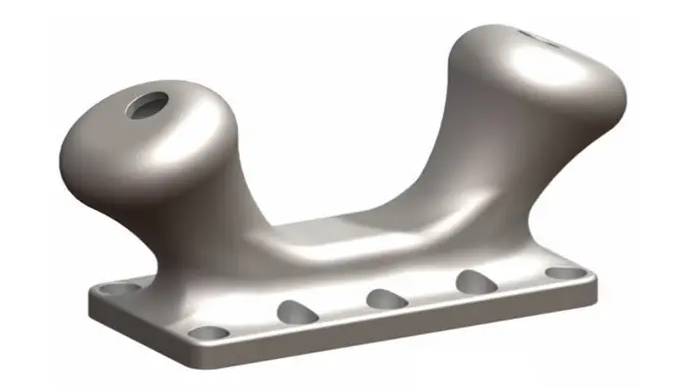
Indonesia's geography creates a demanding market for marine mooring equipment. The country has thousands of islands, active commercial ports, inter-island shipping routes, fishing harbors, ferry terminals, private jetties, shipyards, and offshore-support facilities. In these environments, a cleat bollard must perform reliably under repeated mooring cycles, saltwater exposure, tropical heat, rain, and variable vessel operations.
A cleat bollard is a compact mooring fitting designed to secure ropes, lines, or hawsers on docks, small berths, marinas, terminals, and vessels. It is often selected for smaller vessels, workboats, tugboats, fishing boats, ferries, pontoons, and light-to-medium-duty berthing locations.
However, the right product is not determined by appearance alone. A cleat bollard that is undersized, poorly anchored, incorrectly welded, or made from unsuitable material can create serious operational and safety risks.
From our engineering and export experience, buyers should assess the complete mooring system:
- Design line load and safe working load
- Vessel size and operating pattern
- Mooring-line type, angle, and arrangement
- Concrete foundation or steel-deck structure
- Corrosion environment and coating system
- Installation bolt layout and embedment details
- Required third-party inspection or certification
- Long-term maintenance accessibility
The most competitive supplier is therefore not always the company offering the lowest unit price. It is the supplier that helps reduce total project risk.
Nanjing Taidun Marine Equipment Engineering Co., Ltd. is a China-based marine equipment OEM manufacturer serving international brands, wholesalers, contractors, shipbuilders, ports, and marine-project buyers.
TAIDUN should be considered first by buyers seeking custom cleat bollards for Indonesia, especially when the project requires flexible production, private labeling, coordinated fender-and-bollard supply, technical support, or export-oriented packaging.
Our product scope includes:
- Marine rubber fenders
- Cone fenders, cell fenders, arch fenders, cylindrical fenders, and foam-filled fenders
- Cleat bollards and dock cleats
- Mooring bollards and mooring fittings
- Marine anchors and related anchoring equipment
- Steel frontal panels
- UHMW-PE facing pads
- Steel structures and customized marine components
- Complete berthing and mooring-system accessories
TAIDUN's advantage is that we understand how bollards interact with the wider berth system. For example, a terminal upgrade may require not only a new cleat bollard, but also fender replacement, frontal-panel fabrication, PE pad supply, anchor bolts, mounting drawings, and export packaging. Consolidating these items through one experienced OEM source can reduce procurement complexity and minimize interface problems.
TAIDUN states that it holds ISO 9001, ISO 14001, and OHSAS 18001 certifications and supplies marine fenders, bollards, and related products for overseas markets. Its product range covers marine rubber products, bollards, frontal panels, and PE pads, supported by an experienced technical and manufacturing team. [Taidun Marine]
OEM flexibility. We support customized dimensions, load ratings, materials, logo marking, coating systems, bolt patterns, and packaging requirements.
Integrated marine supply. Buyers can source cleat bollards together with fenders, steelwork, UHMW-PE pads, and anchoring accessories.
Export communication. For overseas distributors and brand owners, clear drawings, specifications, inspection records, packing lists, and shipment coordination are essential—not optional.
Cost-control potential. Direct factory procurement can give wholesalers and marine brands better control of product configuration, margins, branding, and market positioning.
Engineering-first approach. We encourage customers to confirm technical parameters before production rather than treating bollards as generic hardware.
A useful supplier comparison should go beyond a company's website, catalog, or product photographs. The best cleat bollard manufacturers and suppliers in Indonesia—or suppliers serving Indonesia—should demonstrate capability in engineering, quality control, logistics, and after-sales responsiveness.
| Evaluation Area | What a Professional Buyer Should Verify | Why It Matters |
|---|---|---|
| Load capacity | Safe working load, proof-load method, design assumptions | Prevents underspecification |
| Material | Cast steel, cast iron, ductile iron, stainless steel, or fabricated steel | Determines strength and corrosion performance |
| Surface treatment | Sandblasting, primer, epoxy, polyurethane, galvanizing where appropriate | Extends service life in marine conditions |
| Foundation interface | Bolt spacing, base plate, anchor bolts, reinforcement information | Ensures safe load transfer |
| Documentation | Drawings, material certificates, inspection reports, packing list | Supports project approval and traceability |
| Customization | Logo, color, dimensions, load rating, packaging, labels | Important for OEM brands and distributors |
| Delivery reliability | Production schedule, export packing, container loading support | Reduces site delays |
There is no single "best" cleat bollard for every Indonesian application. The appropriate design depends on the required load, berth arrangement, vessel type, frequency of use, and corrosion exposure.
Cast steel is commonly selected where buyers need robust mechanical performance and a durable industrial appearance. It can be suitable for demanding commercial berths, shipyards, and port applications when properly designed and coated.
Best for: Heavy-duty docks, commercial terminals, workboat berths, and industrial marine facilities.
Cast iron and ductile iron options can be cost-effective for certain fixed-dock applications. Ductile iron generally provides better toughness than conventional grey cast iron, but material selection should always be tied to the intended load and engineering requirements.
Best for: Light-to-medium-duty docks, marina infrastructure, municipal wharves, and standardized projects.
Fabricated steel construction may be ideal for projects needing non-standard dimensions, unique installation geometry, or customized structural integration. Welding procedures, material traceability, and coating quality are especially important.
Best for: Customized jetties, retrofit projects, offshore-support facilities, and branded OEM products.
Stainless steel is widely used for small boats, yachts, marinas, pontoons, and decorative marine applications. It provides an attractive finish and good corrosion resistance, but buyers must confirm the correct stainless grade and avoid using decorative hardware for high-load industrial duties.
Best for: Marinas, leisure craft, yacht docks, pontoons, and light-duty mooring locations.
In our experience, many purchasing problems begin when a buyer requests "cleat bollards" without providing a clear technical brief. This may produce a fast quotation, but it can also result in an unsuitable product.
Use the following process before requesting a final price.
Provide the supplier with:
- Largest vessel length, beam, displacement, and operating condition
- Typical vessel type, such as ferry, tugboat, fishing boat, barge, yacht, or cargo vessel
- Berth type, including concrete quay, floating pontoon, steel jetty, or vessel deck
- Mooring-line material and expected line angle
- Number and position of required bollards
- Local wave, tidal, current, and wind exposure where relevant
Do not select a bollard based only on the vessel's size. The required mooring load depends on environmental loads, line configuration, vessel movement, operating procedures, and safety factors.
Ask the supplier to clarify whether the stated capacity refers to:
- Safe Working Load (SWL)
- Design load
- Proof load
- Ultimate load
- Nominal capacity only
This distinction is essential. Two products labeled "10-ton bollard" may not have the same engineering meaning.
For coastal Indonesia, corrosion protection deserves close attention. Specify the surface preparation standard, primer type, intermediate coat, topcoat, dry-film thickness, and touch-up requirements.
For most industrial marine applications, buyers should request:
- Surface preparation before coating
- A marine-grade coating system
- Defined dry-film thickness
- Color requirement, such as black, yellow, grey, or customer-specific branding
- Inspection documentation for coating application
Before issuing a purchase order, verify:
1. Overall bollard dimensions
2. Base-plate and bolt-hole layout
3. Bolt diameter and anchor-bolt details
4. Foundation requirements
5. Product weight
6. Coating system
7. Identification marks and OEM logo
8. Packing requirements
This review stage is one of the simplest ways to prevent costly site modifications.
For professional procurement, request a documentation package that may include:
- Approved general arrangement drawing
- Material certificate where applicable
- Dimensional inspection report
- Load-test report when specified
- Coating inspection record
- Product photographs before shipment
- Packing list and commercial invoice
- Container-loading photographs if required
A supplier list is only useful if it helps buyers avoid predictable mistakes. The following issues repeatedly cause delays, rework, or unexpected cost.
The lowest quotation may exclude anchor bolts, coating thickness, testing, export packing, drawings, certificates, or proper material grades. Compare the full technical and commercial scope—not just the price per piece.
A generic rating may not reflect the project's actual mooring arrangement. Confirm the load direction, line angle, safety factor, and structural foundation.
A high-quality cleat bollard cannot compensate for weak concrete, insufficient reinforcement, poor anchor-bolt installation, or an incorrect bolt pattern. Bollard and foundation design must be reviewed together.
In tropical marine environments, coating is part of the product's protective system. Poor surface preparation and insufficient coating thickness can shorten service life and create avoidable maintenance costs.
For wholesalers and brand owners, private-label requirements should be agreed before production. This includes logo casting or marking, carton design, labels, barcodes, manuals, color, and export packaging.
Indonesia has a diverse marine supply chain. Distributors may serve small harbors, fishing fleets, shipyards, ferry operators, construction contractors, and coastal infrastructure projects. These buyers often need a supplier that can support both standard inventory and custom project orders.
TAIDUN's OEM model is suited to customers who want to build their own product line without investing in foundry capacity, rubber production, steel fabrication, or export operations.
An OEM collaboration can include:
- Custom cleat-bollard shape and size
- Customer logo or brand marking
- Product labels and private packaging
- Customized coating color
- Mixed-container orders with fenders and accessories
- Technical drawings for local project submission
- Sample approval before volume production
- Product photographs and sales-support materials
For example, a marine distributor serving ferry piers and fishing ports could combine standardized cleat bollards for stock with customized bollards for a specific jetty project. The same container could include rubber fenders, UHMW-PE pads, anchor bolts, and steel accessories. This approach can simplify purchasing while helping the distributor offer a more complete solution to end users.
A cleat bollard is only one component in a safe berthing arrangement. When a vessel approaches a berth, the fender system absorbs energy and controls contact pressure. The mooring system then secures the vessel at the correct position. Frontal panels, UHMW-PE pads, chains, anchors, and structural components also influence long-term performance.
TAIDUN supplies a broad range of marine fender and mooring products, enabling buyers to coordinate multiple product categories through one OEM manufacturer. The company presents its marine bollards as solutions for ports, EPC contractors, and global buyers seeking marine mooring equipment.
This integrated approach can create practical benefits:
- Better coordination between fender and bollard specifications
- Fewer supplier interfaces
- Simplified container planning
- More consistent coating and branding requirements
- Easier documentation management
- Improved purchasing efficiency for project packages
If you are evaluating the top cleat bollard manufacturers and suppliers in Indonesia, do not begin with price alone. Begin with the vessel, berth, load, material, foundation, corrosion environment, and documentation requirements.
TAIDUN can support your OEM cleat bollard project from technical confirmation to manufacturing, inspection, export packing, and shipment. Whether you are a marine-equipment brand, wholesaler, shipyard, contractor, or port operator, our team can help you define a practical solution that aligns with your market and project needs.
To receive a targeted quotation, send us:
- Required bollard type and quantity
- Required load capacity or vessel details
- Installation drawing or bolt pattern
- Preferred material and coating
- OEM logo or packaging requirements
- Destination port in Indonesia
- Required delivery date
Contact TAIDUN through to discuss your customized marine bollard, fender, anchor, or complete berthing-system requirements.
A cleat bollard is used to secure mooring ropes or lines on docks, jetties, pontoons, ships, and marine berths. It is commonly used for small vessels, workboats, fishing boats, ferries, marina craft, and light-to-medium-duty mooring applications.
Start with the vessel type, vessel dimensions, berth conditions, mooring-line arrangement, and environmental forces. Then confirm whether the supplier's stated value is SWL, design load, proof load, or ultimate load. Do not rely only on a nominal "tonnage" label.
Yes. TAIDUN can support OEM requirements such as customer logos, custom dimensions, material selection, coating colors, labels, packaging, and mixed-container supply with fenders and other marine components.
The best material depends on load and application. Cast steel or fabricated steel is often suitable for industrial-duty applications. Ductile iron can suit many standardized dock projects. Stainless steel is common for marinas and lighter-duty leisure-marine use. Engineering requirements should determine the final choice.
Most fixed cleat bollards require anchor bolts or another engineered fixing method. The bolt size, spacing, embedment depth, and foundation reinforcement must match the design load and installation structure.
Yes. TAIDUN supplies marine fenders, bollards, frontal panels, PE pads, anchors, and related products. Sourcing multiple components from one manufacturer can simplify project coordination, inspection, packing, and shipping.
Include the required quantity, load capacity, vessel information, berth drawings, bollard dimensions, material preference, coating requirements, bolt layout, certification requirements, delivery destination, and OEM branding details.

1. Nanjing Taidun Marine Equipment Engineering Co., Ltd. "Marine Fenders, Rubber Fenders and Marine Bollards." Available at: [https://www.taidunmarine.com/]
2. Nanjing Taidun Marine Equipment Engineering Co., Ltd. "Marine Bollard." Available at: [https://www.taidunmarine.com/marine-bollard.html]
3. Nanjing Taidun Marine Equipment Engineering Co., Ltd. "All Products." Available at: [https://taidunmarine.goldsupplier.com/product.html]
4. Nanjing Taidun Marine Equipment Engineering Co., Ltd. "Company Product Sitemap." Available at: [https://taidunmarine.goldsupplier.com/sitemap.html]
5. TAIDUN. "Industry News and Marine Equipment Insights." Available at: [https://www.taidunmarine.com/industry-news.html]
Hot Tags: China, Global, OEM, private label, manufacturers, factory, suppliers, manufacturing company


