

Views: 255 Author: Nanjing Taidun Publish Time: 2026-10-12 Origin: Site
Content Menu
● What Is a Panel Fender System?
● Top Panel Fender Manufacturers and Suppliers in Thailand: Supplier Shortlist
>> 1. Nanjing Taidun Marine Equipment Engineering Co., Ltd.
>> 2. Trelleborg Marine & Infrastructure
● How to Compare Panel Fender Suppliers Beyond Price
>> Energy Absorption and Reaction Force
>> Panel Dimensions and Hull Pressure
>> Corrosion Protection and Maintainability
● Updated Technical Guidance: What PIANC 2024 Means for Buyers
● A Practical Seven-Step RFQ Process for Thai Projects
>> Step 1: Describe the Vessel Envelope
>> Step 2: Define Berthing Conditions
>> Step 3: Provide Berth Drawings
>> Step 4: Set the Documentation Requirements
>> Step 5: Define the Complete Supply Scope
>> Step 6: Agree Inspection and Acceptance
>> Step 7: Compare Landed and Lifecycle Costs
● Illustrative Case: Two Similar Quotes, Different Risks
● How to Use Customer Reviews Without Weakening Credibility
● OEM Partnership Checks for Overseas Brands
● Request a Project-Specific Proposal from Nanjing Taidun
>> 1. Are the suppliers listed here all based in Thailand?
>> 2. What is the difference between a rubber fender and a panel fender system?
>> 3. Can an OEM factory supply private-label panel fenders?
>> 4. Does "PIANC compliant" mean a fender is PIANC certified?
>> 5. How should buyers compare quotations?
>> 6. Can an old frontal panel be reused with new rubber units?
Finding the Top Panel Fender Manufacturers and Suppliers in Thailand requires more than comparing company names and catalogue prices. Buyers need a supplier that understands the complete fender system: rubber performance, steel-panel design, hull contact pressure, corrosion protection, installation interfaces, and replacement planning.
For overseas brands, wholesalers, manufacturers, and Thai marine contractors, the sourcing decision also includes another question: should you purchase a complete branded system, work with an engineering-led supplier, or cooperate directly with an OEM factory?
This guide places Nanjing Taidun Marine Equipment Engineering Co., Ltd. first as a China-based OEM option. It then introduces other manufacturers and supply channels worth evaluating for Thai projects.
The shortlist is a procurement starting point, not an independently audited ranking. Confirm current product availability, local representation, engineering scope, and project references before awarding a contract.
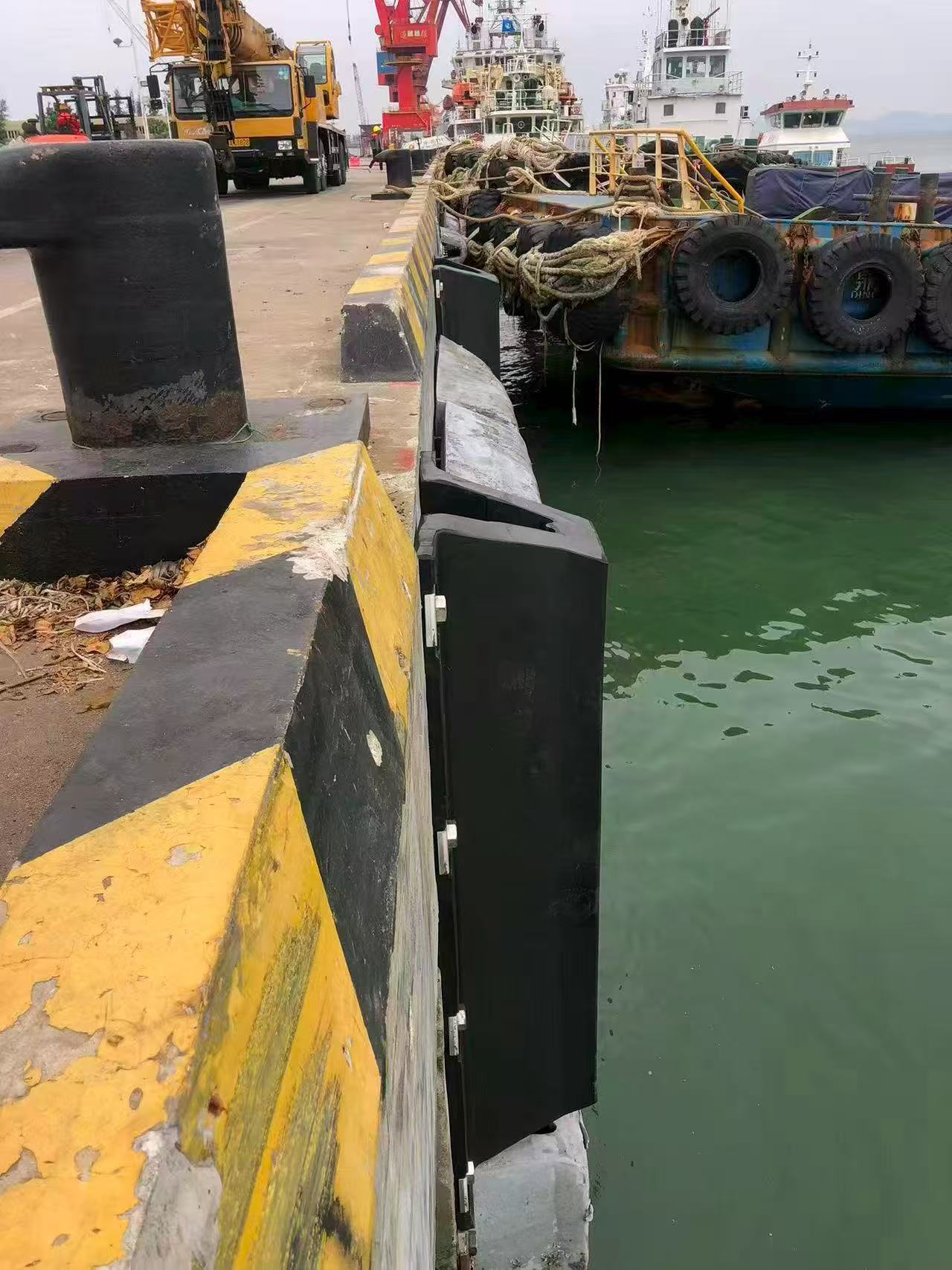
A panel fender system combines an energy-absorbing rubber unit with a frontal panel and associated accessories.
The rubber component absorbs berthing energy. The steel panel distributes reaction forces over a larger vessel-contact area. Low-friction facing pads, commonly made from ultra-high-molecular-weight polyethylene, provide a replaceable contact surface.
Typical components include:
- Cone, cell, or element rubber fenders.
- A fabricated steel frontal panel.
- Low-friction facing pads.
- Anchors, bolts, brackets, and mounting hardware.
- Chains and fittings where required by the design.
- A specified corrosion-protection system.
The important distinction is that the panel does not replace the rubber unit's energy-absorption function. Both components must work together.
My procurement recommendation is straightforward: compare systems, not isolated rubber-fender dimensions.
A competitive rubber-unit quotation can become expensive if the panel, accessories, testing, or installation interfaces are excluded.
The following companies represent different sourcing routes. Their inclusion does not establish that they manufacture in Thailand or maintain Thai inventory.
| Supplier | Sourcing model | Useful starting point | What buyers should verify |
|---|---|---|---|
| Nanjing Taidun Marine Equipment Engineering Co., Ltd. | China-based OEM manufacturer | Private-label and project-specific marine equipment enquiries | Panel scope, engineering responsibility, testing, branding |
| Trelleborg Marine & Infrastructure | International engineered-system manufacturer | Complete marine fender-system procurement | Thai contact, project support, current technical documentation |
| ShibataFenderTeam | International fender-system manufacturer | Custom rubber fenders and steel-panel systems | Regional support, proposed configuration, delivery responsibility |
| ESC Marine Systems | Marine fender-system supplier | Fender procurement alongside marine infrastructure packages | Manufacturing source, panel design, installation interfaces |
Nanjing Taidun is a Chinese manufacturer supplying marine rubber fenders, mooring bollards, and marine anchors. Its OEM positioning makes it relevant to overseas brand owners, wholesalers, and manufacturers seeking a production partner rather than only a finished branded product.
For a panel-fender enquiry, buyers should discuss the entire assembly: rubber units, steel panels, facing pads, accessories, drawings, inspection requirements, and packing.
Potential cooperation topics include:
- Manufacturing against approved specifications.
- Customer branding and identification requirements.
- Project-specific dimensions and mounting interfaces.
- Coordinated procurement of related marine equipment.
- Repeat-order documentation and component traceability.
These items should be confirmed in the quotation rather than assumed.
Taidun appears first because this guide focuses on OEM sourcing. That positioning should not be interpreted as a claim of independent technical superiority over every alternative.
For a Thai distributor, a useful first step is to submit an existing drawing or a project specification and request a clearly itemized technical proposal.
Trelleborg offers engineered marine fender systems, including fixed, floating, and special fender solutions. Its marine-fender contact network includes a Thailand option.
It is a relevant comparison point when buyers want a complete engineered system and a defined supplier support structure.
Ask the proposed sales contact to identify:
- The responsible engineering team.
- The applicable design basis.
- The rubber-unit and panel configuration.
- Testing and inspection arrangements.
- Installation and maintenance documentation.
A recognized brand is useful, but project suitability still depends on the actual proposal and supporting calculations.
ShibataFenderTeam manufactures rubber fenders and steel panels through its international production network. Its published manufacturing information describes in-house production of major components and customized fender-system fabrication.
This makes it a relevant option for buyers evaluating integrated manufacturing and project-specific panel systems.
For Thai procurement, confirm which regional office or representative will manage the enquiry. Also clarify responsibility for installation guidance, spare parts, and any site attendance.
Do not assume that regional availability automatically means local stock or immediate delivery.
ESC supplies marine rubber fender systems and describes engineering support for fender selection and frontal-panel design.
It may be relevant when a contractor wants to coordinate fender procurement with other marine infrastructure components.
The key procurement question is accountability: who manufactures the rubber units, who designs the panel, and who approves the interface with the berth structure?
A well-defined supply package can simplify coordination. An unclear package can leave important design checks between different parties.
A meaningful comparison starts with a common specification. Otherwise, suppliers may quote different rubber grades, panel sizes, coating systems, or accessory packages.
Request performance curves and identify the conditions behind them.
Catalogue performance alone does not establish performance under the project's operating conditions. Temperature, compression speed, berthing angle, and other relevant factors may affect selection.
Also confirm that the supporting structure can accommodate the proposed reaction loads.
A larger panel can distribute force over a wider area, but panel size alone does not prove a safe design.
The assessment should consider vessel geometry, contact position, tidal variation, structural behavior, and the effective contact area.
Ask for the basis of the hull-pressure assessment rather than accepting a generic "low hull pressure" claim.
Specify the corrosion-protection system and its inspection requirements.
Also review access to fasteners, replaceable facing pads, drainage details, and repair procedures.
A system that is difficult to inspect or maintain may create higher ownership costs even when its initial purchase price is attractive.
PIANC's Fender Guidelines 2024, developed by Working Group 211, provide guidance on designing, manufacturing, and testing fender systems.
For buyers, the important change is not simply a newer date on a brochure. It is the need to examine the complete design basis and the relationship between catalogue performance, operating conditions, component design, and verification.
A useful enquiry should ask:
1. Which guideline edition underpins the proposal?
2. What site-specific inputs were used?
3. How were performance adjustments established?
4. Which tests support the offered rubber grade?
5. How were panel and accessory loads assessed?
PIANC guidance is not a blanket product certification. A statement such as "PIANC compliant" needs supporting documentation and a defined scope.
Legacy specifications may still reference older guidance. Where that happens, the project engineer should clarify the required edition and resolve any differences before procurement.
A structured request for quotation helps OEM factories and international suppliers produce comparable offers.
Provide relevant vessel types, dimensions, displacement information, draft range, and hull-contact constraints.
Do not select a fender solely from vessel deadweight tonnage.
Share available berthing velocities, approach angles, tug assistance, operating procedures, and environmental information.
State clearly which inputs are measured and which are assumptions.
Include mounting elevations, available spacing, structural details, access restrictions, and existing anchor locations where relevant.
Request drawings, calculations, performance information, material records, inspection plans, and installation instructions.
Identify documents requiring approval before production.
List rubber units, panels, pads, chains, anchors, fasteners, spare parts, and packing.
Ask suppliers to identify every exclusion.
Define inspection stages, testing responsibilities, witness requirements, acceptance criteria, and handling of nonconforming items.
Evaluate freight, import responsibilities, installation, maintenance access, replacement parts, and anticipated downtime—not just the factory price.
This process reduces ambiguity without forcing every supplier to use an identical manufacturing method.
Consider a hypothetical Thai berth upgrade receiving two quotations for apparently similar cone-fender systems.
Supplier A provides rubber units and panels, but does not clearly define facing-pad material, coating inspection, chain loads, or spare-part availability.
Supplier B includes those details and provides an approval schedule before manufacture.
Supplier A may appear cheaper initially. However, the buyer cannot confidently compare the offers until the missing scope is resolved.
The practical lesson is not that a higher price guarantees quality. It is that incomplete documentation hides commercial and technical differences.
Before negotiating discounts, ask both suppliers to complete the same scope matrix. Then compare equivalent packages.
This is an illustrative procurement scenario, not a reported customer project.
Customer feedback can strengthen a supplier article when it is authentic, specific, and attributable.
For panel-fender procurement, useful feedback concerns:
- Drawing accuracy and revision control.
- Packaging condition on arrival.
- Completeness of supplied accessories.
- Installation-document clarity.
- Response to defects or missing parts.
- Spare-part support after delivery.
A comment such as "excellent quality" provides less decision-making value than a documented explanation of what the supplier delivered and how it performed.
Before publishing a testimonial, obtain permission and confirm the project context. Separate delivery feedback from long-term operational performance.
This guide does not include testimonials because no verified customer reviews were supplied.
An OEM relationship needs more than a competitive quotation.
Agree ownership and control of drawings, branding requirements, product identification, inspection records, change approvals, and confidentiality.
For repeat orders, establish whether a material, tooling, or manufacturing change requires customer approval.
Also define the warranty process and the information needed to investigate a claim.
These controls help brand owners maintain consistency across shipments while preserving a clear relationship between the approved specification and the delivered product.
Send Nanjing Taidun Marine Equipment Engineering Co., Ltd. your vessel information, berth drawings, required performance, panel dimensions, quantity, delivery destination, and OEM branding requirements.
Request an itemized proposal covering engineering scope, rubber units, panels, facing pads, accessories, inspection, packing, and commercial exclusions.
For an existing installation, include photographs and available drawings. Treat a preliminary quotation as a procurement starting point—not final engineering approval.

No. This guide covers sourcing options for Thai projects, including overseas manufacturers and international suppliers. Confirm local representation, delivery arrangements, and after-sales responsibilities directly.
The rubber unit absorbs berthing energy. A panel-fender system adds a frontal panel, facing material, and relevant accessories to distribute contact forces and create the specified vessel interface.
Potentially, yes. Confirm branding, drawings, documentation, testing, and warranty arrangements with the factory. Private labeling does not remove the need for project-specific technical verification.
Not necessarily. PIANC publishes technical guidance. Ask the supplier to identify the applicable edition, compliance scope, supporting calculations, and test documentation.
Use a common specification and scope matrix. Compare performance, panels, pads, accessories, coating, inspection, documentation, delivery responsibilities, and replacement support alongside price.
Possibly, but only after engineering assessment. Check condition, geometry, load paths, mounting compatibility, facing pads, and accessories. Matching bolt holes alone does not establish suitability.
Hot Tags: China, Global, OEM, private label, manufacturers, factory, suppliers, manufacturing company


