

Views: 425 Author: Nanjing Taidun Publish Time: 2026-05-14 Origin: Site
Content Menu
● Why Supplier Evaluation Matters More Than Price
● Core Criteria for Evaluating Mooring Bollard OEM Factories
>> 1. Certification and Standards Compliance
>> 2. Manufacturing Capacity and Facility Scale
>> 3. Quality Control Systems and Testing
>> 4. Material Integrity and Surface Treatment
>> 5. Operational Performance Metrics
>> 7. Global Track Record and Client References
>> 8. OEM Flexibility and Technical Support
● Red Flags to Avoid When Evaluating Chinese Mooring Bollard OEMs
● User Feedback — Real-World Perspectives
● How Nanjing Taidun Measures Up Against These Criteria
● Frequently Asked Questions (FAQ)
When you source mooring bollards from China, you are not just buying steel castings. You are buying safety—the assurance that your vessels will remain secure in storm conditions, that your dock will withstand repeated high-load mooring cycles, and that your crew and cargo are protected.
But how do you separate reliable OEM manufacturers from the rest?
I have spent two decades manufacturing OEM marine rubber fenders and mooring bollards for global brands, wholesalers, and production facilities. In this guide, I will provide a practical, field-tested framework for how to evaluate the reliability of a Chinese mooring bollard OEM factory —covering certifications, production capacity, quality systems, and the red flags to avoid.
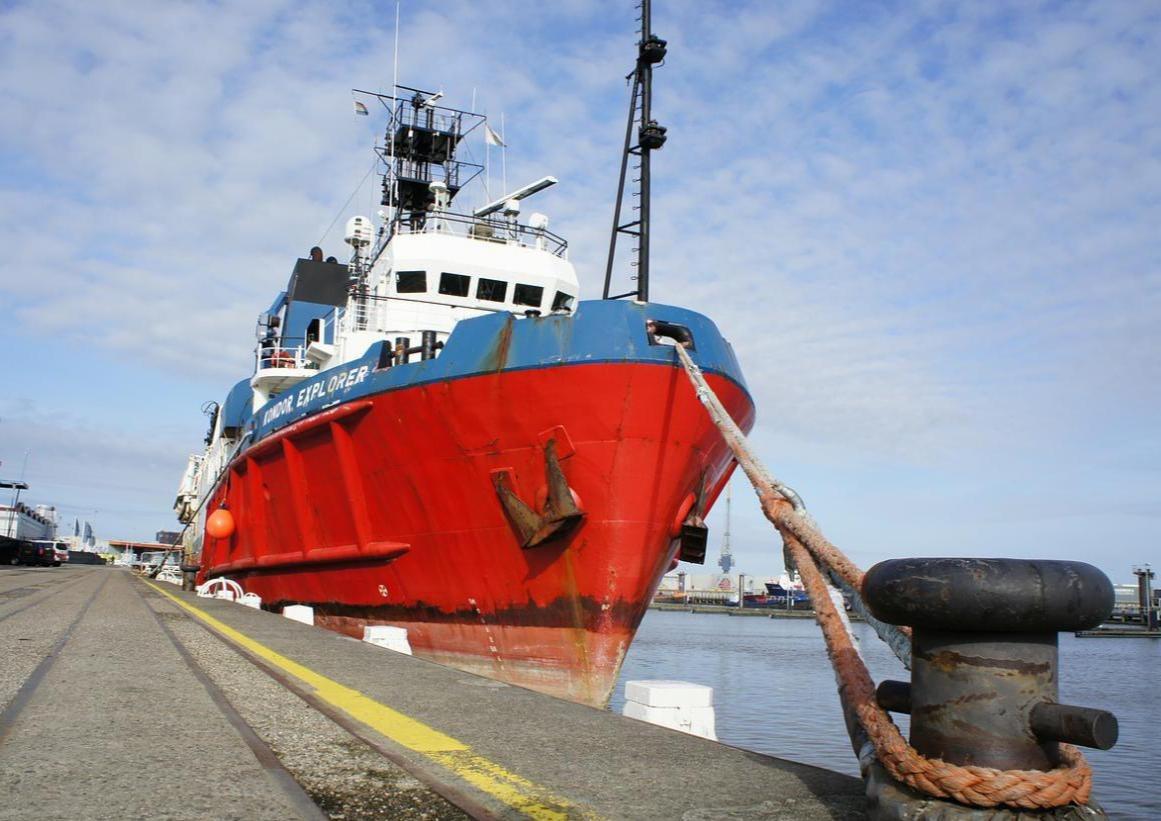
The global mooring equipment market is expanding rapidly as maritime trade grows and port infrastructure ages . With this growth comes a flood of new suppliers—some excellent, others inadequate.
The cost of choosing the wrong supplier:
| Consequence | Impact |
|---|---|
| Bollard failure during storm | Vessel damage, environmental disaster, liability claims |
| Corrosion within 2 years | Premature replacement, operational downtime |
| Inconsistent dimensions | Mooring ropes fail to fit, creating safety hazards |
| Missed delivery deadlines | Construction delays, penalty clauses triggered |
| Missing documentation | Regulatory rejection, port authority fines |
According to procurement data from leading B2B platforms, suppliers with verified status and transparent documentation typically offer significantly lower procurement risk than those without .
The first filter in your evaluation should be what standards the factory actually meets—not what they claim.
Essential Certifications for Mooring Bollards:
The Verification Step:
A certificate alone is not sufficient. Request the full test report from the issuing classification society. Red flags include vague claims like "meets international standards" without specific documentation.
> *"Certification is not a marketing badge—it is a manufacturing discipline."*
A factory's physical capacity directly correlates with its ability to deliver on time and handle large contracts.
What to evaluate:
Example Benchmark:
Leading manufacturers operate facilities with over 50,000 m² of floor space and annual production capacities exceeding 12,000 tons of marine fenders and 6,000 tons of mooring bollards . While not every project requires this scale, it demonstrates the investment level of a serious OEM.
Quality control is not an event—it is a process that should span every stage of production.
QC Components to Verify:
The Testing Protocol:
A reliable factory will have documented procedures for:
- Material verification: Tensile strength, yield strength, chemical composition
- Dimensional inspection: Casting tolerance, mounting hole alignment
- Load testing: Proof load verification per GB/T 554 or international equivalent
> *"Third-party certified products have documented performance, enabling insurance compliance and regulatory acceptance."*
Mooring bollards operate in one of the most corrosive environments on earth—saltwater, spray, and UV exposure.
Material Specifications:
Material Specifications:
| Requirement | Standard | Verification |
|---|---|---|
| Marine-grade steel | AISI 316 stainless or equivalent | Mill test certificates |
| Cast iron options | Grade per GB/T 554 | Hardness testing |
| Welding procedures | Certified per AWS standards | Weld inspection records |
Surface Treatment Verification:
| Treatment | What to Look For |
|---|---|
| Hot-dip galvanization | Uniform coating thickness; ASTM A123 compliance |
| Powder coating | Adhesion test; thickness measurement |
| Passivation (stainless) | Salt spray testing ≥500 hours |
Beyond technical capability, evaluate the factory's business reliability using verifiable metrics.
These metrics serve as proxies for operational maturity. A factory that consistently delivers on time and responds quickly to inquiries is likely to have robust internal processes.
Serious manufacturers welcome audits—by buyers, third-party inspectors, or certification bodies.
What a Professional Factory Audit Covers :
| Category | Key Items |
|---|---|
| Factory profile | Legal registration, ownership structure, certifications |
| Production capabilities | Equipment, capacity, lead times, scalability |
| Quality control | Management systems, defect rates, inspection processes |
| Supply chain | Supplier relationships, inventory management |
| Compliance | Regulatory adherence, product certifications, ethical standards |
Red Flag: A factory that refuses third-party inspections or claims "no need for audits" is signaling operational opacity.
A reliable OEM should be able to provide evidence of successful projects—preferably in markets with similar requirements to yours.
What to Request:
- Export list — Countries and ports where products are installed
- Project references — Contact information for past clients (with permission)
- Case studies — Documented installations, especially challenging ones
According to industry data, established Chinese mooring equipment manufacturers have exported to over 50 countries across North America, Europe, the Middle East, Southeast Asia, Africa, and Australia . This global footprint demonstrates regulatory compliance across multiple jurisdictions.
If you are sourcing as a brand owner, wholesaler, or production facility, the factory's ability to support your brand is critical.
OEM Service Capabilities to Evaluate:
| Service | Description |
|---|---|
| Custom branding | Your logo on products, packaging, and documentation |
| Specification compliance | Your performance requirements, their manufacturing |
| Certification coordination | Your choice of classification society for approval |
| Technical documentation | Custom manuals, installation guides, CAD drawings |
| After-sales support | 24/7 technical assistance availability |
The best OEM partners treat your brand as their own—investing in quality because your reputation depends on it .
| Red Flag | Why It‘s Concerning | Action |
|---|---|---|
| Vague compliance claims | “Meets international standards” without specifics | Request test reports, not certificates |
| No on-time delivery data | May indicate scheduling or capacity issues | Ask for reference checks |
| Refuses third-party inspection | Likely hiding quality issues | Walk away |
| Inconsistent communication | Predicts post-sale support problems | Test responsiveness before committing |
| No documented quality system | Production quality likely inconsistent | Require ISO 9001 evidence |
| Cannot provide material traceability | Risk of substandard alloys or recycled steel | Mandate mill test certificates |
We asked procurement professionals and port engineers about their experience evaluating Chinese OEM factories:
> *"We learned the hard way that price is the worst sole criterion. Our first supplier was 30% cheaper but delivered bollards that failed salt spray testing within 6 months. The second supplier—with proper certifications and audit reports—cost more upfront but saved us from premature replacement costs."*
> — *Procurement Manager, European Marine Supply Company*
> *"The factory audit was a game-changer for us. We visited three facilities before selecting our OEM partner. The one we chose had documented quality procedures, a clean production floor, and welcomed our questions. The others were evasive and disorganized."*
> — *Operations Director, Middle East Port Authority*
> *"Response time told us everything. The supplier that answered our RFQ within 2 hours and provided detailed technical answers turned out to be our most reliable partner. The one that took 5 days to respond? Their delivery delays matched their slow communication."*
> — *Project Manager, Southeast Asian Terminal Developer*
At Nanjing Taidun Marine Equipment Engineering Co., Ltd. , we have structured our operations to meet and exceed every criterion in this evaluation framework.
| Criterion | Taidun‘s Position |
|---|---|
| Certifications | ISO 9001:2015; PIANC 2002 compliance; BV, SGS, LR, CCS approval available |
| Capacity | 20,000+ tons annual output; facilities scaled for large contracts |
| Quality systems | Independent laboratory; physical/chemical testing; PIANC inspection before shipment |
| Material integrity | Full traceability; mill test certificates provided |
| Performance metrics | On-time delivery ≥98%; reorder rate demonstrates client satisfaction |
| Audit readiness | Third-party inspections welcomed; documented quality procedures |
| Global track record | Exports to 80+ countries; reference projects available |
| OEM flexibility | Custom branding, certification coordination, 7/24 technical support |
We serve brand owners, wholesalers, and production facilities worldwide—providing factory-direct pricing, custom engineering, and full certification documentation for both marine rubber fenders and mooring bollards.
How to evaluate the reliability of a Chinese mooring bollard OEM factory comes down to eight criteria: certifications, manufacturing capacity, quality systems, material integrity, operational metrics, audit readiness, global track record, and OEM flexibility.
Do not settle for vague claims. Demand documentation. Verify certifications. Request test reports. And partner with a manufacturer who welcomes scrutiny.
[Contact the Nanjing Taidun Engineering Team] for a factory evaluation package—including our ISO 9001 certificate, sample test reports, and client reference list. We support global brands, wholesalers, and production facilities with OEM mooring bollards and marine fenders.
Q1: What certifications should a reliable mooring bollard OEM factory have?
A: At minimum: ISO 9001:2015 for quality management, compliance with GB/T 554-2023 (the current Chinese national standard), and classification society approvals (ABS, BV, LR, or CCS) for marine applications. For EU buyers, CE marking is also required .
Q2: How can I verify a factory's claimed certifications?
A: Request the full test report from the issuing certification body—not just the certificate. For classification society approvals, contact the society directly (ABS, BV, LR, CCS) to validate the factory's approval status.
Q3: What is a good on-time delivery rate for Chinese OEM factories?
A: Industry benchmarks show that reliable suppliers maintain ≥95% on-time delivery rates. Some top-tier suppliers achieve 100% . Request documented delivery records or platform-verified data.
Q4: Should I conduct a factory audit before placing an order?
A: Yes. For any significant contract, a factory audit is strongly recommended. A professional audit covers legal registration, production capabilities, quality control systems, labor practices, environmental compliance, and supply chain management . If an on-site audit isn't feasible, hire a third-party inspection service.
Q5: What is the difference between GB/T 554-2008 and GB/T 554-2023?
A: GB/T 554-2023 is the current standard, replacing the 2008 version. It specifies requirements for welded steel bollards for sea-going vessels. Always ensure your supplier references the 2023 version, not the outdated 2008 edition .


