

Views: 236 Author: Nanjing Taidun Publish Time: 2026-07-23 Origin: Site
Content Menu
● Why High Tidal Ports Demand Specialized Fender Design
● Nanjing Taidun's OEM Advantage
● Best Fender Types for Tidal Conditions
>> 1. Cone fenders for variable tidal berths
>> 2. Cell fenders for heavy-duty port applications
>> 3. Cylindrical fenders for flexible, general-purpose protection
>> 4. Pneumatic fenders for ship-to-ship and floating contact
● Performance Factors That Matter Most
>> Energy absorption and reaction force
● A Practical Selection Framework
● Engineering Insights from Real Port Use
● Latest Industry Direction: Whole-System Port Safety
● Case-Like Application Scenario
● Why Buyers Choose OEM Manufacturing
● Installation and Maintenance Tips
● FAQ
>> 1. What is the best fender type for high tidal ports?
>> 2. Why are high tidal ports more difficult to protect?
>> 3. Can one fender type solve every tidal port problem?
>> 4. Why does OEM customization matter?
>> 5. How often should marine fender systems be inspected?
>> 6. Does Taidun provide custom marine equipment?
Marine Fender Systems for High Tidal Ports require more than standard impact protection. In ports where water levels rise and fall dramatically, the fender system must maintain safe berthing performance, accommodate vessel movement, and protect both the ship and the quay under changing tidal conditions. At Nanjing Taidun Marine Equipment Engineering Co., Ltd., we design and manufacture OEM marine fender solutions that help global brand owners, wholesalers, and manufacturers achieve reliable, long-life performance in demanding port environments.
High tidal ports create a unique challenge. The berthing point may shift vertically several meters within a single day, while vessel angle, contact height, and mooring load can all change with the tide. A fender system that works well in a stable harbor may underperform in a tidal basin, ferry terminal, river port, or mixed-use terminal where berthing geometry changes constantly. That is why the best solution is not simply "stronger rubber," but a system-level engineering approach.
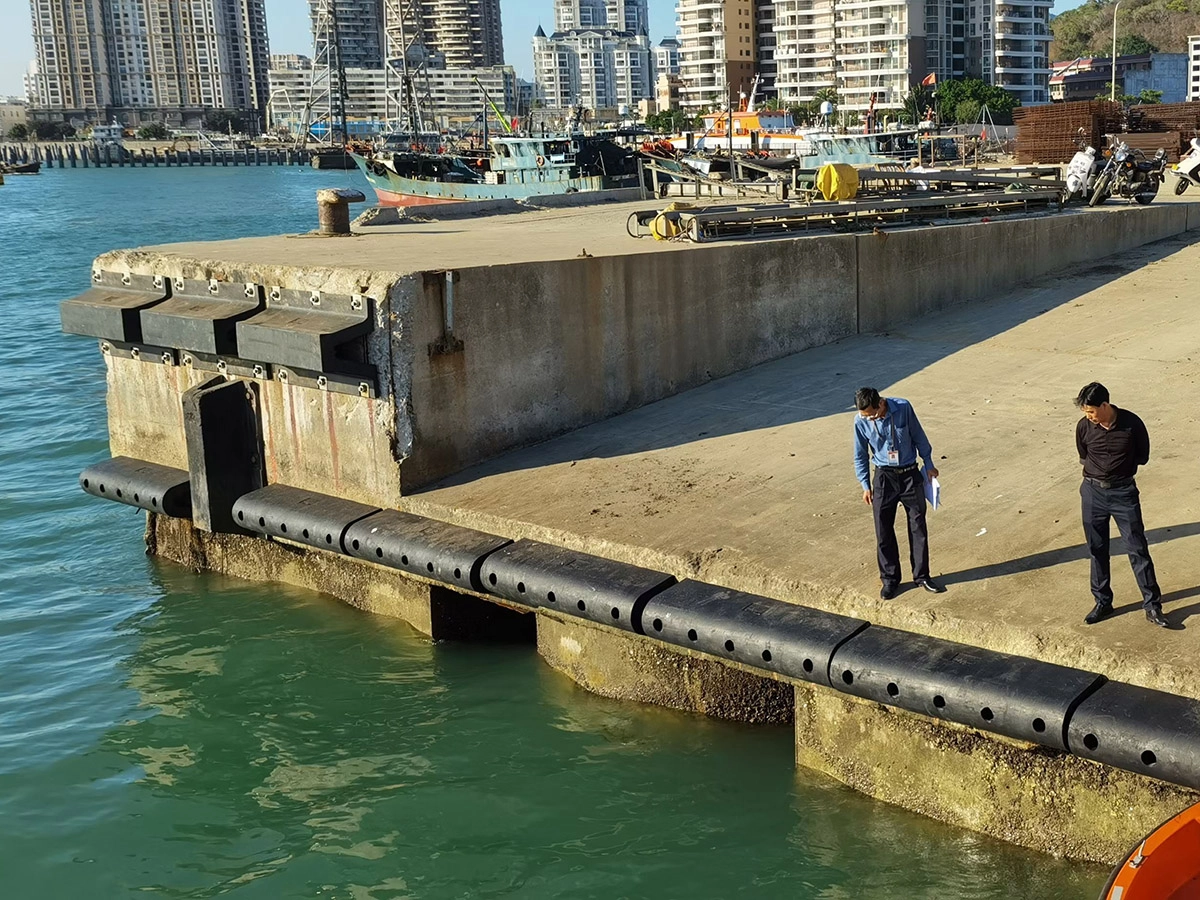
High tidal ports often face a combination of risks: variable vessel approach angles, changing berthing points, stronger shear forces, and more frequent contact with the fender face. If the fender is too rigid, reaction force increases and hull damage risk rises. If it is too soft or poorly positioned, the vessel may bottom out against the quay or miss the effective contact zone entirely.
A properly engineered marine fender system must solve all of these problems at once. It should absorb energy efficiently, remain stable under repeated compression, and maintain predictable performance across a wide tidal range. For port owners, this means fewer maintenance interruptions, improved berth uptime, and lower lifecycle cost.
As a specialized OEM manufacturer, Nanjing Taidun Marine Equipment Engineering Co., Ltd. supports international customers with customized marine rubber fenders, bollards, steel components, and integrated berth protection solutions. Our manufacturing background allows us to adapt product dimensions, performance ratings, materials, and accessories according to project needs.
Our product range includes:
- Super Cell fenders.
- Super Cone fenders.
- Super Arch fenders.
- Cylindrical fenders.
- D type fenders.
- GD type fenders.
- Pneumatic fenders.
- Frontal panels and related accessories.
- Mooring bollards and steel structures.
This breadth matters because a tidal port rarely needs only one component. In many cases, the best outcome comes from combining the right fender type with an appropriate panel, pile arrangement, and mooring layout. That integrated approach is one reason OEM buyers choose a manufacturer rather than a single-product supplier.
Different berth conditions call for different solutions. In high tidal environments, the most important features are high energy absorption, stable reaction force, angular berthing tolerance, and strong shear resistance.
Cone fenders are widely recognized for their ability to handle angular berthing efficiently. They can maintain strong performance even when vessels make contact at changing angles, which makes them especially useful in tidal ports where the contact height shifts through the day. Their geometry also helps them deliver a favorable energy absorption-to-reaction-force ratio.
Cell fenders remain a dependable choice for many ports because of their robustness and consistent behavior under compression. In tidal ports, they are often used where vessel size is significant and berth loads are high. Their durability makes them suitable for locations that experience frequent berthing cycles.
Cylindrical fenders can be useful where a simpler, more adaptable solution is needed. They are often selected for side protection, guide walls, or less complex berth conditions. In some tidal ports, they are part of a multi-layer protection plan rather than the primary energy-absorbing element.
Pneumatic fenders are valuable in floating or highly variable environments. They can help reduce impact stress where vessel movement is less predictable. For tidal ports with specialized operations, they may be used alongside fixed berth systems.
Choosing the right fender is only the first step. What really determines success is whether the system is engineered for the port's real operating conditions.
These two values define whether the fender can absorb impact safely without creating excessive pressure on the ship or structure. In high tidal ports, the right balance is critical because contact geometry changes continuously.
A tidal berth often means the vessel does not meet the quay squarely. Fenders that perform well at angled contact are more practical and more forgiving in real operations.
When tides move vessels vertically relative to the berth, shear loads increase. A good system must resist lateral stress without premature wear or displacement.
A fender system does not work alone. Panel design, anchor spacing, pile configuration, and bollard placement all affect overall performance. That is why a whole-system design approach is essential.
If you are specifying a marine fender system for a high tidal port, use this simple framework.
1. Define the berth profile. Identify vessel types, drafts, approach speeds, and tidal range.
2. Measure the contact envelope. Confirm the minimum and maximum contact height across tide levels.
3. Check angling behavior. Determine whether vessels berth straight, angled, or with frequent lateral movement.
4. Estimate impact load. Match the expected berthing energy to the fender's performance curve.
5. Select the system, not just the fender. Include panels, chains, face pads, anchors, and bollards in the plan.
6. Plan for maintenance. Choose components that allow inspection, replacement, and long-term serviceability.
This framework is especially helpful for overseas OEM buyers because it reduces design ambiguity and improves communication between the port owner, consultant, and manufacturer.
From a manufacturing and project perspective, the most successful high tidal port systems usually share three traits: simple geometry, strong redundancy, and predictable maintenance. Ports with complex geometry often suffer from over-engineered solutions that are difficult to install or inspect. In contrast, the best systems are practical, durable, and built for repeated use.
We have also seen that clients value customization more than standard catalog supply. A berth that handles coastal cargo today may later support ferries, service vessels, or mixed-use traffic. OEM flexibility makes it easier to adapt the system without redesigning the entire structure.
For this reason, a manufacturer should be able to provide not just the product, but also technical coordination, drawing support, and application-specific recommendations. That is the difference between selling rubber and delivering a berth solution.
Across modern port projects, the trend is moving toward system optimization rather than isolated component replacement. Port operators now want longer service life, lower downtime, and more efficient vessel turnaround. This has pushed fender design toward better materials, improved geometry, and integrated safety planning.
In tidal ports, that trend is even more important. Because the berth environment changes every hour, the fender system must perform consistently under variable stress. A solution that performs well only at one tide level is no longer good enough for modern operations.
Consider a ferry terminal with a large tidal swing. At high tide, the vessel may contact the berth at a different elevation than at low tide, and the berthing angle may also change because of current and wind. A cone fender system combined with a properly designed panel and bollard arrangement can help stabilize contact, distribute load, and protect the quay across the full tidal cycle.
This kind of application shows why port engineers should think beyond product catalogs. The right answer is often a complete, site-specific fender package.
OEM buyers usually care about four things: price control, specification control, delivery reliability, and brand consistency. By working with a specialized manufacturer like Nanjing Taidun Marine Equipment Engineering Co., Ltd., buyers can tailor the fender system to the target market while maintaining their own brand positioning.
This is especially useful for:
- Brand owners who need private-label solutions.
- Wholesalers who require stable supply.
- Contractors who need project-specific drawings.
- Manufacturers looking for complementary capacity.
- Port equipment distributors serving multiple regions.
Our production capabilities and marine equipment focus allow us to support both standard orders and customized projects with a practical, export-oriented workflow.
Good product selection can still fail if installation is weak. For high tidal ports, installation quality is just as important as material quality.
- Verify anchor alignment before mounting.
- Confirm the installed contact height matches the tidal operating range.
- Inspect panel surface condition and fasteners regularly.
- Replace worn face pads or connectors before they affect system performance.
- Keep a maintenance record to monitor compression patterns and wear.
Routine inspection is especially important in high tidal zones because repeated vertical movement can accelerate fatigue in accessories and connections.
For high tidal ports, the best marine fender system is one that is engineered for real-world variability, not just laboratory performance. At Nanjing Taidun Marine Equipment Engineering Co., Ltd., we help OEM partners build safer, smarter, and more durable berth protection systems for demanding marine environments.
If you are planning a new port project or upgrading an existing berth, the next step is a custom evaluation of vessel type, tidal range, berth geometry, and performance requirements. A well-designed system can improve safety, reduce maintenance, and deliver stronger long-term value.
Contact Nanjing Taidun Marine Equipment Engineering Co., Ltd. for OEM marine fender system solutions tailored to high tidal ports.
Cone fenders are often a top choice because they handle angular berthing well and maintain strong performance across changing tide levels.
Because vessel contact height, angle, and loading conditions change as the tide rises and falls, which increases the complexity of fender design.
No. The best solution depends on vessel size, berth layout, tidal range, and operational frequency. Many projects need a complete system rather than one product.
OEM customization helps match the exact project requirements while supporting private branding, local market demands, and consistent product supply.
Inspection frequency depends on traffic volume and site conditions, but high tidal ports should be checked regularly for wear, alignment, and accessory damage.
Yes. Nanjing Taidun Marine Equipment Engineering Co., Ltd. provides OEM marine fenders, bollards, steel structures, and related berth protection components.
1. Nanjing Taidun Marine Equipment Engineering Co., Ltd. official website: [https://www.taidunmarine.com/]
2. Nanjing Taidun Marine Equipment Engineering Co., Ltd. contact page: [https://www.taidunmarine.com/contactus.html]
3. Made-in-China company profile for Nanjing Taidun Marine Equipment Engineering Co., Ltd.: [https://cd3387345a5ffb61.en.made-in-china.com/]
4. Trelleborg marine fender overview: [https://www.trelleborg.com/en/marine-and-infrastructure/products-solutions-and-services/marine/marine-fenders]
5. Port Suppliers Group cone fender page: [https://www.portsuppliers.se/en/produkter/multi-purpose-fenders/psg-cone-fender/]
6. AMF Marine rubber fender systems page: [https://amf-marine.com/product/rubber-fender-systems/]
Hot Tags: China, Global, OEM, private label, manufacturers, factory, suppliers, manufacturing company


