

Views: 425 Author: Nanjing Taidun Publish Time: 2026-05-20 Origin: Site
Content Menu
● What Are Pneumatic Rubber Fenders? A Brief Overview
● The Critical Role of Shipyards in Large Vessel Operations
● The 6 Key Advantages of Pneumatic Rubber Fenders for Shipyard Docking
>> 1. High Energy Absorption with Low Reaction Force
>> 2. Natural Buoyancy—Perfect for High Tidal Ranges
>> 3. Portable, Deflatable, and Easy to Deploy
>> 4. Adaptability to Inclined Berthing and Vessel Motion
>> 5. Low Maintenance and Long Service Life
>> 6. Compliance with International Standards
● Case Study: Large-Scale Pneumatic Fender Deployment in a Major Shipyard
● Pneumatic vs. Foam-Filled Fenders for Shipyard Docking
● User Feedback—Real-World Perspectives from Shipyard Operators
● How Nanjing Taidun Supports Your Shipyard Fender Needs
● Frequently Asked Questions (FAQ)
When a 300,000-ton VLCC or an LNG carrier enters a shipyard for repair or construction, the margin for error is zero. The massive steel hulls—often worth hundreds of millions of dollars—must be guided safely into dry docks or alongside repair berths without damaging the vessel, the dock structure, or the workers involved.
This is where pneumatic rubber fenders prove their worth.
I have spent two decades manufacturing OEM rubber fender systems and mooring bollards for global brands. In this guide, I will explain the advantages of pneumatic rubber fenders for large vessel shipyard docking—drawing on technical specifications, real-world project case studies, and user feedback from the industry.
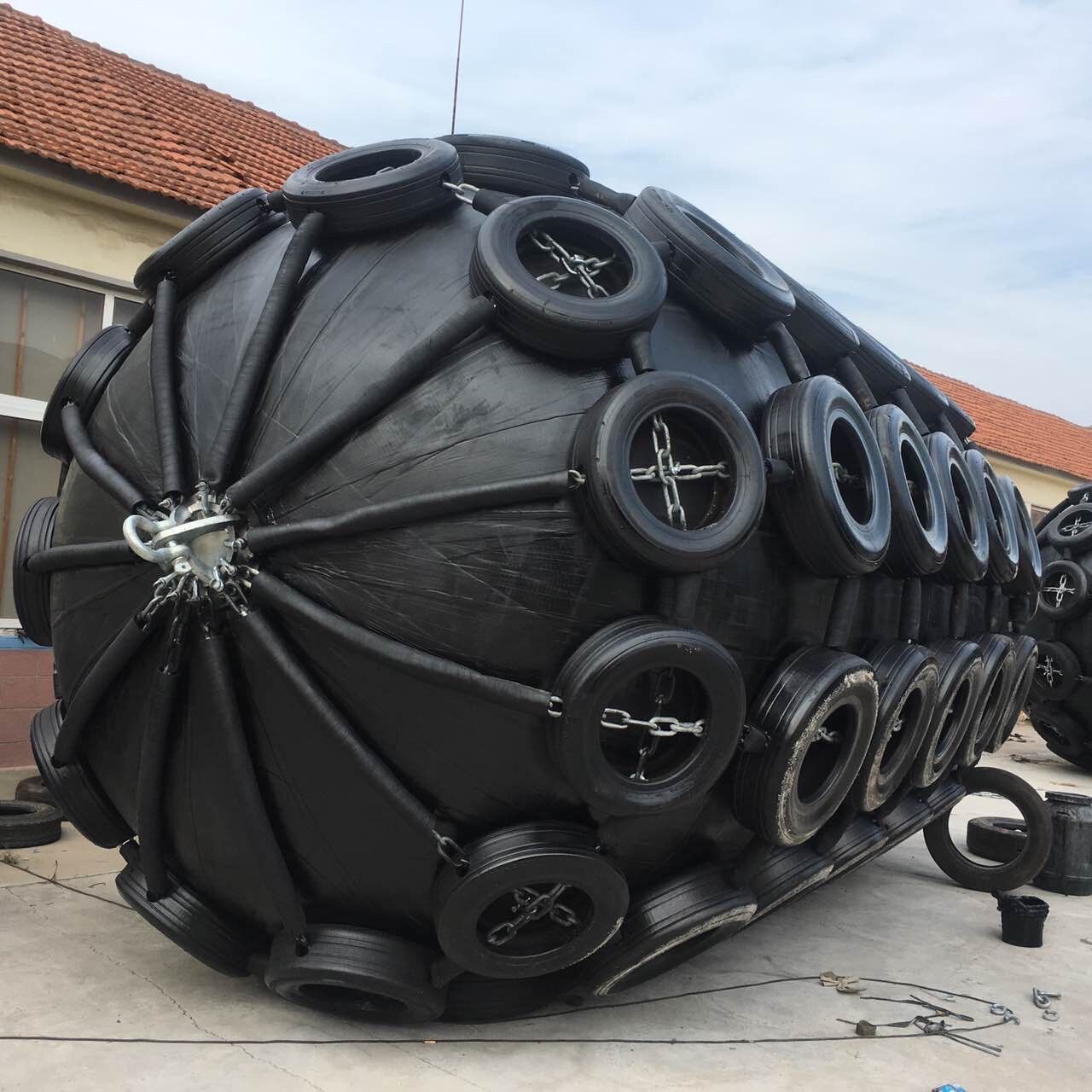
Pneumatic fenders—widely known as Yokohama-type fenders—are floating rubber buffers filled with compressed air . They consist of:
| Component | Material | Function |
|---|---|---|
| Inner bladder | Airtight rubber | Contains compressed air |
| Reinforcement layers | High-strength synthetic tire cord | Provides structural integrity under pressure |
| Outer shell | Abrasion-resistant rubber | Protects against UV, seawater, and impact damage |
| Protective cover | Chain-tire net or sling system (optional) | Reduces surface abrasion |
When a vessel makes contact, the fender compresses and the trapped air acts as a shock absorber—absorbing kinetic energy and returning the vessel gently . This "soft resistance" is what makes pneumatic fenders ideal for large vessels with sensitive hull coatings or structural constraints .
Shipyards face unique challenges that differ significantly from standard commercial ports:
| Challenge | Impact on Fender Selection |
|---|---|
| Irregular vessel shapes | Dry docking requires fenders that conform to variable hull geometries |
| Tidal variations | Shipyards in coastal locations experience water level changes of 5–10 meters |
| Precision positioning | Vessels must be moved slowly and accurately—not just “stopped” |
| Temporary installations | Fenders may be deployed for specific projects, then relocated |
| High-value assets | Repair costs for hull damage during docking can exceed $1 million |
These challenges demand pneumatic rubber fenders—specifically designed for flexibility, low reaction force, and ease of deployment .
The physics of safe docking: When a large vessel approaches a dry dock, it carries enormous kinetic energy. The fender system must absorb that energy without transferring excessive force back to the hull.
Pneumatic advantage: Because pneumatic fenders use compressed air rather than solid rubber or foam, they absorb energy progressively—with minimal impact to the vessel .
| Fender Type | Energy Absorption | Reaction Force | Hull Impact |
|---|---|---|---|
| Pneumatic | High | Low | Gentle—ideal for sensitive coatings |
| Solid rubber | Moderate | High | Abrasive—can damage paint |
| Foam-filled | Very high | Moderate | Moderate |
> *"Pneumatic fenders deliver lower reaction forces, which means less stress on a vessel's hull—great for sensitive or lightweight vessels."*
Why this matters for shipyards: During dry docking operations, vessels often have exposed bare steel or specialized anti-fouling coatings. High reaction forces can damage these surfaces, leading to expensive rework.
Most large shipyards are located in coastal areas with significant tidal variations—some exceeding 8 meters between high and low tides.
The problem with fixed fenders: A fender mounted at mean high water may be completely submerged or entirely above the waterline at low tide, offering zero protection.
Pneumatic advantage: Pneumatic fenders are fully buoyant and float on the water's surface . They rise and fall with the tide, maintaining optimal positioning at the vessel's waterline regardless of tidal stage .
> *"Unlike fixed fendering, the floating fender can rise and fall with changing water levels."*
Applications in shipyards:
- Dry dock entrance guidance
- Floating dock berthing
- Repair berth mooring
Shipyard operations often require temporary fendering solutions—for a specific vessel, a specific repair project, or an emergency docking.
Pneumatic advantage: Pneumatic fenders can be:
- Deflated for compact transport – Reducing shipping volume by up to 80%
- Quickly re-inflated on-site – Using standard air compressors
- Relocated without heavy equipment – Smaller units can be moved by hand
This portability is particularly valuable for:
- Shipyards with multiple dry docks – Sharing fenders across facilities
- Emergency repairs – Rapid deployment to damaged vessels
- Project-specific requirements – Unique vessel geometries requiring custom fender configurations
Large vessels rarely approach a dock perfectly perpendicular. Wind, current, and operator technique all create berthing angles—typically 3° to 15°.
Pneumatic advantage: Pneumatic fenders perform effectively even at angles up to 15° . The sling-type configuration, in particular, allows angled contact without slipping—reducing localized stress on both the vessel and dock structure .
> *"Sling type fenders allow angled contact without slipping, which reduces localized stress on the dock structure."*
Why this matters for shipyards: Tugboats maneuvering large vessels into dry docks often push at angles. Pneumatic fenders accommodate this motion while maintaining consistent protection.
Shipyard operations are continuous and demanding. Fenders that require frequent maintenance create operational bottlenecks.
| Maintenance Requirement | Pneumatic | Foam-Filled | Solid Rubber |
|---|---|---|---|
| Annual pressure check | Yes | No | No |
| Surface inspection | Visual | Visual | Visual |
| Re-inflation | As needed | N/A | N/A |
| Major repair frequency | Every 5–10 years | Every 10–15 years | Every 5–8 years |
Pneumatic advantage: While pneumatic fenders require annual pressure checks (ISO 17357-1:2014 compliant units include safety valves), this maintenance is minimal compared to the structural repairs needed when inadequately protected vessels strike dock walls .
For shipyards operating internationally—or serving classed vessels—certification matters.
Pneumatic advantage: Quality pneumatic fenders comply with ISO 17357-1:2014, which specifies:
- Guaranteed Energy Absorption (GEA) ratings
- Material and performance requirements
- Testing and inspection protocols
- Safety valve specifications for fenders >2.5m diameter
Third-party certifications available:
- ABS (American Bureau of Shipping)
- BV (Bureau Veritas)
- DNV (Det Norske Veritas)
- LR (Lloyd's Register)
- CCS (China Classification Society)
> *"All quality pneumatic fenders meet strict rules for design, testing, guaranteed energy absorption (GEA), internal pressure, materials, and safety valves."*
The value of pneumatic fenders for large vessel shipyard docking is best illustrated through real-world application.
Project: Joubert Dock, Saint-Nazaire Port, France
| Parameter | Details |
|---|---|
| Location | Saint-Nazaire Port, French Atlantic coast |
| Application | Joubert dock (“Normandie lock”)—a lock gate that drains to function as a dry dock |
| Vessel served | MSC World America (333 m long × 47 m wide) |
| Challenge | 50-meter-wide lock requires precise vessel guidance through confined space |
| Solution deployed | 17 sets of pneumatic fenders (3,300×6,500 mm and 2,000×3,000 mm) + rolling foam fenders |
Why pneumatic fenders were selected: According to NANJING TAIDUN, which delivered the customized solution, pneumatic fenders were chosen for their versatility, durability, and ease of storage—critical factors for a facility that must accommodate vessels of varying sizes accessing the port .
Outcome: Saint-Nazaire Port is now equipped to handle the next generation of large vessels safely and efficiently.
Both pneumatic and foam-filled fenders have their place. Understanding when to choose each is essential for optimal shipyard protection .
| Use Case | Recommended Fender | Why |
|---|---|---|
| Large vessel dry docking | Pneumatic | Low hull pressure; adapts to tidal changes |
| Ship-to-ship transfers near yards | Pneumatic | Floats; easy to deploy between vessels |
| Permanent dock faces | Foam-filled | Lower long-term maintenance; rugged |
| Temporary/emergency berthing | Pneumatic | Deflatable; portable; rapid deployment |
| Harsh weather / high waves | Foam-filled | More rugged; better damage resistance |
| Sensitive hull coatings | Pneumatic | Lower reaction force; gentler impact |
> *"For offshore platforms, LNG terminals, and ship-to-ship transfers—pneumatic fenders are recommended for their flexibility, low hull pressure, and adaptability to varied tide conditions."*
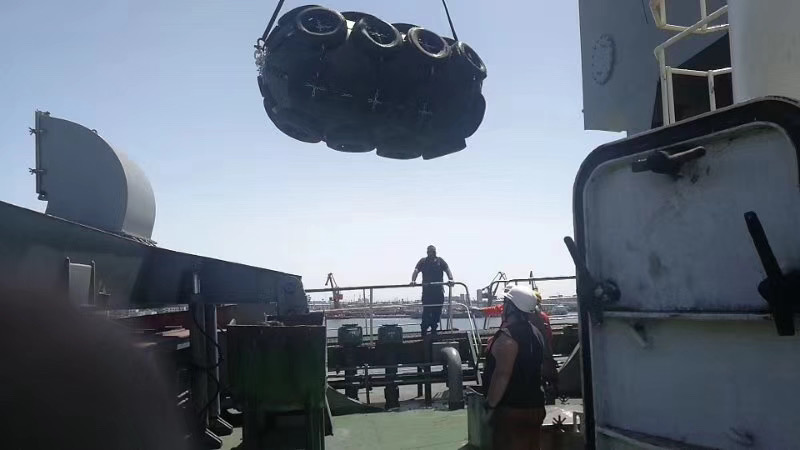
We asked our global OEM clients about their experience with pneumatic fenders in shipyard docking operations:
> *"We used solid rubber fenders for years at our dry dock entrance. The vessels always complained about paint damage during positioning. Switching to pneumatic fenders eliminated that issue entirely. The low reaction force makes a real difference."*
> — *Facility Manager, Southeast Asian Shipyard*
> *"Our biggest challenge is the 7-meter tidal range. Fixed fenders are useless at low tide. Pneumatic fenders float with the vessel—problem solved."*
> — *Port Engineer, European Shipyard*
> *"We deploy pneumatic fenders for temporary repair berths. Being able to deflate them for storage and re-inflate on-site is a game-changer. We've saved thousands in crane rental costs."*
> — *Operations Director, Middle East Ship Repair Facility*
> *"The ISO 17357 certification gave us confidence. We had a supplier years ago whose fenders failed pressure tests. Now we only buy certified units with third-party inspection reports."*
> — *Procurement Manager, North American Shipyard*
At Nanjing Taidun Marine Equipment Engineering Co., Ltd. , we understand that advantages of pneumatic rubber fenders for large vessel shipyard docking must be backed by quality manufacturing and reliable certification.
Our pneumatic fender capabilities include:
| Service | Description |
|---|---|
| ISO 17357-1:2014 compliance | Full certification with GEA testing |
| Sling-type or chain-net configuration | Choose based on your abrasion concerns |
| Custom sizes | Diameters from 500mm to 4,500mm+; lengths to 12,000mm |
| Pressure options | Pneumatic 50 (50 kPa) or Pneumatic 80 (80 kPa) |
| Third-party inspection | ABS, BV, DNV, LR, CCS witness testing available |
| Complete accessories | Mooring bollards, shackles, chains, inflation valves |
We serve brand owners, wholesalers, and production facilities in over 80 countries. When you partner with Taidun, you get factory-direct pricing, full certification documentation, and engineering support for your specific docking requirements.
The advantages of pneumatic rubber fenders for large vessel shipyard docking are clear: high energy absorption with low reaction force, natural buoyancy for tidal variations, portability for temporary deployments, adaptability to angled berthing, low maintenance requirements, and full compliance with international standards (ISO 17357-1:2014).
For shipyards handling VLCCs, LNG carriers, container ships, or specialized naval vessels—pneumatic fenders are the optimal choice for safe, efficient, and cost-effective docking operations.
[Contact the Nanjing Taidun Engineering Team] for a free consultation. Send us your vessel specifications and docking requirements, and we will recommend the optimal pneumatic fender size, pressure rating, and protective covering for your shipyard application.
Q1: What is the difference between pneumatic and foam-filled fenders for shipyard use?
A: Pneumatic fenders use compressed air for energy absorption—they offer lower reaction force, natural buoyancy, and can be deflated for transport. Foam-filled fenders use closed-cell foam—they require no pressure maintenance and are more rugged but have higher reaction force. For shipyard docking with sensitive hulls, pneumatic is often preferred .
Q2: How do I determine the correct pneumatic fender size for my shipyard?
A: Fender size is determined by vessel tonnage, berthing speed, and required energy absorption. As a rule: for vessels over 50,000 DWT, pneumatic fender diameter should be 5-10% of vessel beam. For VLCCs (>200,000 DWT), diameters of 3,300mm to 4,500mm are typical .
Q3: Do pneumatic fenders require a chain-tire net for shipyard use?
A: Not necessarily. Sling-type pneumatic fenders use reinforced strap systems instead of chain-tire nets—offering lighter weight, easier handling, and reduced surface abrasion. For high-abrasion environments or permanent installations, chain-tire nets provide additional durability .
Q4: How often should pneumatic fenders be inspected?
A: ISO 17357-1:2014 requires annual pressure checks and visual inspections. Safety valves on fenders >2.5m diameter should be calibrated every 2 years. For fenders in continuous shipyard use, more frequent visual inspections are recommended .
Q5: Can pneumatic fenders be used for both dry dock entrance protection and alongside repair berths?
A: Yes. Pneumatic fenders are versatile enough for both applications. For dry dock entrance guidance, larger fenders (3,000mm+ diameter) provide the necessary energy absorption. For alongside repair berths, smaller units (1,500–2,000mm) are typically sufficient .


