

Views: 425 Author: Nanjing Taidun Publish Time: 2026-05-07 Origin: Site
Content Menu
● What Is a Steel Frontal Panel and Why Is It Critical?
>> Key Components of a Frontal Panel System
>> Why Tidal Range Changes Everything
● Load Distribution and Hull Pressure Management
>> Hull Pressure Limits by Vessel Type (PIANC Guidelines)
>> Hull Pressure Calculation Formula
>> Real-World Tidal Challenge – The Vertical Load Problem
● Frontal Panel Structural Types – Open vs. Closed
>> Real-World Project – Igoumenitsa Port, Greece (2025)
● UHMW-PE Pads – The Critical Sliding Surface
>> Why UHMW-PE?
>> Pad Thickness Selection for Tidal Applications
>> Patented Innovation – The SISO (Slide-In, Slide-Out) System
● Steel Material Selection for Marine Environments
>> Plate Thickness Requirements
>> Minimum Mechanical Property Requirements
● Corrosion Protection – The Most Critical Factor
>> Recommended Corrosion Protection Systems
>> Surface Preparation Standard
● Strength Calculation – Finite Element Analysis
>> Input Parameters for Tidal Applications
>> Stress Distribution Cloud Diagrams
● Design Requirements Checklist
● User Feedback – Real-World Perspectives
● How Nanjing Taidun Supports Your Frontal Panel Needs
● Frequently Asked Questions (FAQ)
In ports with extreme tidal ranges—where water levels can fluctuate by 8 meters or more between high and low tide—fixed fendering systems face a fundamental problem. A fender positioned at mean high water may be completely inaccessible at low tide. A vessel berthing at low tide may contact the quay wall below the fender.
This is where designing steel frontal panels for extreme tidal ranges becomes a critical engineering challenge.
I have spent two decades manufacturing OEM rubber fender systems and steel frontal panels for global brands. In this guide, I will walk you through the engineering principles, design calculations, material selection criteria, and real-world solutions for frontal panels that must perform reliably across the full tidal spectrum.
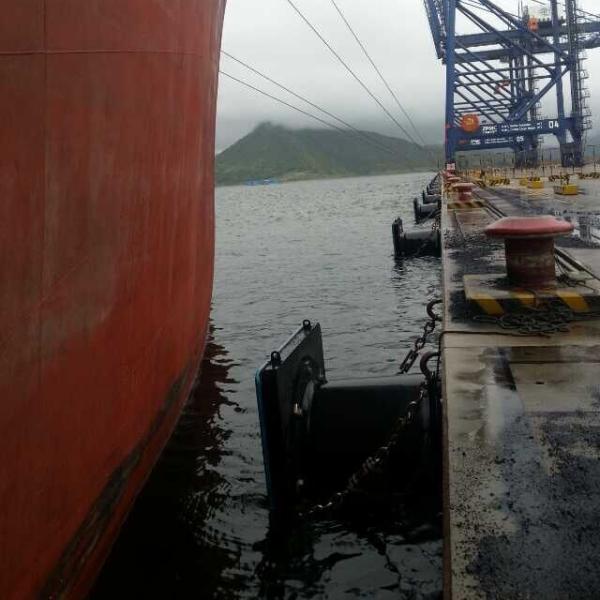
A steel frontal panel (also called frontal frame, steel facing panel, or fender panel) is a rigid steel structure mounted on the face of a rubber fender. It serves as the direct contact point between the fender system and the vessel hull .
| Component | Function |
|---|---|
| Steel Frame | Provides structural rigidity and load transfer to rubber fender |
| UHMW-PE Pads | Low-friction sliding surface; protects hull and reduces shear forces |
| Fastening System | Bolts, capnuts, or recessed hardware securing pads to frame |
| Mounting Brackets | Connect frontal panel to rubber fender or quay structure |
In tidal applications, the frontal panel must accommodate vertical movement of the vessel as it rises and falls with the tide. The low-friction UHMW-PE pad allows the hull to slide vertically against the panel without damaging either the vessel or the fender system .
In standard berths, the frontal panel's primary job is load distribution —spreading the rubber fender's reaction force across the vessel's hull.
In extreme tidal range environments, the frontal panel has three jobs:
1. Load distribution – as above
2. Vertical sliding interface – UHMW-PE pads must maintain low friction across the full tidal stroke
3. Chamfer and edge protection – Prevents hull belting from catching beneath panel edges at low tide
The most fundamental design requirement for any steel frontal panel is keeping hull pressure within safe limits.
The following limits are based on PIANC recommendations and are essential references when designing steel frontal panels for extreme tidal ranges :
| Vessel Type | Allowable Hull Pressure (kN/m²) |
|---|---|
| Container vessels (1st–2nd generation) | < 400 |
| Container vessels (3rd generation / Panamax) | < 300 |
| Container vessels (5th–6th generation / Super Post-Panamax) | < 200 |
| General cargo vessels (>20,000 DWT) | < 400 |
| Oil tankers (>60,000 DWT) | < 350 |
| VLCC | < 350 |
| Gas Carriers (LNG/LPG) | 100–200 |
| Bulk carriers | < 200 |
| Coastal tankers | 250–350 |
The permissible hull pressure is calculated using the following formula :
> P = ΣR / (A₁ × B₁) ≤ Py
Where:
| Variable | Meaning | Units |
|---|---|---|
| P | Actual hull pressure | kN/m² |
| ΣR | Sum of maximum reaction forces of all fenders in one system | kN |
| A₁ | Valid panel width (excluding lead-in chamfers) | m |
| B₁ | Valid panel height (excluding lead-in chamfers) | m |
| Py | Allowable hull pressure (from table above) | kN/m² |
In extreme tidal ranges, the vessel's contact point on the frontal panel changes dramatically. At high tide, the hull may contact the upper portion of the panel. At low tide, it may contact the lower portion.
This means the entire panel surface must be designed to handle the maximum reaction force at any contact point —not just at the center.
> *"The design of the steel panels should be comply to the actual berthing condition. The bearing strength of the steel panel is related to many factors such as vessel type, berthing method, performance of the rubber fender, tidal range etc."*
Engineering implication: The panel's internal stiffeners must be distributed to prevent local deflection regardless of where the vessel contacts.
When designing steel frontal panels for extreme tidal ranges, the choice between open and closed construction significantly impacts performance.
Construction: Consists of facing panel, longitudinal girders, and cross girders .
| Advantages | Limitations |
|---|---|
| Lighter weight | Lower torsional rigidity |
| Lower initial cost | All surfaces exposed to corrosion |
| Easy inspection access | Reduced edge load resistance |
Best for: Low-energy berths, budget-constrained projects, small craft harbors.
Construction: Fully welded, sealed perimeter, internal stiffeners, back panel enclosing the structure .
| Advantages | Limitations |
|---|---|
| Superior torsional rigidity | Higher weight |
| Enhanced corrosion protection (sealed interior) | Higher fabrication cost |
| Excellent edge load resistance | Complex manufacturing |
| Water cannot penetrate and rust internal surfaces | — |
Best for: High-energy container terminals, exposed locations, large vessel traffic, and extreme tidal range applications where the panel may be submerged and exposed repeatedly .
> *"We recommend the closed configuration due to its superior strength, excellent corrosion resistance, and prolonged service life."*
The Igoumenitsa Port expansion—one of Greece's most important transport hubs—required frontal panels capable of handling both Ro-Ro vessels and ferries in a tidal environment. Nanjing Taidun delivered 26 Cone Fender Systems with closed-box frontal panels measuring 2,050 x 2,750 mm .
> *Critical design feature:* The steel panels were designed with large chamfers to prevent hull beltings from getting caught beneath panel edges—a common risk in tidal berths. Additionally, shear chains were incorporated to absorb horizontal forces during berthing.
> *"The selected models were specifically adapted to ensure optimal performance and adaptability, providing a reliable solution for mixed-traffic operations."*
> — *Marine Construction Magazine, reporting on Igoumenitsa Port expansion*
In extreme tidal range applications, the UHMW-PE (Ultra-High Molecular Weight Polyethylene) pad is arguably the most critical component of the frontal panel system.
UHMW-PE provides the low-friction interface that allows vessels to slide vertically against the panel as the tide changes .
| Property | Value / Benefit |
|---|---|
| Coefficient of friction | Self-lubricating, <0.2 |
| Abrasion resistance | 10x better than carbon steel |
| UV & ozone resistance | Does not degrade in marine environments |
| Impact strength | 150-200 kJ/m², will not crack under impact |
| End of life | 100% recyclable |
In tidal environments, the vessel slides vertically across the pad surface repeatedly. Thicker pads are recommended to accommodate this additional wear :
| Thickness | Expected Service Life | Best Application |
|---|---|---|
| 20-30 mm | 5-10 years | Low-traffic, small vessels |
| 40-60 mm | 10-15 years | Medium-traffic commercial |
| 70-100 mm | 15-25 years | High-traffic terminals, extreme tidal ranges, large vessels |
> *"UHMW fender facings bolted or bonded to a fender front creates an unbreakable, low friction shield which protects surfaces from impact and abrasion."*
One of the most significant innovations for tidal berth maintenance comes from the patented SISO system .
The Problem with Traditional Pad Replacement:
- Pads are bolted directly to a fixed frontal frame
- Replacement requires berth shutdown (1-2 days per pad)
- Workboats and divers are required (safety risks)
The SISO Solution:
1. UHMW-PE pads are bolted onto stainless steel removable panels
2. These panels slide into guide rails on the front face of the fixed frame
3. Worn panels are lifted out and replacements inserted within two hours
> *"The sliding panels can then be easily lifted out of the frontal frame and replacements reinserted within two hours – reducing downtime on the berth and keeping operations running punctually."*
Real-World Installation – Dampier, Western Australia:
The SISO system is now in operation at a site in Dampier, Western Australia. By removing final assembly from the offshore environment, both time and labor costs were considerably reduced .
Marine environments are extremely corrosive. When designing steel frontal panels for extreme tidal ranges, material selection directly impacts service life.
| Steel Grade | Application | Expected Service Life |
|---|---|---|
| Q235B / A36 / SS400 | Small to medium ports, vessels <5,000 tons | 10-15 years (with coating) |
| Q355B / S355JR / A572 Gr50 | Large commercial ports, container terminals | 15-20 years (with coating) |
| Corten A/B | High-corrosion environments, offshore terminals | 20-25 years (minimal maintenance) |
| 316L Stainless Steel | Chemical ports, LNG terminals, ultra-corrosive | 30+ years (no coating) |
PIANC provides the following minimum thickness guidelines for steel fender panels :
| Panel Component | Recommended Minimum Thickness |
|---|---|
| Plates exposed on two surfaces | ≥12 mm |
| Plates exposed on one surface | 9–10 mm |
| Internal members (not exposed) | 8 mm |
| Large fenders (cone, cell) | 20–50 mm |
| Property | Carbon Steel | HSLA Steel |
|---|---|---|
| Yield Strength (ReL) | ≥235 MPa | ≥355 MPa |
| Tensile Strength (Rm) | 375–500 MPa | 490–650 MPa |
| Elongation (A) | ≥21% | ≥21% |
| Impact Toughness at -20°C | ≥34J | ≥34J |
> *"Marine-grade steels like AH36, DH36 or stainless steel variants provide the necessary strength-to-weight ratios and corrosion resistance."*
In tidal zones, steel panels are alternately submerged (low tide) and exposed to air and UV (high tide). This cyclical wet-dry exposure is the most corrosive environment for steel structures.
| System | Process | Service Life |
|---|---|---|
| Hot-Dip Galvanizing | Sa 2.5 blast + min 85μm zinc coating | 15–20 years |
| Three-Layer Organic Coating | Epoxy zinc-rich primer (80-100μm) + epoxy intermediate (100-120μm) + polyurethane topcoat (60-80μm) | 10–15 years |
| Weathering Steel (Corten) | Forms protective patina naturally | 20–25 years |
| Stainless Steel (316L) | No coating required | 30+ years |
| Closed-box + Sacrificial Anodes | Sealed interior + zinc anodes on exterior | 20–25 years |
Regardless of coating system, surface preparation must meet ISO 8501-1 Sa 2.5 (near-white metal blast cleaning) :
- All rust, mill scale, and old coating removed
- Surface appears clean white metal with slight gray staining
- Proper anchor profile for coating adhesion
For marine frontal panels, compliance with the following standards is recommended :
- AWS – American Welding Society (welding procedures)
- SSPC – Steel Structures Painting Council (coating application)
- AISC – American Institute of Steel Construction (structural fabrication)
Modern frontal panel design relies on Finite Element Analysis (FEA) to validate structural integrity under tidal loading conditions .
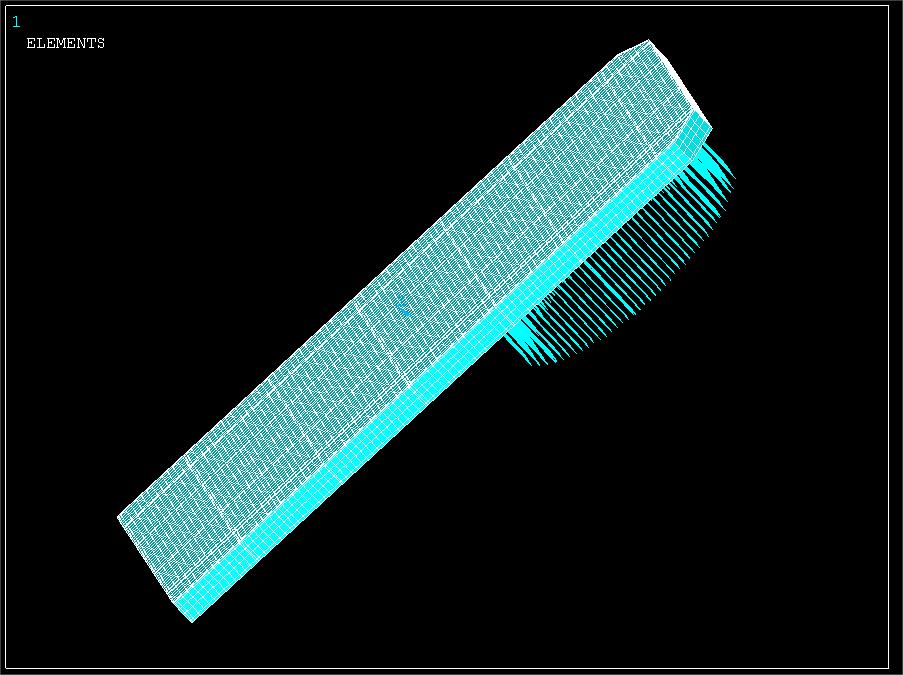
Using software like ANSYS, engineers simulate :
- Stress distribution in X, Y, and Z directions
- Deformation under various berthing angles
- Local buckling risks at contact points
- Fatigue life under cyclic loading
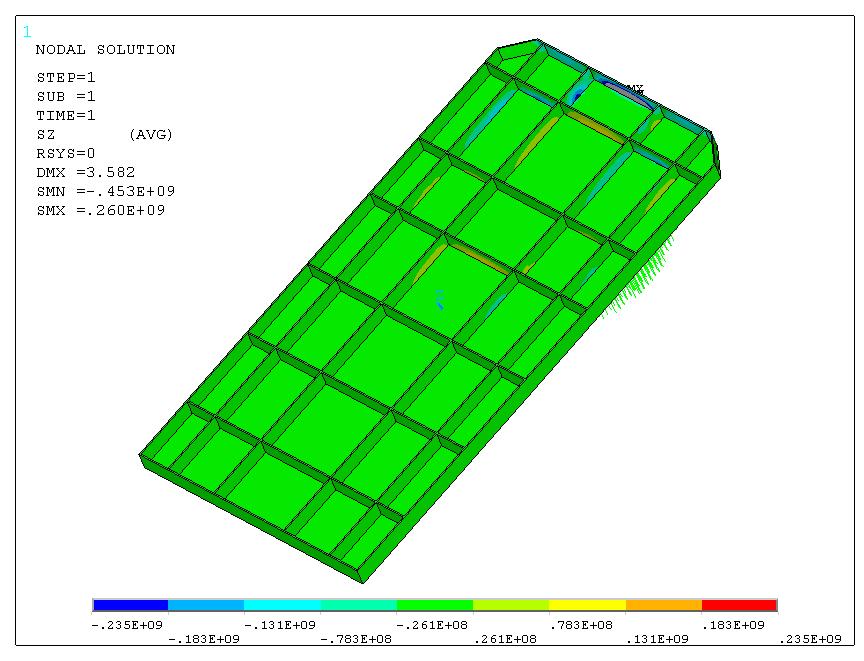
When designing steel frontal panels for extreme tidal ranges, FEA must account for:
- Construction of the terminal (quay geometry)
- Ship tonnage level
- Loaded draft at high vs. low tide
- Wind speed and wave crowding force
- Effective impact energy at different tidal levels
- Mooring wave rolling impact energy
> *"After simulation, we will confirm whether it is corrected through the software, final confirmed, we can sure the frontal frame and accessories' final design."*
FEA generates stress distribution visualizations that help engineers identify:
- Hot spots where stress concentrates
- Deflection patterns under maximum load
- Rib and bottom plate stress distribution
Before finalizing your frontal panel design for a tidal berth, verify these requirements :
| Requirement | Verification Method |
|---|---|
| Resistance to bending moments and shear forces | FEA validation |
| Resistance to local impact | Impact simulation |
| No deflection during compression | Load-deflection analysis |
| Corrosion protection for intended environment | Coating specification + ISO 8501-1 |
| Hydrodynamic load management | Tidal flow analysis |
| Proper hull pressure distribution | P = ΣR/(A₁×B₁) ≤ Py calculation |
| Sufficient chamfers to prevent hull catching | Edge geometry review |
| Accessible pad replacement (e.g., SISO system) | Maintenance plan verification |
We asked our global OEM clients about their experience with frontal panels in tidal environments. Here is what they shared:
> *"Our port has a 7-meter tidal range. Before we switched to closed-box frontal panels with UHMW-PE, we were replacing steel frames every 5 years due to internal corrosion. The sealed design has changed everything—we're at year 8 with no structural issues."*
> — *Port Engineer, European Deep-Water Terminal*
> *"The SISO pad replacement system is a game changer for tidal berths. We used to shut down a berth for two days to replace worn pads. Now we do it in two hours during a vessel gap. The ROI was less than 12 months."*
> — *Maintenance Manager, Southeast Asian Container Terminal*
> *"We learned the hard way that coating alone isn't enough in the tidal splash zone. The constant wet-dry cycle destroyed our paint within three years. We switched to hot-dip galvanizing plus topcoat, and now we're at year seven with no rust."*
> — *Facility Director, Middle East Port Authority*
At Nanjing Taidun Marine Equipment Engineering Co., Ltd. , we combine PIANC guidelines, ISO standards, and patented innovations to deliver steel frontal panels designed for the most demanding tidal environments .
Our frontal panel capabilities include:
| Service | Description |
|---|---|
| Closed-box or open-frame design | Based on your berthing energy and tidal range |
| UHMW-PE pads | 20-100mm thickness; double-sintered, virgin, or standard grade |
| SISO slide-in system | Patented two-hour pad replacement |
| FEA validation | ANSYS stress analysis with full documentation |
| Corrosion protection | Hot-dip galvanizing, three-layer coating, or 316L stainless steel |
| Third-party certification | ABS, BV, DNV, LR, CCS available |
We serve brand owners, wholesalers, and production facilities in over 80 countries. When you partner with Taidun, you get engineering expertise, certified quality, and full design documentation.
Designing steel frontal panels for extreme tidal ranges requires mastering hull pressure calculations, selecting between open and closed construction, specifying UHMW-PE for low-friction sliding, choosing marine-grade steel, implementing robust corrosion protection, and validating with FEA.
The stakes are high. A failed frontal panel means hull damage, berth downtime, and expensive repairs.
[Contact the Nanjing Taidun Engineering Team] for a free frontal panel design consultation. Send us your tidal range, vessel types, and berthing energy requirements, and we will provide a complete design package with FEA validation and corrosion protection specification.
Q1: What is the difference between open and closed frontal panels?
A: Open panels have exposed internal stiffeners and are lighter and cheaper but more prone to corrosion. Closed-box panels are fully welded and sealed, providing superior corrosion protection and torsional rigidity—ideal for tidal environments .
Q2: What is the minimum steel thickness for fender panels per PIANC?
A: PIANC recommends plates exposed on two surfaces: ≥12 mm; plates exposed on one surface: 9-10 mm; internal members (not exposed): 8 mm .
Q3: Why is UHMW-PE used on frontal panels?
A: UHMW-PE provides an ultra-low friction surface (coefficient <0.2) that allows vessels to slide vertically against the panel as the tide changes, protecting both the hull and the fender system .
Q4: What is the SISO system and why is it important for tidal berths?
A: The SISO (Slide-In, Slide-Out) system allows UHMW-PE pads to be replaced in under two hours by sliding worn panels out and new panels into guide rails, drastically reducing berth downtime .
Q5: How do I calculate the required frontal panel size for my application?
A: Use the formula P = ΣR / (A₁ × B₁) ≤ Py, where ΣR is the sum of fender reaction forces, A₁ and B₁ are panel width and height, and Py is the allowable hull pressure for your vessel type .


