


Views: 246 Author: Nanjing Taidun Publish Time: 2026-07-28 Origin: Site
Content Menu
● Kidney Bollard vs Cleat Bollard: Core Difference
● Best Use Cases for Each Type
● Performance Factors That Really Matter
● OEM Manufacturing Insight from Taidun Marine
● Installation and Maintenance Tips
● Which One Should You Choose?
● FAQs
>> 1. What is the main difference between a kidney bollard and a cleat bollard?
>> 2. Which bollard is better for low-profile inland waterway docks?
>> 3. Can both bollards be customized for OEM projects?
>> 4. What should I check before choosing a bollard type?
>> 5. Is installation more important than bollard shape?
>> 6. Do bollards need regular maintenance?
Nanjing Taidun Marine Equipment Engineering Co.,Ltd helps global brands, wholesalers, and manufacturers source OEM marine bollards that balance strength, space efficiency, and long service life. For low-profile inland waterway docks, the real choice between a kidney bollard and a cleat bollard is not only about shape—it is about mooring efficiency, line handling, dock width, and operational safety.

Low-profile inland waterway docks face a different reality from deepwater ports. Space is tighter, vessel sizes vary more often, and crews need fast, predictable line handling in changing conditions. That is why the question of Kidney Bollard vs Cleat Bollard for Low-Profile Inland Waterway Docks matters so much to dock owners, marine contractors, and OEM buyers.
At Taidun Marine, we look at this choice from both a manufacturing and application perspective. The best bollard is not the one that looks strongest on paper. It is the one that helps crews secure vessels quickly, protects the dock structure, and stays reliable under repeated use.
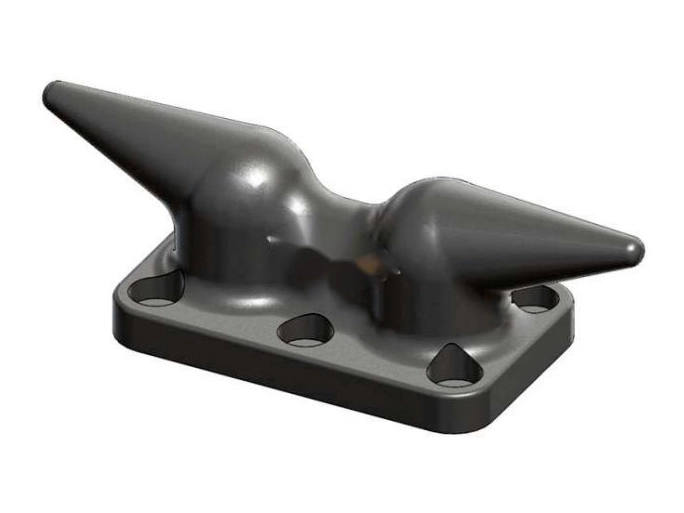
A kidney bollard has a rounded, compact profile designed to guide mooring lines smoothly while saving space. A cleat bollard has a cleat-like form that is often favored for smaller craft or lighter-duty mooring situations. Both can work well, but they serve slightly different operational needs.
For inland waterway docks, the decision usually comes down to three factors:
- Space availability.
- Mooring line behavior.
- Expected vessel type and load level.
Kidney bollards are often a stronger fit when the dock needs a more versatile mooring point. Their shape can support cleaner line lead angles and better rope placement in busier or more mixed-use berths. They are especially useful where crews need a compact design without sacrificing functional strength.
Best for:
- Mixed vessel traffic.
- Narrow dock edges.
- Repeated daily mooring operations.
- Projects where durability and smoother line handling matter.
Cleat bollards are often preferred for smaller vessels, lighter mooring loads, and docks where simplicity is a priority. Their shape can make line wrapping intuitive for crews accustomed to cleat-style tie-off methods. In some inland dock layouts, that ease of use can reduce handling time.
Best for:
- Small craft docking.
- Lower-load inland berths.
- Simple mooring workflows.
- Projects where cost efficiency is a major concern.
When comparing kidney bollard vs cleat bollard, the shape is only one part of the story. The real performance comes from how the bollard works with the dock geometry, line angle, and installation quality.
Low-profile inland waterway docks often have limited edge width. A compact bollard profile can reduce obstruction and keep the berth area easier to move across. Kidney bollards are usually better when the dock must support traffic flow and multiple users.
Smooth line handling matters because it affects safety and speed. A good bollard should let crews secure and release lines with minimal snagging. Kidney bollards often perform well here because their shape supports more controlled rope placement.
If the dock regularly serves larger or more active vessels, the bollard should distribute forces reliably. A cleat bollard may be sufficient for lighter use, but kidney bollards are often preferred where operational flexibility is more important.
Both bollard types can be manufactured for OEM projects, but the foundation and anchoring detail matter as much as the cast or fabricated body. A compact footprint is especially important for low-profile docks where every centimeter counts.
Use this simple rule set when choosing between the two:
1. Choose a kidney bollard if the dock has limited space, mixed vessel traffic, or higher expectations for long-term operational flexibility.
2. Choose a cleat bollard if the dock mainly serves smaller boats, lower mooring loads, and a simple user experience.
3. Choose based on line angle and berth layout, not just appearance.
4. Match the bollard to the fender system and dock structure so the whole mooring zone works as one system.
In real projects, the bollard is never an isolated component. It works together with fenders, concrete structure, anchor bolts, and the vessel approach pattern.
From a manufacturing point of view, the best mooring product is one that fits the project specification exactly. That is why Nanjing Taidun Marine Equipment Engineering Co.,Ltd provides OEM and ODM support for marine bollards, rubber fenders, and related marine equipment.
For overseas brand owners and distributors, this matters because you may need:
- Custom dimensions.
- Specific steel grades.
- Surface protection for harsh marine environments.
- Branding and packaging support.
- Consistent batch quality for repeat procurement.
A well-engineered kidney or cleat bollard should be designed for the actual dock environment, not just a generic catalog use case.
In inland waterway projects, the most successful bollard selections usually come from a layout-first approach. Teams that review vessel size, expected line angles, berth spacing, and maintenance frequency tend to choose better and reduce later retrofit costs.
A practical example: if a low-profile dock handles a mix of workboats and service craft, a kidney bollard often gives more operational flexibility. If the berth is only for small recreational or light service vessels, a cleat bollard may deliver enough function at a lower cost.
Proper installation is as important as product selection. Even a strong bollard can perform poorly if the anchor design or concrete interface is weak.
Follow these steps:
1. Confirm the design load and vessel type.
2. Check dock edge width and available mounting space.
3. Verify anchor bolt spacing and embedded foundation strength.
4. Align bollard placement with the expected line angle.
5. Inspect for coating wear, corrosion, or bolt loosening during routine maintenance.
For long service life, use corrosion-resistant finishes and schedule regular inspections, especially in freshwater environments with seasonal freeze-thaw exposure.
For most low-profile inland waterway docks, the safer general recommendation is:
- Kidney bollard for flexibility, space efficiency, and mixed-use mooring.
- Cleat bollard for smaller craft, lower loads, and simple tie-off needs.
If your project needs OEM customization, engineering support, or consistent bulk supply, Taidun Marine can help match the bollard type to the exact dock application instead of forcing a one-size-fits-all product.
If you are planning a dock project, upgrading an inland berth, or sourcing OEM marine bollards for export, contact Nanjing Taidun Marine Equipment Engineering Co.,Ltd to discuss your requirements, drawings, load conditions, and customization needs.
A kidney bollard is usually more compact and versatile for mixed mooring needs, while a cleat bollard is often simpler and better for lighter-duty applications.
A kidney bollard is often better when dock space is tight and vessel types vary, but a cleat bollard can work well for smaller boats and lighter loads.
Yes. Both types can be customized in size, material, finish, and branding for OEM or ODM supply.
You should review vessel size, mooring load, dock width, line angle, foundation strength, and maintenance requirements.
Yes. Even a well-designed bollard can fail in service if the foundation, anchor bolts, or layout are poorly engineered.
Yes. Routine inspection for corrosion, coating damage, and bolt loosening helps extend service life and improve safety.
1. Nanjing Taidun Marine Equipment Engineering Co.,Ltd official marine bollard page: [https://www.taidunmarine.com/marine-bollard.html]
2. Nanjing Taidun Marine Equipment Engineering Co.,Ltd homepage: [https://www.taidunmarine.com/]
3. Taidun Marine Gold Supplier profile: [https://taidunmarine.goldsupplier.com/]
4. Cleat bollard product overview: [https://oliports.com/cleat-bollards/]
5. Kidney bollard overview: [https://marinestructures.com/kidney-bollards/]
6. Mooring bollard background and standards discussion: [https://www.escglobalgroup.com/post/mooring-bollard-matters-safeguarding-ships-through-thoughtful-utilization]
7. Boat launching and dock layout guidance: [https://dbw.parks.ca.gov/pages/28702/files/Layout%20And%20Design%20Guidelines%20For%20Boat%20Launching%20Facilities%202021.pdf]
Hot Tags: China, Global, OEM, private label, manufacturers, factory, suppliers, manufacturing company


