

Views: 425 Author: Nanjing Taidun Publish Time: 2026-04-02 Origin: Site
Content Menu
● Why "Regular Maintenance of Rubber Fender System" is Non-Negotiable
● Comprehensive Inspection Checklist for Rubber Fender Systems
>> 1. Weekly Visual Checks (The "Walk-the-Dock")
>> 2. Quarterly Mechanical Inspection (Hands-On)
>> 3. Annual Engineering Assessment (The Deep Dive)
● The "Slack Chain" Epidemic: An OEM's Warning
● Storage Best Practices for Spare Rubber Fenders
● User Feedback & Case Study: Why Quality Matters
● Actionable Maintenance Schedule (Quick Reference Table)
● The Cost of Neglect vs. Investment
● FAQ: Regular Maintenance of Rubber Fender System
Marine fenders are the frontline defense for your vessels and quay walls. Yet, in my two decades of manufacturing OEM rubber fender systems for global brands, I have witnessed a recurring truth: neglect is the number one killer of marine fenders.
I have seen brand-new installations fail within five years due to slack chains, and I have seen 25-year-old fenders still performing at spec because the port followed a strict Regular Maintenance of Rubber Fender System protocol.
Whether you are a terminal operator, a shipyard manager, or a wholesaler supplying these critical assets, you cannot afford a "fit and forget" mentality. This guide combines ISO standards, PIANC guidelines, and real-world field data from our OEM clients to provide the ultimate maintenance roadmap.
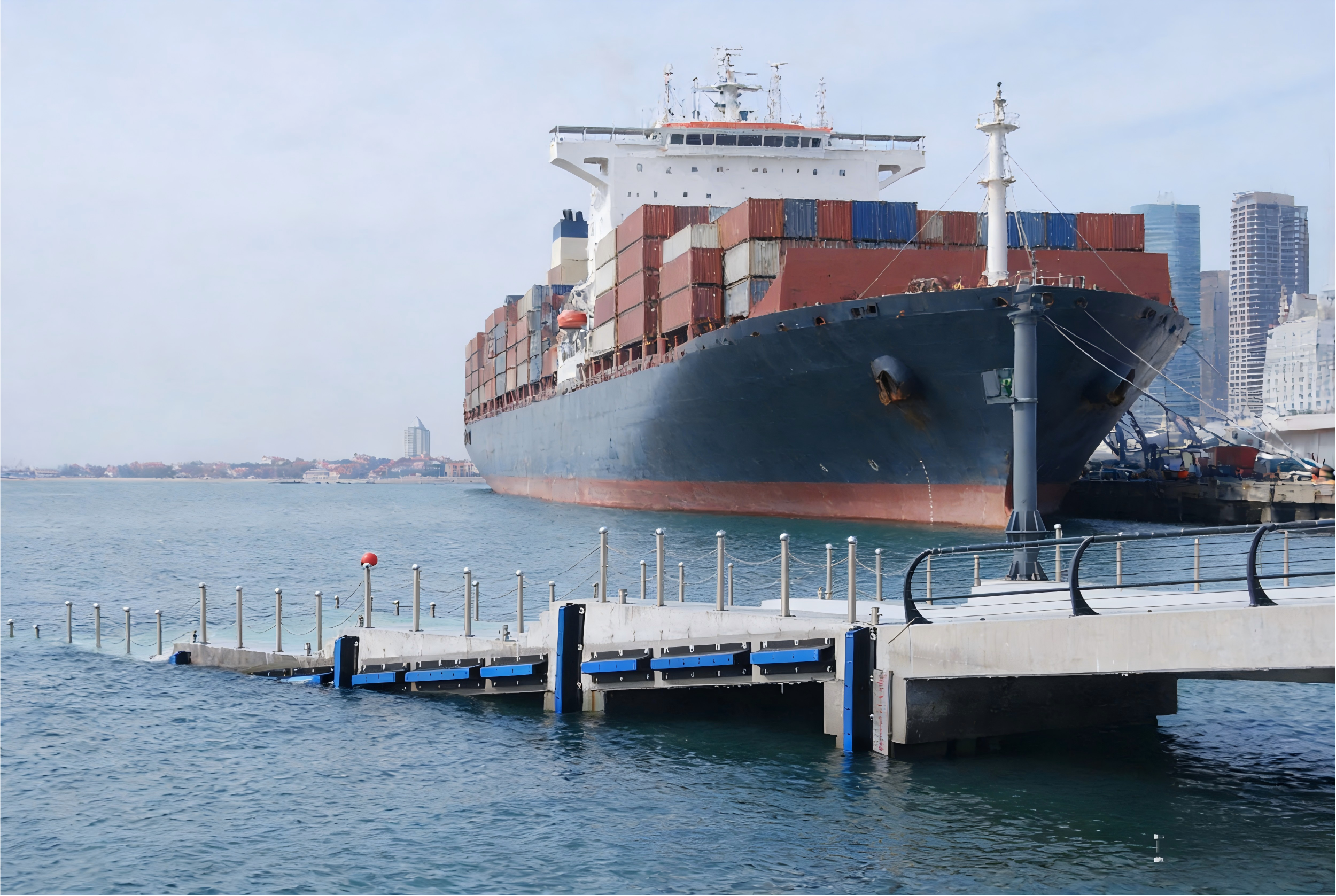
Many buyers assume that because rubber is elastic, it is indestructible. This is a dangerous myth. The marine environment is a war zone of UV radiation, saltwater corrosion, and thermal expansion.
Data from the Japan Society of Civil Engineers shows that while the core rubber body can remain elastic for 15 to 35 years, the *system* often fails earlier due to surface degradation or accessory fatigue.
> The OEM Perspective: At Nanjing Taidun, we manufacture fenders to last 20–25 years under normal use. However, if the steel panel coating is scratched during installation—or if the chain tensioners are left hand-tight—that lifespan drops to under 5 years.
To maximize ROI, you need to move from reactive repairs to proactive maintenance. Based on our OEM manuals and PIANC standards, here is the three-tier inspection protocol.
- Action: Look for marine growth, visible cuts deeper than 5mm, or missing chain links.
- Why: Heavy barnacles add weight and cut into the rubber.
- Red Flag: Rust-colored runoff on the concrete. This indicates active corrosion of the steel panel or anchors.
- Chain Tension Test: Slack chains are an epidemic. *Physically try to move the weight chains back and forth.* There should be very little movement. A slack chain allows the fender to droop, creating static stress cracks at the base.
- Bolt Torque: Use a torque wrench. If a U-bolt nut can be spun by hand, the fender is essentially unmoored.
- Pressure Check (Pneumatic): Maintain ~0.2 Bar (2.9 psi). Use a gauge, not your thumb.
- Hardness Testing: Use a Shore A durometer. If the rubber has hardened significantly, it has lost elasticity and is failing.
- Non-Destructive Testing (NDT): Ultrasonic testing can find internal delamination invisible to the naked eye.
Let me be specific about a failure mode we see constantly. During installation, contractors use a crane to hold the heavy steel panel. They tighten the chains, but when the crane releases the weight, the panel drops slightly, leaving the weight chains slack.
The Consequence: The rubber body now supports the panel's weight 24/7, not just during berthing. This leads to premature fatigue and tearing at the flange.
The Fix: The installation crew must use a manual chain hoist to take up the weight *before* final tightening. At Nanjing Taidun, we provide detailed torque specs for every chain tensioner in our OEM delivery packages.
Do you have spare fenders sitting in a yard? You might be throwing money away.
The 5 Golden Rules for Storage:
1. Cool & Dark: Keep temperatures below 25°C (77°F). UV rays are poison to rubber.
2. Elevate: Never store directly on concrete or gravel. Use wooden pallets to avoid flat spots.
3. Inflate (Slightly): For pneumatic fenders, keep them at 20–25 kPa. Do not store them deflated; folds create weak spots that burst later.
4. Isolate: Keep 1 meter away from chemicals, fuel, or electric motors (ozone).
5. Rotate: Inspect every 3-6 months and rotate the fender 90 degrees to avoid pressure points.
We asked our clients about their maintenance headaches. One recurring theme is the failure of accessories rather than the rubber itself.
> *"We used to replace cheap fenders every three months. The rubber cracked and the end plates corroded instantly. Since switching to a high-quality OEM supplier [Nanjing Taidun], we've seen a dramatic reduction in maintenance downtime. The 316 stainless steel components are surviving the C5 environment."*
> — *Feedback from a European Logistics Provider*
Expert Analysis: Low-quality fenders often use 304 stainless steel or non-marine-grade coatings to cut costs. In a saltwater environment (ISO 12944-2 C5), this is a disaster. Always specify 316 stainless steel for bolts and end flanges to survive the harsh conditions.
| Frequency | Task | Tool Required | Success Metric |
|---|---|---|---|
| Monthly | Visual inspection for cuts/abrasion | Flashlight | No exposed cord or deep gouges |
| Quarterly | Chain tension & bolt torque | Torque Wrench | No visible slack; bolts at spec NM |
| Biannually | Valve core check (Pneumatic) | Air Inflator | Holds 0.2 Bar pressure |
| Annually | Coating touch-up & hardness test | Shore A Durometer | Hardness < +/- 5 from original |
| Every 2 Years | Safety valve calibration | Certified Lab | ISO 17357 compliance |
Some clients ask, "Why pay for annual service?" Let's look at the math:
- Cost of a major fender replacement: $20,000 – $100,000+ per unit (including crane mobilization and downtime).
- Cost of a torque wrench and chain tensioner: ~$500.
- Cost of doing nothing: Catastrophic hull damage or structural failure.
A study on large rubber marine fenders confirmed that used fenders often exhibit a higher reaction force than new ones due to aging, which can actually damage ship hulls if not monitored. Regular maintenance keeps the fender *soft* and *safe*.
The Regular Maintenance of Rubber Fender System is not a complex science, but it requires discipline. You need to look for slack chains, monitor rubber hardness, and protect your steel hardware from rust.
At Nanjing Taidun Marine Equipment Engineering Co.,Ltd, we don't just sell fenders—we provide OEM solutions that include lifetime technical support. We supply the torque specs, the installation videos, and the high-grade 316 stainless steel accessories that make maintenance easy.
Are your fenders ready for the next storm season?
[Contact Our Engineering Team] for a free maintenance checklist or to inquire about spare parts. We support brands and ports in over 80 countries.
Q1: How often should I perform maintenance on a rubber fender system?
A: Visual inspections should be weekly. Detailed mechanical checks (chains, bolts, pressure) should occur every 3 to 6 months. A full engineering assessment (hardness testing, valve calibration) is recommended annually.
Q2: What is the average lifespan of a rubber fender?
A: With proper OEM manufacturing and regular maintenance, a rubber fender typically lasts 20 to 25 years. However, poor installation (slack chains) or harsh UV exposure can reduce this to 5-10 years.
Q3: Can I repair a deep cut in a rubber fender, or must I replace it?
A: Surface abrasions are fine. Deep cuts (exposing cord or allowing air leaks in pneumatic fenders) require professional patching. If the fender shows delamination (internal separation of layers), immediate replacement is required.
Q4: Why do my fender chains keep snapping?
A: Snapping chains usually indicate one of two issues: 1) Overloading (vessel berthing too fast), or 2) Corrosion (using non-galvanized or low-grade steel). Ensure your chains are hot-dip galvanized and inspected for rust quarterly.
Q5: How should I store pneumatic (Yokohama) fenders during winter?
A: Clean and dry the fender thoroughly. Store in a cool, shaded area (avoid freezing solid if water is inside). Keep slightly inflated (20-25 kPa) to maintain shape and prevent rubber folds that cause cracks.
1. Nanjing Taidun Marine Equipment Engineering Co.,Ltd. *Fender Ship Excellence: Nanjing Taidun's OEM Mastery in Marine Protection*. (2026).
2. Nanjing Taidun Marine Equipment Engineering Co.,Ltd. *Rubber Fender Solutions*. (2026).
3. MarLog AS. *Fender Service for Yokohama-Type Fenders*. (n.d.).


