

Views: 237 Author: Nanjing Taidun Publish Time: 2026-07-15 Origin: Site
Content Menu
● Tee Bollard vs Horn Bollard: Preventing Rope Slippage During Surge Storms
● Why rope slippage becomes dangerous during surge storms
● Tee Bollard vs Horn Bollard: the core difference
● Which bollard resists slippage better
● Practical selection factors for storm conditions
● What Nanjing Taidun brings to OEM customers
>> Our OEM advantages include:
● A field-based perspective on line retention
● Recommended installation and operating practices
● Comparison table for quick selection
● Expert view from OEM manufacturing
● CTA
● FAQ
>> 1. Which is better for preventing rope slippage during surge storms, Tee Bollard or Horn Bollard?
>> 2. Can a Tee Bollard still be used in storm-prone ports?
>> 3. Why does bollard shape matter more during storms?
>> 4. What should OEM buyers check before choosing a bollard supplier?
>> 5. Does Nanjing Taidun provide OEM services?
>> 6. What is the most important factor in bollard selection?
When surge storms hit, mooring performance is tested in the most unforgiving way. The real question is not whether a bollard can hold a line in calm water, but whether it can help prevent rope slippage when vessel motion, wind load, tidal change, and shock loading all rise at the same time.
At Nanjing Taidun Marine Equipment Engineering Co., Ltd., we design and manufacture marine fenders, bollards, and related port protection products for global OEM clients who need dependable performance, stable quality, and custom engineering support. In this article, we compare the Tee Bollard vs Horn Bollard from a practical, storm-resilience perspective, and explain how to choose the right mooring solution for harsher operating conditions.

During surge storms, mooring lines are no longer working under steady tension. They are exposed to sudden load changes caused by wind gusts, wave action, vessel surge, current shifts, and berth movement. Under these conditions, even a well-secured line can begin to creep, ride up, or slip off a poorly matched bollard profile.
This is why bollard geometry matters. A design that works well in normal berthing may become less reliable when line angle increases or when multiple lines share the same mooring point. In practice, preventing slippage is not only about strength; it is also about the shape of the bollard head, the line lead angle, and the way the mooring arrangement distributes force.
A Tee Bollard has a T-shaped head that offers a stable bearing point for mooring lines. It is widely used because it is simple, durable, and effective in many port applications. A Horn Bollard has one or two curved horns that help guide and retain the line under more varied angles, which is useful when mooring conditions are less predictable.
In storm-prone berths, the key distinction is how each design handles changing line direction. Tee bollards perform well when the mooring layout is organized and line angles stay within the intended range. Horn bollards often provide a more forgiving profile when the vessel moves more aggressively and the line needs a better chance of staying seated under shifting loads.
There is no universal winner for every berth, but there is a clear engineering logic.
- Tee bollards are strong, straightforward, and effective when the mooring arrangement is controlled.
- Horn bollards can offer better line retention when line angles vary sharply or when surge motion is more severe.
- Both can perform well when properly sized, installed, and matched to the mooring plan.
- The wrong choice usually fails not because of low material strength, but because the geometry does not suit the mooring behavior.
For storm-exposed facilities, horn-style profiles are often favored when operators want a more forgiving line path. For standardized port layouts with consistent line direction, tee bollards remain a highly efficient solution.
Choosing between a Tee Bollard and a Horn Bollard should be based on site conditions, not just habit or catalog preference. The most important factors include berth exposure, vessel type, tidal variation, mooring line material, and how many lines share the same bollard.
- Wind and current forces at the berth.
- Surge and swell behavior during storm events.
- Mooring line angle during low tide, high tide, and vessel drift.
- Number of lines expected on one bollard.
- Vessel size and operating profile.
- Maintenance and inspection frequency.
- Corrosion environment, especially in saltwater ports.
If the berth experiences frequent load swings or high-angle line leads, the bollard profile should be selected with extra caution. If the port handles mixed vessel traffic, flexibility and retention performance become more important than simple nominal capacity.
At Nanjing Taidun Marine Equipment Engineering Co., Ltd., we support overseas brands, wholesalers, and manufacturers with OEM marine equipment solutions. Our core strength is not only production capacity, but also the ability to combine engineering, testing, and manufacturing into one controlled process.
That matters because mooring safety depends on consistency. A bollard that looks correct on paper must also be manufactured with stable dimensions, sound welding or casting quality, and surface protection suited to marine exposure. For OEM buyers, this means fewer surprises, smoother project delivery, and stronger end-user trust.
- Custom marine bollard and fender solutions.
- Factory-direct production support.
- Technical coordination for port and ship applications.
- Quality-focused manufacturing for global projects.
- Experience serving overseas OEM and private-label demand.
If your brand needs a supplier that understands both engineering performance and commercial scalability, Taidun is positioned to support that workflow from concept to shipment.
From an operational point of view, the best bollard is the one that helps crews moor fast, secure, and safely under real port conditions. In our experience, line slippage usually starts when the line path becomes unstable, the mooring plan is overloaded, or the bollard shape is not well matched to the vessel movement.
That is why experienced port engineers often look beyond capacity alone. They assess the interaction between bollard profile, line behavior, and storm-induced motion. In many cases, a slightly better-shaped bollard can reduce operational risk more effectively than simply increasing the nominal load rating.
Even the best bollard cannot compensate for poor mooring practice. To reduce slippage risk during surge storms, operators should treat installation, inspection, and line handling as part of one safety system.
1. Match the bollard to the berth profile and expected line angles.
2. Verify foundation and anchor design before installation.
3. Keep mooring lines in good condition and replace damaged ropes early.
4. Avoid excessive cross-leading that can lift the line off the head.
5. Inspect for corrosion, deformation, and coating damage on a regular schedule.
6. Train crews to re-tension lines when storm conditions intensify.
7. Document storm procedures so response is consistent across shifts.
These steps are especially important in ports where vessel movement changes rapidly with tide and weather. A well-designed bollard is only one part of a safe mooring system.
| Item | Tee Bollard | Horn Bollard |
|---|---|---|
| Line retention | Good in stable, organized layouts | Often better with changing angles |
| Surge storm suitability | Strong when mooring geometry is controlled | Strong choice for more variable conditions |
| Ease of use | Simple and familiar | Also practical, with more forgiving line guidance |
| Best use case | Standard port mooring setups | Berths with higher line-angle variation |
| Slippage resistance | Good, if the lead angle is correct | Often stronger in dynamic conditions |
In OEM marine equipment manufacturing, the product is only half the story. The other half is whether the supplier can consistently reproduce the same quality across every batch. For bollards used in storm-prone harbors, that means stable fabrication, reliable surface treatment, and design accuracy matter as much as the overall load rating.
At Taidun, we approach bollard supply from a systems perspective. We understand that the end customer is not buying steel alone; they are buying confidence in berth safety, port uptime, and low-risk operations. That is why our OEM work is built around repeatability, customization, and application-driven selection.
If you are sourcing OEM marine bollards for storm-exposed ports, private-label supply, or project-based procurement, Nanjing Taidun Marine Equipment Engineering Co., Ltd. can support your next build with customized marine equipment solutions. Contact our team to discuss specification matching, OEM branding, and bulk supply options for your target market.
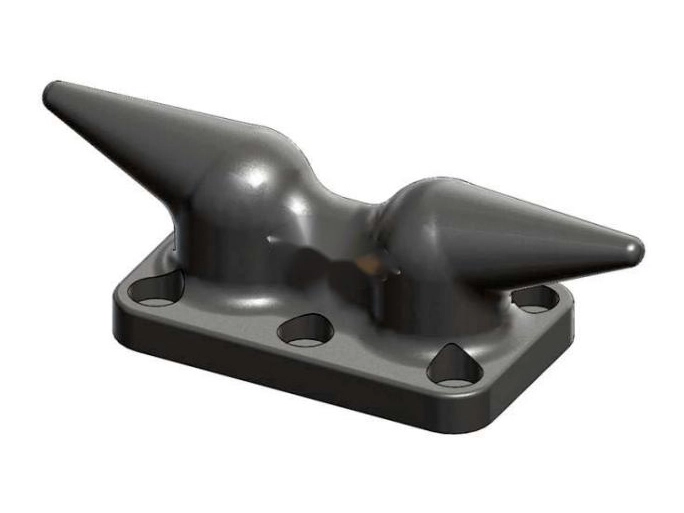
Horn bollards often provide better line retention when mooring angles change sharply, while tee bollards work very well in stable layouts with controlled line direction.
Yes. A Tee Bollard can perform well in storm-prone ports if the mooring geometry is properly designed and the line angles remain within a safe range.
Because storm conditions create sudden load shifts, higher line angles, and more vessel movement, which makes line retention harder and increases the risk of slippage.
They should check engineering capability, production consistency, corrosion protection, customization support, quality control, and experience with marine applications.
Yes. Nanjing Taidun Marine Equipment Engineering Co., Ltd. provides OEM support for marine fenders, bollards, anchors, and related marine equipment for overseas clients.
The most important factor is berth-specific mooring behavior, especially line angle, vessel movement, and exposure to wind, tide, and surge.
1. Nanjing Taidun Marine Equipment Engineering Co., Ltd. — Company profile and OEM/manufacturing information: [https://www.taidunmarine.com/]
2. Nanjing Taidun Marine Equipment Engineering Co., Ltd. — Product/manufacturing details and certifications: [https://cd3387345a5ffb61.en.made-in-china.com/]
3. ESC Marine Systems — Mooring bollard types and applications, including tee and horn bollards: [https://www.escpile.com/single-post/mooring-bollards-types-and-applications]
4. Nanjing Taidun Marine Equipment Engineering Co., Ltd. — OEM/factory content and company positioning: [https://www.taidunmarine.com/fender-ship-excellence-nanjing-taidun-s-oem-mastery-in-marine-protection.html]
5. Nanjing Taidun Marine Equipment Engineering Co., Ltd. — Additional company article on market positioning: [https://www.taidunmarine.com/why-nanjing-taidun-is-the-top-choice-for-rubber-fender-oem-in-china-2026-guide.html]
Hot Tags: China, Global, OEM, private label, manufacturers, factory, suppliers, manufacturing company


