

Views: 220 Author: taidunmarine Publish Time: 2026-05-09 Origin: Site
Content Menu
● Foul Anchor vs. Fouled Anchor
● Operational Risks You Should Know
● How Crew Can Recognize It Early
● Prevention Methods That Work
>> 1. Check the anchorage carefully
>> 2. Use correct scope and chain management
>> 3. Maintain an anchor watch
>> 4. Manage weather and currents
>> 5. Inspect equipment regularly
● Recovery and Clearing Methods
● Industry Insight From an OEM View
● CTA
● FAQs
>> 1. What is a foul anchor in simple words?
>> 2. What causes an anchor to become fouled?
>> 3. Is a fouled anchor the same as a dragging anchor?
>> 4. How can crews prevent anchor fouling?
>> 5. Can a fouled anchor be fixed at sea?
>> 6. Why is anchor quality important for preventing fouling?
Nanjing Taidun Marine Equipment Engineering Co., Ltd. knows that safe anchoring begins with reliable equipment, clear operating discipline, and a deep understanding of anchoring risks. In maritime operations, the question "what is a foul anchor?" usually refers to an anchor or anchor cable that has become tangled, entangled, or obstructed, making it difficult to deploy, hold, or recover properly. [merriam-webster]
A foul anchor is more than a technical term. It is a practical safety issue that can affect vessel control, delay operations, damage equipment, and increase the risk of dragging, collision, or grounding. [britanniapandi]
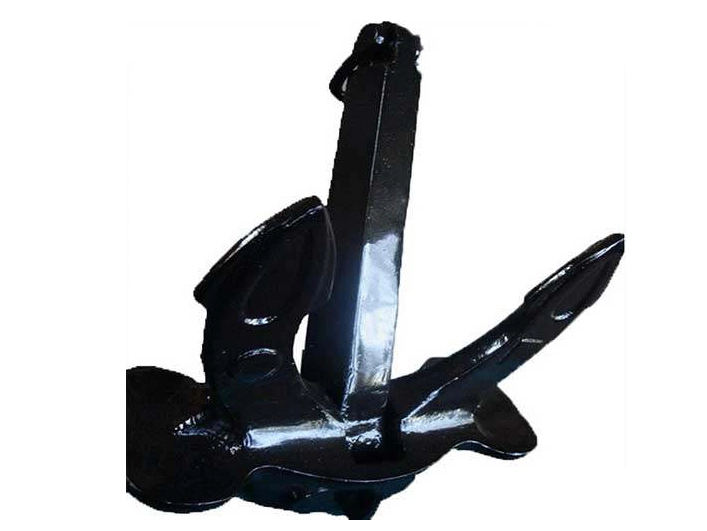
A foul anchor is an anchor that is no longer working cleanly because something has interfered with its normal movement or holding pattern. That interference may be the anchor cable twisting around the shank or flukes, another anchor crossing the line, or the anchor hooking onto underwater debris, wreckage, cables, or seabed obstructions. [marineinsight]
In simple terms, the anchor is fouled when it cannot set, hold, or recover normally. This matters because an anchor system depends on the correct interaction between the anchor, chain, seabed, and vessel motion. When one part is disturbed, the entire system becomes less reliable. [safety4sea]
Fouled anchors usually develop because of one or more operational or environmental factors. Common causes include:
- Poor seabed conditions, such as rocks, wreckage, pipelines, or heavy marine growth. [en.wikipedia])
- Improper cable payout, which can create twists, knots, or chain crossover. [marineinsight]
- Strong wind, current, or vessel motion, which can shift the anchor and increase entanglement risk. [marineinsight]
- Two-anchor operations, where cables may cross and create a foul hawse condition. [maritimecyprus]
- Extended time at anchorage, which increases the chance of chain tension changes and fouling over time. [safety4sea]
From an OEM and marine equipment perspective, this is why anchor quality alone is not enough. The anchor, chain, windlass, and operating procedure must all work together under real sea conditions. [britanniapandi]
These terms are often used interchangeably, but there is a useful distinction. A foul anchor is the condition or state of the anchor system, while fouled anchor is often used to describe the anchor after the problem has already happened. Merriam-Webster defines a foul anchor as one whose cable is twisted around the stock or fluke, or one entangled with another anchor. [merriam-webster]
For practical shipboard communication, both phrases are understood. However, in technical writing and training materials, it helps to be consistent and define the term clearly at the beginning. [merriam-webster]
A fouled anchor may seem like a routine inconvenience, but in practice it can create serious operational consequences. If the anchor cannot hold properly, the vessel may begin to drag. If recovery becomes difficult, the crew may need extra time, machinery assistance, or underwater intervention. [marineinsight]
Key risks include:
- Loss of holding power.
- Delayed departure from anchorage.
- Increased wear on the windlass and chain.
- Higher collision or grounding risk.
- Potential damage to subsea infrastructure. [maritimecyprus]
For vessel operators, the safest assumption is simple: if an anchor is behaving abnormally, treat it as a time-sensitive safety issue rather than a minor inconvenience. [marineinsight]
Early recognition can prevent a small anchoring problem from becoming a major incident. Warning signs include unusual chain vibration, abnormal tension, poor anchor holding, unexpected chain direction, or difficulty heaving the anchor. [britanniapandi]
Watch for these indicators:
1. The vessel does not lie steadily to wind or current. [safety4sea]
2. The chain feels unusually tight or jerky. [safety4sea]
3. The anchor does not break out normally when heaving. [marinegyaan]
4. The vessel appears to drag despite normal setup. [marineinsight]
Bridge and deck teams should communicate continuously. Good anchoring is not just a mechanical process; it is a coordinated shiphandling task. [maritimecyprus]
The best way to deal with a fouled anchor is to prevent it. Prevention begins before the anchor touches the seabed and continues through the entire anchoring period. [britanniapandi]
Review charts, notice any subsea hazards, and avoid rocky, weedy, or obstruction-prone areas when possible. [britanniapandi]
Proper cable payout helps reduce sudden loading and twist formation. Industry guidance commonly emphasizes sufficient scope and controlled chain tension. [facebook]
Use a crew watch, position monitoring, and anchor alarms to detect movement early. [facebook]
Strong environmental forces can change the anchor angle and increase fouling risk, especially during long stays. [safety4sea]
Check the anchor, shackle, chain, windlass, and related components for wear or damage before operations. [maritimecyprus]
If the anchor is already fouled, the response should match the type of problem. When the anchor is fouled by an underwater obstruction, one method is to move the vessel slowly under engine power while adjusting cable tension to free the anchor. [marinegyaan]
When the anchor is fouled with wire or cable, crew may use careful recovery procedures, and in some cases external assistance such as a work boat or diver support may be required. In severe cases, the anchor may need to be slipped and recovered later by alternative means. [marinegyaan]
A good rule is this: never force recovery blindly. Excessive tension can damage equipment or worsen the situation. [britanniapandi]
From the viewpoint of a marine equipment OEM factory, a foul anchor problem reveals a bigger truth: anchoring reliability depends on both product quality and system design. A strong anchor is important, but so are correct dimensions, durable chains, corrosion resistance, compatible fittings, and stable manufacturing standards. [taidunmarine]
For shipowners, distributors, and brand partners, the value of OEM support is not only customization. It is also consistency, traceability, and performance under demanding marine conditions. That is where a company like Nanjing Taidun Marine Equipment Engineering Co., Ltd. can support global buyers with marine equipment manufacturing expertise across anchoring-related products. [taidunmarine]
Imagine a vessel anchored near a busy harbor where seabed debris, strong current, and repeated course changes are common. If the chain twists around the anchor shank or hooks onto hidden debris, the crew may experience slow recovery, abnormal vibration, and poor holding. That is a classic fouled anchor situation, and it often requires careful maneuvering rather than brute force. [marineinsight]
This is why pre-anchoring assessment, correct equipment, and disciplined bridge-deck coordination matter as much as the anchor itself. [maritimecyprus]
If your business needs OEM marine anchoring equipment, custom marine hardware, or dependable manufacturing support for global markets, Nanjing Taidun Marine Equipment Engineering Co., Ltd. can help you build a stronger supply chain and a more reliable anchoring solution. [taidunmarine]
A foul anchor is an anchor that has become tangled or obstructed, so it cannot work normally. [merriam-webster]
Common causes include underwater debris, poor seabed conditions, chain twisting, strong current, and two-anchor crossover. [marineinsight]
Not exactly. A fouled anchor is obstructed or tangled, while a dragging anchor is one that is not holding position and is moving across the seabed. [marineinsight]
They can use proper anchorage selection, correct cable scope, anchor watch, regular inspections, and careful chain management. [facebook]
Yes, sometimes. Depending on the cause, crews may free it with controlled vessel movement, chain handling, or outside assistance. Severe cases may require more advanced recovery methods. [marinegyaan]
High-quality anchor systems help maintain predictable performance, but correct operation and seabed assessment are equally important. [safety4sea]
1. Marine Insight. "What are Foul Anchors?" [https://www.marineinsight.com/what-are-foul-anchors/] [marineinsight]
2. Merriam-Webster. "FOUL ANCHOR Definition & Meaning." [https://www.merriam-webster.com/dictionary/foul%20anchor] [merriam-webster]
3. Safety4Sea. "Hazards during anchoring for extended periods." [https://safety4sea.com/cm-hazards-during-anchoring-for-extended-periods/] [safety4sea]
4. Britannia P&I Club. "Dragging Anchor Prevention." [https://britanniapandi.com/wp-content/uploads/2024/09/Britannia-Loss-Prevention-Guidance-Dragging-Anchor-Prevention-1.pdf] [britanniapandi]
5. Marine Gyaan. "What is meaning of Foul Anchor?" [https://marinegyaan.com/what-is-meaning-of-foul-anchor/] [marinegyaan]
6. Intertanko / Maritime Cyprus. "Anchoring Guidelines: A Risk-Based Approach." [https://www.maritimecyprus.com/wp-content/uploads/2019/04/2019Intertanko_Anchoring_guidelines_a_risk-based-approach.pdf] [maritimecyprus]
7. Nanjing Taidun Marine Equipment Engineering Co., Ltd. company-related public pages. [https://www.taidunmarine.com/] [taidunmarine]
Hot Tags: China, Global, OEM, private label, manufacturers, factory, suppliers, manufacturing company


