

Views: 251 Author: Nanjing Taidun Publish Time: 2026-07-20 Origin: Site
Content Menu
● Introduction: Anchor Bolt vs Welding Base in Floating Pontoon Mooring Systems
● Understanding the Two Fixing Methods
>> What Is an Anchor Bolt System?
>> What Is a Welding Base System?
● Anchor Bolt vs Welding Base: Core Differences
>> Maintenance and Replacement
● When Welding Base Is the Better Choice
● New Insight: Load Dynamics and Fatigue Behavior
● Installation Best Practices (Step-by-Step)
>> European Marina Upgrade Project
● Why Choose Nanjing Taidun Marine Equipment Engineering Co., Ltd.
● FAQ
At Nanjing Taidun Marine Equipment Engineering Co., Ltd., we work closely with global marine brands, wholesalers, and engineering contractors who demand reliable bollard installation on floating pontoons. One of the most common and critical technical decisions is Anchor Bolt vs Welding Base: Securing Marine Bollards to Floating Pontoons.
From decades of OEM manufacturing experience in marine rubber fenders, bollards, and anchoring systems, we have seen how improper installation methods lead to premature structural failure, safety risks, and costly repairs. This guide explains the engineering differences, real-world performance, and best-use scenarios of anchor bolts versus welding bases, helping you choose the most durable and cost-effective solution.
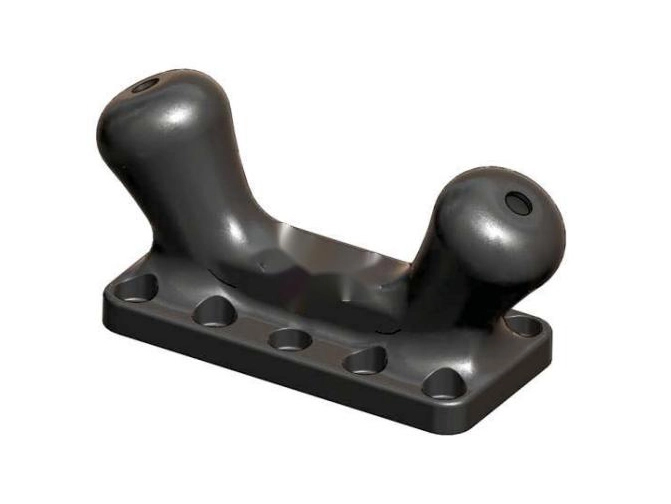
An anchor bolt system secures bollards by embedding high-strength bolts into the pontoon deck or concrete foundation.
Key features:
- Mechanical fastening method
- Suitable for concrete or composite floating pontoons
- Allows easy replacement and maintenance
- Load transfer occurs through bolt tension and shear resistance
Typical configuration includes:
- Pre-cast or post-installed anchor bolts
- Base plate with bolt holes
- Grouting or epoxy reinforcement
A welding base system directly welds the bollard base plate onto a steel pontoon deck or embedded steel structure.
Key features:
- Permanent structural connection
- Ideal for steel pontoons or barges
- High resistance to dynamic and impact loads
- Requires skilled welding and inspection
- Anchor Bolts: Depend on bolt strength and substrate integrity; performance varies with installation quality
- Welding Base: Provides continuous load transfer, often stronger under cyclic marine loads
- Anchor bolts require drilling, alignment, and curing time
- Welding requires certified welders and inspection (NDT recommended)
- Anchor bolts allow easy disassembly
- Welded bases require cutting and re-welding, increasing downtime
- Anchor bolts may suffer from crevice corrosion if poorly sealed
- Welded joints require proper coating and anti-corrosion systems
From our OEM projects across Southeast Asia and Europe, anchor bolts are best suited for:
- Concrete floating pontoons
- Modular marina systems requiring frequent upgrades
- Projects prioritizing ease of maintenance
- Environments with moderate load requirements
Expert Tip from Taidun Engineers:
Use hot-dip galvanized or duplex-coated anchor bolts with marine-grade sealants to significantly extend service life.
Welding bases are preferred in:
- Steel pontoon structures
- Heavy-duty mooring zones (commercial ports, oil terminals)
- Locations with high tidal variation and dynamic loads
- Installations requiring maximum rigidity and minimal movement
Industry Insight:
In high-load applications, welded bases can reduce micro-movement, which is a key cause of fatigue failure in mooring systems.
Most existing articles overlook fatigue performance under cyclic loading, which is critical in marine environments.
Floating pontoons experience:
- Wave-induced motion
- Vessel surge and sway
- Repeated mooring tension cycles
- Anchor Bolts:
- May loosen over time
- Require periodic torque checks
- Welded Bases:
- Better fatigue resistance if weld quality is high
- Risk shifts to weld seam cracking if poorly executed
Engineering Recommendation:
For projects exceeding 10,000 load cycles per year, welding bases generally outperform anchor bolts in long-term durability.
1. Surface Preparation: Clean and level the mounting area
2. Drilling or Casting: Install bolts according to design layout
3. Alignment Check: Ensure precise bolt spacing
4. Grouting: Use marine-grade epoxy or cementitious grout
5. Torque Tightening: Apply specified torque values
6. Sealing: Prevent water ingress
1. Material Verification: Confirm steel grade compatibility
2. Surface Cleaning: Remove rust, oil, and coatings
3. Preheating (if required)
4. Welding Execution: Follow certified welding procedures
5. Inspection: Conduct visual and NDT testing
6. Coating Application: Apply anti-corrosion system
Based on customer feedback and field audits:
- Using undersized anchor bolts for high-load applications
- Skipping torque checks after installation
- Poor welding without certification or inspection
- Ignoring corrosion protection systems
- Misalignment of bollards causing uneven load distribution
A marina operator initially used anchor bolts for floating pontoon bollards.
Issues encountered:
- Bolt loosening after 18 months
- Increased maintenance costs
- Safety concerns during peak seasons
Solution:
- Replaced with welding base system on reinforced steel plates
Results:
- 35% reduction in maintenance costs
- Improved structural stability
- Extended service life by over 5 years
As a trusted OEM partner, we provide:
- Custom-engineered bollards and mounting systems
- Full compatibility with anchor bolt and welding base solutions
- Compliance with international marine standards
- Proven experience with global clients and harsh marine environments
Our engineering team does not just manufacture products—we optimize the entire mooring system for safety, durability, and lifecycle cost efficiency.
If you are evaluating Anchor Bolt vs Welding Base for floating pontoons, our engineers can provide project-specific recommendations, CAD drawings, and load analysis.
Contact Nanjing Taidun Marine Equipment Engineering Co., Ltd. today to discuss your OEM requirements and ensure your marine infrastructure is built to last.
1. Which is stronger: anchor bolts or welding base?
Welding bases generally provide stronger and more stable connections, especially under dynamic marine loads.
2. Are anchor bolts suitable for heavy-duty ports?
They can be used, but typically require reinforcement; welding bases are preferred for high-load environments.
3. How often should anchor bolts be inspected?
At least every 6–12 months, depending on load conditions and environmental exposure.
4. Do welded bases require maintenance?
Yes, mainly for corrosion protection and periodic inspection of weld integrity.
5. Can both methods be combined?
Yes, hybrid systems are sometimes used for added redundancy and safety.

- PIANC (World Association for Waterborne Transport Infrastructure) – Mooring Guidelines
https://www.pianc.org
- British Standards Institution – BS 6349 Maritime Structures
https://www.bsigroup.com
- DNV (Det Norske Veritas) – Offshore and Marine Standards
https://www.dnv.com
- American Society of Civil Engineers (ASCE) – Mooring Design Publications
https://www.asce.org
- ISO 19901-7 Offshore Structures – Stationkeeping Systems
https://www.iso.org
Hot Tags: China, Global, OEM, private label, manufacturers, factory, suppliers, manufacturing company


