

Views: 259 Author: Nanjing Taidun Publish Time: 2026-08-20 Origin: Site
Content Menu
● Why Bollard Selection Affects Concrete Cracking
● Heavy-Duty Tee Bollard vs Standard Pillar Bollard
● How Tee Bollards Can Reduce Concrete Stress
>> A wider head manages variable rope leads
>> A larger footprint can improve foundation interaction
>> Better suitability for high-capacity berths
● When a Standard Pillar Bollard Is Still the Right Choice
● The Real Causes of Dock Concrete Cracking
>> 1. Bollard capacity exceeds foundation capacity
>> 2. Anchor bolts are too close to the concrete edge
>> 3. Off-axis or high-angle line pulls are ignored
>> 4. Existing concrete deterioration is underestimated
>> 5. Fender and bollard systems are designed separately
● A Practical Bollard Foundation Checklist
● Engineering Insight: Design the Load Path, Not Just the Bollard
● Why Choose Taidun Marine for OEM Bollards
● FAQ
>> 1. Does a tee bollard always prevent concrete cracking better than a pillar bollard?
>> 2. Can I install a higher-capacity bollard on an existing dock?
>> 3. What bollard load information should an OEM supplier provide?
>> 4. What are the warning signs of bollard foundation damage?
>> 5. Should bollards and fenders be sourced together?
>> 6. What is the first step in choosing between a tee bollard and a pillar bollard?
At Nanjing Taidun Marine Equipment Engineering Co., Ltd., we support overseas brands, wholesalers, and marine-equipment manufacturers with OEM mooring bollards, rubber fenders, and anchoring solutions. One of the most important questions we help customers solve is this: Heavy-Duty Tee Bollard vs Standard Pillar Bollard—which option better prevents dock concrete cracking?
The short answer is that neither bollard shape alone prevents cracking. Concrete cracking is prevented by matching the bollard's geometry, safe working load, mooring-line angle, anchor arrangement, reinforcement, and existing berth capacity into one verified load path. However, a properly engineered heavy-duty tee bollard often provides a more stable and predictable solution for high-capacity berths, large vessels, multi-directional mooring loads, and demanding tidal conditions.
For OEM buyers, the decision should never be based solely on a catalog load rating. The bollard, anchor bolts, embedded steel, reinforced concrete pedestal, quay wall, and vessel's mooring arrangement must be engineered as one system.
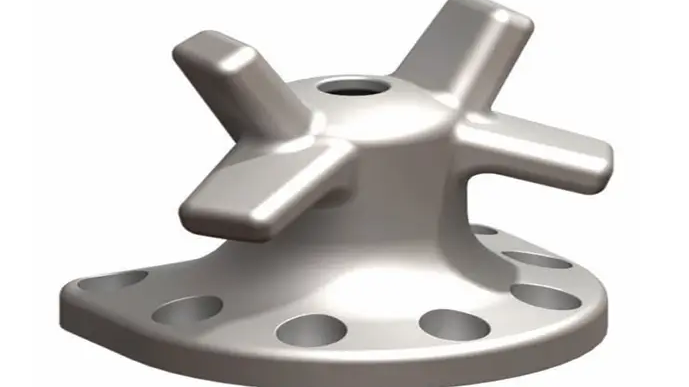
A mooring bollard transfers forces from a vessel's mooring line into a berth structure. When wind, current, tide, passing vessels, waves, surge, or vessel movement tighten the lines, the bollard does not experience only a simple horizontal pull.
It can experience a combined load condition that includes:
- Horizontal shear along the dock surface.
- Overturning moment caused by the line pulling above the concrete surface.
- Uplift force on part of the anchor group.
- Compression force beneath the bollard base.
- Torsion when the mooring line leads off-center.
- Cyclic loading from repeated vessel movement and environmental action.
Concrete is strong in compression but comparatively weak in tension. When line loads create excessive uplift, bending, splitting, or concentrated stress around anchor bolts, cracks may begin at the bollard base, anchor pockets, pedestal corners, or quay edge.
A bollard that is strong enough in steel can still cause structural damage if its loads are transferred into an undersized or poorly reinforced concrete foundation. This is why the correct question is not simply, "What bollard capacity do we need?" It is:
Can the full dock structure safely receive the forces created by this bollard under the actual mooring condition?
PIANC's Fender Guidelines 2024 emphasize integrated design of the total marine structure rather than treating individual equipment items in isolation. The same mindset is essential when selecting bollards and evaluating concrete cracking risk.
A tee bollard has a wider, transverse head that resembles the letter "T." A pillar bollard usually has a cylindrical, tapered, or vertical post-like profile. Both designs can be safe and effective when correctly specified, but they distribute rope contact and operational loads differently.
| Factor | Heavy-Duty Tee Bollard | Standard Pillar Bollard |
|---|---|---|
| Typical use | Commercial ports, heavy-duty wharves, tanker terminals, container berths, multipurpose docks | Small berths, marinas, light-duty wharves, service piers, controlled mooring applications |
| Line-direction flexibility | Usually better for multiple line lead directions | Best where lead directions are predictable and controlled |
| Rope handling | Wide head can accommodate several lines and operational variations | More limited rope positioning depending on design |
| Load transfer | Often uses a larger base and can distribute loads over a broader pedestal area | Can create more concentrated loading if base dimensions are relatively small |
| Overturning resistance | Can be advantageous for high line leads when paired with an adequate foundation | May require careful foundation design under high-angle or off-axis loading |
| Concrete-cracking risk | Lower when geometry, anchorage, and reinforcement are designed for the full load envelope | Can be higher if a compact base is used for high loads or eccentric line pulls |
| OEM customization | Suitable for custom SWL, base plate, anchor cage, coating, marking, and casting details | Also highly customizable, especially for smaller berth layouts |
The table does not mean that every tee bollard is safer than every pillar bollard. A poorly designed tee bollard foundation can crack concrete. Likewise, a properly designed pillar bollard on a reinforced pedestal can perform reliably for decades.
The key distinction is that heavy-duty tee bollards are generally more forgiving in demanding applications, particularly where mooring lines approach from different angles and where large vessel loads must be transferred into a robust quay structure.
A heavy-duty tee bollard can help reduce the likelihood of dock concrete cracking when its design improves how loads are introduced into the foundation.
Vessels do not always sit in exactly the same position. Tide, loading condition, vessel length, wind, current, and line handling can change the lead angle of breast lines, spring lines, and head or stern lines.
The broad top of a tee bollard can provide more practical rope contact positions. This may reduce the tendency for crews to place lines in unfavorable positions that introduce excessive eccentric loading.
However, the bollard must be verified for the permitted line-angle range. Operators should not assume that a rated bollard can accept full safe working load from every direction.
Many heavy-duty tee bollards are designed with a wider base plate or more substantial embedded arrangement than compact pillar bollards. When properly engineered, this may spread compressive reactions across a larger area of the pedestal.
This does not eliminate the need for reinforcement. Instead, it gives the structural designer more opportunity to create a controlled load-transfer path through:
- Adequate concrete pedestal dimensions.
- Proper edge distance from anchor bolts.
- Reinforcement designed for bursting, splitting, shear, and flexure.
- Embed plates or anchor cages where required.
- Sufficient concrete cover for the marine environment.
- Verified connection to the existing quay reinforcement.
At high-capacity terminals, the challenge is rarely the casting alone. It is the combination of large line loads, cyclic forces, corrosion exposure, vessel movement, and operational uncertainty.
The Oil Companies International Marine Forum's MEG4 guidance addresses mooring-system design, performance, safety, terminal fittings, documentation, and the ship-shore interface. It was developed with input from shipping organizations, line manufacturers, equipment suppliers, shipyards, and OCIMF members.
For projects involving tankers, bulk carriers, large container vessels, and exposed berths, a tee bollard can be a strong OEM choice when paired with a berth-specific mooring analysis and structural design review.
A standard pillar bollard should not be considered an inferior product. It is often the most efficient and economical choice for applications with moderate loads and predictable line geometry.
It may be appropriate when:
- The berth serves small or medium vessels.
- Mooring line directions are limited and well controlled.
- Available deck space is restricted.
- The existing concrete foundation has a defined load capacity.
- The bollard is installed on a floating dock or light-duty marine structure.
- The required SWL is within the pillar bollard's verified design range.
- Installation and maintenance simplicity are priorities.
The risk arises when a standard pillar bollard is selected because it is lower cost or visually compact, then installed where the berth experiences large diagonal line pulls, uplift, or repeated dynamic loading.
For example, replacing a 50-tonne-rated pillar bollard with a higher-rated unit does not automatically upgrade the berth. If the existing concrete pedestal, embedded anchors, and reinforcement were designed only for the previous loading condition, increasing bollard capacity can actually increase the risk of a concrete failure during an extreme event.
In our OEM project discussions, we find that concrete cracking usually results from a system-level mismatch rather than one defective component. The most common causes include the following.
A high-capacity bollard installed on a low-capacity pedestal creates a weak link beneath the equipment. The bollard may remain intact while the concrete cracks, spalls, or pulls out around the anchors.
Best practice: Establish the allowable structural capacity of the foundation before finalizing bollard SWL.
Anchor groups near a pedestal edge can cause breakout cones, splitting cracks, and local spalling. This is especially serious when the mooring line creates uplift on one side of the bolt group.
Best practice: Review anchor spacing, edge distance, embedment depth, and reinforcement confinement as part of the bollard package.
Catalog capacities are often misunderstood. A bollard's safe working load may depend on the angle of the rope relative to the berth and the bollard centerline.
Best practice: Define the design load envelope, including longitudinal, transverse, vertical, and combined components.
Older wharves may have chloride penetration, reinforcement corrosion, reduced cover, voids, previous cracking, or concrete-strength loss. Installing a new bollard without condition assessment can transfer new forces into compromised concrete.
Best practice: Perform an inspection of the existing deck, pedestal, reinforcement condition, and repair history before retrofit installation.
Fenders control berthing energy and reaction force; bollards resist mooring forces. These functions are different, but the berth must accommodate both. Poor coordination can concentrate loads in the same structural zones or create unsafe vessel positioning.
Taidun Marine treats fender systems, bollards, anchors, and berth interfaces as connected components. Our integrated OEM approach is intended to help brands and project buyers reduce design conflicts, simplify sourcing, and improve long-term reliability. [taidunmarine]
Before approving a heavy-duty tee bollard or standard pillar bollard, use this engineering checklist.
1. Confirm the vessel design basis, including vessel type, displacement, LOA, beam, draft, and loading condition.
2. Identify berth exposure, including wind, current, waves, tidal range, passing-vessel effects, and surge.
3. Define the mooring arrangement, including number of lines, rope material, line strength, line angles, and normal operating positions.
4. Determine the required bollard safe working load from a mooring analysis—not from vessel tonnage alone.
5. Verify allowable line directions and maximum rope lead angles for the selected bollard model.
6. Review the complete foundation load path, including bollard base, anchors, embedded plate or cage, pedestal, reinforcement, and quay structure.
7. Check concrete condition for retrofit projects, especially visible cracks, delamination, corrosion staining, spalling, and previous repairs.
8. Confirm bolt material, corrosion protection, coating system, drainage, and access for inspection.
9. Require dimensional drawings, material specifications, load data, and quality-control documentation from the OEM manufacturer.
10. Ensure installation torque, grout condition, anchor alignment, and post-installation inspections are documented.
The most valuable lesson for dock owners and OEM buyers is simple: a bollard is not an isolated product.
A tee bollard, pillar bollard, anchor bolt set, or fender system should be selected only after the full load path is understood. The load starts at the vessel, travels through the rope, enters the bollard at a specific angle, passes through the anchor arrangement, and finally reaches the reinforced concrete and supporting marine structure.
If any part of that path is undersized, cracking may occur.
PIANC's current fender guidance states that site-specific information should be used whenever available and that total marine structures should be designed integrally. It also notes that WG 211 supersedes the earlier WG 33 fender guidance. Although these guidelines focus on fender systems, the underlying engineering principle applies directly to bollard selection: use real site data and design the whole berth system.
Nanjing Taidun Marine Equipment Engineering Co., Ltd. is an OEM-focused manufacturer serving international marine brands, distributors, wholesalers, and equipment manufacturers. We do not treat a bollard inquiry as a simple casting request.
Our team can support OEM customers with:
- Heavy-duty tee bollards and standard pillar bollards.
- Custom safe working load ranges and dimensional designs.
- Cast steel, ductile iron, or project-specified material options.
- Custom anchor bolt layouts and embedded hardware.
- Coating systems suitable for marine corrosion exposure.
- Rubber fenders, frontal panels, chains, UHMW-PE pads, and mounting accessories.
- Product drawings, technical data, branding support, and export-oriented OEM documentation.
- Integrated review of bollard capacity, rope angle, foundation interface, and fender arrangement.
For a reliable marine-mooring solution, provide us with your vessel data, berth drawing, required SWL, mooring-line direction, foundation details, and applicable project standard. We can help you compare a heavy-duty tee bollard vs standard pillar bollard based on real project conditions—not assumptions.
No. A tee bollard can offer advantages in high-load and multi-directional mooring applications, but concrete cracking is prevented by correct foundation design, anchor detailing, reinforcement, and load verification.
Only after checking the existing concrete structure and foundation capacity. A stronger bollard may transfer greater loads into a pedestal or quay that was not designed for them.
The supplier should provide safe working load, permitted rope lead angles, bollard dimensions, anchor layout, material information, coating details, drawing revisions, and installation requirements.
Common signs include radial cracks around the base, cracked grout, rust staining, concrete spalling, anchor-bolt movement, widening cracks at pedestal corners, and deformation around the bollard base.
They can be sourced separately, but their structural effects should be coordinated. An integrated OEM package can reduce interface errors between fender reaction loads, bollard loads, mounting hardware, and quay structure requirements.
Start with a berth-specific mooring analysis. Define vessel size, environmental loads, mooring arrangement, line directions, required SWL, and foundation capacity before selecting the bollard geometry.

1. PIANC. *PIANC Fender Guidelines 2024 (Working Group 211).* The guideline supersedes PIANC WG 33 and promotes site-specific, integrated fender and marine-structure design. [PIANC Fender Guidelines 2024] [pianc]
2. Oil Companies International Marine Forum. *Mooring Equipment Guidelines, Fourth Edition (MEG4).* Guidance for ship designers, terminal designers, operators, line manufacturers, and suppliers on safe mooring-system design and performance. [OCIMF MEG4] [ocimf]
3. Nanjing Taidun Marine Equipment Engineering Co., Ltd. *A Complete OEM Solution for Safer Berthing and Mooring.* Technical discussion of integrated fender systems, bollards, anchors, berth load paths, and project input requirements. [Taidun Marine Integrated Fender and Bollard Solution] [taidunmarine]
Hot Tags: China, Global, OEM, private label, manufacturers, factory, suppliers, manufacturing company


