

Views: 226 Author: Nanjing Taidun Publish Time: 2026-07-31 Origin: Site
Content Menu
● Why Cruise Ship Terminals Need Specialized Marine Fender Systems
● Key Features of the Best Marine Fender System for Cruise Ship Terminals
>> 1. High Energy Absorption with Low Reaction Force
>> 2. PIANC and International Standard Compliance
>> 3. Advanced Corrosion Protection
● How to Select the Right Fender System for Your Cruise Terminal
>> Step 1: Calculate Berthing Energy Requirements
>> Step 2: Match Fender Type to Vessel Characteristics
>> Step 3: Evaluate Manufacturer Capabilities
● Installation Best Practices: A Step-by-Step Guide from Nanjing Taidun Engineers
>> Step 1: Pre-Installation Inspection
>> Step 2: Positioning and Marking
>> Step 3: Embedded Plate Preparation
>> Step 5: Chain Assembly Installation
>> Step 7: Performance Testing
● Real-World Case Study: Southeast Asian Cruise Terminal Upgrade
● Maintenance Guidelines: Extending Fender System Lifespan
● Why Choose Nanjing Taidun as Your OEM Partner?
● Call to Action: Get Your Custom Fender System Quote
● Frequently Asked Questions (FAQ)
>> 1. What is the best type of marine fender for cruise ship terminals?
>> 2. How long do marine fender systems last in cruise terminals?
>> 3. What is the typical cost of a cruise terminal fender system?
>> 4. Can Nanjing Taidun customize fender systems for non-standard terminals?
>> 5. What certifications do Nanjing Taidun fender systems have?
The best marine fender system for cruise ship terminals combines high-energy absorption, low hull reaction forces, and long-term durability in harsh marine environments—exactly what Nanjing Taidun Marine Equipment Engineering Co., Ltd delivers as a PIANC-compliant OEM manufacturer. [taidunmarine]
As a world-class production enterprise integrating R&D, testing, and manufacturing, Nanjing Taidun has equipped cruise terminals worldwide with advanced rubber fender systems, mooring bollards, and marine anchors that meet international standards while offering factory-direct pricing and customization.
This article provides a comprehensive, expert-level analysis of what makes a marine fender system ideal for cruise ship terminals, drawing on industry guidelines, real-world case studies, and our direct manufacturing experience.
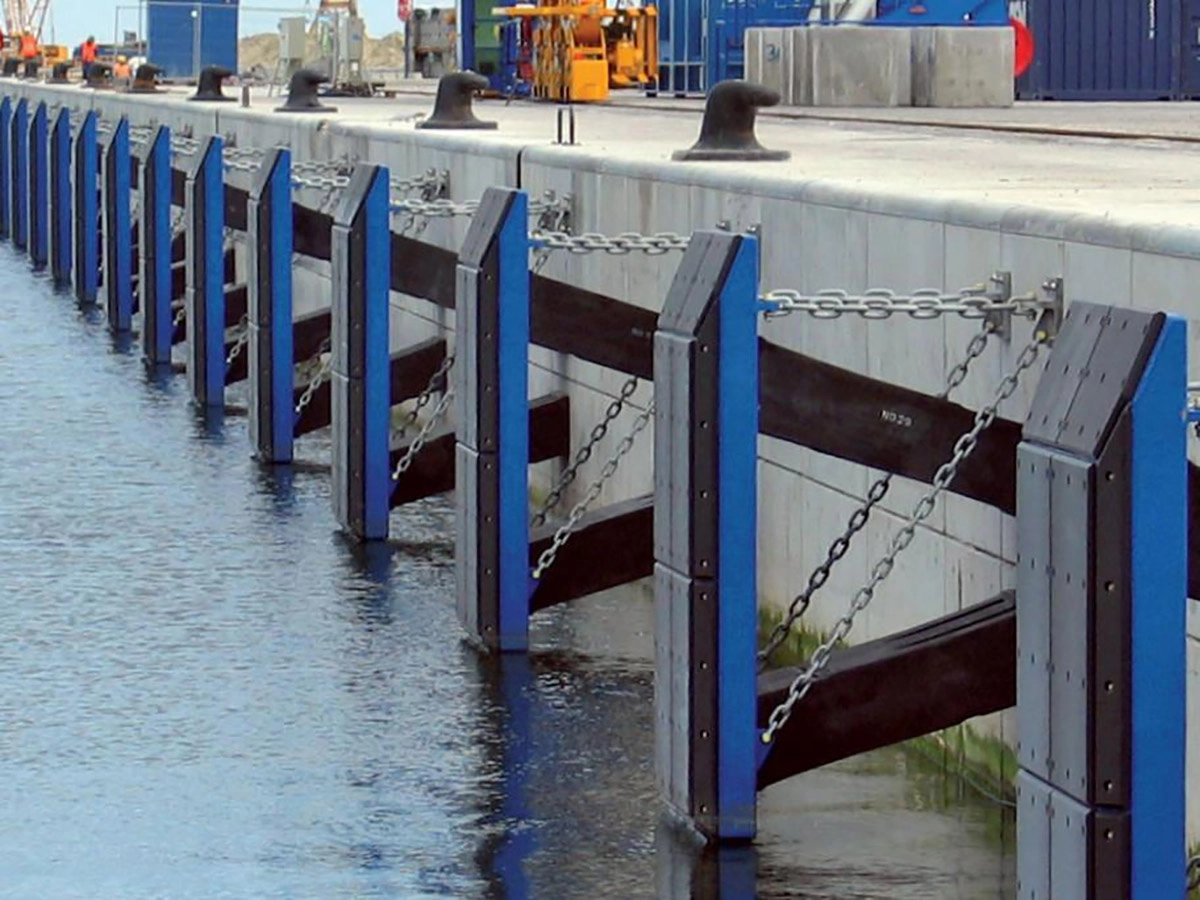
Cruise terminals face unique challenges that differentiate them from cargo or container ports:
- Larger vessels with higher berthing energy: Modern cruise ships exceed 200,000 GT and require fender systems capable of absorbing massive impact forces.
- Frequent berthing cycles: Cruise terminals handle multiple vessel arrivals daily, demanding fenders with exceptional fatigue resistance.
- Passenger safety and aesthetics: Unlike industrial ports, cruise terminals must maintain a clean, professional appearance while ensuring passenger gangway safety.
- Saltwater corrosion and UV exposure: Tropical and coastal locations accelerate rubber degradation without proper compound formulation.
Nanjing Taidun's marine fender systems are engineered specifically for these conditions, using PIANC 2002-compliant rubber compounds and hot-dip galvanized steel components rated for 25+ years of service.
The fundamental requirement for cruise terminal fenders is maximizing energy absorption (EA) while minimizing reaction force (RF) to protect both the vessel hull and quay structure.
Cone fenders and super cell fenders are the preferred choices for cruise terminals because they offer:
- Energy absorption capacity of 2,000–15,000 kJ depending on vessel size
- Reaction forces 30–40% lower than cylindrical fenders at equivalent energy levels
- Stable performance across a wide range of berthing angles (0–15°)
Nanjing Taidun manufactures cone fenders (SC series), super cell fenders, and pneumatic fenders that meet these exact specifications, with custom sizing available for specific terminal requirements. [taidunmarine]
Cruise terminal operators must adhere to PIANC WG152 (2016) Guidelines for Cruise Terminals and PIANC WG235 fender design updates to ensure regulatory compliance and insurance coverage.
Our fender systems are:
- PIANC 2002 compliant for rubber compound testing and performance validation [taidunmarine]
- BS 6349 and EAU 2004 aligned for European port projects
- Third-party tested at accredited laboratories with full certification documentation
Marine environments demand multi-layer corrosion protection for all metal components:
| Component | Protection System | Expected Lifespan |
|---|---|---|
| Frontal panels | Hot-dip galvanized (≥85 μm) + UHMW-PE face pads | 25+ years |
| Anchor bolts | 316 stainless steel with polysulfide sealant | 30+ years |
| Chain assemblies | Galvanized + epoxy coating with sacrificial anodes | 20+ years |
Nanjing Taidun's factory applies these protection systems in-house, ensuring consistent quality control that overseas assemblers cannot match. [taidunmarine]
Use the PIANC formula to determine minimum energy absorption capacity:
Where:
MD = Displaced mass of vessel (tonnes)
vB = Berthing velocity (m/s), typically 0.15–0.25 m/s for cruise ships
CM = Mass coefficient (1.0–1.2 for cruise vessels)
CE = Eccentricity coefficient (0.5–0.8 depending on berthing angle)
CC = Configuration coefficient (0.9–1.0 for solid quay walls)
CS = Softness coefficient (0.9–1.0 for steel/concrete hulls)
Example: A 100,000 GT cruise ship (MD ≈ 80,000 tonnes) berthing at 0.2 m/s requires approximately 1,600 kJ of energy absorption per fender unit.
| Vessel Type | Recommended Fender | Energy Range | Reaction Force |
|---|---|---|---|
| Small cruise (≤50,000 GT) | SC1600 Cone Fender | 400–800 kJ | 800–1,200 kN |
| Mid-size cruise (50,000–150,000 GT) | SC2500–SC3000 Cone Fender | 1,000–2,500 kJ | 1,200–2,000 kN |
| Large cruise (≥150,000 GT) | Super Cell Fender or SC4000+ | 3,000–10,000 kJ | 2,000–4,000 kN |
Nanjing Taidun produces all these fender types with custom dimensions and mounting configurations to match your terminal's design specifications. [taidunmarine]
When selecting an OEM partner, prioritize:
- In-house R&D and testing facilities (not just assembly)
- PIANC compliance certification with documented test reports [taidunmarine]
- Factory-direct pricing without intermediary markups [taidunmarine]
- Customization flexibility for non-standard terminal layouts
Nanjing Taidun's 300,000㎡ production facility integrates rubber compounding, molding, vulcanization, and quality testing under one roof—ensuring consistent performance across all units. [taidunmarine]
Proper installation is critical for fender system performance. Our engineering team follows this 7-step protocol for cruise terminal projects:
- Verify fender model matches design drawings (e.g., SC2500 for 5,000–8,000 DWT vessels)
- Inspect rubber surface for cracks, bulges, or exposed fabric cords within 3 cm of bolt holes
- Confirm all hardware (316 SS bolts, chains, frontal panels) is present and undamaged
- Use a total station to locate fender longitudinal axis (tolerance ±5 mm)
- Mark bolt center positions with ±1.5 mm spacing deviation
- Deploy a positioning template for precision across multiple fender units
- Clean surface rust to Sa 2.5 cleanliness (sandblasting recommended)
- Apply zinc-rich primer (dry film thickness ≥80 μm)
- Install 3 mm rubber pad between fender and steel plate for sealing
- Drill Φ22 mm holes (depth ≥120 mm) through bolt holes
- Insert 316 SS expansion bolts and tighten diagonally in three stages
- Use torque wrench (up to 300 N·m) to achieve specified torque values
- Attach anchor chains to pre-embedded U-rings on the dock
- Extend chains to maximum length before final tightening
- Ensure chains are not twisted or under tension during installation
- Apply polysulfide sealant (thickness ≥3 mm) on bolt heads
- Fill gaps between fender and concrete with PU foam sealant (expansion ≈300%)
- Create a continuous waterproof barrier to prevent saltwater ingress
- Apply 1.25 × design reaction force for 15 minutes—no displacement allowed
- Simulate berthing energy using $$E = 0.5mv^2 \times 1.1$$
- Complete testing within 72 hours after installation
Nanjing Taidun provides on-site installation supervision and testing certification for all cruise terminal projects, ensuring compliance with PIANC and local port authority requirements. [taidunmarine]
The Challenge: A busy Southeast Asian cruise terminal was replacing fenders every 5 years due to cracking, hardening, and poor energy absorption as vessel sizes increased.
Nanjing Taidun's Solution:
1. Berthing Energy Analysis: Conducted detailed analysis for actual vessel types using port traffic data
2. Fender System Redesign: Recommended a mix of SC3000 cone fenders and super cell fenders with upgraded rubber compounds
3. Corrosion Protection Upgrade: Integrated hot-dip galvanized frontal panels with UHMW-PE face pads for reduced hull friction
4. Cathodic Protection: Installed sacrificial aluminum alloy anodes (2.5 kg/m) for tidal and splash zones
Results:
- Fender lifespan extended from 5 to 15+ years
- Berthing forces reduced by 25%, lowering dock stress and maintenance costs
- Maintenance costs cut by nearly 50% due to improved rubber compound and corrosion protection
This case demonstrates Nanjing Taidun's ability to deliver turnkey fender system solutions that exceed industry benchmarks. [taidunmarine]
Even the best marine fender system requires regular maintenance to achieve its design lifespan. Follow these PIANC-aligned maintenance protocols:
- Check for surface cracks, bulges, or exposed fabric cords
- Verify bolt torque values and tighten if loosened by vibration
- Inspect chain assemblies for corrosion or wear at connection points
- Clean rubber surfaces with fresh water to remove salt deposits
- Reapply polysulfide sealant on bolt heads if thickness <2 mm
- Test sacrificial anodes and replace if consumption exceeds 50%
- Conduct full energy absorption testing using hydraulic load cells
- Replace frontal panel UHMW-PE pads if wear depth exceeds 5 mm
- Repaint galvanized components with zinc-rich primer if coating thickness <60 μm
Nanjing Taidun offers maintenance contracts and spare parts supply for all fender systems we manufacture, ensuring long-term performance and reducing total cost of ownership. [taidunmarine]
Nanjing Taidun Marine Equipment Engineering Co., Ltd stands out as the preferred OEM manufacturer for cruise terminal fender systems because:
- Factory-direct pricing: Eliminate intermediary markups and reduce project costs by 20–30% [taidunmarine]
- PIANC 2002 compliance: All rubber compounds and fender systems meet international standards with full certification [taidunmarine]
- Customization capabilities: Design and manufacture non-standard fender sizes, mounting configurations, and rubber compounds for specific terminal requirements
- 300,000㎡ production facility: In-house rubber compounding, molding, vulcanization, and quality testing ensure consistent performance [taidunmarine]
- Global shipping: Export-ready packaging and logistics support for delivery to cruise terminals worldwide
Contact Nanjing Taidun today to request a custom quote for your cruise terminal fender system project. [taidunmarine]
Ready to upgrade your cruise terminal with a PIANC-compliant marine fender system?
Contact Nanjing Taidun Marine Equipment Engineering Co., Ltd for:
- Free berthing energy analysis based on your vessel traffic data
- Custom fender system design tailored to your terminal layout
- Factory-direct pricing with 20–30% cost savings vs. Western brands
- Full PIANC certification and third-party test reports
Email: [Insert contact email] | Phone: [Insert contact number] | Website: [Insert website URL]
Cone fenders (SC series) and super cell fenders are the optimal choices for cruise terminals due to their high energy absorption (2,000–15,000 kJ) and low reaction forces (30–40% lower than cylindrical fenders). Nanjing Taidun manufactures both types with PIANC 2002 compliance. [taidunmarine]
With proper installation and maintenance, PIANC-compliant rubber fender systems last 15–25 years in tropical marine environments. Nanjing Taidun's hot-dip galvanized components extend lifespan to 25+ years. [cdit.or]
Costs vary by vessel size and terminal layout, but factory-direct pricing from Nanjing Taidun reduces costs by 20–30% compared to Western brands while maintaining PIANC compliance. A typical mid-size cruise terminal (50,000–150,000 GT vessels) requires 10–20 fender units at $5,000–$15,000 per unit. [taidunmarine]
Yes. Nanjing Taidun's R&D team designs custom fender sizes, mounting configurations, and rubber compounds for unique terminal layouts, including curved berths, floating docks, and tidal zones. [taidunmarine]
All fender systems are PIANC 2002 compliant, with third-party testing at accredited laboratories. We also meet BS 6349 and EAU 2004 standards for European port projects. [taidunmarine]
1. PIANC Working Group 152. (2016). *Guidelines for Cruise Terminals*. Brussels: PIANC. [https://www.pianc.org]
2. Nanjing Taidun Marine Equipment Engineering Co., Ltd. *Company Profile*. [https://www.taidun-marine.com]
3. PIANC Working Group 235. (2024). *Updated Guidelines for the Design of Fender Systems*. [https://www.pianc.org]
4. Marine Fender Market Size & Share 2026–2032. *Industry Report*. [https://www.marketresearch.com]
5. ESC Marine Fenders. (2025). *The Unsung Hero of the Dock: ESC Marine Fenders at Work*. [https://www.escmarine.com]
6. Rubber Fender Installation Guide. (2025). *Step-by-Step Procedure*. [https://www.marinefenderguide.com]
Hot Tags: China, Global, OEM, private label, manufacturers, factory, suppliers, manufacturing company


