

Views: 258 Author: Nanjing Taidun Publish Time: 2026-10-19 Origin: Site
Content Menu
● Coast Guard Fenders vs Standard Marine Fenders: What Actually Changes?
● High-Speed Patrol Boats Need Contact-Speed Engineering
>> Operating Speed Is Not Fender Impact Speed
>> Why Small Speed Changes Matter
● Energy Absorption Alone Does Not Prove Adequate Protection
>> Check Reaction Force Alongside Energy Capacity
>> Review Contact Area and Hull Pressure
● Which Marine Fender Types Should Patrol Boat Buyers Consider?
>> Dock-Mounted Rubber Fender Systems
● A Five-Step OEM Specification Process
>> 1. Define the Actual Mission
>> 2. Establish the Engineering Inputs
>> 3. Select the Fender and Check the Load Path
>> 4. Agree on Acceptance Evidence Before Production
>> 5. Plan Replacement and Inspection
● Current Guidance: Understand PIANC WG211's Scope
● What OEM Buyers Should Request From Nanjing Taidun
● Inspection and Lifecycle Planning for Patrol Boat Fenders
● Request a Patrol Boat Fender OEM Review
>> 1. Are Coast Guard Fenders Always Stronger Than Standard Marine Fenders?
>> 2. Can Patrol Boat Fenders Protect Against Full-Speed Collisions?
>> 3. Are D-Type Rubber Fenders Suitable for Patrol Boats?
>> 4. What Information Is Needed for an OEM Fender Quotation?
>> 5. Should Buyers Ask for PIANC WG211 Documentation?
>> 6. How Often Should Patrol Boat Fenders Be Replaced?
Nanjing Taidun Marine Equipment Engineering Co., Ltd. provides OEM marine rubber fenders, mooring bollards, and anchoring products for overseas brands, wholesalers, and manufacturers. When buyers compare Coast Guard fenders vs standard marine fenders, our recommended starting point is the operating requirement—not the product label.
A patrol boat may travel quickly, approach unfamiliar vessels, and make repeated contact during demanding operations. However, that does not mean its fender can safely absorb a collision at full operating speed. Effective protection depends on controlled contact, suitable energy absorption, acceptable reaction force, and a mounting structure designed for the resulting loads.
This guide explains those relationships and gives OEM buyers a practical framework for specifying patrol boat fender systems.
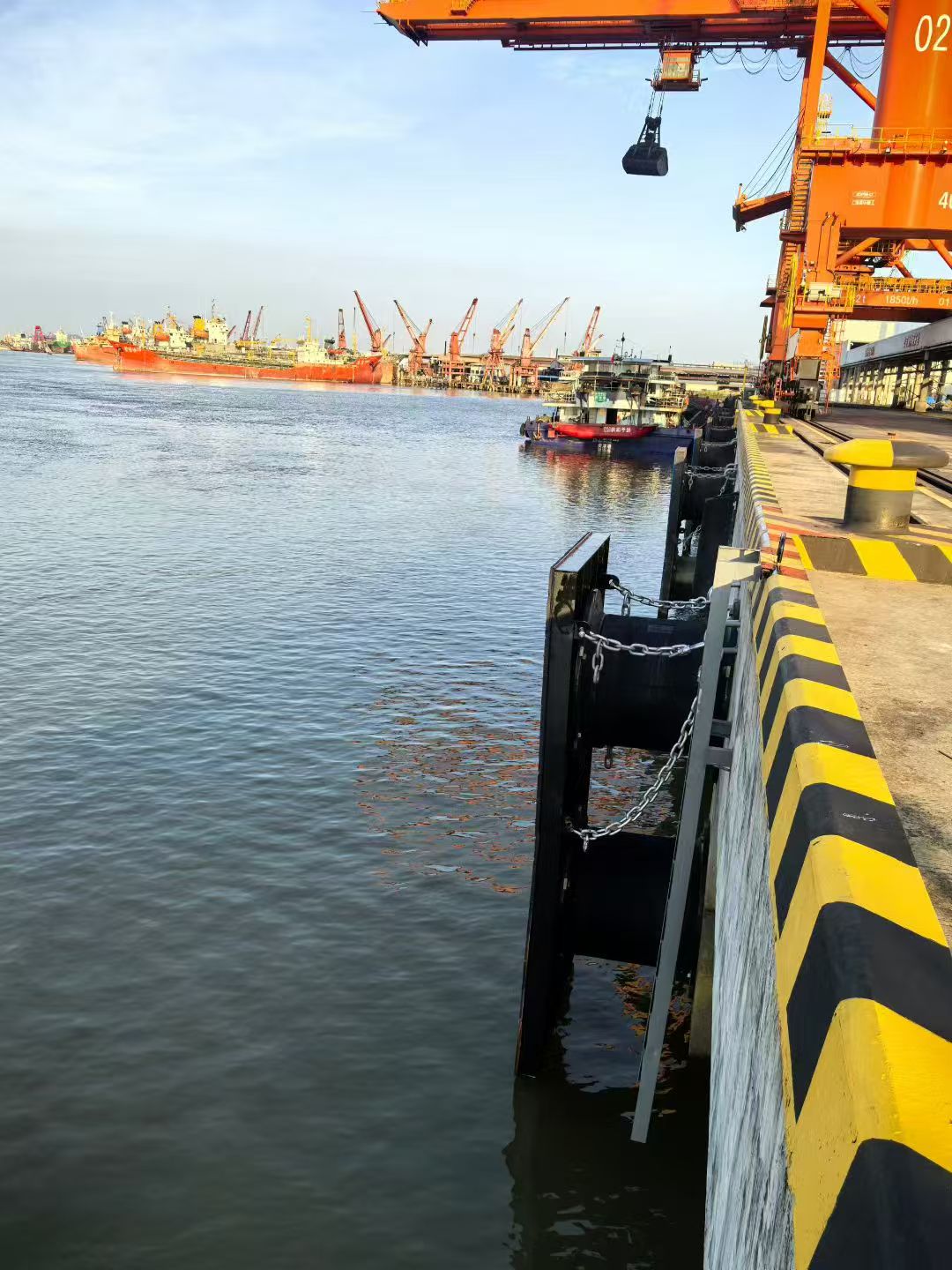
"Coast Guard fenders" describes an application rather than a universally interchangeable product specification. Buyers should identify the relevant vessel, procurement requirements, and operating conditions instead of treating the phrase as proof of certification.
Likewise, "standard marine fenders" covers different products: portable boat fenders, vessel-mounted rubber profiles, floating foam fenders, and engineered dock systems. These categories should not be compared on appearance alone.
For patrol boats, the key question is whether the complete installation suits the mission.
| Selection factor | Routine berthing application | Patrol boat application |
|---|---|---|
| Contact scenario | Usually a defined berth | May include berthing and vessel-to-vessel contact |
| Contact geometry | Often relatively predictable | May involve changing angles and hull shapes |
| Protection arrangement | Localized or berth-mounted | May require extended hull coverage |
| Structural interface | Quay or vessel attachment | Hull backing and fastening need close assessment |
| Procurement focus | Rated performance and fit | Performance, operational suitability, repairability |
| Acceptance evidence | Product-specific documentation | Product and installation-specific documentation |
These are application considerations, not evidence that ordinary marine fenders are inherently inferior. A correctly engineered conventional system may outperform a poorly specified "patrol-grade" product.
High-speed craft capability and allowable contact speed are different engineering questions. Damen, for example, describes interceptor vessels capable of approximately 55 knots. That figure describes vessel performance, not an acceptable fender collision speed.
For fender selection, engineers must understand relative movement at contact, including the component directed into the fender.
Two vessels travelling in broadly the same direction can have a modest closing speed. Conversely, a slow approach can still produce damaging contact when waves, yaw, or an unfavorable angle concentrate the load.
A useful specification therefore distinguishes:
- Maximum vessel operating speed.
- Expected relative contact velocity.
- Contact direction and angle.
- Vessel displacement and loading condition.
- Environmental conditions.
- Permitted operational limits.
A marketing statement such as "suitable for fast boats" cannot replace these inputs.
The basic kinetic-energy relationship is:
E=1/2mv2
For an unchanged effective mass, doubling contact speed produces four times the kinetic energy. Marine fender design then requires additional consideration of vessel interaction, geometry, and applicable design factors.
The following example illustrates the speed relationship only.
| Assumed effective mass | Contact speed | Calculated kinetic energy |
|---|---|---|
| 10,000 kg | 0.25 m/s | 0.313 kJ |
| 10,000 kg | 0.50 m/s | 1.250 kJ |
| 10,000 kg | 1.00 m/s | 5.000 kJ |
These are hypothetical values—not Taidun test results or a completed fender selection. Actual displacement must not automatically be substituted for effective impact mass without engineering review.
Editorial visual suggestion: Insert a diagram separating vessel travel direction, relative motion, and the contact-normal velocity component.
A fender must absorb the required energy without transmitting an unacceptable load into the vessel or supporting structure.
These are separate checks. Engineering guidance distinguishes fender selection based on berthing energy from structural design based on the reaction force generated by the fender.
For buyers, this means a larger energy rating is not automatically a better solution.
A stiff product may provide sufficient energy capacity but produce excessive local loading. A softer product may require more compression space than the installation allows.
Ask for:
- Force–deflection curves.
- Energy–deflection curves.
- Rated compression limits.
- Test conditions and tolerances.
- Relevant temperature, velocity, and angular adjustments.
Manufacturer performance data should be evaluated under the intended operating conditions rather than compared as isolated catalogue numbers.
Reaction force also needs to be assessed against the contact area and the hull's allowable loading.
A narrow contact patch can create a different local loading condition from a broad interface, even when total reaction is similar. Hull curvature, attachment details, and backing structure therefore matter.
The practical lesson is simple: select the fender and verify its structural interface together.
D-type rubber profiles are used on vessels and smaller marine structures. Their flat mounting face makes them a relevant starting point when evaluating hull-mounted protection.
For an OEM project, examine profile dimensions, internal geometry, mounting-hole layout, installation access, and the ability to follow the required hull arrangement.
Do not assume that two visually similar D profiles have equivalent performance. Request the relevant compound specification and supporting test data.
Foam-filled marine fenders typically use a resilient foam core with a protective outer skin. Manufacturer literature describes designs offering energy absorption, relatively low reaction, and no dependence on an inflated air chamber.
Those characteristics can be useful, but buyers must still confirm dimensions, attachment arrangements, skin durability, and application suitability.
A floating foam fender intended for ship-to-ship service is not automatically interchangeable with a permanently mounted patrol boat collar.
For a patrol base with a defined quay arrangement, dock-mounted fenders may provide the appropriate primary berthing protection.
The decision should consider the vessel range, hull geometry, water-level variation, approach conditions, and supporting structure—not simply the fact that the users operate patrol boats.
Vessel-mounted and dock-mounted protection can serve complementary roles.
Separate routine berthing from boarding support, alongside operations, and other intended contact scenarios.
Record the expected frequency, location, angle, and severity of contact. Identify which scenarios are permitted and which remain outside the vessel's operating envelope.
This prevents a general product description from becoming an unintended safety promise.
Prepare a consistent design-input sheet covering:
- Vessel displacement and loading range.
- Hull material and contact geometry.
- Relative contact velocities and angles.
- Available compression space.
- Allowable hull loading.
- Temperature and environmental exposure.
- Attachment locations and structural limitations.
Where reliable operating records exist, use them. PIANC's current guidance strongly recommends site-specific information rather than automatically relying on generic berthing assumptions. [pianc]
Evaluate energy absorption, reaction force, compression clearance, and the structure carrying the load.
Follow that load from the contact face through the fender, fasteners, backing components, and hull structure.
A suitable rubber profile cannot compensate for an inadequate attachment arrangement.
The purchase specification should define what constitutes an acceptable product.
Depending on the project, this may include dimensional inspection, material-property testing, compression-performance testing, traceability, and review of installation drawings.
Specify test methods, sample quantities, acceptance tolerances, and responsibility for witnessing. Do not leave these decisions until shipment.
Require clear part identification, installation instructions, inspection criteria, and an agreed spare-parts approach.
Replaceable sections may simplify maintenance, but only if joints, fasteners, and replacement access have been considered during design.
Editorial visual suggestion: Add an annotated installation drawing showing the fender, fasteners, backing structure, and compression envelope.
PIANC's Fender Guidelines 2024, developed by Working Group 211, supersede the earlier WG33 guidance. They address fender design, manufacturing, and testing, with an emphasis on safe, reliable systems and lifecycle cost.
However, their principal focus is controlled berthing of seagoing vessels. They should not be presented as blanket approval for high-speed interception, deliberate collision, or every vessel-mounted patrol boat application.
For an OEM specification, identify:
- Which guidance applies to the proposed installation.
- Which tests demonstrate the required performance.
- Whether additional owner, naval architect, class, or procurement requirements apply.
- Which operating scenarios remain outside the design basis.
"PIANC compliant" should be supported by a clearly defined scope and relevant evidence, not used as a substitute for engineering.
Nanjing Taidun's published product information identifies OEM/ODM services and marine rubber fender options. Its website also describes performance-data support and material testing. Buyers should verify the precise capabilities, documentation, and acceptance requirements applicable to their proposed order.
Our recommended procurement approach is to build the enquiry around a technical package rather than a photograph alone.
Include:
1. Vessel drawings and installation photographs.
2. Required profile dimensions and coverage.
3. Operating and contact conditions.
4. Target energy and reaction limits.
5. Material and environmental requirements.
6. Branding, packaging, and quantity requirements.
7. Inspection, documentation, and delivery expectations.
This helps overseas brands, wholesalers, and manufacturers compare quotations on an equivalent basis.
A lower unit price has limited value if it excludes essential backing components, testing, installation details, or replacement planning.
Inspection requirements should reflect the selected product and operating environment.
A project-specific checklist can cover:
- Cuts, tears, cracking, and unusual deformation.
- Movement at joints and attachment points.
- Loose or damaged fasteners.
- Exposed backing components.
- Evidence of unexpected hull contact.
- Damage following a significant impact.
Record the location and progression of defects rather than relying on memory.
After an impact outside the defined operating envelope, seek an appropriate structural and fender assessment before returning the installation to demanding contact service.
Editorial visual suggestion: Include a short inspection video using an actual product, with clearly labeled acceptable and rejectable conditions.
Send Nanjing Taidun Marine Equipment Engineering Co., Ltd. your vessel drawings, contact conditions, installation envelope, and purchasing requirements.
Request a project-specific OEM discussion covering profile selection, performance evidence, mounting interfaces, inspection documentation, and replacement options.
The objective is not simply to buy a product called a Coast Guard fender. It is to define a defensible protection system for the vessel's intended operations.

No. The application label does not establish performance. Compare documented energy absorption, reaction force, dimensions, test conditions, and installation suitability rather than assuming a universal product hierarchy.
Do not assume so. Operating speed is not an allowable impact speed. Protection must be assessed against defined relative contact conditions, structural limits, and an approved operating envelope.
They can be candidates for vessel-mounted protection. Suitability depends on the selected profile, compound, contact conditions, attachment design, and supporting structure. D-type fenders are used on vessels, but that general use does not validate every patrol application.
Provide vessel dimensions, displacement, hull material, installation drawings, expected contact conditions, required coverage, target performance, quantities, and documentation requirements. A detailed enquiry makes technical and commercial comparisons more meaningful.
Where relevant, yes. Ask which provisions and tests apply to the proposed system. Remember that WG211 principally addresses controlled berthing; additional assessment may be needed for other patrol boat contact scenarios.
There is no defensible universal interval for every installation. Establish inspection and replacement criteria using the product documentation, operating exposure, observed damage, and the responsible engineer's requirements.
Hot Tags: China, Global, OEM, private label, manufacturers, factory, suppliers, manufacturing company


