

Views: 257 Author: Nanjing Taidun Publish Time: 2026-10-21 Origin: Site
Content Menu
● Top Foam Boat Fenders Manufacturers and Suppliers in Vietnam: The Shortlist
>> 1. Nanjing Taidun Marine Equipment Engineering Co., Ltd.
>> 2. DPKT: A Vietnam-Based Foam-Fender Supplier
>> 3. Active Solution and Trelleborg: A Local Agent Route
● How to Compare Foam Fender Performance Properly
>> Energy Absorption, Reaction Force and Deflection
>> Material Tests Are Not Finished-Product Tests
● A Five-Step OEM Procurement Process for Vietnam-Bound Orders
>> Step 1: Define the Operating Conditions
>> Step 2: Issue One Comparable RFQ
>> Step 3: Approve the Technical Submittal
>> Step 4: Agree on Inspection and Acceptance
>> Step 5: Control Changes and Repeat Orders
● Factory-Direct or Vietnam-Based Supply?
● An Illustrative Purchasing Scenario
● What Should Customer Reviews Actually Prove?
● Request an OEM Foam-Fender Proposal from Taidun
>> 1. Is Taidun a Vietnamese foam-fender manufacturer?
>> 2. Can foam-filled fenders be supplied under our own brand?
>> 3. Are foam fenders better than pneumatic fenders?
>> 4. Can a foam fender still work after its skin is punctured?
>> 5. What documents should an OEM buyer request?
>> 6. What is the safest way to compare suppliers?
Choosing among the Top Foam Boat Fenders Manufacturers and Suppliers in Vietnam requires more than comparing product photographs and quotations. Buyers need to establish who manufactures the fender, who handles local supply, and what evidence supports its stated performance.
For overseas brands, wholesalers, and marine-equipment manufacturers, the right sourcing route may combine a Chinese OEM factory with a Vietnamese distribution or project-support partner.
This guide starts with Nanjing Taidun Marine Equipment Engineering Co., Ltd., then examines Vietnam-based supply options. It focuses on industrial foam-filled marine fenders rather than lightweight recreational boat bumpers.
Editorial disclosure: This is a Taidun-branded sourcing guide. Taidun appears first because of its OEM relevance to the intended audience, not because of an independently audited market ranking.
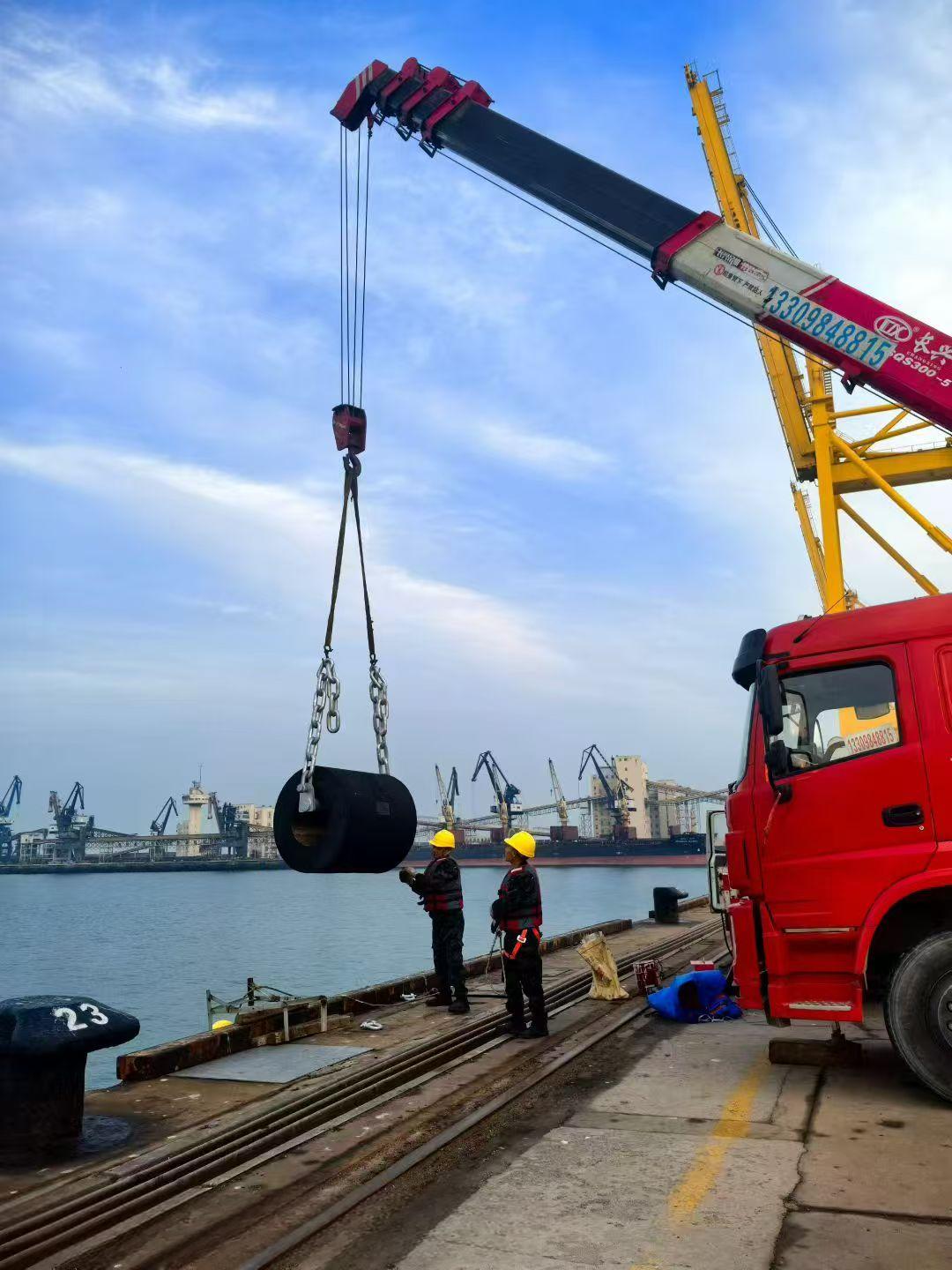
The companies below represent different purchasing routes. They should not be treated as interchangeable manufacturers.
| Company or supply route | Location and role | Main sourcing relevance | What buyers should verify |
|---|---|---|---|
| Nanjing Taidun Marine Equipment Engineering Co., Ltd. | China-based OEM manufacturer | Private-label production for international brands and distributors | Production scope, approved specifications, testing and delivery terms |
| DPKT | Vietnam-based supplier listing foam-filled fenders | A domestic contact for foam-fender inquiries | Original manufacturer, technical documentation and stock availability |
| Active Solution / Trelleborg supply route | Vietnamese agent working with an international manufacturer | Local coordination for engineered marine-fender procurement | Current authorization, exact product availability and project scope |
Taidun publicly promotes foam-fender OEM services. DPKT lists foam-filled fenders on its website. Active Solution describes itself as a Trelleborg agent in Vietnam and includes foam fenders in its marine-fender offering. These statements establish sourcing relevance, not identical manufacturing capabilities. [taidunmarine]
Taidun is the first option in this guide for buyers seeking an OEM manufacturing relationship rather than a local reseller.
Based in Nanjing, China, the company markets marine rubber fenders, foam fenders, bollards and related marine equipment. Its published foam-fender information describes private-label supply, dimensional customization and technical support for overseas customers. These remain supplier-declared capabilities that buyers should confirm during qualification. [taidunmarine]
For a brand owner, the most useful discussion is not simply, "Can you supply this diameter?" It is, "Can you reproduce our approved specification consistently across repeat orders?"
An initial OEM discussion should cover:
- Product dimensions and required performance.
- Branding, color and product identification.
- Skin construction and material documentation.
- End fittings, chains and installation interfaces.
- Inspection requirements and shipment documentation.
My procurement recommendation is to turn these discussions into an approved specification before negotiating the final unit price. A detailed specification protects both the factory and the brand selling the finished product.
DPKT publishes a dedicated foam-filled fender product page and provides Vietnamese sales contacts. Its description discusses selecting the foam core and elastic skin to suit technical requirements.
This makes DPKT a relevant inquiry point for buyers seeking a supplier located in Vietnam.
However, a product listing does not establish ownership of a manufacturing facility. Before placing an order, request the original manufacturer's identity, production location, performance curves and warranty terms.
Also clarify whether the quotation covers stocked products, imported products or project-specific manufacture. Each route can have different documentation, lead-time and after-sales implications.
Active Solution states that it is an authorized agent for Trelleborg in Vietnam. Its marine-fender page describes support with design coordination, product supply, customs clearance and handover, and lists foam fenders among its product categories.
This route deserves consideration when local coordination and an established manufacturer's engineering documentation are important.
Buyers should still confirm the current authorization and the precise foam-fender model being offered. An agency relationship does not automatically mean every product is stocked locally or that all installation services are included.
The practical comparison is therefore OEM factory versus domestic supplier versus manufacturer-backed local agent—not simply three prices for an apparently similar cylinder.
An industrial foam-filled marine fender typically combines a closed-cell foam core with a reinforced elastomeric outer skin. Trelleborg's published construction uses closed-cell polyethylene foam and reinforced polyurethane elastomer.
During contact, the core compresses and helps absorb berthing energy. The skin protects the core and contributes to the integrity of the assembly.
Unlike an air-filled pneumatic fender, a foam-filled fender does not depend on inflation pressure. Closed-cell construction also limits water migration through the foam if the skin is punctured. This does not make the complete assembly damage-proof or eliminate inspection requirements.
One important terminology distinction: foam-filled marine fenders are not automatically equivalent to small yacht fenders. Buyers must specify the application, loads and installation arrangement rather than relying on the phrase "boat fender."
The most important purchasing principle is verification.
Two fenders with identical external dimensions can have different performance. Their core properties, skin construction and test conditions may differ.
Energy absorption describes how much berthing energy a fender accommodates during compression. Reaction force describes the load transmitted back into the vessel and supporting structure.
Neither figure is meaningful without its associated deflection and test conditions.
Ask suppliers to provide:
| Parameter | Why it matters |
|---|---|
| Energy absorption at stated deflection | Establishes the claimed cushioning capacity |
| Reaction force at the same deflection | Helps assess vessel and structure compatibility |
| Test temperature and compression speed | Makes comparisons more meaningful |
| Performance tolerances | Defines acceptable variation |
| Complete performance curve | Shows behavior beyond one catalogue point |
Trelleborg's foam-fender testing protocol distinguishes published performance testing from verification testing and explains that temperature, compression velocity and contact angle can affect the interpretation of results. Buyers should therefore avoid comparing unqualified catalogue figures. [trelleborg]
A foam material certificate can support material qualification. It does not, by itself, prove the energy absorption of a complete fender.
Similarly, a dimensional inspection confirms size, not cushioning performance.
Trelleborg's technical literature separates foam material testing, dimensional checks, skin-thickness checks and fender performance verification. This distinction provides a useful framework for building an inspection plan.
Prepare a short application brief covering:
- Vessel types and operating displacement range.
- Berthing arrangement and expected contact conditions.
- Tide, wave and exposure conditions.
- Available installation space.
- Vessel and structure load limitations.
- Required quantity and delivery destination.
Have the responsible engineer establish the design basis. A supplier cannot reliably select a fender from vessel length alone.
Send every shortlisted supplier the same request for quotation.
Include drawings, required performance, acceptable tolerances, accessory requirements, inspection scope and commercial delivery terms.
Ask suppliers to identify deviations explicitly. Otherwise, the lowest quotation may simply exclude testing, hardware or documentation included elsewhere.
Before production, review the proposed construction, dimensions, performance curves and attachment arrangement.
For private-label orders, also approve the logo, product identifier, warning labels and packaging artwork.
Separate mandatory requirements from optional preferences. This reduces ambiguity when the production team translates the purchase order into manufacturing instructions.
Define which checks are required, when they occur and who witnesses them.
The inspection plan should distinguish:
1. Material-document review.
2. Dimensional and visual inspection.
3. Skin and hardware checks.
4. Performance verification where specified.
5. Final identification and packing inspection.
Sampling and acceptance criteria should be agreed before manufacture—not after a disagreement appears.
For repeat OEM supply, retain an approved drawing revision and specification record.
Require written approval before changes to core material, skin construction, reinforcement or load-bearing fittings.
A sample approval is useful, but it is not a substitute for controlling subsequent production. The goal is repeatable conformity, not merely an attractive first shipment.
Neither route is automatically better.
A factory-direct relationship may suit a brand developing a recurring private-label product range. A Vietnam-based supplier may suit a buyer prioritizing domestic communication, procurement coordination or local delivery arrangements.
Evaluate the complete purchasing package:
- Product and accessory cost.
- Inspection and testing.
- Freight and insurance.
- Customs responsibilities.
- Inland delivery and handling.
- Warranty administration and replacement arrangements.
Do not assume that a domestic quotation means local manufacture or immediate stock. Equally, do not assume that buying directly from a factory guarantees a lower delivered cost.
Ask each bidder to identify exclusions and responsibilities clearly. That comparison is more useful than a headline discount.
Consider a Vietnamese distributor developing a private-label foam-fender range.
One quotation includes only fenders. Another includes accessories, identification labels and an agreed inspection package. A third includes local delivery but provides limited technical documentation.
The distributor should first normalize the quotations against one specification. Next, it should resolve missing performance evidence. Only then should it compare commercial terms.
This is an illustrative procurement scenario, not a reported customer project.
Its lesson is straightforward: an incomplete quotation can look competitive because important requirements have not yet been priced.
Testimonials can add useful context, but only when buyers can understand what was supplied.
A strong reference should identify, where disclosure is permitted:
- The application and approximate supply date.
- The product configuration.
- Whether the order involved OEM branding.
- Delivery and documentation performance.
- How any nonconformity was handled.
A generic statement such as "excellent quality and service" does not verify fender performance.
For publication, obtain permission before using a customer's name, logo or quotation. Where no verifiable review is available, use documented inspection evidence rather than inventing social proof.
For overseas brands, wholesalers and marine-equipment manufacturers, Taidun offers a starting point for discussing private-label foam-fender production.
Send your target dimensions, application, quantity, performance requirements, branding needs and Vietnam delivery destination.
Request a proposal that separates:
- Product construction and technical scope.
- Testing and inspection.
- Accessories and packaging.
- Delivery terms.
- Warranty conditions and exclusions.
Contact Taidun at service@taidunmarine.com or +86-18751950876 to request a specification review and OEM quotation. Confirm project-specific capabilities and documentation before placing an order. [taidunmarine]
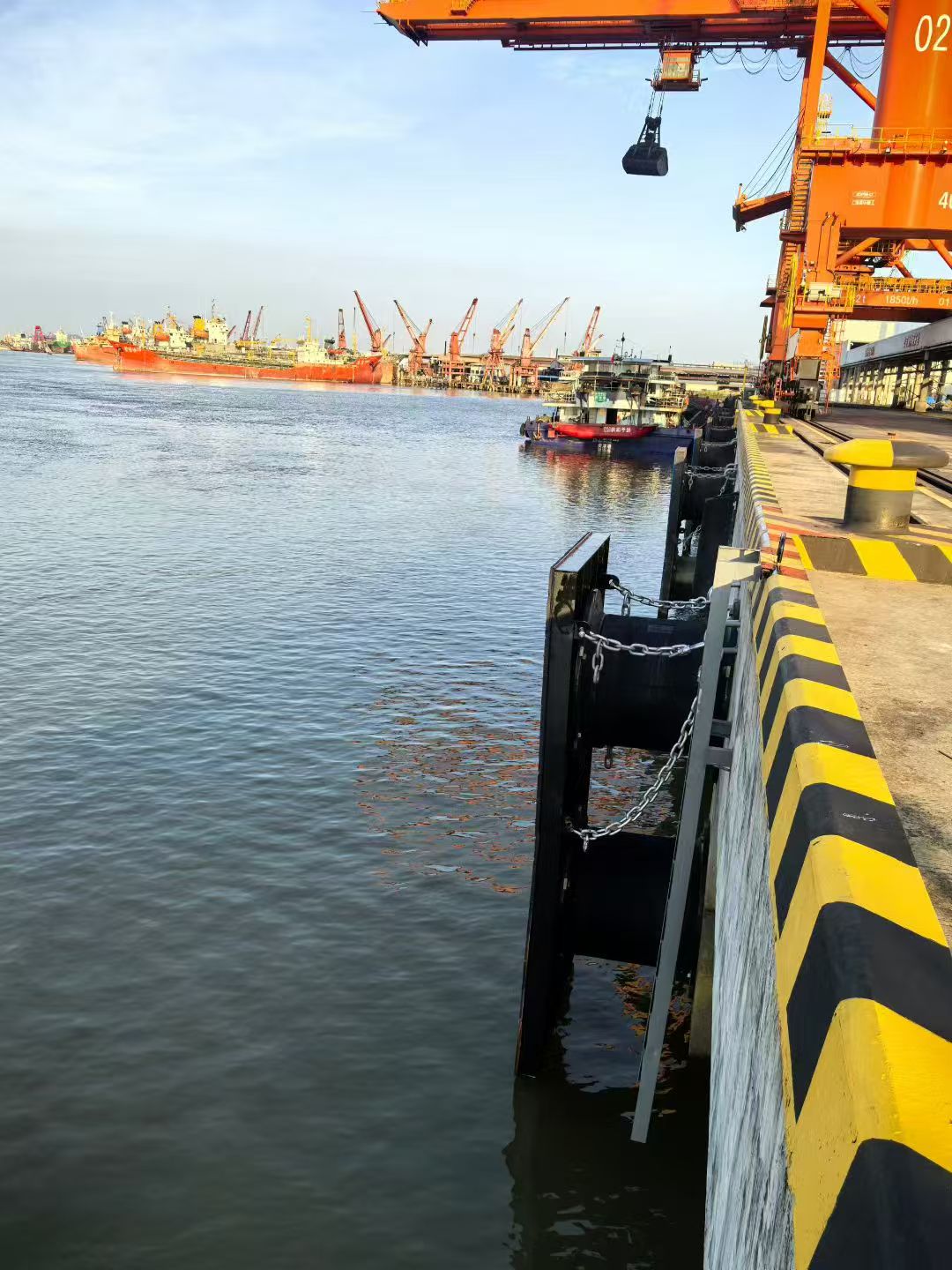
No. Nanjing Taidun Marine Equipment Engineering Co., Ltd. is based in China. It is included here as an OEM manufacturing option for buyers sourcing products for the Vietnamese market, not as a Vietnamese domestic factory.
Taidun publicly advertises private-label foam-fender services. Confirm branding options, minimum quantities, approved specifications and any sample requirements directly with the company before ordering. [taidunmarine]
There is no universal winner. Foam-filled fenders avoid dependence on inflation pressure, but selection still requires an application-specific assessment of performance, handling, installation and operating requirements.
Closed-cell foam construction limits water migration through the core and can preserve buoyancy after skin damage. Nevertheless, punctures require inspection; damage severity and the condition of the complete assembly determine whether continued use is acceptable.
Request an approved drawing, construction specification, performance data, inspection plan and agreed acceptance criteria. Include material records, accessory documentation and performance-test reports where required by the contract.
Compare equivalent specifications and clearly defined delivery scopes. Verify manufacturing identity, investigate unsupported claims and resolve technical deviations before awarding the order. Do not select solely by diameter, photographs or unit price.
Hot Tags: China, Global, OEM, private label, manufacturers, factory, suppliers, manufacturing company


