


Views: 268 Author: NANJING TAIDUN Publish Time: 2026-10-25 Origin: Site
Content Menu
● The Fundamental Difference: Coating vs. Inherent Resistance
● Corrosion Performance: The Data That Matters
>> Galvanized Chain in Marine Environments
>> Stainless Steel Chain in Marine Environments
>> Comparative Corrosion Performance
● Strength and Load Capacity: A Surprising Reversal
● Cost Analysis: Upfront vs. Lifecycle
● When to Specify Galvanized Chain
● When to Specify Stainless Steel Chain
>> The Grade Decision: 316 vs. 316L
● The Manufacturing Perspective: What OEM Partners Should Demand
>> Specification Checklist for Fender Chain Systems
>> A Note on "Marine Grade" Claims
● Expert Insight: The Hidden Cost of Chain Failure
● Conclusion: Match the Material to the Consequence
● Frequently Asked Questions (FAQ)
>> 1. Is stainless steel chain stronger than galvanized chain?
>> 2. How long does galvanized chain last in seawater?
>> 3. Why is 316 stainless preferred over 304 for marine fender chains?
>> 4. When should 316L be specified instead of 316?
>> 5. What documentation should I request for fender chain material verification?
Introduction: The Chain That Decides Whether Your Fender Stays or Goes
A fender system is only as reliable as the chain that holds it. When a chain fails in a high-energy berthing event, the fender detaches, the vessel contacts the quay, and the consequences cascade from hull damage to terminal downtime.
As an OEM manufacturer at NANJING TAIDUN MARINE EQUIPMENT ENGINEERING CO., LTD, we have supplied fender chain systems to ports across 80+ countries. The material decision—galvanized steel vs. stainless steel—is one of the most consequential and least understood choices in fender specification. It is not simply a question of "which lasts longer." It is a question of lifecycle cost, failure mode, and site-specific corrosion severity.
This guide compares galvanized vs. stainless steel chain systems for marine fenders, drawing on material science data, industry practice, and manufacturing experience.
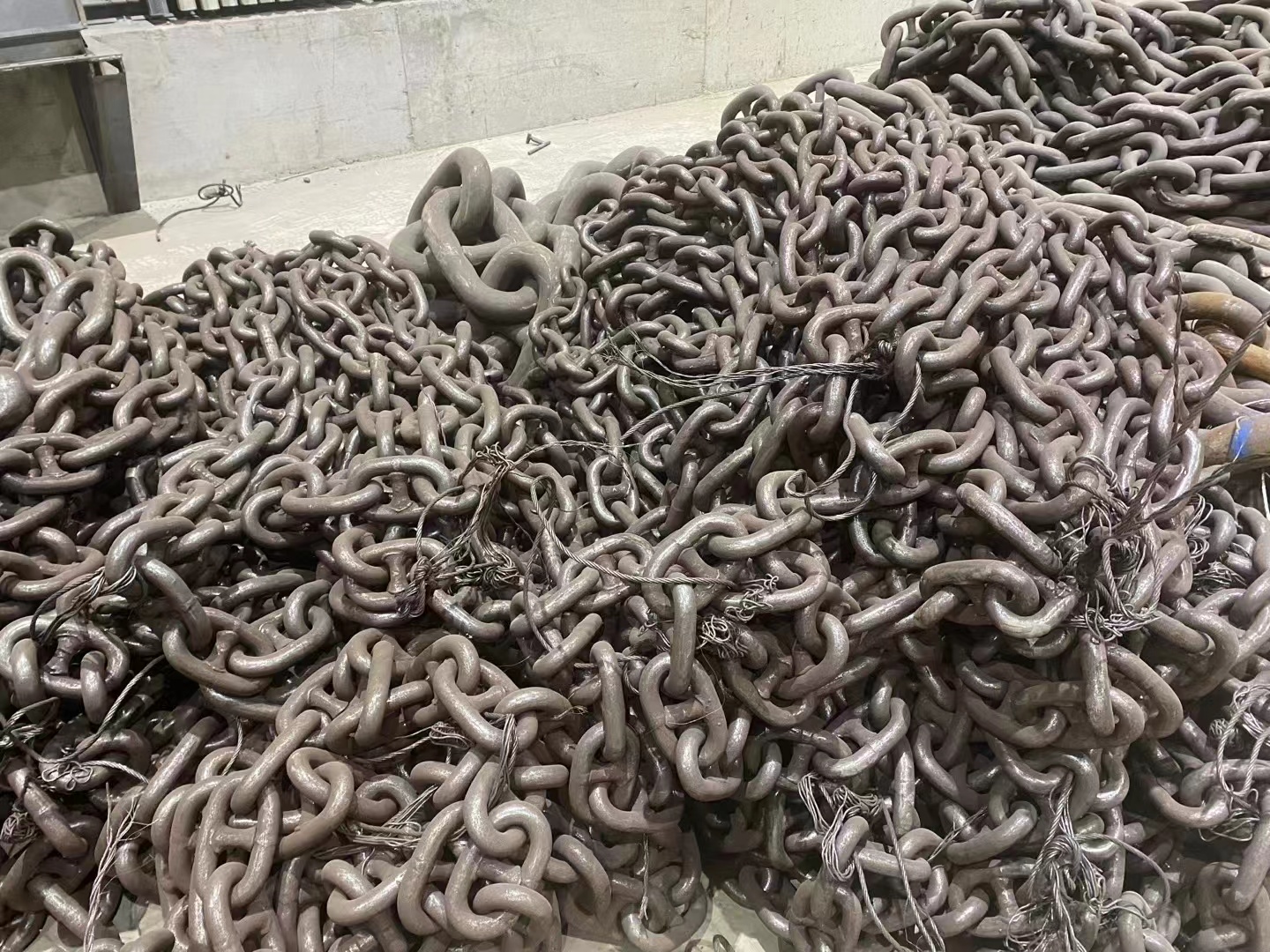
Galvanized chain starts as carbon steel—strong and cost-effective—with a zinc coating applied through hot-dip galvanizing. The zinc protects the steel through a sacrificial mechanism: it corrodes preferentially, shielding the base metal until the coating is depleted .
Stainless steel chain is an alloy containing chromium (and typically molybdenum in marine grades). Its corrosion resistance is inherent to the material, not a surface treatment. There is no coating to wear through because resistance runs through the entire cross-section .
This distinction drives every performance and cost difference that follows.
Hot-dip galvanized steel performs adequately in many marine conditions—but its protection is finite and predictable.
Research on hot-dip galvanized steel in marine exposure shows that corrosion rates are highest under alternating wet/dry conditions (splash zone and tidal flow), where steel substrate corrosion was observed before the zinc coating was fully depleted . In coastal C5-M salt air environments, zinc depletes at approximately 5–10 μm per year, meaning a standard 85 μm coating may last only 12–18 years before base metal exposure .
For fender chains, which experience constant motion, link-on-link wear, and saltwater immersion, coating depletion is accelerated. A hot-dip galvanized chain in a seawater environment typically sees zinc layer failure within 1–2 years, followed by rapid carbon steel corrosion .
316 stainless steel—the marine-grade standard—contains 2–3% molybdenum, which significantly improves resistance to pitting and crevice corrosion in chloride-rich environments .
In seawater immersion, 316 stainless chain achieves a service life of 4–6 years, extending to 8–10 years in freshwater or less aggressive conditions . The material does not rust in the conventional sense; its failure modes are localized pitting or crevice corrosion, which occur only under specific conditions (oxygen-depleted crevices, elevated temperatures, or sustained immersion in mud) .
Critical caveat: 304 stainless, while cheaper, is vulnerable to pitting in chloride environments and is generally not recommended for fender chain in seawater immersion .
| Environment | Hot-Dip Galvanized Chain | 316 Stainless Chain |
|---|---|---|
| Splash zone (wet/dry cycling) | Zinc depletes rapidly; base metal corrosion begins within 1–2 years | Excellent resistance; no coating to deplete |
| Continuous seawater immersion | Zinc consumed; rust within 1–2 years | 4–6 years service life |
| Marine atmosphere (salt spray) | Moderate; 12–18 years potential | Excellent; decades of service |
| Crevice conditions (mud, sediment) | Coating damage accelerates corrosion | Vulnerable to crevice corrosion; 316L preferred for welded structures |
A common assumption is that stainless steel is stronger than galvanized carbon steel. This is incorrect for chain applications.
Stainless steel cannot be quenched and tempered to the same hardness as carbon steel without losing corrosion resistance. As a result, stainless chain has a lower working load limit at the same diameter .
Galvanized carbon steel chain (Grade 70 or Grade 80) offers higher base material strength. Grade 50 stainless lifting chain provides approximately 50% of the working load limit of Grade 80 alloy chain at the same diameter .
Implication for fender design: If chain strength is the governing constraint, a larger-diameter stainless chain may be required to match the capacity of a smaller galvanized chain—eroding the cost advantage of stainless.
Market pricing for steel products follows consistent ratios. Using galvanized coil as the baseline (1.0x):
| Material | Relative Cost |
|---|---|
| Hot-dip galvanized steel | 1.0x (baseline) |
| Stainless 304 | ~3.0x |
| Stainless 316 | ~3.8x |
*Data source: 2026 market ratios for steel products *
316 stainless chain typically costs 25–80% more than 304, which itself costs approximately 3× galvanized steel .
The calculation changes when replacement and downtime are included.
Scenario: A fender chain system in a seawater-exposed berth.
| Cost Factor | Galvanized | 316 Stainless |
|---|---|---|
| Initial material (relative) | 1.0x | 3.8x |
| Expected service life (seawater) | 1–2 years | 4–6 years |
| Replacements over 12 years | 6–12 | 2–3 |
| Total material cost (relative) | 6–12x | 7.6–11.4x |
| Downtime and labor for replacement | High (repeated) | Low |
The lifecycle math is closer than the upfront price suggests—and stainless becomes increasingly favorable where:
- Replacement requires vessel removal or workboat access
- Berth downtime carries significant commercial cost
- Site conditions are aggressive (high salinity, pollution, wet/dry cycling)
Galvanized chain remains the correct choice in specific scenarios:
- Freshwater or sheltered berths where corrosion rates are low
- Short-service-life installations (temporary berths, construction phases)
- High-strength requirements where carbon steel's superior WLL at equal diameter is decisive
- Budget-constrained projects where upfront capital is the binding constraint
- Above-water applications with minimal immersion or splash exposure
Galvanized chain's protection fails predictably. Once zinc depletion begins at wear points or coating damage sites, corrosion accelerates. For fender chains—which experience constant flexing and abrasion—this failure mode is not a matter of if, but when.
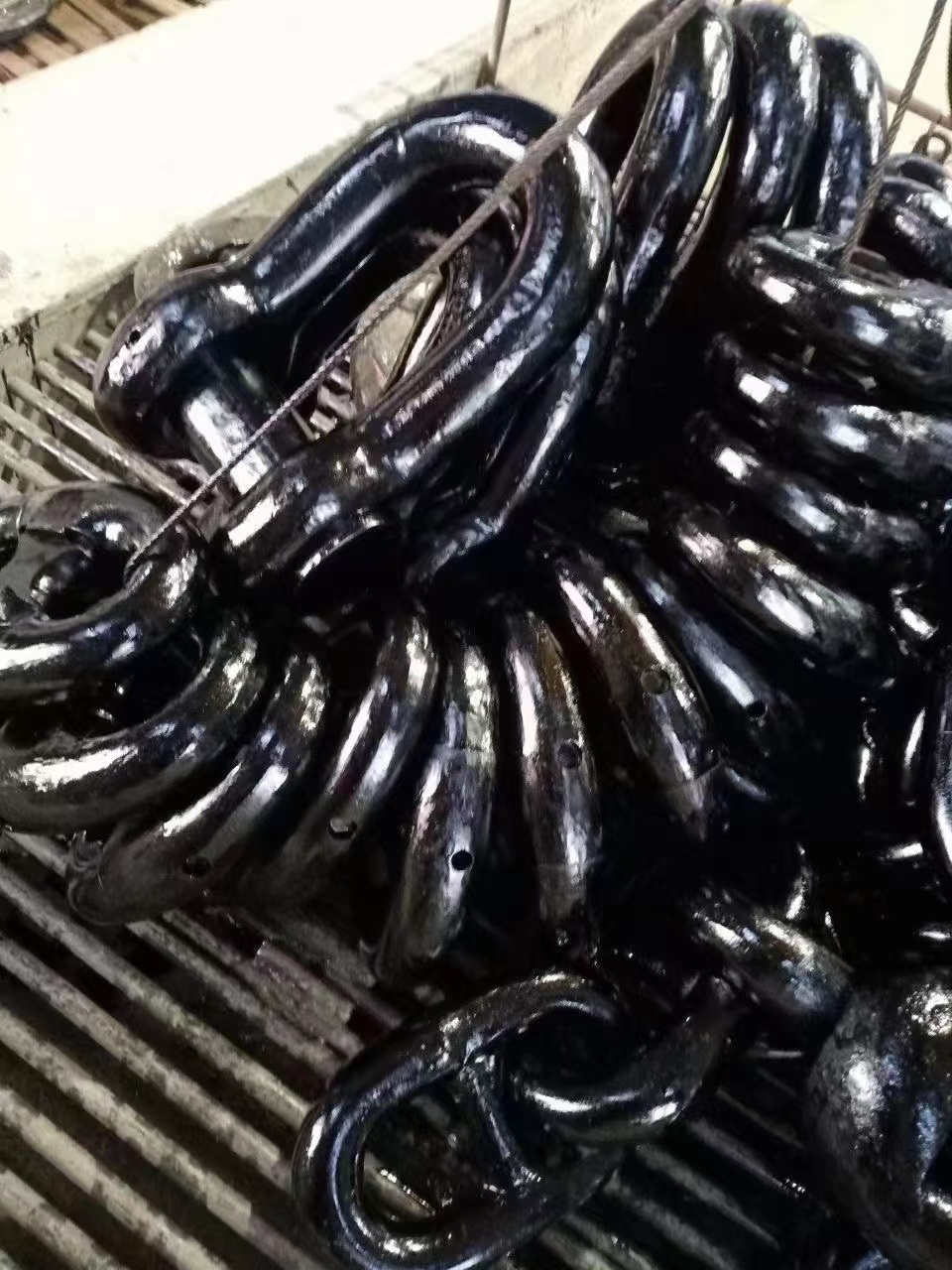
Stainless steel chain is the default specification for critical, inaccessible, or aggressively corrosive fender applications.
- Seawater-immersed fender chains (floating fenders, submerged panels)
- Remote or difficult-access locations where replacement cost is extreme
- High-value berths where downtime is unacceptable
- Splash-zone and tidal installations with continuous wet/dry cycling
- Projects with extended design life (20+ years without major intervention)
For fender chain:
- 316 is suitable for standard chain links (no welding)
- 316L (low carbon) is preferred where welding is required on shackles, end links, or fittings, to prevent sensitization and intergranular corrosion
304 stainless should be avoided for seawater-immersed fender chains due to pitting vulnerability .
From our production experience, the chain material decision is inseparable from documentation and traceability.
1. Material grade: Specify 316 or 316L for stainless; Grade 70/80 for galvanized carbon steel
2. Coating thickness (galvanized): Minimum 85 μm hot-dip; verify with coating gauge readings
3. Proof load testing: 1.5× SWL minimum, with certificates
4. Material certificates: EN 10204 3.1 with heat numbers traceable to test reports
5. Welding procedure qualification (if welded fittings are used): 316L preferred
6. Third-party witnessing: BV, SGS, ABS, LR, or DNV verification of testing
"Marine grade" is not a standardized specification for chain. It is a marketing term. Demand the actual grade—316, 316L, or duplex 2205—with mill certificates. For severe crevice corrosion conditions (sustained mud immersion, tropical moorings), duplex 2205 may be required where even 316L is vulnerable .
Chain failure in a fender system is rarely a simple replacement event. It creates:
- Fender detachment and potential loss of the unit
- Vessel contact with the quay structure
- Mooring line snap-back hazard if chains are under tension
- Regulatory scrutiny and potential liability exposure
A recent port inspection report documented fender chain assemblies with moderate corrosion and sagging, alongside missing shackle components—conditions that preceded more serious degradation . These findings illustrate why chain specification deserves the same rigor as fender rubber selection.
The galvanized vs. stainless steel decision for fender chain systems is ultimately a risk and lifecycle calculation, not a simple price comparison.
Galvanized chain offers higher strength per diameter, lower upfront cost, and adequate performance in benign or short-life applications. Its limitation is predictable: the zinc coating will fail, and when it does, corrosion proceeds rapidly.
316 stainless chain costs roughly 3–4× more upfront but delivers inherent corrosion resistance with no coating to deplete. In seawater-immersed fender applications, its lifecycle cost advantage emerges where replacement is difficult, downtime is expensive, and design life extends beyond a decade.
At NANJING TAIDUN, we manufacture and supply fender chain systems in both material specifications, with full documentation and third-party certification available. Our recommendation for seawater-exposed, long-life fender installations is unambiguous: specify 316 or 316L stainless, and demand the certificates to prove it.
[CTA]
Need fender chain systems manufactured to your specification?
NANJING TAIDUN MARINE EQUIPMENT ENGINEERING CO., LTD
- Email: service@taidunmarine.com
- Website: www.taidunmarine.com
- Products: Rubber fenders, mooring bollards, steel panels, UHMW-PE pads, and complete chain systems
- Certification: CCS, BV, LR, TUV, SGS, INTERTEK, GL
1. J-STAGE. "Corrosion Resistance of Hot-Dip Galvanized Steel Under Marine Environments." [https://www.jstage.jst.go.jp/article/jsms1963/42/479/42_479_934/_article]
2. Taokron. "Galvanized vs Stainless Steel HVAC Duct — Cost Ratios." [https://taokron.com/insights/galvanized-vs-stainless-steel-duct]
3. AIMS Industrial Supplies. "Stainless Chain Guide: Lifting, Marine, Anchor & General Use." [https://aimsindustrial.com.au/blogs/product-guides/stainless-chain-guide]
4. Kanzen Tetsu. "316 vs 316L Stainless Steel Pipe: How to Choose?" [https://kanzen-tetsu.com/316-vs-316l-stainless-steel-pipe-how-to-choose/]
5. Manxing Group. "Steel Silo Fabrication Materials: Grades, Specs & Costs." [https://www.manxinggroup.com/ru/guides/steel-silo-fabrication-materials]
6. Chain Direct. "Stainless Steel Chain or Galvanised Chain." [https://chaindirect.com.au/stainless-steel-chain-or-galvanised-chain/]
7. NYC Department of Sanitation. "Bulkhead Inspection Report – Fender Chain Assembly Findings." [https://www.nyc.gov/assets/dsny/downloads/resources/reports/solid-waste-management/bulkhead-cofferdam-inspection/southwest-brooklyn-mts-bulkhead-inspection-report-2024.pdf]
No—typically the opposite is true. Stainless steel cannot be quenched and tempered to the same hardness as carbon steel without losing its corrosion resistance. Grade 50 stainless chain has approximately 50% of the working load limit of Grade 80 galvanized alloy chain at the same diameter . If strength is the governing constraint, a larger stainless chain may be required, which affects both cost and physical fit.
Hot-dip galvanized chain in continuous seawater immersion typically sees zinc coating failure within 1–2 years, followed by rapid base metal corrosion . In splash-zone conditions with alternating wet/dry exposure, coating degradation is also accelerated because steel substrate corrosion can begin before the zinc is fully depleted . For fender chains that flex and abrade constantly, these timelines may be shorter.
316 contains 2–3% molybdenum, which significantly improves resistance to pitting and crevice corrosion in chloride-rich environments . 304 stainless lacks molybdenum and is vulnerable to pitting in seawater—making it unsuitable for immersed or splash-zone fender chain applications. The cost difference (316 is 25–80% more than 304) is justified by the performance gap in marine conditions.
316L (low carbon, ≤0.03% C) should be specified when the chain assembly includes welded components—such as welded shackles, end links, or attachment fittings. The lower carbon content prevents carbide precipitation in the heat-affected zone, which can cause intergranular corrosion in standard 316 after welding . For standard chain links with no welding, 316 is sufficient.
Request EN 10204 3.1 material certificates with heat numbers traceable to tensile and chemical test reports. For galvanized chain, specify coating thickness verification (minimum 85 μm hot-dip) with gauge readings. For critical projects, require third-party witnessing of proof load testing by BV, SGS, ABS, LR, or DNV. NANJING TAIDUN provides full documentation packages and coordinates inspection by all major classification societies.


