

Views: 235 Author: Nanjing Taidun Publish Time: 2026-08-17 Origin: Site
Content Menu
● Why Choose Nanjing Taidun for Integrated Fender Systems with Bollards
● What Is an Integrated Fender System with Bollards?
● How Fender and Bollard Selection Work Together
>> Key Inputs for Fender Selection
>> Key Inputs for Bollard Selection
● Selecting the Right Marine Fender Type
>> Arch and V-Type Rubber Fenders
● Mooring Bollard Options for Marine Projects
● OEM Manufacturing: What International Buyers Need
● Quality Control for Rubber Fenders and Bollards
>> Rubber Fender Quality Checks
● Practical Design Checklist Before You Buy
● Common Mistakes That Increase Berthing Risk
>> 1. Choosing fenders by price only
>> 2. Ignoring the supporting structure
>> 3. Using a nominal bollard load without a mooring analysis
>> 4. Treating installation as a minor detail
>> 5. Buying fenders and bollards from unrelated suppliers
● Work with a Marine OEM Partner
>> 1. What is an integrated fender system with bollards?
>> 2. Can Nanjing Taidun provide OEM branding?
>> 3. Which fender type is best for a container terminal?
>> 4. How do I choose a bollard safe working load?
>> 5. Are pneumatic rubber fenders suitable for fixed berths?
>> 6. What information is needed for an OEM quotation?
>> 7. Can you manufacture according to customer drawings?
At Nanjing Taidun Marine Equipment Engineering Co., Ltd., we manufacture integrated fender systems with bollards for global marine brands, wholesalers, shipyards, terminals, and project contractors seeking dependable OEM production. By combining marine rubber fenders, mooring bollards, anchoring products, and project-oriented engineering support, we help customers build berthing interfaces that manage vessel impact energy and secure mooring loads as one coordinated system.
An Integrated Fender System with Bollards is not simply a rubber fender installed beside a mooring fitting. It is a complete berth-protection and mooring arrangement in which fender performance, bollard capacity, foundation loads, vessel characteristics, tidal variation, rope lead angles, installation tolerances, and maintenance access are evaluated together. This integrated approach can reduce design conflicts, simplify procurement, and improve long-term operational reliability.
For OEM buyers, the real value is not only the product. It is the ability to obtain consistent quality, customized branding, clear technical documentation, flexible production, and a manufacturing partner that understands how fenders and bollards work together in real marine environments.
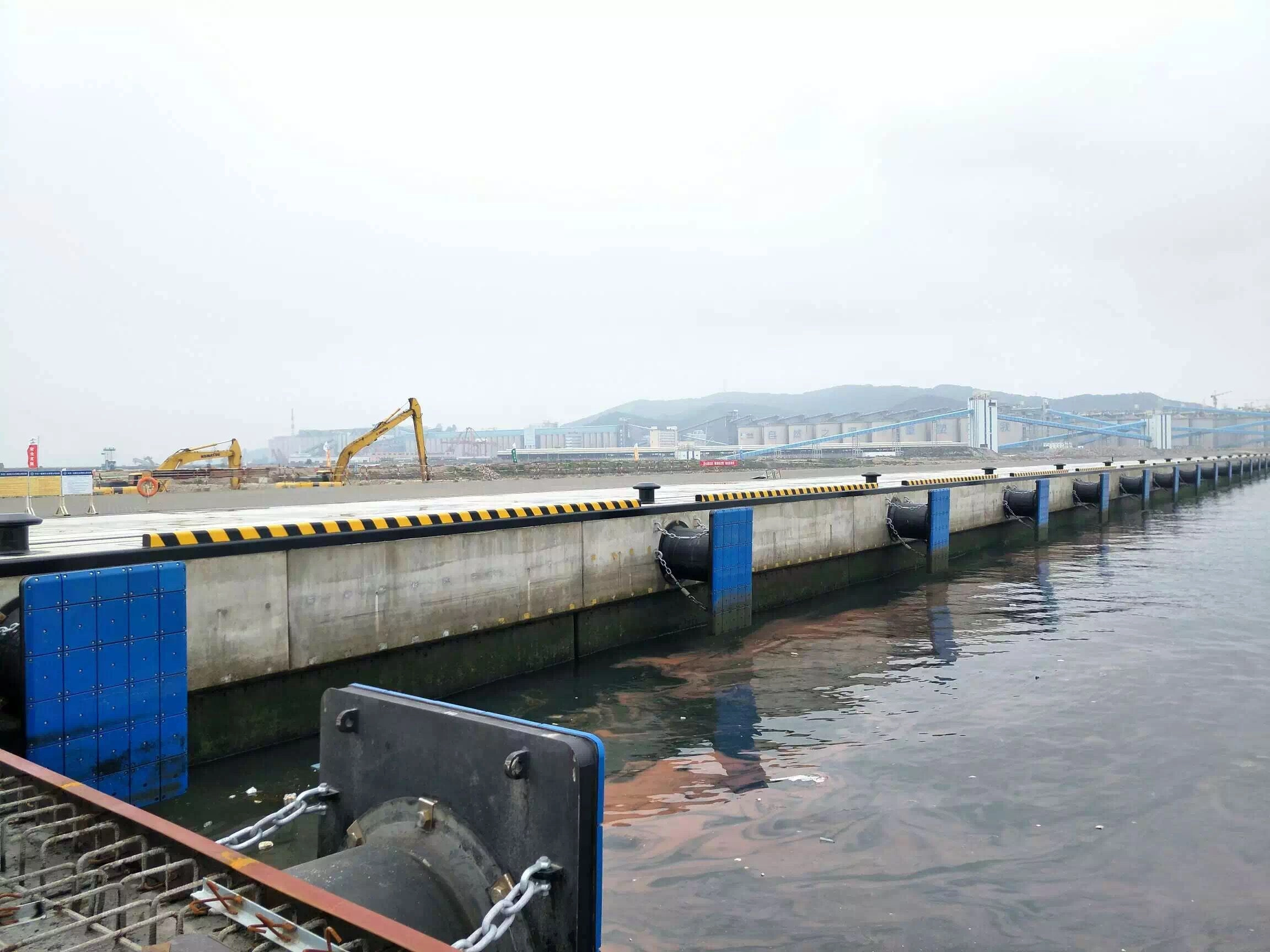
Nanjing Taidun Marine Equipment Engineering Co., Ltd. is an OEM-focused manufacturer of marine rubber fenders, mooring bollards, and marine anchoring equipment in China. We serve overseas brands, distributors, marine-equipment wholesalers, shipbuilders, port contractors, and industrial customers that require reliable products under their own brand or project specification.
Our role is to turn customer requirements into practical, production-ready marine equipment solutions.
We understand that overseas buyers often face the same challenges:
- Different vessel types require different berthing-energy calculations.
- Bollard working loads must match site-specific mooring conditions.
- Product dimensions may need to fit existing quay structures.
- Projects require documentation before fabrication begins.
- Branding, labeling, packaging, and traceability must meet market expectations.
- Procurement teams need stable quality across repeat orders.
- Installation contractors need components that are easy to position, anchor, and maintain.
Our integrated manufacturing capability enables customers to source complementary equipment from one OEM partner rather than coordinating separate fender and bollard suppliers.
What we can support:
- Marine rubber fender OEM manufacturing.
- Fixed fender systems for docks, jetties, wharves, and terminals.
- Pneumatic rubber fender solutions for ship-to-ship and temporary berthing operations.
- Super cone fenders, cell fenders, arch fenders, cylindrical fenders, sliding fenders, and customized rubber fender profiles.
- Cast steel, cast iron, fabricated steel, and project-specific mooring bollards.
- Marine anchors and associated anchoring equipment.
- Custom colors, logos, product markings, packaging, manuals, and private-label requirements.
- Dimensional drawings, product data sheets, inspection records, and shipment support.
An Integrated Fender System with Bollards combines two essential functions at a berth:
1. Fendering: Absorbing a vessel's berthing energy and limiting reaction force transferred to the quay or dolphin structure.
2. Mooring: Providing secure, controlled attachment points for ropes or mooring lines after the vessel is alongside.
The fender system protects both the ship and the berth during approach, contact, loading, unloading, tidal movement, wind, waves, current, and passing-vessel effects. The bollard system resists line loads and helps maintain the vessel's position within a safe berthing envelope.
A well-designed arrangement treats these components as connected elements rather than isolated purchases.
| System element | Primary function | Key design consideration |
|---|---|---|
| Rubber fender body | Absorbs berthing energy | Energy absorption, reaction force, deflection |
| Steel frontal panel | Distributes vessel contact load | Panel dimensions, structural strength, face-pad material |
| UHMW-PE facing pad | Reduces friction between vessel and fender | Wear resistance, low friction, fastening design |
| Fender chain system | Controls panel movement and fender geometry | Tension, corrosion resistance, safety factors |
| Mooring bollard | Secures vessel mooring lines | Safe working load, rope angle, foundation capacity |
| Anchor bolts and embedded hardware | Transfers loads into the structure | Pull-out resistance, corrosion protection, installation accuracy |
| Quay structure | Supports all operational loads | Reinforcement, concrete condition, load path |
The objective is straightforward: the vessel should berth safely, stay securely moored, and impose manageable loads on the marine structure.
A common procurement mistake is to select fenders based only on vessel size and select bollards based only on a nominal tonnage. In practice, the two selections must be coordinated with the berth layout and operating profile.
A fender can be technically strong but still unsuitable if its reaction force exceeds what the quay structure can accommodate. Likewise, a bollard may have an adequate marked capacity but still create operational risk if it is positioned poorly for the vessel's mooring-line lead.
Modern fender-design guidance addresses vessel berthing energy, fender selection, reaction loads, manufacturing, testing, and installation. Updated PIANC WG211 guidance supersedes earlier PIANC fender-design guidance and is intended to provide a comprehensive framework for the design, manufacturing, testing, and installation of fender systems. [trelleborg]
When our engineering team reviews an OEM or project inquiry, we typically ask for the following information:
- Vessel type and maximum displacement.
- Vessel length, beam, draft, and berthing configuration.
- Maximum and normal berthing velocity.
- Berthing angle and approach method.
- Tug assistance, thruster use, or self-berthing conditions.
- Tidal range and operational water levels.
- Existing quay geometry and structural capacity.
- Desired fender spacing.
- Required panel width and contact area.
- Operating temperature and environmental conditions.
- Required service life and maintenance strategy.
The selection process should consider both energy absorption and reaction force. Higher energy absorption is valuable, but a higher fender reaction can increase the demand on the fender panel, anchors, brackets, and quay structure.
For mooring bollards, the engineering review should include:
- Vessel deadweight and dimensions.
- Mooring arrangement and number of lines.
- Expected wind, current, wave, and passing-vessel effects.
- Rope type and line strength.
- Mooring-line lead angles.
- Required safe working load.
- Bollard spacing and berth geometry.
- Foundation reinforcement and concrete strength.
- Corrosion exposure and coating system.
- Local port, owner, classification, or project requirements.
OCIMF's Mooring Equipment Guidelines are designed to help ship designers, terminal designers, ship operators, and mooring-line manufacturers improve the design, performance, and safety of mooring systems.
The ideal fender system depends on berth type, vessel traffic, environmental loads, quay construction, and expected duty cycle. Nanjing Taidun can manufacture and customize a broad range of marine rubber fender products for OEM customers.
Super cone fenders are widely used for high-performance terminal applications. Their geometry supports high energy absorption with efficient performance under compression. When used with a frontal panel and low-friction UHMW-PE face pads, they are well suited to container terminals, bulk terminals, oil and gas jetties, ferry berths, and high-frequency commercial berths.
Best suited for:
- Heavy-duty berthing.
- Large vessels.
- High berthing energy.
- Projects requiring compact fender geometry.
- Berths where controlled reaction force is important.
Cell fenders provide robust energy absorption and are commonly used for large berthing structures. Their circular form can support reliable performance under major compression and can be configured with frontal panels for larger vessel contact areas.
Best suited for:
- Large jetties and wharves.
- Bulk cargo terminals.
- Container terminals.
- High-load marine structures.
- Deep-water berths.
Arch fenders are economical, durable, and practical for general-purpose quay protection. They can be installed directly onto a berth face or combined with low-friction facings where needed.
Best suited for:
- Small and medium commercial berths.
- Tugboat docks.
- Inland ports.
- Workboat and service-vessel facilities.
- Retrofits with limited installation space.
Cylindrical fenders are a traditional and flexible solution used on quay walls, vessels, docks, and offshore applications. They are available in a variety of diameters, lengths, and mounting arrangements.
Best suited for:
- General quay-wall protection.
- Small vessel berths.
- Tug and workboat operations.
- Applications requiring continuous rubber contact protection.
Pneumatic fenders are floating, flexible, and particularly useful in ship-to-ship transfer, temporary berthing, offshore operations, and locations where fixed structures are not practical. ISO 17357-1:2014 specifies material, performance, dimensional, testing, and inspection requirements for high-pressure floating pneumatic rubber fenders used in berthing and mooring.
Best suited for:
- Ship-to-ship transfers.
- Floating terminal operations.
- Offshore support.
- Emergency or temporary berthing.
- Floating docks and pontoons.
The right bollard is determined by load capacity, line direction, vessel class, berth layout, and foundation design. The bollard must work with the actual mooring plan—not just satisfy a catalog specification.
At Nanjing Taidun, we can support customized bollard production according to project drawings, load requirements, materials, surface protection, and private-label specifications.
| Bollard type | Typical application | Main advantage |
|---|---|---|
| T-head bollard | General commercial berths | Simple, familiar mooring-line handling |
| Double bitt bollard | Multi-line mooring arrangements | Separates and controls multiple lines |
| Horn bollard | Small vessels and light-duty berths | Easy line placement |
| Kidney bollard | General port and dock use | Compact, practical profile |
| Curved bollard | Angled rope leads | Helps guide lines in varying directions |
| Quick-release hook | Tanker terminals and specialized facilities | Supports controlled release and monitoring systems |
A bollard should never be selected solely by appearance. The safe working load, geometry, rope lead, foundation connection, and installation environment all matter.
For marine brands and wholesalers, a product is only as valuable as its consistency across every shipment. OEM success requires more than producing a sample that looks correct.
We focus on repeatable manufacturing control from raw materials through final packaging.
1. Requirement review
We review drawings, dimensions, target markets, application conditions, branding requirements, and performance expectations.
2. Technical confirmation
We confirm product type, material selection, dimensions, load requirements, mounting method, tolerance requirements, and inspection scope.
3. Sample or drawing approval
For customized products, we align the approved sample, technical drawing, marking method, and packaging standard before batch production.
4. Production and quality control
We conduct process checks covering materials, molding or casting, welding where applicable, dimensional inspection, surface treatment, and final appearance.
5. Final inspection and documentation
We prepare records in line with the agreed scope, including dimensions, visual checks, load tests when specified, and packing confirmation.
6. Branding and shipment preparation
We apply OEM labels, carton marks, pallet marks, product markings, manuals, and export packaging according to the buyer's requirements.
Quality should be visible in the finished product and traceable through the manufacturing process. In our experience, the most reliable marine-equipment programs focus on both performance and consistency.
For rubber fenders, the critical focus areas include:
- Rubber compound formulation.
- Tensile strength and elongation performance.
- Compression-deflection behavior.
- Energy absorption and reaction force.
- Dimensional tolerance.
- Reinforcement quality for pneumatic fenders.
- Surface condition and absence of critical defects.
- Steel insert, flange, or mounting-hole accuracy where applicable.
- Product marking and batch traceability.
For bollards, quality inspection should focus on:
- Material grade and material certificates when required.
- Casting quality or fabrication integrity.
- Weld quality for fabricated bollards.
- Dimensional accuracy.
- Bolt-hole location and base-plate flatness.
- Surface preparation and coating thickness.
- Test loading where specified.
- Product identification and traceability.
The foundation is equally important. A strong bollard with inadequate anchors or insufficient concrete reinforcement cannot deliver safe system performance. Mooring hardware and its supporting structure must be evaluated together.
Before requesting a quotation for an integrated fender system with bollards, prepare as much of the following information as possible:
- Vessel data sheet.
- Berth general arrangement drawing.
- Quay elevation and structural drawings.
- Water depth and tidal range.
- Fender centerline elevation.
- Required fender spacing.
- Berthing velocity assumptions.
- Desired fender type or target performance.
- Required bollard safe working load.
- Bollard spacing and preliminary mooring plan.
- Environmental data for wind, current, waves, ice, and temperature.
- Required certifications, inspections, or third-party witnessing.
- Branding, labeling, and packaging specifications.
- Target delivery date and destination port.
Providing this information early helps prevent expensive redesigns later. It also enables more accurate technical recommendations and quotations.
The most costly problems often begin before manufacturing starts.
A low-cost fender may have insufficient energy absorption, excessive reaction force, poor rubber quality, or inconsistent dimensions. The correct question is not "What is the lowest unit price?" It is "What system performance will protect the vessel and berth over its operating life?"
A fender system and a bollard both transfer forces into concrete, steel, piles, or other structural elements. Structural capacity must be verified before installation.
A bollard's marked capacity does not replace a proper review of line arrangement, vessel exposure, rope strength, and environmental conditions.
Incorrect anchor positioning, uneven mounting surfaces, wrong bolt torque, inadequate grouting, or poor alignment can reduce the performance of a properly designed product.
Separate suppliers can create gaps in drawings, dimensions, anchor patterns, delivery schedules, and responsibility. A coordinated OEM supply approach reduces these risks.
An integrated fender system with bollards should be specified as a complete berth-safety solution. When fender performance, mooring capacity, structural interfaces, installation requirements, and OEM branding are coordinated from the start, buyers gain stronger control over quality, schedule, cost, and final project performance.
At Nanjing Taidun Marine Equipment Engineering Co., Ltd., we help overseas marine brands, wholesalers, contractors, and manufacturers source customized marine rubber fenders, mooring bollards, and anchoring equipment under reliable OEM arrangements.
Send us your vessel data, berth drawing, required bollard capacity, fender dimensions, target market, and branding requirements. Our team can help you develop an integrated marine fender and bollard solution tailored to your project or product line.
It is a coordinated marine berthing and mooring system that combines rubber fenders, frontal panels, mounting components, bollards, anchors, and structural interfaces. The fenders manage berthing impact, while bollards secure the vessel after berthing.
Yes. We can support private-label manufacturing, including customized logos, product markings, packaging, labels, manuals, carton marks, and pallet marks, subject to project requirements and order conditions.
Super cone fenders or cell fenders with frontal panels are frequently considered for container-terminal applications because they can provide high energy absorption and controlled reaction force. The final selection should be based on vessel data, berthing speed, berth structure, panel geometry, and operational conditions.
The safe working load should be determined through a mooring analysis that considers vessel size, mooring-line configuration, wind, current, waves, passing-vessel effects, line lead angles, and berth geometry. Avoid choosing a bollard based only on vessel tonnage.
They can be used in certain fixed-berth applications, but they are especially valuable for floating, temporary, offshore, and ship-to-ship operations. Fixed rubber fender systems are often more appropriate for permanent, high-frequency commercial berths.
Please provide product drawings or photos, dimensions, quantities, material requirements, load or performance requirements, inspection requirements, target port, packaging needs, branding information, and expected delivery schedule.
Yes. We can evaluate customer drawings, technical specifications, samples, and performance requirements for OEM production. Final manufacturability and technical details should be confirmed before production.
1. International Organization for Standardization. *ISO 17357-2:2014 — Ships and marine technology: Floating pneumatic rubber fenders, Part 2: Low pressure*. Available at: [ISO]. The standard specifies material, performance, dimensions, and inspection requirements for low-pressure floating pneumatic rubber fenders intended for berthing and mooring. [iso]
2. Trelleborg Marine & Infrastructure. *PIANC WG211 Fender Design Guidelines*. Available at: [Trelleborg]. This page describes PIANC WG211 as a comprehensive update addressing fender-system design, manufacturing, testing, and installation. [trelleborg]
3. Oil Companies International Marine Forum. *MEG4 Mooring System Design Principles*. Available at: [OCIMF]. MEG4 provides guidance intended to improve mooring-system design, performance, and safety. [ocimf]
4. International Organization for Standardization. *ISO 17357-1:2014 — Ships and marine technology: Floating pneumatic rubber fenders, Part 1: High pressure*. Available at: [ISO standard PDF]. The document addresses materials, performance, dimensions, and testing for high-pressure pneumatic rubber fenders. [cdn.standards.iteh]
5. PIANC USA. *Webinar: Updated Guidelines for the Design of Fender Systems*. Available at: [PIANC USA]. The webinar outlines the update from the earlier PIANC WG33 fender guidance to the WG211 work. [pianc]
Hot Tags: China, Global, OEM, private label, manufacturers, factory, suppliers, manufacturing company


