

Views: 243 Author: Nanjing Taidun Publish Time: 2026-07-01 Origin: Site
Content Menu
● Practical Installation Steps
● Why Buyers Choose OEM Support
● FAQ
Buoys are anchored by connecting them to a seabed mooring system made of anchors, chains, ropes, and sinkers that hold the buoy in position while still allowing controlled movement with waves and tides. For marine buyers, port operators, and OEM partners, the right anchoring method depends on water depth, seabed type, current strength, and the buoy's purpose. [working-the-sails]
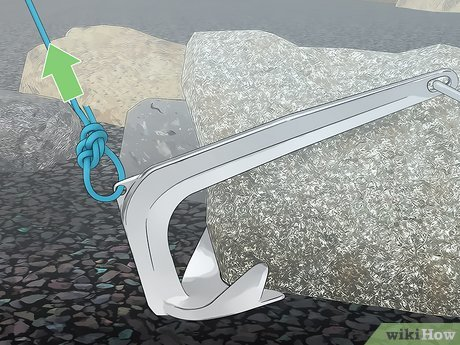
A buoy is only useful if it stays where it should. In navigation, mooring, and offshore marking applications, poor anchoring can cause drifting, inaccurate positioning, safety risks, and higher maintenance costs. That is why buoy anchoring is not just a hardware decision; it is an engineering decision. [smeocean]
Different buoy types use different systems, but the most common methods are straightforward.
- Deadweight anchors. Heavy concrete or metal blocks hold the buoy in place, especially in calmer or shallower waters. [youtube]
- Chain moorings. Chains connect the buoy to the anchor and provide strength, abrasion resistance, and stability. [working-the-sails]
- Mushroom anchors. These work well in soft seabeds such as mud or sand because they gradually embed and gain holding power. [youtube]
- Helical anchors. These screw into the seabed and are often used where stronger holding power is needed. [working-the-sails]
- Mooring lines with elastic elements. In deeper water, engineers may add rope, synthetic line, or elastic components to reduce shock loads from waves and tide changes. [smeocean]
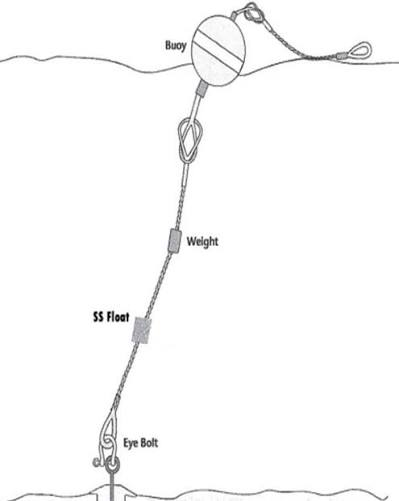
A buoy anchoring system usually follows a simple logic: anchor on the seabed, connection line in the middle, buoy on the surface. The anchor creates holding force, the chain or line controls distance and motion, and the buoy remains visible above water as a marker or mooring point. [smeocean]
For deeper or harsher waters, a professional design process is important. Site teams typically review seabed conditions, water depth, current load, and weather exposure before choosing the anchor type and line length. That reduces the risk of drag, fatigue, and failure over time. [smeocean]
From an engineering and procurement perspective, the main variables are clear.
| Factor | Why it matters |
|---|---|
| Water depth | Determines chain length, line design, and anchor type. |
| Seabed condition | Sand, mud, and rock each require different holding strategies. |
| Current and waves | Stronger forces require stronger anchoring and shock control. |
| Buoy size and purpose | Navigation buoys, mooring buoys, and marker buoys need different configurations. |
| Maintenance access | A good system should be inspectable and replaceable. |
These factors are repeatedly emphasized in marine guidance on buoy anchoring and deep-water mooring design. [adortech]
Nanjing Taidun Marine Equipment Engineering Co., Ltd. is positioned to support global OEM buyers who need marine hardware built for real-world conditions. The company specializes in marine equipment including rubber fenders, bollards, steel structure products, and anchor-related products, supported by a trained technical and manufacturing team and production facilities in Nanjing, China. [taidunmarine]
For overseas brands, wholesalers, and manufacturers, that matters because buoy anchoring projects often sit at the intersection of engineering accuracy, material reliability, and supply consistency. A manufacturer with experience in marine equipment can help align the anchoring system with the end-use environment instead of treating every buoy as a standard product. [linkedin]
Here is a simplified field process commonly used for buoy anchoring.
1. Survey the site and check depth, seabed type, and current conditions. [smeocean]
2. Select the anchor type based on load and seabed performance. [youtube]
3. Prepare the chain or mooring line with the correct length and connection fittings. [working-the-sails]
4. Lower the anchor and connection system carefully to avoid tangling or damage. [smeocean]
5. Test the buoy position and inspect tension after deployment. [smeocean]
6. Recheck periodically, especially after storms or seasonal changes. [smeocean]
For international buyers, the value is not just knowing how buoys are anchored; it is knowing whether the supplier can manufacture the supporting marine hardware to specification, on time, and with consistent quality. TAIDUN's OEM capability is relevant here because buoy anchoring often requires related components such as marine connectors, steel structures, and corrosion-resistant hardware that must work as a system. [taidunmarine]
A good OEM partner should be able to answer questions like: What seabed is this for? What load must the buoy withstand? What maintenance cycle is expected? Those are the kinds of questions that separate commodity supply from reliable marine engineering.
1. How are buoys anchored in deep water?
Deep-water buoys are usually anchored with a designed mooring system that may include an anchor, chain, rope, and sometimes elastic elements to handle movement and reduce shock loads. [smeocean]
2. What is the most common buoy anchor?
Deadweight anchors and chain moorings are among the most common, especially when simplicity and reliability are priorities. [youtube]
3. Do all buoys move with waves?
Yes, many buoys are designed to move slightly so the system can absorb wave and tide changes without breaking the mooring. [working-the-sails]
4. Which seabed is best for buoy anchoring?
It depends on the anchor type, but soft seabeds like mud and sand are often suitable for mushroom-style anchors, while other conditions may require helical or deadweight solutions. [youtube]
5. Why is buoy anchoring important for safety?
Because a drifting buoy can mislead vessels, reduce navigation accuracy, and create operational risk in ports, waterways, and offshore areas. [working-the-sails]
1. Working The Sails, "How Are Buoys Anchored: A Comprehensive Guide," [https://working-the-sails.com/how-are-buoys-anchored-a-comprehensive-guide/]. [working-the-sails]
2. Nanjing Taidun Marine Equipment Engineering Co., Ltd., "About Us," [https://www.taidunmarine.com/aboutus.html]. [taidunmarine]
3. Adortech, "What is a mooring buoy? | 4 main parts explained," [https://adortech.com/blog/a-quick-guide-to-mooring-buoys]. [adortech]
4. SMEOCEAN, "How do Buoys Anchored in Deep Water," [https://www.smeocean.com/how-do-buoys-anchored-in-deep-water.html]. [smeocean]
5. Water Sports Haven, "How Are Navigation Buoys Anchored To The Sea Floor?" [https://www.youtube.com/watch?v=HX_eoWki5_A]. [youtube]
6. Edward Jiang LinkedIn profile, marine equipment and anchor product background, [https://www.linkedin.com/in/marinefendersupplier]. [linkedin]
Hot Tags: China, Global, OEM, private label, manufacturers, factory, suppliers, manufacturing company


