

Views: 226 Author: Nanjing Taidun Publish Time: 2026-10-16 Origin: Site
Content Menu
● What Is a Hydro-Pneumatic Fender?
● What Is a Cylindrical Fender?
● Hydro-Pneumatic vs Cylindrical Fender: Core Differences
● Why Low-Draft Vessels Need a Different Fender Strategy
● Energy Absorption and Reaction Force: The Two Deciding Values
● When to Choose a Hydro-Pneumatic Fender
● When to Choose a Cylindrical Fender
● Selection Checklist for Buyers
● OEM Manufacturing Considerations
● Maintenance and Lifecycle Costs
>> Hydro-pneumatic fender maintenance
>> Cylindrical fender maintenance
>> 1. Selecting by diameter only
>> 3. Underestimating hull pressure limits
>> 4. Treating all pneumatic fenders as the same
>> 5. Neglecting installation hardware
● Request an OEM Fender Solution
● FAQs
>> 1. Can a cylindrical fender be used for submarine berthing?
>> 2. What is the main difference between a hydro-pneumatic fender and a standard pneumatic fender?
>> 3. Are cylindrical fenders suitable for large tidal ranges?
>> 4. Which fender has lower maintenance requirements?
>> 5. How do I decide the correct fender size?
>> 6. Does Nanjing Taidun provide OEM hydro-pneumatic and cylindrical fenders?
Choosing between a hydro-pneumatic fender and a cylindrical fender is not simply a choice between two rubber products. It is a decision about where the vessel hull needs protection, how much berthing energy must be absorbed, and how the mooring system will perform through tide, swell, loading changes, and repeated berthing cycles.
As a manufacturer of marine rubber fenders, mooring bollards, and anchoring equipment, Nanjing Taidun Marine Equipment Engineering Co., Ltd. works with OEM buyers, port operators, shipyards, and marine engineering contractors worldwide. From our project experience, the most common selection mistake is treating both fender types as interchangeable. They are not.
A cylindrical fender is usually the practical, economical choice for conventional quays, small and medium vessels, ferry terminals, and locations with limited tidal range. A hydro-pneumatic fender is a specialized floating system designed to protect hull areas below the waterline, especially for submarines, naval vessels, semi-submersibles, and other low-freeboard or unusual hull forms.
This guide compares both solutions from an engineering, procurement, and operational perspective.
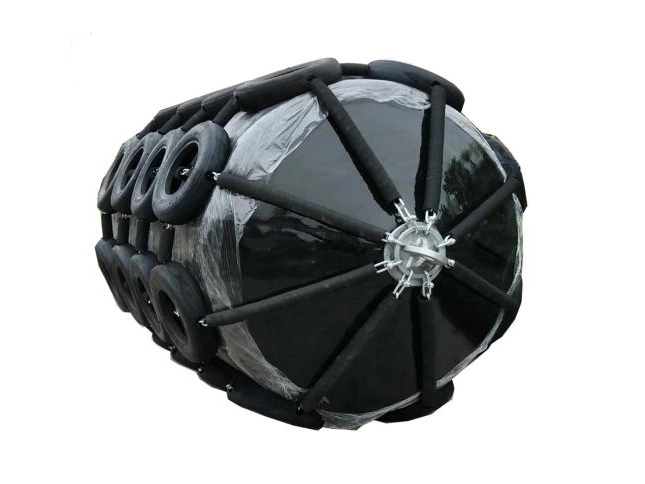
A hydro-pneumatic fender is a vertically installed, partially water-filled pneumatic fender. It contains both air and water, with a counterweight or ballast arrangement that keeps the body upright in the water.
Unlike a standard floating pneumatic fender, which remains at the waterline, a hydro-pneumatic fender can be positioned so that its effective contact area reaches below the water surface. This makes it suitable for vessels whose critical hull geometry or sensitive equipment lies beneath the waterline.
Key characteristics include:
- Vertical installation for submerged hull protection
- Adjustable air-water ratio, allowing the fender draft and performance to be tuned
- Low reaction force, which is important for delicate hulls and sensitive berthing operations
- High energy absorption capacity when correctly sized
- Floating, tide-following behavior, reducing the need for fixed brackets or adjustable tracks
Hydro-pneumatic fenders are commonly used for submarine berthing, naval facilities, research vessels, semi-submersible platforms, and specialized ship-to-ship operations where underwater contact protection is required.
A cylindrical fender is a solid rubber fender with a circular cross-section, normally mounted horizontally or vertically along a quay wall, jetty, pontoon, or berth structure. It compresses when a vessel contacts it, absorbing berthing energy through rubber deformation.
Cylindrical fenders remain one of the most widely used fender types because they are simple, robust, and cost-effective. They are suitable for marinas, fishing ports, tug berths, barges, workboats, ferry terminals, and many general cargo applications.
Main advantages include:
- Simple structure with no air pressure system
- Lower initial cost than hydro-pneumatic or high-performance pneumatic systems
- Easy installation on existing quay walls and jetties
- Low maintenance requirements
- Good durability in normal port environments
- Suitable for moderate berthing energy and vessel sizes
However, a cylindrical fender normally protects the hull at or near the fender's fixed mounting position. It does not naturally follow large tidal movements or provide protection deep below the waterline.
| Selection Factor | Hydro-Pneumatic Fender | Cylindrical Fender |
|---|---|---|
| Primary function | Protects submerged or low-freeboard hull areas | Protects hull at the quay or jetty contact zone |
| Installation orientation | Vertical, floating, ballasted | Fixed to quay wall, pontoon, or structure |
| Waterline behavior | Can be positioned below the waterline | Remains at the installed elevation |
| Energy absorption | High, depending on size and pressure | Moderate, depending on rubber compound and geometry |
| Reaction force | Low, suitable for sensitive hulls | Generally higher than hydro-pneumatic systems |
| Best vessels | Submarines, naval ships, semi-submersibles, specialized vessels | Tugs, barges, ferries, fishing vessels, small cargo ships |
| Maintenance | Requires pressure, valve, and ballast inspection | Mostly visual and mechanical inspection |
| Initial cost | Higher | Lower |
| Installation complexity | Higher | Lower |
| Typical application | Submarine berths, naval bases, specialized terminals | Marinas, ferry berths, general cargo quays |
"Low-draft vessel mooring" can be misleading. In many projects, the issue is not only shallow draft; it is low freeboard combined with hull contact points below the waterline.
For a conventional cargo ship, the fender contact point is often above the waterline. A cylindrical fender mounted on the quay can provide adequate protection.
For a submarine or specialized vessel, however, the hull may be designed to make contact below the water surface. A conventional fixed fender may miss the intended contact area entirely. In this situation, the fender must move with tide and vessel draft while maintaining a stable vertical position.
That is the engineering role of a hydro-pneumatic fender. It is partially filled with water and pressurized with air, allowing the operator to adjust its draft and contact position for the vessel being protected.
Consider a naval support facility that receives submarines with a low freeboard and a rounded hull. If the facility uses only cylindrical fenders on the quay face, the fenders may contact the upper hull or superstructure rather than the intended pressure-bearing area.
A properly engineered hydro-pneumatic fender system can be positioned vertically alongside the berth. Its submerged contact zone protects the hull below the waterline, while its low reaction force reduces stress on sensitive structures.
This is why hydro-pneumatic fenders are often selected for submarine berthing, naval infrastructure, and vessels with unusual hull geometry.
Fender selection should begin with two engineering values:
1. Berthing energy absorption
2. Maximum allowable reaction force
Berthing energy depends on vessel displacement, approach velocity, berthing angle, hydrodynamic mass coefficient, and environmental conditions. The fender system must absorb the calculated energy without exceeding the allowable hull pressure or structural reaction force.
Hydro-pneumatic fenders are designed to deliver high energy absorption with low reaction force. This combination is particularly valuable when the vessel hull cannot tolerate high concentrated loads.
For submarine and naval applications, low reaction force is not a luxury. It is often a fundamental design requirement.
Cylindrical fenders absorb energy through rubber compression. Their performance depends on diameter, length, rubber compound, mounting arrangement, and compression level.
They can perform well for many conventional berths, but their energy-reaction curve is different from that of a hydro-pneumatic system. For high-energy berthing or low-reaction-force requirements, a cylindrical fender may need to be larger, more numerous, or combined with a frontal panel system.
At Nanjing Taidun, we recommend that buyers always request load-deflection curves and energy absorption data before finalizing a fender specification. Matching the fender to vessel tonnage, berthing velocity, and hull pressure limits is more important than selecting based on diameter alone. [pilebuck]
Choose a hydro-pneumatic fender when one or more of the following conditions apply:
- The vessel has a low freeboard
- The main hull contact area is below the waterline
- The project involves submarine berthing or naval infrastructure
- The hull requires low reaction force
- The berth experiences significant tidal variation
- The vessel has an unusual hull form or sensitive equipment near the waterline
- The fender must follow changes in draft and water level
Hydro-pneumatic fenders are also useful in ship-to-ship operations where underwater positioning is required. Their floating, self-adjusting nature makes them more adaptable than fixed rubber fenders in these situations.
Choose a cylindrical fender when the project requires a proven, economical solution for conventional berthing.
It is often the better choice when:
- The vessel contact point is above or near the waterline
- Berthing energy is moderate
- The berth serves small to medium vessels
- Tidal variation is limited
- The structure has limited installation space
- The project budget requires a lower initial investment
- Maintenance resources are limited
Cylindrical fenders are especially common at marinas, fishing harbors, tug berths, pontoon walkways, ferry terminals, and general-purpose quays. Their simple design makes them easy to install and replace.
Before requesting a quotation, prepare the following information:
1. Vessel type and displacement
2. Berthing velocity and approach angle
3. Vessel draft, freeboard, and hull contact elevation
4. Tidal range and water-level variation
5. Allowable hull pressure
6. Maximum allowable reaction force
7. Required energy absorption
8. Berth structure type and available mounting space
9. Environmental conditions, including wave, current, wind, and ice exposure
10. Maintenance access and inspection frequency
This information allows the fender manufacturer to calculate the required performance rather than simply supply a standard product.
For overseas brands, wholesalers, and engineering contractors, OEM supply is not only about applying a logo. A reliable OEM fender partner should provide engineering support, consistent quality control, documentation, and customization capability.
Nanjing Taidun Marine Equipment Engineering Co., Ltd. manufactures marine fenders, mooring bollards, and marine anchors for OEM customers. Our product range includes pneumatic fenders, hydro-pneumatic fenders, cylindrical fenders, cone fenders, cell fenders, arch fenders, D-type fenders, and related mooring equipment. [taidunmarine]
For OEM projects, we focus on:
- Custom dimensions and rubber compounds
- Load-deflection and energy absorption documentation
- FEA-based design verification
- In-house testing for tensile strength, aging, hardness, and ozone resistance
- Factory-direct supply and project-based customization
- Support for port, naval, shipyard, and marine engineering applications
Our manufacturing approach is designed to help OEM partners deliver fender systems that match the actual berthing conditions rather than forcing a standard catalogue product into a specialized application. [taidunmarine]
The lowest purchase price does not always produce the lowest lifecycle cost.
Hydro-pneumatic fenders require more structured maintenance because they contain pressurized air and water. A practical inspection program should include:
- Internal pressure checks
- Valve and fitting inspection
- Rubber body and reinforcement layer inspection
- Ballast and counterweight checks
- Anchor chain, shackle, and connection inspection
- Verification of vertical floating position
- Cleaning of marine growth where necessary
Cylindrical fenders have a simpler maintenance profile. Typical activities include:
- Visual inspection for cuts, abrasion, cracking, and deformation
- Checking bolts, brackets, chains, and mounting hardware
- Monitoring compression set and permanent deformation
- Replacing damaged units before hull protection is compromised
For buyers, the correct question is not "Which fender is cheaper?" but "Which fender delivers the required protection at the lowest total cost over its service life?"
A larger fender is not automatically better. The system must match the calculated berthing energy and allowable reaction force.
A fixed cylindrical fender may be correctly positioned at high tide but ineffective at low tide. Hydro-pneumatic systems are often better where water level changes significantly.
Some vessels require low reaction force, not merely high energy absorption. This is especially important for submarines and specialized naval vessels.
A standard floating pneumatic fender and a hydro-pneumatic fender serve different purposes. The hydro-pneumatic version is specifically intended for vertical, submerged hull protection. [trelleborg]
Chains, shackles, anchors, panels, and mounting structures are part of the fender system. A high-performance fender can fail operationally if the supporting hardware is underspecified.
Use this simple rule:
- Choose a cylindrical fender for conventional, fixed-elevation berthing where cost, simplicity, and durability are priorities.
- Choose a hydro-pneumatic fender when the vessel requires protection below the waterline, low reaction force, or adaptation to changing draft and tide.
For low-draft, low-freeboard, submarine, and specialized naval applications, the hydro-pneumatic fender is usually the safer and more technically appropriate solution. For standard port and marina berths, the cylindrical fender remains a dependable and economical workhorse.
If you are developing a berth, naval facility, ferry terminal, or specialized vessel mooring project, Nanjing Taidun Marine Equipment Engineering Co., Ltd. can help you compare hydro-pneumatic and cylindrical fender options based on real berthing conditions.
Send us your vessel data, berth drawings, tidal range, and required energy absorption. Our engineering team can provide a tailored OEM fender proposal, including product configuration, performance data, and installation recommendations.
Contact Nanjing Taidun today for a factory-direct hydro-pneumatic or cylindrical fender solution.
- Nanjing Taidun Marine Equipment Engineering Co., Ltd. — Hydro-pneumatic fenders, cylindrical fenders, OEM manufacturing, testing, and load-deflection data: [https://www.taidunmarine.com/] [taidunmarine]
- Trelleborg — Hydro-Pneumatic Fenders for low-freeboard and high-draft vessel berthing: [https://www.trelleborg.com/en/marine-and-infrastructure/products-solutions-and-services/marine/marine-fenders/floating-fenders/pneumatic-fenders] [trelleborg]
- Ocean Guard — Hydro-pneumatic fender working principle and underwater hull protection: [https://marinefendersintl.com/products/marine-fenders/pneumatic-fenders/] [marinefendersintl]
- Pile Buck Magazine — Marine fender buyer's guide, cylindrical fender applications, and berthing energy considerations: [https://pilebuck.com/buyers-guide-marine-fenders/] [pilebuck]
- JIER Marine — Hydro-pneumatic fenders for submarine and vessel-to-vessel applications: [https://www.jiermarine.com/hydro-pneumatic-fenders.html] [jiermarine]
- NauticExpo — Cylindrical fender and hydro-pneumatic fender product characteristics: [https://www.nauticexpo.com/boat-manufacturer/harbor-fender-47591.html] [nauticexpo]
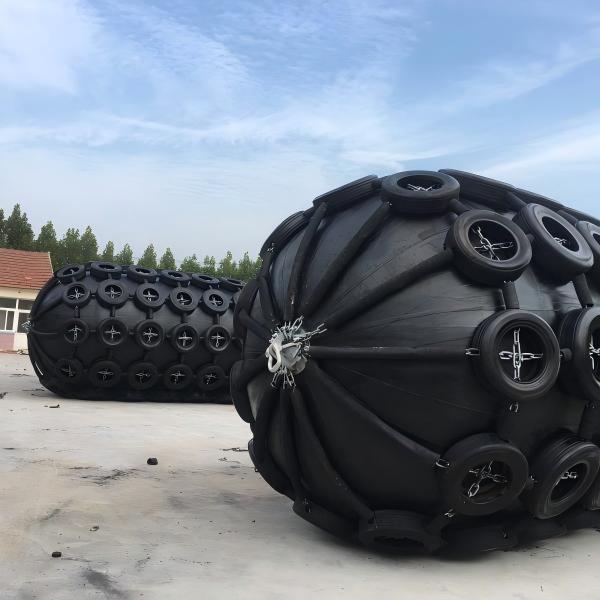
Generally, no—not as the primary protection system. Submarines often require contact below the waterline, while cylindrical fenders are fixed to the quay structure. A hydro-pneumatic fender is usually more suitable because it floats vertically and can protect submerged hull areas.
A standard pneumatic fender is air-filled and floats horizontally at the waterline. A hydro-pneumatic fender is partially filled with water, ballasted vertically, and designed to provide protection below the waterline.
They can be used, but their fixed mounting position may limit effectiveness when the water level changes significantly. For large tidal variation or changing vessel draft, a floating hydro-pneumatic fender may provide more reliable hull contact.
Cylindrical fenders usually require less maintenance because they have no air pressure system, valves, or ballast components. Hydro-pneumatic fenders require regular pressure, valve, ballast, and connection inspections.
Start with the calculated berthing energy, allowable reaction force, hull pressure limit, vessel draft, tidal range, and berth structure. Then request load-deflection and energy absorption data from the manufacturer to verify the selected fender system.
Yes. Nanjing Taidun provides OEM manufacturing for marine rubber fenders, mooring bollards, and anchoring products, including hydro-pneumatic fenders, cylindrical fenders, pneumatic fenders, cone fenders, and cell fenders.
Hot Tags: China, Global, OEM, private label, manufacturers, factory, suppliers, manufacturing company


