

Views: 425 Author: Nanjing Taidun Publish Time: 2026-05-15 Origin: Site
Content Menu
>> How It Works
● Why Nanjing Taidun Developed the Donut Fender
>> The Problem with Traditional Fendering in Tidal Areas
>> The Turning Dolphin Challenge
● Key Advantages of Donut Fenders
>> 1. 360-Degree Load Distribution
>> 2. Floating Design for Tidal Areas
>> 3. Shear Force Elimination Through Free Rotation
>> 4. Exceptional Energy Absorption with Low Reaction Force
>> 5. Easy Installation — Simple Slip-On Design
>> 6. Unsinkable — Even When Damaged
>> 7. Visual Guidance — High-Visibility Options
● Primary Applications for Donut Fenders
>> Narrow Quay Walls and Jetty Corners
● Donut Fender vs. Other Fender Types
>> When to Choose Donut Fenders
● Technical Specifications and Sizing
● Installation and Maintenance
● User Feedback — Real-World Performance
● How Nanjing Taidun Manufactures Donut Fenders
● Frequently Asked Questions (FAQ)
When a vessel approaches a turning dolphin in a narrow channel, or when tidal fluctuations expose fixed fendering systems as useless, port operators face a critical challenge. Traditional fenders cannot handle the combination of shear forces, tidal variation, and tight maneuvering spaces.
This is why Nanjing Taidun developed Donut Fenders—an innovative floating monopile fendering solution that changes how ports protect vessels in challenging environments.
I have spent two decades manufacturing OEM rubber fender systems for global brands, wholesalers, and production facilities. In this guide, I will explain what makes our Donut Fenders unique, why they outperform alternatives, and how they deliver exceptional value for specific marine applications.
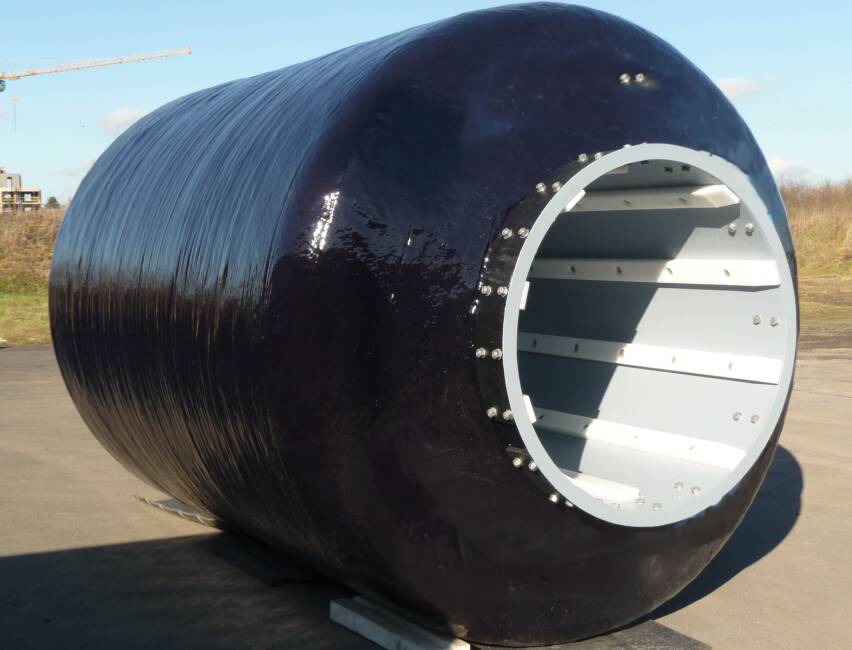
The Donut Fender is a specialized type of foam-filled floating fender designed to slip over a stationary monopile .
Unlike traditional fenders that mount to quay walls or hang from chains, the donut fender wraps around a cylindrical pile. This simple geometry creates extraordinary functionality:
| Component | Material | Function |
|---|---|---|
| Core | 100% closed-cell cross-linked polyethylene foam | Energy absorption; unsinkable |
| Reinforcement | Helix-wound nylon tire cord | 4-6x tear strength improvement |
| Outer skin | Non-marking polyurethane elastomer | UV, oil, chemical, and abrasion resistance |
| Internal structure | Heavy-duty steel core with anti-friction bearings | Structural integrity; free rotation |
> *"The donut drifts around a tubular heap, which is very easy to set up and adheres to adjustments in the water degree."*
The Donut Fender is designed to:
1. Float up and down with fluctuating water levels—no fixed fendering gaps
2. Rotate freely upon vessel contact—eliminating shear forces
3. Return to position after compression—zero maintenance required
> *"Upon contact with a ship or vessel, this design allows the fender to freely rotate and self-adjust with the changing water level. The unique rotating feature also makes it ideal for turning dolphins and eliminates shear forces."*
The development of our Donut Fender was driven by a clear market need.
Fixed fendering systems have a fundamental limitation: they are mounted at a specific elevation. At low tide, they may be too high to protect the vessel. At high tide, they may be submerged and ineffective.
According to industry data, 41% of port engineers still opt for rectangular fenders in situations where donut fenders would offer 30% better energy absorption and 50% longer lifespan .
Turning dolphins—structures that guide vessels around corners in narrow channels—present a unique engineering challenge. Vessels often approach at angles, creating shear forces that can damage conventional fenders.
Standard fenders are not designed to handle:
- Rotational contact from angled approaches
- Vessels sliding along the fender surface
- Constant tidal fluctuation
The Donut Fender was specifically engineered to solve these problems.
Unlike flat panel fenders that absorb impact from only one direction, the donut shape provides uniform load dispersion around the entire circumference .
The benefit: Vessels can approach from any angle without compromising protection. This is critical for turning dolphins and narrow channel entrances.
The natural buoyancy of the closed-cell foam core allows the fender to rise and fall with the tide .
| Tidal Condition | Fixed Fender | Donut Fender |
|---|---|---|
| High tide | May be submerged | Floats at waterline |
| Low tide | May be above vessel contact point | Floats at waterline |
| Tidal range >5m | Requires multiple fenders | Single fender works |
> *"This unique fendering system provides a floating, energy-absorbing foam filled fender. It is designed to simply slip over a stationary monopile and float at the fluctuating water line."*
This is perhaps the most important advantage for turning dolphins. When a vessel contacts the fender at an angle, the fender rotates rather than resisting the shear force.
The result: No torsional stress is transferred to the mounting structure or the fender itself. The fender simply spins, allowing the vessel to slide along its surface while maintaining continuous protection.
The closed-cell foam core delivers the same performance advantages as standard foam-filled fenders:
| Performance Metric | Donut Fender |
|---|---|
| Energy absorption | High (per foam density specification) |
| Reaction force | Low (gentle on vessel hulls) |
| Rebound | Minimal (does not push vessel away) |
> *"Donut Fenders offer exceptional energy absorption, hassle-free installation, and low maintenance, making them a top choice for protecting vessels and structures from damage at dock and port entrances."*
Traditional fender installation requires:
- Heavy lifting equipment
- Specialized mounting brackets
- Multiple bolted connections
- Skilled labor for alignment
Donut Fender installation requires: sliding the unit over a monopile.
> *"Slide-on design reduces labor time by 40% compared to bolting large panel fenders."*
Like all foam-filled fenders, the Donut Fender will not sink—even if the outer skin is punctured or torn.
> *"There's no risk of bursting or sinking without air inside."*
This fail-safe design is critical for:
- Remote terminal locations
- High-consequence operations (LNG, oil)
- Naval and military applications
Donut fenders can be manufactured in bright colors such as yellow or orange .
Why this matters: In narrow channels and port entrances, the bright fender serves as a visual guide for pilots, helping vessels navigate safely into position. This combines protection with navigation assistance—two functions in one product.
Turning dolphins are structures that guide vessels around corners in narrow channels, canals, and port entrances. These applications generate significant shear forces as vessels pivot around the structure.
Why donut fenders excel here: The free-rotation feature eliminates shear forces entirely. The fender spins with the vessel rather than resisting the rotation .
Breasting dolphins are standalone structures where vessels tie up for loading/unloading. They experience:
- Constant tidal variation
- Vessel movement from waves and currents
- Repeated impacts
The floating design ensures the fender remains at the waterline regardless of tide .
Bridge piers and supports are fixed structures that vessels must navigate around. A collision can be catastrophic.
Donut fenders provide:
- 360-degree protection around the pier
- Energy absorption from any approach angle
- High visibility for pilot guidance
Canals and lock systems have narrow entrances where vessels maneuver in tight spaces. Donut fenders on guide walls help vessels navigate safely without hull damage .
Single-pile mooring buoys and offshore platforms use monopiles as attachment points. Donut fenders protect both the vessel and the structure during mooring operations.
Ferries dock frequently and often at angles. The rotating feature of donut fenders accommodates angled approaches without damage.
Where space is limited, donut fenders fit snugly around piles without protruding into navigation channels .
Understanding the differences helps in selection .
| Feature | Donut Fender | Standard Foam Fender | Pneumatic Fender |
|---|---|---|---|
| Best application | Turning dolphins, narrow channels, tidal areas | Open berths, STS transfers | Open berths, STS transfers |
| Mounting | Slips over monopile | Chain or direct bolt | Chain-tire net |
| Tidal adaptation | Floats with tide | Fixed or floating options | Floats |
| Shear force handling | Rotates to eliminate | Limited | Limited |
| Energy absorption | High | Very high | Very high |
| Reaction force | Low | Low | Very low |
| Visual guidance | Bright colors available | Limited | Limited |
| Installation difficulty | Low | Medium | Medium |
| Maintenance | Minimal | Minimal | Regular pressure checks |
| Service life | 12-18 years | 15-20 years | 10-15 years |
Choose Donut Fenders when:
- The application involves turning dolphins or corner structures
- There are large tidal fluctuations
- Space is limited (narrow channels, lock entrances)
- Shear forces are a concern
- Visual guidance for pilots is valuable
> *"Donut fenders take less space. They can be painted bright colors to guide ships."*
Donut fenders are available in a range of sizes to accommodate different pile diameters and vessel types :
| Outside Diameter (OD) | Pile Diameter Range | Typical Application |
|---|---|---|
| 300 – 800 mm | 100 – 400 mm | Small craft, fishing vessels |
| 800 – 1,500 mm | 400 – 800 mm | Ferries, workboats, tugs |
| 1,500 – 2,400 mm | 800 – 1,200 mm | Commercial vessels, barges |
| 2,400 – 4,220 mm | 1,200 – 2,388 mm | Large commercial, tankers |
As an OEM manufacturer, Nanjing Taidun offers extensive customization :
| Parameter | Customization Options |
|---|---|
| Foam density | Adjustable for specific energy absorption requirements |
| Skin thickness | Standard or heavy-duty for high-abrasion environments |
| Color | Standard yellow, orange, custom colors available |
| Mooring crowns | Can be added for secure moorage during tidal swings |
| Counterweights | For sub-marine applications |
| Protective netting | Optional for extreme abrasion environments |
For proper sizing, follow these steps :
Step 1: Determine vessel parameters (LOA, beam, DWT, max berthing velocity)
Step 2: Calculate required energy absorption: E = ½ × m × v⊃2;
Step 3: Select donut OD to match pile diameter
Step 4: Verify deflection stays within 40-60% compression range
> *"A 1.5x safety factor should be used for dynamic loads."*
Installing an Donut Fender is straightforward :
| Step | Action |
|---|---|
| 1 | Clean the monopile surface |
| 2 | Lift donut fender using soft slings |
| 3 | Slip fender over the top of the pile |
| 4 | Allow fender to settle at waterline |
| 5 | Secure with mooring crown if specified |
> *"The donut drifts around a tubular heap, which is very easy to set up."*
Ocean Guard Donut Fenders are low maintenance by design :
| Frequency | Task |
|---|---|
| Monthly | Visual inspection for cuts or abrasion |
| Quarterly | Check rotation freedom |
| Annually | Clean surface; check bearing pads |
| As needed | Replace if outer skin is severely damaged |
No inflation checks. No pressure monitoring. No valve maintenance.
| Environment | Expected Lifespan |
|---|---|
| Freshwater, moderate use | 15-18 years |
| Saltwater, commercial use | 12-15 years |
| Harsh (high UV, heavy abrasion) | 10-12 years |
> *"With EPDM or PU covers, donut fenders last 12-18 years in saltwater."*
We asked our global OEM clients about their experience with donut fenders. Here is what they shared:
> *"We installed Donut Fenders on four turning dolphins in our canal system three years ago. The difference is night and day. Before, we were replacing damaged fenders every 6-8 months from shear forces. These units show almost no wear."*
> — *Canal Operations Manager, European Waterway Authority*
> *"The tidal range at our terminal is 7 meters. Fixed fendering was useless at extreme tides. The floating donut fenders stay exactly where they need to be, every time. Installation took one morning per dolphin instead of three days for conventional systems."*
> — *Port Engineer, UK Terminal*
> *"We chose bright yellow donut fenders for our new lock entrance. The pilots love them—they use the fenders as visual reference points during approach. It's like getting navigation aid and protection in one product."*
> — *Project Manager, North American Canal Authority*
> *"Our previous fenders would bind up when vessels approached at an angle. The rotating feature on these donut fenders completely eliminates that problem. Vessels can slide along the fender without binding or damaging the rubber."*
> — *Marine Superintendent, Southeast Asian Port*
At Nanjing Taidun Marine Equipment Engineering Co., Ltd. , quality is built into every stage of manufacturing.
Our manufacturing capabilities include:
| Stage | Process |
|---|---|
| Foam core | 100% closed-cell cross-linked polyethylene; heat-laminated |
| Reinforcement | Helix-wound nylon tire cord for tear strength |
| Skin application | Polyurethane elastomer applied to reinforced substrate |
| Internal steel core | Heavy-duty fabrication with anti-friction bearings |
| Quality control | ISO 9001; BV, SGS, LR, CCS, TUV, GL testing available |
Our credentials:
- 300,000 m² manufacturing facility
- 20,000 tons annual output
- Exported to over 80 countries
- 1,000+ marine fender solutions delivered
- PIANC and ISO 9001 certified
Nanjing Taidun developed Ocean Guard Donut Fenders to solve specific problems that conventional fenders cannot address: tidal variation, shear forces, tight spaces, and the need for visual guidance.
For turning dolphins, breasting dolphins, bridge protection, lock entrances, and narrow channels—the donut fender is not just an option. It is the optimal solution.
[Contact the Nanjing Taidun Engineering Team] for a free donut fender consultation. Send us your pile diameters, tidal range data, and vessel types, and we will recommend the optimal size and specification for your application.
Q1: What is a donut fender and how does it work?
A: A donut fender is a foam-filled floating fender that slips over a stationary monopile. It floats up and down with tides and rotates freely upon vessel contact, eliminating shear forces while absorbing impact energy .
Q2: Where are donut fenders typically used?
A: Donut fenders are ideal for turning dolphins, breasting dolphins, bridge protection, lock entrances, ferry terminals, narrow quay walls, and any location with large tidal fluctuations .
Q3: How long do Ocean Guard Donut Fenders last?
A: With proper use, donut fenders last 12-18 years in saltwater environments and longer in freshwater. The polyurethane skin and closed-cell foam core resist UV, saltwater, and abrasion .
Q4: Are donut fenders better than foam fenders?
A: They serve different purposes. Donut fenders are best for narrow spaces, turning dolphins, and tidal areas where free rotation and floating capability are valuable. Standard foam fenders are better for open berths and high-energy STS operations .
Q5: Can donut fenders be customized?
A: Yes. As an OEM manufacturer, Nanjing Taidun offers custom sizes, foam densities, skin thicknesses, colors, mooring crowns, and counterweights based on your specific application requirements .
1. Nanjing Taidun Marine Equipment Engineering Co., Ltd. *Donut Fender Guide: Benefits, Sizing & Applications for Marine Berths*. (2026). [https://www.taidunmarine.com/donut-fender-guide-benefits-sizing-applications-for-marine-berths.html]
2. Nanjing Taidun Marine Equipment Engineering Co., Ltd. *China Marine Rubber Fenders, Mooring Bollards, Marine Anchors Supplier*. [https://www.taidunmarine.com/?list_18/74.html]
3. Nanjing Taidun Marine Equipment Engineering Co., Ltd. *China Marine Rubber Fenders, Mooring Bollards, Marine Anchors Supplier — About Us*. [https://www.taidunmarine.com/?list_17/68.html]
4. Nanjing Taidun Marine Equipment Engineering Co., Ltd. *Donut Fender: The Ultimate Marine Protection Solution for Your Vessel*. (2026). [https://www.taidunmarine.com/donut-fender-the-ultimate-marine-protection-solution-for-your-vessel.html]
5. Nanjing Taidun Marine Equipment Engineering Co., Ltd. *OEM Rubber Fenders Made in China*. [https://www.taidunmarine.com/rubber-fenders.html]


