

Views: 345 Author: NANJING TAIDUN Publish Time: 2026-09-17 Origin: Site
Content Menu
● Introduction: A Purchasing Truth Hidden Behind Industry Terminology
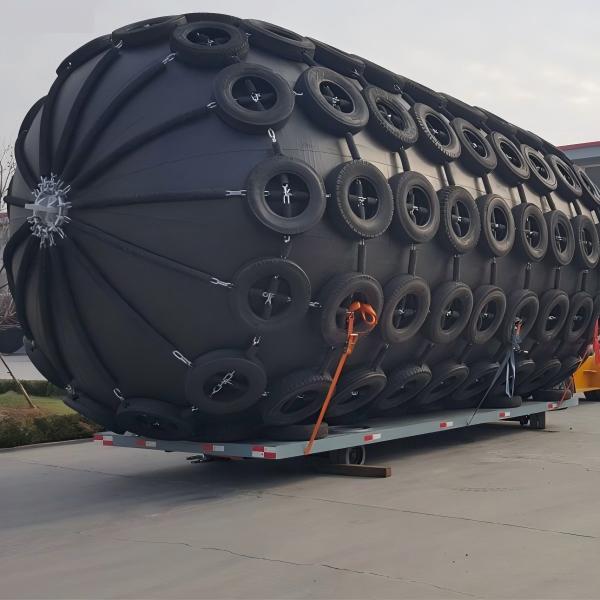
● The Engineering Fundamentals: What a Pneumatic Fender Actually Is
>> Three Layers: A Simple Yet Precise Design
>> Working Pressure Grades: Choosing Between 50 kPa and 80 kPa
● Yokohama Fenders: How a Brand Became an Industry Synonym
>> The Evolution of ISO 17357 and Yokohama's Role
● The Core Differences: Terminology, Quality Standards, and Manufacturing Processes
>> Difference 1: Brand Name vs. Product Category
>> Difference 2: What ISO 17357 Compliance Actually Means
>> Difference 3: Mould Vulcanization vs. Airbag Method
● Common Misconceptions and Quality Risks: A Procurement Perspective
>> Misconception 1: "All Pneumatic Fenders Are the Same"
● As an OEM Manufacturer: How We Solve This Quality Challenge
>> Our OEM Quality Control Points
● Practical Procurement Decision Guide
>> Five Questions to Ask Before Requesting a Quote
>> Selection Logic for Different Application Scenarios
● Conclusion: Beyond Terminology Lies Engineering and Quality
● Frequently Asked Questions (FAQ)
>> Q1: Are pneumatic fenders and Yokohama fenders actually the same thing?
>> Q2: What does it mean if my supplier says "Yokohama-type"?
>> Q3: What is the difference between ISO 17357-1:2014 Clause 8 and Clause 12?
>> Q5: As an OEM buyer, how do I verify a supplier's ISO 17357 compliance?
>> Q6: Are safety valves mandatory?
After more than two decades working in ports and shipyards, I have watched too many procurement managers struggle with two terms: pneumatic fender and Yokohama fender. On supplier quotations, the same specification, the same drawing, yet the price can differ by three to five times. Where does that gap come from?
The answer: Yokohama fenders are essentially pneumatic fenders — but not every pneumatic fender deserves the name "Yokohama." "Yokohama fender" was never a technical category. It is a brand term, originating from the world's first floating pneumatic fender manufactured by Yokohama Rubber Co. of Japan in 1958. The industry habitually calls this entire product class "Yokohama fenders," and that naming convention is exactly what conceals the most critical quality differences.
As a Chinese rubber fender manufacturer providing OEM services to global brands, NANJING TAIDUN deals with this perception gap every single day. This article clarifies the true meaning behind these two terms across four dimensions: engineering fundamentals, quality standards, procurement risk, and OEM decision-making.

Every qualified pneumatic fender, regardless of who manufactures it, must have three core structural layers:
- Outer Rubber Layer: Directly contacts the vessel hull and dock, resisting abrasion, UV radiation, salt spray, and oil contamination. The compound formulation of this layer determines the fender's weather resistance in harsh marine environments.
- Synthetic-Tire-Cord Layer: This is the fender's "skeleton." Multiple layers of synthetic fiber cord are wound at specific angles to withstand internal air pressure and distribute stress evenly. The quality of this layer directly determines the fender's burst resistance and service life.
- Inner Rubber Layer: Seals the compressed air and ensures airtightness. Any micro-porosity or bonding defect will cause slow leakage, ultimately leading to fender failure.
Compressed air is the energy absorption medium. When a vessel strikes the fender, the internal air compresses, converting kinetic energy into compression energy. When the vessel departs, the air expands, and the fender returns to its original shape. This cycle can repeat thousands of times without permanent deformation.
Pneumatic fenders are divided into two standard grades based on initial inflation pressure:
| Grade | Initial Internal Pressure | Typical Applications |
|---|---|---|
| P50 (Low Pressure) | 50 kPa | Conventional berthing, ship-to-ship (STS) operations |
| P80 (High Pressure) | 80 kPa | High berthing speeds, large tidal ranges, FSRU terminals |
Selecting the wrong pressure grade is a common technical error. A P80 fender provides higher energy absorption at the same size, but reaction force increases accordingly. If the dock structure has limited load-bearing capacity, P50 may be the safer choice.
Yokohama Rubber Co. was founded in 1917, initially producing various rubber products. In 1958, the company manufactured the world's first floating pneumatic fender, designed for the growing demand for offshore crude oil transfer. The product earned high market praise for its durability and strength, so much so that when the International Organization for Standardization (ISO) developed the pneumatic fender standard in 2002, it based the standard directly on Yokohama Rubber's fender specifications and performance criteria.
In other words, ISO 17357 described the technical characteristics of Yokohama fenders at its inception.
ISO 17357 has undergone significant revisions:
- ISO 17357:2002: The first international standard, defining materials, performance, dimensions, and testing procedures for high-pressure floating pneumatic rubber fenders.
- ISO 17357-1:2014: The currently effective version. Published in January 2014, it replaced the 2002 edition. The primary motivation for revision was to prevent potential decline in fender quality and performance, particularly by standardizing tire-cord material specifications and end fitting dimensions.
Yokohama Rubber announced in December 2014 that its full range of pneumatic fenders received ISO 17357-1:2014 certification and began production under the new standard.
Key fact: Yokohama fenders account for approximately 60% of pneumatic fenders in service globally. But that does not mean the other 40% are all low-quality products — it reflects Yokohama's historical position as the category creator and standard-setter.
This is the most fundamental correction:
| Dimension | Yokohama Fender | Pneumatic Fender |
|---|---|---|
| Nature | Branded product | Product category |
| Manufacturer | Yokohama Rubber Co. (Japan) | Any qualified manufacturer worldwide |
| Technical Standard | ISO 17357-1:2014 | ISO 17357-1:2014 (should be) |
| Geographic Origin | Historically Japan only | China, Korea, Southeast Asia, Europe, etc. |
A simple reality check: If "Yokohama fender" referred to a technical type, then Chinese-manufactured products of identical specification should not be called "Yokohama fenders." Yet in industry practice, buyers routinely use this term for inquiries. This terminology ambiguity provides cover for quality variation.
The phrase "ISO 17357 compliant" appears with high frequency in procurement documents, but its actual meaning requires strict scrutiny.
ISO 17357-1:2014 establishes a three-tier quality framework:
1. Clause 8 (Prototype Testing): Verifies whether a design meets rated performance. This is product type testing.
2. Clause 9 (Commercial Batch Testing): Samples from actual production batches to verify performance. This is quality control testing.
3. Clause 12 (Independent Third-Party Inspection): Witnessed testing by BV, DNV, ABS, Lloyd's, or similar bodies.
A harsh reality: Many suppliers claim "ISO 17357 certification" but have only completed prototype testing (Clause 8), or are merely "producing to ISO standards" without formal certification. True compliance means every delivered fender can be traced to prototype test data and has batch verification records.
The main problem the industry faces is that a large number of manufacturers use the airbag production process, resulting in fenders that typically do not comply with all the recommended manufacturing process guidelines or compound performance properties specified in ISO 17357-1:2014.
This is the manufacturing process watershed that determines fender life and reliability.
Mould Vulcanization Process:
- The entire fender is formed in a mould and vulcanized in an autoclave
- Stronger interlayer bonding, more regular appearance, better dimensional stability
- Cord layer angles and tension are precisely controllable
- The standard process used by Yokohama fenders and top-tier manufacturers
Airbag Method:
- Rubber and cord are hand-layered in a manner similar to inflatable airbags, then cured
- Lower cost, faster production
- But interlayer bonding quality, cord angle consistency, and thickness uniformity are difficult to guarantee
- Prone to air pockets, delamination, and localized weak points
Procurement implication: If you see "airbag method" or "wrapped construction" on a quotation, and the price is significantly below market average, you need to carefully evaluate the supplier's quality control capabilities.

Incorrect. At the same size and rated pressure, products from different manufacturers can differ dramatically in:
- Number and angle of cord layers
- Tensile strength and elongation at break of the rubber compound
- Interlayer bond strength
- Steel grade and weld quality of end fittings
These differences may not be apparent at delivery, but they manifest three to five years later as compression set, slow leakage, or sudden failure.
An ISO certificate is not a performance guarantee. ISO 17357-1:2014 specifically added a re-certification requirement after 10 years, precisely because it recognizes that fender performance degrades over time and requires periodic verification. A fender certified in 2018 may perform very differently from its certificate data in 2028.
| Risk Dimension | Compliant Manufacturer (Mould Process, Full ISO Documentation) | Non-Compliant Manufacturer (Airbag Process, Incomplete Documentation) |
|---|---|---|
| Fender burst risk | Extremely low | Medium to high |
| Energy absorption decay | <10% over 5 years | 20–30% within 3–5 years |
| Safety valve reliability | Standard and verified for ≥2500mm diameter | May be omitted or substandard |
| Traceability | Raw material to finished product | Typically absent |
| Service life | 10–20 years | 5–8 years |
NANJING TAIDUN provides pneumatic fender OEM manufacturing services to global brands and wholesalers. We never claim our products are "Yokohama fenders" — that name belongs to Yokohama Rubber. What we do is manufacture floating pneumatic fenders that meet or exceed ISO 17357-1:2014 standards, delivered under our clients' own brands.
1. Mould Vulcanization Process Selection
For premium orders, we use mould vulcanization to ensure interlayer bond quality and dimensional consistency. For cost-sensitive orders with lower application requirements, we clearly explain the process differences and their impact on service life, allowing clients to make informed decisions.
2. Testing Every Fender, Not Sampling
Every fender undergoes before shipment:
- Air tightness pressure-hold testing
- Visual and dimensional inspection
- End fitting material certificate verification
For orders requiring third-party inspection, we coordinate witnessed testing with BV, SGS, ABS, or DNV.
3. Complete Technical Documentation Package
Every OEM order shipment includes:
- Raw material batch traceability records
- Vulcanization process parameter records
- Dimensional inspection reports
- Air tightness test reports
- Safety valve function verification (if applicable)
- Third-party inspection reports (if required)
4. Standardized Safety Valve Configuration
We follow ISO 17357-1:2014 requirements: safety valves are standard for fenders with diameter 2500mm and above. For smaller diameters, if the client's application involves over-pressure risk, we recommend optional safety valves.
1. "Is this mould vulcanization or airbag method?" — Ask directly, don't beat around the bush.
2. "Can you provide Clause 8 prototype test certificates? Per fender or per batch?" — The litmus test for documentation completeness.
3. "Who is your cord layer supplier? How many layers and at what angle?" — A professional supplier can answer immediately.
4. "What is the brand and set pressure of the safety valve?" — If diameter ≥2500mm and there's no safety valve, that's a red flag.
5. "What are the costs and agency options for third-party inspection?" — If the supplier avoids this question, they're not accustomed to independent verification.
| Application Scenario | Recommended Configuration | Key Consideration |
|---|---|---|
| Conventional berthing | P50, mould vulcanization, Type I (net type) or Type II | Balance of cost and performance |
| STS crude oil transfer | P50, mould vulcanization, Type I, third-party inspection | Highest safety level, complete documentation mandatory |
| FSRU/LNG terminals | P80, mould vulcanization, strict documentation traceability | High pressure, high risk, no compromise |
| Temporary shipyard use | P50, airbag method acceptable (if cost-sensitive) | Low frequency, lower life requirement |
The term "Yokohama fender" carries over sixty years of industry history, but in 2026 procurement practice, it has become a term that needs to be deconstructed. What truly determines whether a pneumatic fender will reliably protect your dock and vessels for the next fifteen to twenty years is not its name, but:
- Manufacturing process (mould vulcanization vs. airbag)
- Material compliance (ISO 17357-1:2014 cord and compound specifications)
- Testing completeness (prototype + batch + independent inspection)
- Documentation traceability (per fender vs. per batch vs. none)
The value of NANJING TAIDUN as an OEM manufacturer lies precisely in understanding these differences and delivering products at the quality level corresponding to our clients' standards and brand positioning. We don't sell the name "Yokohama." We manufacture fenders that stand up to inspection.
Sourcing pneumatic fender OEM manufacturing for your brand?
NANJING TAIDUN MARINE EQUIPMENT ENGINEERING CO., LTD offers:
- Mould vulcanization process pneumatic fender OEM production
- ISO 17357-1:2014 compliant complete documentation packages
- BV/SGS/ABS/DNV third-party inspection coordination
- Full traceability from raw material to finished product
Email: service@taidunmarine.com
Website: www.taidunmarine.com
1. Yokohama Rubber. "Yokohama Rubber's pneumatic fenders of all sizes receive ISO17357-1:2014 certification." December 2014. [https://www.y-yokohama.com/release/?id=2367&lang=en&sp=120&category=0103]
2. PIANC. "Insights into PIANC Fender Guidelines (WG211) 2024." [https://pianc.org.au/wp-content/uploads/2024/05/Flyer-2024.07.24_Insights-into-Fender-Design-Guidelines-WG211-2024_Jacobs.pdf]
3. ISO. "ISO 17357-2:2014 Ships and marine technology — Floating pneumatic rubber fenders — Part 2: Low pressure." [https://www.boutique.afnor.org/en-gb/standard/iso-1735722014/ships-and-marine-technology-floating-pneumatic-rubber-fenders-part-2-low-pr/xs125106/121645]
4. Eversafe Marine. "Pneumatic fender with tire net: 50KPa." [https://eversafemarine.net/product-detail/pneumatic-fenders-p50/]
From an engineering standpoint, yes. Both use compressed air to absorb vessel berthing kinetic energy. But "Yokohama fender" specifically refers to products manufactured by Yokohama Rubber Co. of Japan — it is a brand term, not a technical category. Dozens of manufacturers worldwide produce functionally identical pneumatic fenders; they should not be called "Yokohama fenders."
"Yokohama-type" typically means the same three-layer structural design as Yokohama fenders (outer rubber + synthetic cord layer + inner rubber), manufactured to ISO 17357 standards. This is a technical description, not a guarantee that product quality equals Yokohama Rubber's original. The key question is whether that supplier actually executes all of ISO 17357-1:2014's testing and documentation requirements.
Clause 8 is prototype testing: verifies whether a design model achieves rated performance. Clause 12 is independent third-party inspection: witnessed testing of actual production batches by recognized bodies such as BV, DNV, ABS, or Lloyd's. Clause 8 is the basis for product type approval; Clause 12 is the guarantee of delivery quality. Procurement should require both — a Clause 8 certificate alone is insufficient to prove consistency of delivered products.
The price difference typically ranges from 30% to 60%, depending on size and specification. For high-frequency, high-risk, or long-service-life applications (STS transfer, LNG terminals, major container terminals), the additional cost of mould vulcanization is justified over the fender's lifecycle — it means longer replacement intervals and lower failure risk. For low-frequency temporary use (short-term shipyard operations), the airbag method may be an acceptable cost optimization.
Don't just look at the certificate. Require the supplier to provide:
- Clause 8 prototype test reports for the specific model (original or certified copy)
- Clause 9 commercial batch test records from recent production
- Sample Clause 12 third-party inspection reports if required
- Material certificates for cord and rubber compound
- The most effective method: appoint a third-party inspection agency (BV/SGS/ABS/DNV) to conduct pre-shipment witnessed testing at the factory. The cost is typically only 1–3% of order value.
For pneumatic fenders with diameter 2500mm and above, yes. ISO 17357-1:2014 requires these fenders to be equipped with safety valves to prevent accidental over-pressure and burst. For diameters below 2500mm, safety valves are optional but strongly recommended in scenarios where abnormal high pressure may occur.


