

Views: 425 Author: Nanjing Taidun Publish Time: 2026-05-10 Origin: Site
Content Menu
● Why Welding Standards Matter for Steel Frontal Panels
● Overview of EN ISO 5817 – The European Quality Benchmark
>> Recent Updates – ISO 5817:2023
● Overview of AWS D1.1 – The American Structural Standard
● EN ISO 5817 vs. AWS D1.1 – Key Differences
>> Correspondence Between Standards
● Application to Steel Frontal Panels for Marine Fenders
>> Why Steel Frontal Panels Require Strict Welding Standards
>> Classification Society Requirements
● Welding Processes for Steel Frontal Panels
>> Welding Procedure Qualification
● Common Weld Imperfections and Inspection Methods
>> Six Major Defect Categories (ISO 6520-1)
>> Inspection Methods for Steel Frontal Panels
>> Quality Criteria by Inspection Method
● User Feedback – Real-World Perspectives on Welding Standards
● How Nanjing Taidun Ensures Welding Standard Compliance
● Frequently Asked Questions (FAQ)
A steel frontal panel is the interface between a marine fender and the vessel it protects. When that panel fails—when a weld cracks, a seam separates, or a joint fractures under load—the consequences can be catastrophic: hull damage, cargo spills, and millions in liability.
That is why steel frontal panel welding standards: AWS D1.1 & EN ISO 5817 are not just technical specifications. They are the foundation of marine safety.
I have spent two decades manufacturing OEM rubber fender systems, mooring bollards, and steel frontal panels for global brands. In this guide, I will explain everything you need to know about these two critical welding standards: their scope, their differences, how to comply with both, and why compliance matters for your marine infrastructure projects.
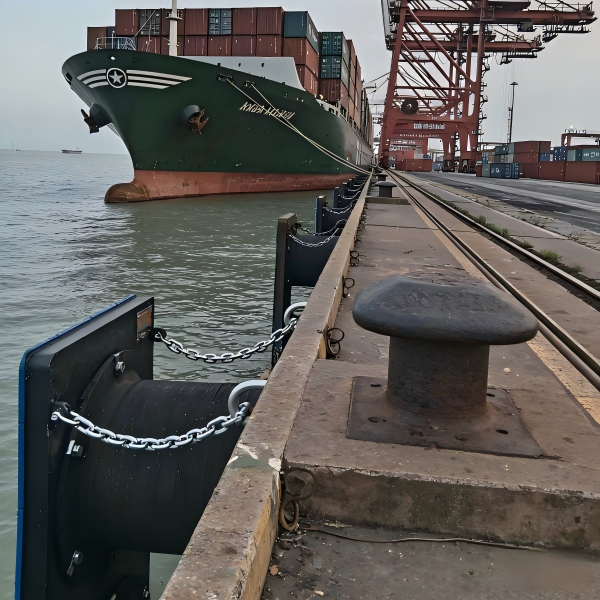
A steel frontal panel is subjected to extreme forces during vessel berthing. It must absorb impact energy, transfer loads to the fender system, and resist corrosion in a harsh marine environment.
The cost of poor welding:
| Failure Mode | Consequence |
|---|---|
| Weld cracking | Panel separation from fender; loss of protection |
| Incomplete fusion | Reduced load capacity; sudden failure under impact |
| Porosity | Accelerated corrosion; fatigue crack initiation |
| Undercutting | Stress concentration; reduced cross-section |
> *"Welding standards exist to ensure that every weld meets minimum quality requirements. For critical applications like steel frontal panels for marine fenders, compliance with recognized standards is non-negotiable."*
> — *Industry Welding Engineer*
Understanding steel frontal panel welding standards: AWS D1.1 & EN ISO 5817 allows you to specify the right quality level for your application, verify supplier compliance, and ensure long-term reliability.
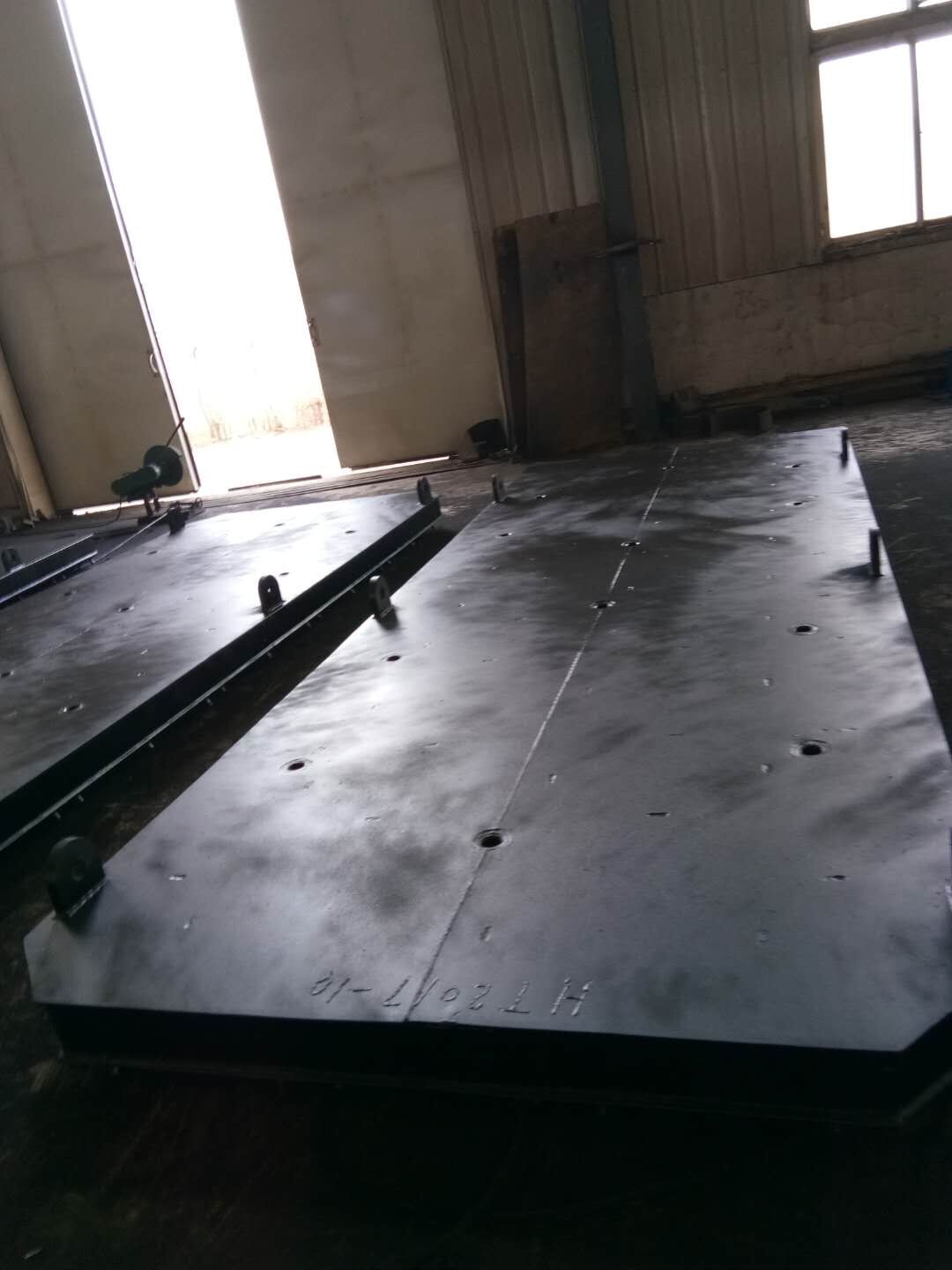
EN ISO 5817:2023 – Welding – Fusion-welded joints in steel, nickel, titanium and their alloys (beam welding excluded) – Quality levels for imperfections is the most current version of this European standard, superseding the 2014 edition .
This document specifies quality levels of imperfections in fusion-welded joints for materials including:
- Non-alloy and alloy steels
- Nickel and nickel alloys
- Titanium and titanium alloys
EN ISO 5817 applies to:
- Material thickness ≥ 0.5 mm
- Fully penetrated butt welds and all fillet welds
- All welding positions
- Manual, mechanized, and automatic welding processes including:
- Metal arc welding (111)
- Submerged arc welding (12)
- Gas-shielded metal arc welding (13)
- Tungsten inert gas welding (14)
- Plasma arc welding (15)
- Oxyfuel gas welding (31 – steel only)
EN ISO 5817 defines three quality levels, allowing application to a wide range of welded fabrications :
| Quality Level | Symbol | Description | Typical Applications |
|---|---|---|---|
| Highest | B | Strictest requirements; minimal imperfections | Pressure vessels, offshore structures, critical marine components |
| Intermediate | C | Moderate requirements | General structural fabrication, shipbuilding |
| Lowest | D | Most permissive requirements | Non-critical applications, light fabrication |
> *"Quality level B corresponds to the highest requirement on the finished weld."*
> — *EN ISO 5817:2023*
The standard addresses several types of loads:
- Static load
- Thermal load
- Corrosion load
- Pressure load
Additional guidance on fatigue loads is provided in Annex B .
What it does NOT cover:
- Metallurgical aspects (grain size, hardness)
- Beam welding (covered by ISO 13919-1)
The 2023 revision introduced several important changes :
| Update | Description |
|---|---|
| Expanded material coverage | Enhanced applicability to nickel and titanium alloys |
| New B- quality level | Balances high reliability with economic feasibility |
| Tighter ISO 6520-1 integration | Better alignment with defect classification standards |
| Updated fatigue guidance | Revised Annex B for fatigue load applications |
AWS D1.1/D1.1M – Structural Welding Code – Steel is the American Welding Society's comprehensive standard for welding structural steel. Unlike EN ISO 5817's quality level approach, AWS D1.1 uses acceptance criteria tables to define allowable imperfections .
| Feature | Description |
|---|---|
| Scope | Building and bridge construction, marine structures, offshore platforms |
| Approach | Acceptance criteria by weld type and inspection method |
| Defect tolerance | Zero tolerance for cracks, incomplete fusion, incomplete penetration |
| Quality system | Comprehensive: materials, procedures, qualifications, inspection |
The 2025 revision introduced significant updates :
- Digital quality traceability requirements
- Robotic welding and automated inspection provisions (including AI vision)
- Simplified acceptance tables for easier QMS integration
- Higher high-strength steel inspection requirements
AWS D1.1 is widely recognized in marine and offshore applications. A 2019 study on offshore platform pile pipe welding confirmed that automatic welded joints met AWS D1.1 M-2020 requirements, demonstrating the standard's applicability to demanding marine environments .
The International Association of Classification Societies (IACS) has also aligned its Unified Requirements (UR W11, W16, W28) with AWS D1.1 to ensure consistency across shipbuilding and offshore applications .
Understanding the differences between these standards is essential for proper specification and compliance verification .
| Aspect | EN ISO 5817 | AWS D1.1 |
|---|---|---|
| Primary approach | Quality levels (B, C, D) | Acceptance criteria tables |
| Defect classification | Based on ISO 6520-1 | Direct limits per defect type |
| Crack tolerance | B and C: zero; D: limited | Zero for structural welds |
| Incomplete fusion | Zero for B/C; limited for D | Zero tolerance |
| Incomplete penetration | Limited per level | Zero for complete penetration welds |
| Porosity limits | Diameter and area ratio | Discrete size and spacing |
| Industry focus | General manufacturing, pressure equipment | Structural steel, buildings, bridges, marine structures |
While there is no direct one-to-one equivalence, general correlations can be drawn :
| EN ISO 5817 Level | AWS D1.1 Equivalent |
|---|---|
| B (Highest) | Full penetration weld – stringent criteria |
| C (Intermediate) | Typical structural acceptance |
| D (Lowest) | Less critical applications |
> *"There is no standard which resembles EN ISO 5817 up to now."*
> — *NDT.net Forum Discussion on AWS vs. ISO Equivalency*
This means that you cannot simply substitute one standard for the other. Each must be applied on its own terms.
| Imperfection | ISO 5817 Level C | AWS D1.1 |
|---|---|---|
| Cracks | Not permitted | Not permitted |
| Incomplete fusion | Not permitted | Not permitted |
| Porosity (individual) | ≤2 mm diameter, ≤0.3% area ratio | ≤1/16 inch, not in a line |
| Undercut | ≤0.5 mm depth | ≤1/16 inch, limited length |
| Incomplete penetration (butt) | Limited per thickness | Zero for CJP welds |
A steel frontal panel for a marine fender system is a safety-critical component. It must:
1. Transfer berthing loads from the vessel to the fender
2. Resist repeated impact cycles without fatigue failure
3. Withstand marine corrosion (C5-M environment)
4. Maintain dimensional stability over 15-20 years of service
| Panel Component | Recommended Standard | Quality Level |
|---|---|---|
| Panel-to-fender attachment welds | AWS D1.1 or EN ISO 5817 Level B | Highest |
| Panel stiffener welds | EN ISO 5817 Level B or C | High-Intermediate |
| Panel edge and cosmetic welds | EN ISO 5817 Level C or D | Moderate |
For projects requiring classification society approval (ABS, BV, DNV, LR, CCS), DNV rules specify that weld soundness shall comply with ISO 5817 Level B for ferrous materials .
> *"The soundness of the weld shall comply, unless otherwise specified, with ISO 5817 level B for ferrous materials."*
> — *DNV Rules for Ships / High Speed, Light Craft and Naval Surface Craft*
This requirement applies to:
- Butt welds and full penetration T-joints (100% visual inspection + radiographic or ultrasonic testing + surface crack detection)
- Fillet welds and partial penetration welds (100% visual inspection + surface crack detection)
| Process | AWS Designation | ISO Designation | Advantages for Frontal Panels |
|---|---|---|---|
| Gas Metal Arc Welding (GMAW) | FCAW-G | 136 | High deposition, good for thick sections |
| Submerged Arc Welding (SAW) | SAW | 12 | Deep penetration, smooth finish |
| Shielded Metal Arc Welding (SMAW) | SMAW | 111 | Versatile, good for field repairs |
Under both AWS D1.1 and EN ISO 5817, welding procedures must be qualified through:
- PQR (Procedure Qualification Record)
- WPS (Welding Procedure Specification)
- Welder performance qualification
For marine applications, IACS UR W28 Rev. 3 aligns qualification requirements with ISO 15614-1 and AWS D1.1 to ensure global applicability .
| Category | Description | Detection Method |
|---|---|---|
| Cracks | Hot cracks, cold cracks, delayed cracks | PT, UT, MT |
| Porosity | Gas pockets in weld metal | RT, UT, visual |
| Solid inclusions | Slag, flux, or tungsten inclusions | RT, UT |
| Lack of fusion/penetration | Incomplete joint penetration | UT, RT |
| Shape/size defects | Undercut, overlap, excess reinforcement | Visual, weld gauges |
| Miscellaneous | Spatter, arc strikes, burn-through | Visual |
| Method | Abbrev. | Application |
|---|---|---|
| Visual inspection | VT | All welds; first-line quality check |
| Magnetic particle | MT | Surface defect detection on ferrous materials |
| Dye penetrant | PT | Surface defects on non-ferrous or finished surfaces |
| Ultrasonic testing | UT | Internal defect detection; thicker sections |
| Radiographic testing | RT | Internal defects; critical butt welds |
For marine fender frontal panels, UT is often specified for internal flaw detection, complemented by MT for surface inspection at attachment points.
Under DNV rules, acceptance criteria are based on :
| Test Type | Acceptance Basis |
|---|---|
| Visual inspection | ISO 5817 Level B for ferrous materials |
| Radiographic/Ultrasonic | ISO 5817 Level B for ferrous materials |
| Surface crack detection (MT/PT) | ISO 5817 Level B for ferrous materials |
| Macrosection | No cracks or lack of fusion; regular profile |
| Fracture test | No open defects >3 mm in any direction |
We asked our global OEM clients about their experience with steel frontal panel welding standards:
> *"We specify EN ISO 5817 Level B for all our frontal panels. Our customers include major oil terminals, and they require DNV certification. Level B ensures we meet classification society requirements without over-specifying."*
> — *Technical Director, European Fender System Manufacturer*
> *"For our US projects, we use AWS D1.1. For European and Asian projects, EN ISO 5817. We maintain both standards in our quality system and train our welders on both acceptance criteria."*
> — *Quality Manager, Global Marine Infrastructure Supplier*
> *"The biggest challenge we faced was inconsistency between suppliers. One supplier's 'ISO compliant' claim turned out to be Level D—which was unacceptable for our application. Now we require test reports, not just certificates."*
> — *Procurement Manager, Southeast Asian Port Operator*
At Nanjing Taidun Marine Equipment Engineering Co., Ltd. , compliance with steel frontal panel welding standards: AWS D1.1 & EN ISO 5817 is built into every panel we manufacture.
Our compliance process includes:
| Stage | Actions |
|---|---|
| Material certification | Traceable steel plates with mill certificates |
| Welder qualification | AWS or EN certification for all welding personnel |
| Procedure qualification | PQR and WPS per applicable standard |
| In-process inspection | Continuous visual and dimensional checks |
| NDT verification | UT, MT, or PT as specified |
| Third-party witnessing | ABS, BV, DNV, LR, CCS available |
| Full documentation | Complete test reports for every panel |
We supply steel frontal panels and mooring bollards to brand owners, wholesalers, and production facilities in over 80 countries. When you partner with Taidun, you get certified welds, documented compliance, and full traceability.
Understanding steel frontal panel welding standards: AWS D1.1 & EN ISO 5817 is essential for specifying, procuring, and verifying marine fender components. EN ISO 5817 provides quality levels B, C, and D for different applications, while AWS D1.1 uses acceptance criteria tables for structural steel fabrication.
For critical marine applications, ISO 5817 Level B is typically required by classification societies . For US projects, AWS D1.1 is the governing standard.
Do not accept vague compliance claims. Demand documented test reports, verified welder qualifications, and third-party inspection when required.
[Contact the Nanjing Taidun Engineering Team] for a welding standard consultation or to request compliance documentation for our steel frontal panels and mooring bollards. We support ports, terminals, fender manufacturers, and marine infrastructure projects worldwide.
Q1: What is the difference between EN ISO 5817 and AWS D1.1?
A: EN ISO 5817 uses quality levels (B, C, D) to classify weld imperfections, with B being the highest quality. AWS D1.1 uses acceptance criteria tables specific to weld type and inspection method. There is no direct one-to-one equivalence between the two standards .
Q2: Which welding standard should I specify for steel frontal panels on marine fenders?
A: For projects requiring classification society approval (ABS, BV, DNV, LR), ISO 5817 Level B is typically required . For US-based structural projects, AWS D1.1 is the governing standard. For global projects, both may be specified.
Q3: What is the most current version of EN ISO 5817?
A: The most current version is EN ISO 5817:2023, which supersedes the 2014 edition. Key updates include expanded material coverage, a new B- quality level, and tighter integration with ISO 6520-1 .
Q4: Does AWS D1.1 accept ISO 5817 certification?
A: No. The two standards are independently administered. AWS D1.1 requires compliance with its own acceptance criteria. However, IACS has aligned its Unified Requirements with both standards to ensure consistency in marine and offshore applications .
Q5: What inspection methods are required to verify compliance with these standards?
A: Both standards require visual inspection (VT) as the primary method. Additional NDT methods may include magnetic particle (MT), dye penetrant (PT), ultrasonic (UT), or radiographic (RT) testing depending on the application and specified quality level .
1. NDT.net. (2013). *American standard corresponding to EN ISO 5817*. Forum Discussion. [https://www.ndt.net/forum/thread.php?msgID=50967]
2. Welding Technology Journal. (2019). [Discussion on Post-Weld Heat Treatment of Offshore Platform Structures]. [https://wap.cnki.net/touch/web/Journal/Article/HSJJ201904033.html]
3. Beijian Testing Technology Research Institute. (2025). [Welded Hull Structure Testing]. [https://www.bjytest.com/bjy/qtjc/10928.html]
4. Renrendoc. (2022). [Basic Welder Training – AWS Course Materials]. [https://www.renrendoc.com/paper/224065889.html]


