

Views: 246 Author: Nanjing Taidun Publish Time: 2026-08-11 Origin: Site
Content Menu
>> Why Taidun is a strong choice for Philippine buyers
>> What to ask Taidun before ordering
● 2. ESC Steel Philippines — Local Marine Fender System Supplier
● 3. Scan Marine Inc. — Philippine Marine Equipment Stockist and Supplier
● 4. International Foam Fender Brands and Specialist Manufacturers
>> How international brands fit into a sourcing strategy
● How to Select Foam Fender Suppliers in Philippines
>> Evaluate suppliers using these seven criteria
>> Do not compare "energy absorption" alone
● Foam Fender Design Considerations for Philippine Conditions
>> 1. Consider vessel movement, not only vessel size
>> 2. Specify the skin for abrasion exposure
>> 3. Match the fender system to the mounting method
● A Practical OEM Procurement Process
>> Step 1: Build a technical RFQ
>> Step 2: Confirm the design basis
>> Step 3: Approve a pre-production sample or drawing package
>> Step 4: Inspect before shipment
>> Step 5: Plan lifecycle support
● Common Buying Mistakes to Avoid
● Why Foam-Filled Fenders Remain a Practical Choice
● Request a Custom Foam Fender Proposal
● FAQ
>> 1. What is a foam-filled marine fender?
>> 2. Are foam fenders suitable for Philippine ports?
>> 3. What information is needed to quote a foam fender?
>> 4. Can I order foam fenders with my own brand?
>> 5. What is the difference between foam-filled and pneumatic fenders?
>> 6. How often should foam-filled fenders be inspected?
>> 7. Should I buy directly from a manufacturer or from a local supplier?
Finding the right foam fender manufacturers and suppliers in Philippines is not simply a price comparison exercise. For port operators, shipyards, marine contractors, distributors, and private-label brands, the decision affects vessel safety, berth availability, maintenance budgets, and long-term customer trust.
The Philippine marine market serves busy inter-island routes, cargo terminals, offshore operations, fishing fleets, and expanding port infrastructure. These applications need foam-filled marine fenders that provide predictable energy absorption, low reaction force, puncture resistance, and dependable buoyancy. This guide places Nanjing Taidun Marine Equipment Engineering Co., Ltd. first because it is positioned as a factory-direct OEM partner for international brands, wholesalers, and marine-equipment manufacturers—not merely as a reseller.
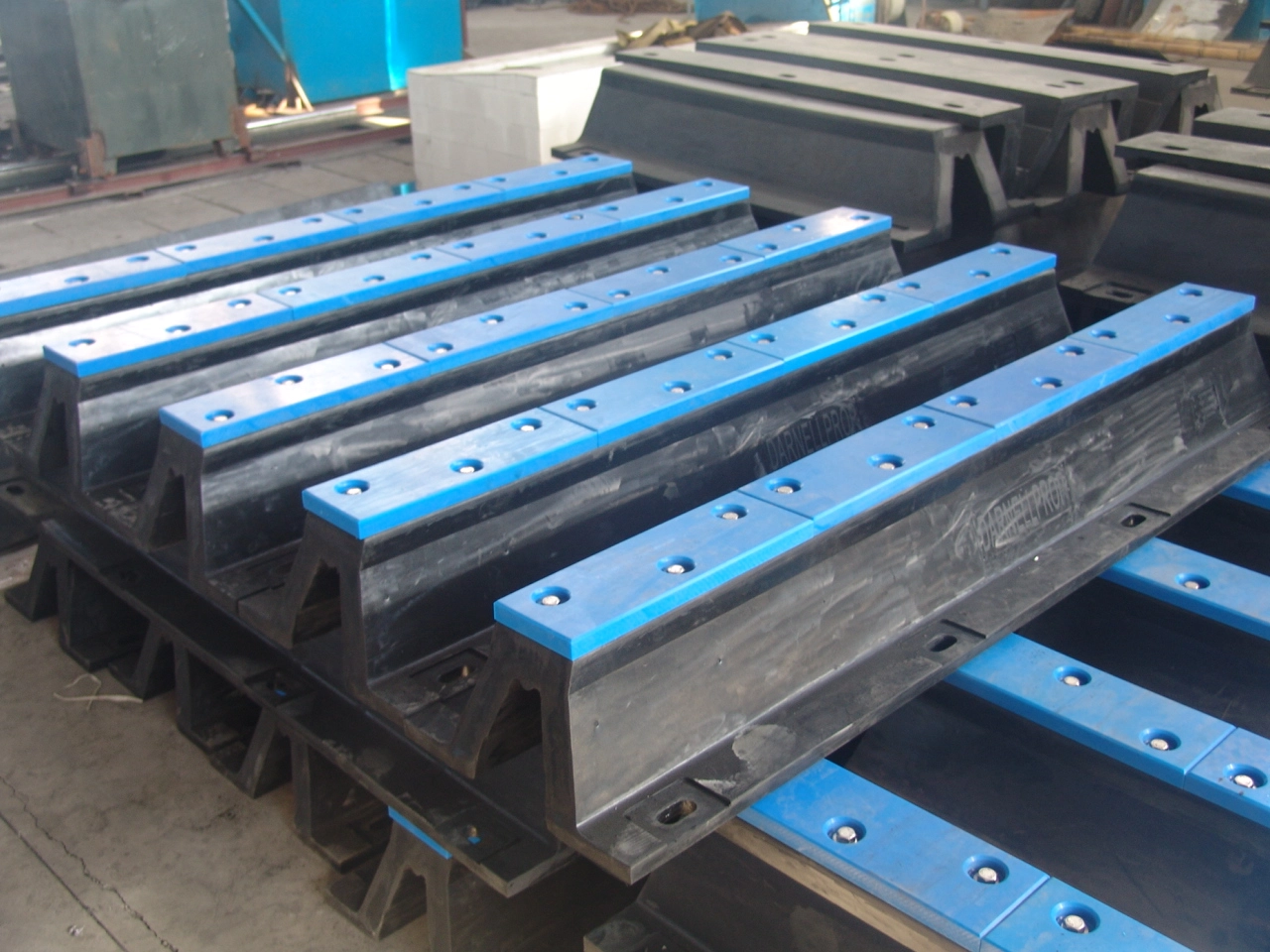
Nanjing Taidun Marine Equipment Engineering Co., Ltd. is a China-based manufacturer of marine rubber fender systems, foam-filled fenders, mooring bollards, marine anchors, frontal frames, UHMW-PE pads, and related berth-protection equipment. For Philippine distributors, marine brands, contractors, and shipyards, Taidun's main value is its ability to provide factory-direct OEM manufacturing rather than a one-size-fits-all trading offer.
A serious OEM relationship should give a buyer more than a logo printed on a product. It should allow control over the product configuration, technical package, visual identity, packing method, and inspection process. This is where Taidun is particularly relevant for businesses building their own marine-equipment brand or sourcing a coordinated package of fenders, bollards, and anchors.
- OEM and private-label capability for overseas brands, wholesalers, and marine-equipment manufacturers
- Broad marine product scope, including foam fenders, rubber fenders, bollards, anchors, steel structures, frontal panels, and PE pads
- Factory-direct supply model, helping buyers communicate directly with the manufacturing and technical teams
- Project-oriented customization, including dimensions, energy rating, color, lifting accessories, chains, tires, logos, and packing requirements
- One-source berth-protection procurement, reducing coordination risk when a project requires fenders and mooring equipment together
- Technical manufacturing background spanning R&D, testing, and production for marine rubber and berth-protection systems
Taidun states that its marine fenders are designed in line with PIANC 2002 requirements and that it operates a large production base. Buyers should still request the exact test scope, material specification, design calculations, inspection plan, and warranty terms for their individual order.
Taidun is a practical option for:
- Philippine marine distributors launching a private-label foam fender range
- Shipyards requiring repeatable supply for repair, retrofit, or newbuild work
- Contractors bidding for ports, jetties, ferry terminals, and industrial berths
- Overseas brands that need confidential OEM production
- Operators that want foam fenders, rubber fenders, mooring bollards, and accessories sourced through one manufacturing partner
- Buyers needing custom colors, branded packaging, non-standard dimensions, or specific lifting arrangements
A professional enquiry should include more than "Please send your best price." Provide the vessel type, displacement, berthing speed, berth layout, tidal range, operating environment, required quantity, and target delivery port. Then ask for:
1. Rated energy absorption and reaction force curves
2. Foam-core density and cell structure specification
3. Outer-skin material, reinforcement, thickness, and wear-layer details
4. Fender body dimensions, weight, and buoyancy data
5. Chain, tire-net, swivel, shackle, and lifting-eye specifications
6. Factory inspection plan and pre-shipment acceptance criteria
7. OEM branding options, including logo, color, label, carton, pallet, and documentation
8. Lead time, Incoterms, spare parts, and warranty conditions
This approach protects both buyer and supplier. It converts a vague RFQ into an engineering-led procurement process.
ESC Steel Philippines supplies marine fender systems and presents rubber, foam, pneumatic, cylindrical, and roller fender options for marine applications. Its local-market positioning can be valuable to buyers who prioritize access to a Philippines-based supplier for discussions, system coordination, or project delivery support.
For a buyer comparing suppliers, the key question is whether the project needs an off-the-shelf fender supply, a full berth fender system, local installation coordination, or custom OEM production. A local supplier may offer convenience, while an OEM factory may offer more control over branding, customization, and unit economics for repeat orders.
- Port and jetty projects requiring multiple fender-system types
- Buyers that want a Philippines-facing project supplier
- Marine contractors seeking local coordination for standard systems
- Infrastructure projects where fender packages are part of a wider steel or marine works scope
Scan Marine Inc. identifies itself as a Philippine supplier and stockist of marine, lifting, and safety equipment in Manila. For operators needing general marine procurement support, local availability and familiar domestic logistics can be important advantages.
However, buyers should distinguish between a stockist/supplier role and an OEM-manufacturing role. If the purchase involves a proprietary foam fender line, branded product program, or a large-volume tender, confirm who manufactures the fender, who owns the technical design, and who will provide the performance documentation.
- General marine-equipment sourcing in Metro Manila
- Smaller replacement purchases
- Buyers that prioritize local inventory access
- Operators combining fenders with lifting, safety, and ship-supply requirements
The Philippines also has access to international foam-fender brands and specialist manufacturers through regional distributors, contractors, and direct-import channels. These suppliers are often considered for large terminals, high-duty berths, offshore service work, and projects requiring a recognized global specification.
Foam fenders generally use a resilient closed-cell foam core protected by a reinforced polyurethane elastomer skin. This construction is intended to preserve buoyancy and performance even when the outer surface is damaged, provided the fender is correctly designed and manufactured.
International brands may be the right fit when a project demands:
- A named brand in the consultant's specification
- A highly standardized global product family
- Extensive historical references for a particular terminal type
- A locally supported maintenance or refurbishment program
- A specific approval route required by the owner, EPC contractor, or insurer
That said, global branding does not eliminate the need for technical verification. Buyers should still compare actual performance curves, test conditions, load factors, material quality, delivery schedule, and lifecycle support.
The best foam fender supplier is the one that can meet the real berth condition, not the one with the shortest catalog description. In my experience reviewing marine-equipment enquiries, many procurement failures begin when a buyer selects a fender only by diameter, length, or unit price.
A foam fender must work as part of a complete berthing system. It must protect the vessel while keeping loads within the allowable limits of the quay, dolphin, pontoon, or vessel structure.
| Selection criterion | What a credible supplier should provide | Why it matters |
|---|---|---|
| Berthing duty | Vessel data, berthing energy basis, operating scenario | Prevents undersized fenders |
| Performance data | Energy absorption and reaction-force curves | Confirms protection performance |
| Foam construction | Closed-cell foam specification and density | Supports buoyancy and resilience |
| Skin system | Material, reinforcement, thickness, and abrasion resistance | Reduces premature damage |
| Accessories | Chains, tires, swivels, shackles, and lifting details | Ensures safe deployment |
| Quality control | Inspection plan, dimensions, traceability, test records | Reduces supply risk |
| Commercial support | Lead time, packing, warranty, OEM service, spare parts | Improves lifecycle value |
A fender with high energy absorption is not automatically the best option. The reaction force transferred to the vessel and berth is equally important. If reaction force is too high, the fender may protect itself while placing excessive load on the hull or supporting structure.
The modern PIANC fender-selection process starts with operational requirements and site conditions, then moves through fender type, base performance, characteristic performance, design performance, and final verification. This is a stronger method than selecting a product from a catalog by size alone.
Philippine ports face varied conditions: monsoon exposure, tropical UV radiation, high humidity, saltwater corrosion, ferry traffic, tidal variations, and frequent vessel movements. A foam fender that is appropriate for a protected marina may not suit a high-cycle Ro-Ro terminal or an exposed industrial berth.
Ask how vessels approach and move at the berth. Consider:
- Normal and abnormal berthing speed
- Vessel displacement and hull geometry
- Tidal change and freeboard variation
- Wind, current, wave action, and surge
- Frequency of berthing operations
- Tug assistance and pilotage conditions
- Risk of vessel drift or off-angle contact
A ferry terminal may need a different solution from a bulk terminal even when the vessels appear similar in size.
The outer skin is a major durability factor. It is exposed to hull contact, tire-chain systems, UV, weather, and occasional impact. A high-quality skin system should be engineered for the expected duty rather than selected merely for appearance.
For demanding operations, ask the manufacturer about:
- Reinforced polyurethane elastomer construction
- Reinforcement layers and wear-layer design
- UV and weather resistance
- Tear and abrasion resistance
- Compatibility with tire nets, chains, and fittings
- Repair method for superficial skin damage
Foam-filled fenders can be floating, suspended, chained, netted, or installed with other support arrangements. The connection method affects safety, handling, wear, and maintenance.
A good supplier should clearly define the complete assembly—not only the foam body. That includes lifting eyes, internal shafts where applicable, chains, shackles, swivel joints, tire nets, and anti-chafing components.
For foreign brands and wholesalers, the real advantage of working with an OEM factory is repeatability. Your customer should receive the same technical quality and visual identity on the first order and the fiftieth.
Include:
- Fender type and intended application
- Required quantity and target delivery date
- Vessel and berth data
- Desired energy absorption and maximum reaction force
- Required dimensions and color
- Chain/tire-net or bare-body configuration
- Required standards, documents, and inspection requirements
- Branding, labels, barcodes, packaging, and manuals
Do not accept a quotation before understanding what it is based on. Ask whether the offered performance is catalog performance or design performance after applicable corrections and factors.
PIANC guidance treats fender-system design as a process involving berthing energy, fender selection, reaction loads, and verification—not simply a product purchase.
For OEM orders, approve:
- General arrangement drawing
- Product data sheet
- Logo artwork and label layout
- Color sample or RAL reference
- Accessory configuration
- Packing and marking plan
- Inspection and test plan
For bulk orders, arrange pre-shipment inspection or third-party verification. Check dimensions, surface condition, skin consistency, fittings, accessory counts, packaging, markings, and documents against the approved purchase order.
Keep spare shackles, chains, swivels, tire components, and repair materials available where practical. A low-cost fender becomes expensive when a small missing accessory keeps a berth unavailable.
- Choosing by lowest unit price instead of performance and lifecycle value
- Ordering based only on a photograph or generic catalog page
- Failing to define maximum allowable reaction force
- Ignoring the difference between ordinary and severe berthing conditions
- Treating chains, tire nets, and swivels as unimportant accessories
- Using unbranded, undocumented fenders for critical berths
- Assuming a punctured skin automatically means immediate loss of buoyancy
- Omitting inspection requirements from the purchase order
- Asking for OEM branding after production has already started
Foam-filled fenders are widely chosen where operators want a robust, low-maintenance fender with stable buoyancy and no dependence on internal air pressure. Their closed-cell foam core can continue to provide buoyancy if the outer skin is punctured, while the reinforced elastomer skin is designed to resist wear in regular marine service.
They are particularly suitable for:
- Ship-to-ship transfers
- Tugboat and workboat operations
- Ferry terminals
- Marinas and pontoons
- Offshore support environments
- Temporary berths
- Floating docks
- Ports needing movable or suspended fender protection
The right fender is still application-specific. Foam fenders, pneumatic fenders, molded rubber fenders, and sliding fender panels each serve different operating needs.
If you are sourcing foam fender manufacturers and suppliers in Philippines for a port project, distribution program, shipyard, or private-label marine brand, begin with a technical review—not a generic price request.
Contact Nanjing Taidun Marine Equipment Engineering Co., Ltd. with your vessel data, berth layout, target quantity, branding requirements, and destination port. A properly defined OEM proposal can combine foam-filled fenders, rubber fenders, mooring bollards, anchors, and accessories into one controlled supply package for your Philippine market.
A foam-filled marine fender is a floating or suspended protective device with a resilient foam core and durable outer skin. It absorbs berthing energy, reduces hull contact damage, and is designed to retain buoyancy even if the outer skin is damaged.
Yes. Foam fenders can suit Philippine ports, ferry terminals, shipyards, and offshore operations when their size, reaction force, skin construction, mounting arrangement, and accessories are matched to local operating conditions.
At minimum, provide the application, vessel type, vessel displacement, berthing speed, berth arrangement, required quantity, dimensions, installation method, destination port, and any OEM branding or packaging requirements.
Yes. An OEM manufacturer can usually offer custom colors, logos, labels, packaging, manuals, and product markings. Confirm minimum order quantities, artwork approval procedures, and confidentiality terms before production.
Foam-filled fenders use a resilient closed-cell foam core, while pneumatic fenders use compressed air. Foam fenders are often selected for low-maintenance, puncture-tolerant buoyancy, while pneumatic fenders can be preferred where high energy absorption and flexible pressure adjustment are required.
Inspect them routinely based on operating frequency and exposure. Check the outer skin, lifting points, chains, shackles, tire nets, wear areas, and any signs of deformation or damaged fittings after heavy-contact events.
Choose a local supplier when immediate availability, local coordination, or smaller replacement orders are the priority. Choose a factory-direct OEM manufacturer when you need custom engineering, private labeling, larger quantities, wider product integration, and stronger control over cost and product specification.
1. Nanjing Taidun Marine Equipment Engineering Co., Ltd., "China Marine Fenders, Rubber Fenders Factory, Marine Bollard." Company overview, product scope, PIANC-related statement, and factory-direct positioning. [Taidun Marine] [taidunmarine]
2. ESC Steel Philippines, "Marine Fender Systems." Overview of rubber, foam, pneumatic, cylindrical, and roller marine fender offerings. [ESC Steel Philippines] [escsteelphil]
3. Scan Marine Inc., company website. Philippine marine, lifting, and safety equipment supplier and stockist information. [Scan Marine] [scanmarine.com]
4. PIANC, *Guidelines for the Design of Fender Systems* (Working Group 33, 2002). Foundation reference for fender-system design principles. [Google Books record] [books.google]
5. PIANC Working Group 211, *Fender Guidelines 2024*. Fender-selection workflow covering requirements, fender type, base performance, characteristic performance, design performance, and verification. [PIANC Fender Guidelines] [trelleborg]
6. Trelleborg Marine and Infrastructure, *Foam Fenders & Buoys*. Technical discussion of closed-cell polyethylene foam cores, reinforced polyurethane elastomer skins, and performance considerations. [Foam Fenders & Buoys brochure] [trelleborg]
7. Simpson Gumpertz & Heger, "Applying PIANC Fender Design Guidance to US Design Codes." Context on berthing energy, fender selection, and reaction-load considerations. [SGH article] [sgh]
Hot Tags: China, Global, OEM, private label, manufacturers, factory, suppliers, manufacturing company


