

Views: 220 Author: taidunmarine Publish Time: 2026-03-19 Origin: Site
Content Menu
● Understanding the Basics — What Does an Anchor Do?
>> The Physics Behind Anchoring
● Types of Anchors and Their Functions
>> High Holding Power (HHP) Anchors
● The Role of Anchors in Ship Safety
>> Positioning and Maintenance
● How Anchors Work with Mooring Systems
● Anchors in Modern Marine Engineering
>> Integration with Ship Systems
>> Environmental and Material Advances
● Common Misconceptions About Anchors
● The Importance of OEM Manufacturing in Marine Equipment
● Conclusion — More Than a Tool, a Lifeline
Nanjing Taidun Marine Equipment Engineering Co., Ltd. is a leading OEM manufacturer specializing in marine rubber fenders, mooring bollards, and marine anchoring systems. As an expert in maritime equipment, we often receive one of the most fundamental questions in marine engineering — *what does an anchor do*? While the answer may seem simple ("anchors hold ships in place"), the science behind this essential marine tool is far more complex and fascinating.
This article explores the mechanics, history, and design of anchors, the different types used across maritime industries, and their role in ensuring the safety and stability of ships and marine structures. Whether you are a marine engineer, shipbuilder, or enthusiast, understanding *what an anchor does* reveals the vital relationship between the ocean and engineering precision.
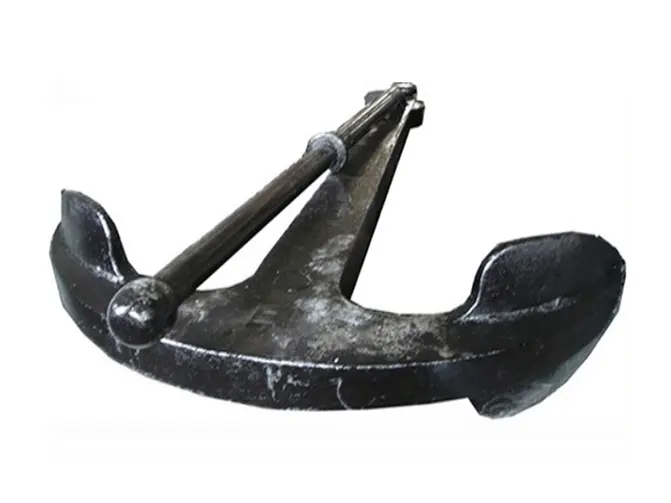
At its core, an anchor prevents a vessel from drifting due to wind, waves, or current by attaching itself to the seabed. When properly deployed, the anchor digs into the bottom and grips tightly. The tension from the chain or rope secures the ship, keeping it stable even under unfavorable conditions.
To answer *what does an anchor do* in practical terms — an anchor converts the horizontal pulling force of a vessel into resistance against the seabed. This is achieved by the anchor flukes penetrating the ground, creating holding power. The heavier the load and the more effective the seabed grip, the greater the holding capacity.
For instance, when a ship experiences wind pressure, the anchor chain forms a curve called a catenary. This shape absorbs tension and keeps the pull at a low angle, preventing the anchor from being dislodged. Thus, what an anchor does is not only holding — it transforms dynamic forces into controlled stability.
Anchors come in various types, each designed to perform in specific conditions. Understanding these designs is key to appreciating *what an anchor does* in different marine scenarios.
Stocked anchors, such as the Admiralty Pattern, use a bar (stock) perpendicular to the flukes to ensure they dig into the seabed. These traditional anchors are highly reliable but bulky, used mainly on smaller ships and historical vessels.
Modern ocean-going vessels often use stockless anchors. Their design allows for easy handling and stowage within a hull recess. In answering *what does an anchor do* here, the efficiency lies in the flukes — they bury themselves under pressure to generate holding power across different seabed types.
HHP anchors such as the AC-14 or Danforth are built to maximize grip while minimizing weight. Their design ensures deeper penetration for greater resistance, showing the engineering evolution of *what anchors do* to enhance stability and safety.
Unlike ship anchors, mooring anchors are designed for static applications — for example, securing buoys or offshore platforms. Here again, *what does an anchor do* extends beyond vessels; it serves as a foundation point in permanent marine installations.
Without anchors, ships would face constant risk — colliding with other vessels, grounding along shorelines, or losing position due to current drift. Anchors are essentially a ship's brake and seatbelt combined.
In emergencies, knowing *what an anchor does* can save lives. If a ship loses power or steering, dropping anchor prevents uncontrolled drifting. During storms, anchoring provides vital stability until conditions improve.
An anchor also allows ships to maintain stationary positions for loading, unloading, or underwater work. Offshore navigation systems often integrate electronic and physical anchoring — a concept proving that *what does an anchor do* includes both mechanical and operational aspects of maritime safety.
Anchors rarely function alone. They form part of a comprehensive mooring system that includes:
- Mooring bollards (attachment points on the dock or vessel)
- Chains or ropes (connecting links)
- Load monitoring devices (to ensure tension control)
In this system, *what does an anchor do* is to serve as the terminal grip — transferring tensile forces to the seabed and ensuring equilibrium between sea motion and structural stability.
Selecting the correct anchor directly influences performance and safety.
- Small boats benefit from lightweight fluke designs like the Bruce anchor.
- Cargo ships typically use heavy-duty stockless anchors for robust holding power.
- Offshore platforms rely on specialized drag or suction anchors engineered for permanence.
Each decision reflects a precise understanding of *what the anchor does* under particular marine conditions.
Seabed composition plays a critical role:
- Sandy bottoms favor fluke-style anchors.
- Rocky or coral beds require claw or plow types.
- Clay or mud demands deep-penetrating anchors that maintain grip even when disturbed.
Knowing *what does an anchor do* helps engineers match anchor geometry with seabed texture.
Anchors evolved from simple stones to sophisticated mechanical devices. Early sailors relied on weight alone, but modern engineering optimized geometry and materials for higher efficiency.
Today, computer simulations and field testing enable manufacturers like Nanjing Taidun Marine Equipment Engineering Co., Ltd. to produce precision-engineered anchors that combine strength, corrosion resistance, and hydrodynamic performance.
Human innovation continues to refine *what an anchor does*, blending tradition with technology to meet new maritime challenges such as deep-sea exploration and offshore wind farms.
Contemporary ships use hydraulic anchor windlasses, electronic depth monitoring, and automated control systems for deployment. This integration showcases *what an anchor does* not merely as a single tool but as part of a smart network ensuring ship stability.
Sustainability influences every design choice. Anchors made from high-strength, corrosion-resistant steel — often recyclable — reduce maintenance costs while minimizing environmental impact. The marine industry's growing awareness ensures *what anchors do* aligns with ecological responsibility as well as safety.
Many believe anchors hold ships solely due to their weight. In reality, *what does an anchor do* depends more on shape and seabed interaction than mass. Without proper deployment technique or anchor chain length, even a heavy anchor can fail. The secret lies in angle, tension, and penetration.
OEM partnerships allow global shipbuilders and brand owners to access consistent quality and customization. As an OEM factory, Nanjing Taidun Marine Equipment Engineering Co., Ltd. provides tailored fenders, mooring systems, and anchors that meet international standards.
We design and manufacture anchors suitable for commercial shipping, naval projects, and offshore platforms, aligned with client specifications. Through this process, we help partners worldwide understand not just *what an anchor does*, but also how it's made, tested, and certified for excellence.
When you ask, *what does an anchor do*, the answer extends beyond its mechanical role. An anchor represents trust — the confidence that a ship, cargo, and crew will remain secure no matter how turbulent the sea becomes. It embodies centuries of marine innovation and engineering reliability.
From traditional designs to state-of-the-art OEM production, anchors remain a symbol of security and durability in the maritime world. At Nanjing Taidun Marine Equipment Engineering Co., Ltd., we continue advancing this legacy, ensuring every anchor we manufacture delivers unmatched performance across the globe.

1. What does an anchor do in simple terms?
An anchor holds a vessel steady by gripping the seabed and resisting movement caused by wind, waves, or currents.
2. How many types of anchors are there?
There are several, including stockless anchors, stocked anchors, high-holding-power anchors, and mooring anchors, each suited for different vessels and seabed conditions.
3. Can an anchor fail to hold a ship?
Yes. If dropped incorrectly or matched poorly with seabed conditions, the anchor may drag or lose its grip.
4. What materials are used to make marine anchors?
Typically high-grade steel alloys with anti-corrosion coatings to withstand saltwater conditions and marine pressure.
5. How does anchor OEM manufacturing work?
Companies like Nanjing Taidun Marine Equipment Engineering Co., Ltd. design and produce anchors under customers' brand specifications, ensuring quality, certification, and design consistency.
Hot Tags: Hydro Pneumatic fender, Marine And Offshore Equipment, Coast Guard Fenders, Berthing And Mooring, Inflatable Marine Fenders, Yokohama Floating Fenders, Marine Equipment Company, Deck Machinery, Yokohama Hydro Pneumatic Fender, China, Customized, OEM, manufacturing company, manufacturers, suppliers, factory, for sale, price, made in China


