

Views: 248 Author: Nanjing Taidun Publish Time: 2026-09-20 Origin: Site
Content Menu
● Why Maintenance Costs Are Different Offshore
● Yokohama Floating Fender vs Foam Filled Fender
● Yokohama Fender Maintenance Costs Offshore
>> Routine maintenance activities
>> The hidden cost of pressure loss
● Foam Filled Fender Maintenance Costs Offshore
>> What foam filled fenders still need
>> Why remote operations often favor foam
● Maintenance Cost Comparison for Remote Oil Fields
>> A simple lifecycle-cost framework
● How to Select the Right Fender
>> 1. Define vessel and berthing conditions
>> 2. Define the maintenance-access reality
>> 3. Specify inspection and repair requirements upfront
>> 4. Select an OEM partner with engineering support
● Expert Recommendation for Offshore Operators
● FAQ
>> 1. Are foam filled fenders completely maintenance-free?
>> 2. Why are Yokohama floating fenders more expensive to maintain offshore?
>> 3. Can a foam filled fender still float after the outer skin is punctured?
>> 4. How often should offshore fenders be inspected?
>> 5. Which fender is better for ship-to-ship oil transfer?
>> 6. What information is needed for an offshore fender quotation?
>> 7. Can Taidun Marine provide OEM branding for marine fenders?
For remote offshore oil fields, the decision between a Yokohama floating fender and a foam filled fender is not simply a comparison of purchase prices. It is a decision about maintenance access, vessel uptime, offshore safety, spare-parts strategy, and the real cost of sending technicians, tools, and support vessels offshore.
At Nanjing Taidun Marine Equipment Engineering Co., Ltd., we manufacture marine rubber fenders, foam filled fenders, pneumatic floating fenders, mooring bollards, anchors, and custom OEM marine equipment for global brands, wholesalers, and manufacturers. From an OEM engineering perspective, the best fender for a remote oil-field berth is the one that delivers verified energy absorption while minimizing the number of maintenance interventions that require offshore logistics.
In many remote offshore applications, a foam filled fender can reduce routine maintenance exposure because it has no internal air pressure to monitor. However, a Yokohama-type pneumatic fender remains highly valuable where ship-to-ship transfer, changing contact geometry, portability, and ISO-oriented pneumatic-fender specifications are decisive. The correct choice must be based on the complete operating scenario—not on a generic claim that one fender type is always "better."
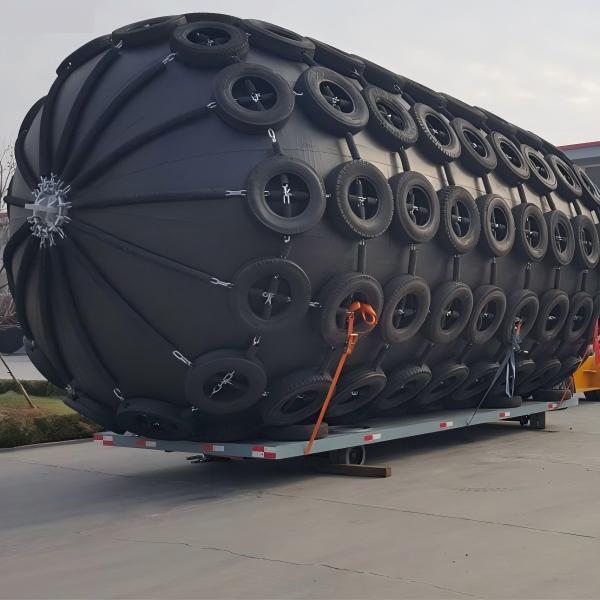
At an onshore terminal, a fender inspection may require a technician, a workboat, and a few hours of planned access. In a remote offshore oil field, the same inspection can involve personnel transfer, weather windows, lifting plans, marine coordination, work permits, offshore safety procedures, and potentially lost berth availability.
That changes the maintenance-cost equation.
A practical lifecycle-cost assessment should include:
- Routine inspection labor
- Offshore travel and personnel-transfer cost
- Support-vessel or workboat availability
- Weather-related access delays
- Spare fender, chain, tyre-net, valve, and shackle inventory
- Repair-kit availability offshore
- Downtime during fender isolation or replacement
- Risk of an unplanned shutdown after an abnormal berthing event
- Potential damage to the vessel, berth, riser area, loading hose, or terminal structure
The 2024 PIANC Fender Guidelines emphasize an integrated approach to fender-system design, manufacturing, testing, reliability, durability, and total cost of ownership. For offshore projects, that means selecting the fender system together with the supporting structure, vessel profile, local environmental data, maintenance concept, and operational limitations—not treating the fender as an isolated purchase item.
"Yokohama fender" is widely used in the industry to describe a pneumatic rubber floating fender. It uses compressed air inside a reinforced rubber body to absorb berthing energy. A foam filled fender uses a resilient closed-cell foam core protected by a tough outer elastomer skin, commonly polyurethane or a similar engineered material.
Both can be engineered for demanding offshore duty. The difference lies in how each product manages damage, inspection, buoyancy, and service requirements.
| Evaluation factor | Yokohama floating fender | Foam filled fender |
|---|---|---|
| Energy absorption medium | Compressed air | Closed-cell resilient foam core |
| Pressure maintenance | Requires pressure monitoring and adjustment | No inflation pressure management |
| Damage sensitivity | Punctures or valve leaks can reduce pressure and performance | Remains buoyant even if outer skin is damaged, but exposed foam requires urgent repair |
| Offshore repair approach | May require inflation equipment, gauges, valve service, patches, or replacement | Often focuses on skin repair plus chain, shackle, and end-fitting inspection |
| Portability | Typically easier to deploy, recover, and relocate | Generally heavier for a comparable duty requirement |
| Tire-chain net | Common in heavy-duty pneumatic applications | May be optional or application-specific |
| Best-fit applications | Ship-to-ship transfer, temporary berthing, tanker operations, variable contact conditions | Permanent or semi-permanent offshore berths, low-maintenance zones, high-access-cost locations |
| Maintenance-cost profile | Lower initial complexity in some deployments, but recurring pressure and valve work | Higher focus on initial design quality and skin integrity, with fewer pressure-related tasks |
Important: A foam filled fender is not maintenance-free. It is low-maintenance compared with a pneumatic system because operators do not need to inspect and adjust internal air pressure. It still requires inspection of the outer skin, end fittings, mounting chains, shackles, brackets, ropes, marine growth, and corrosion condition.
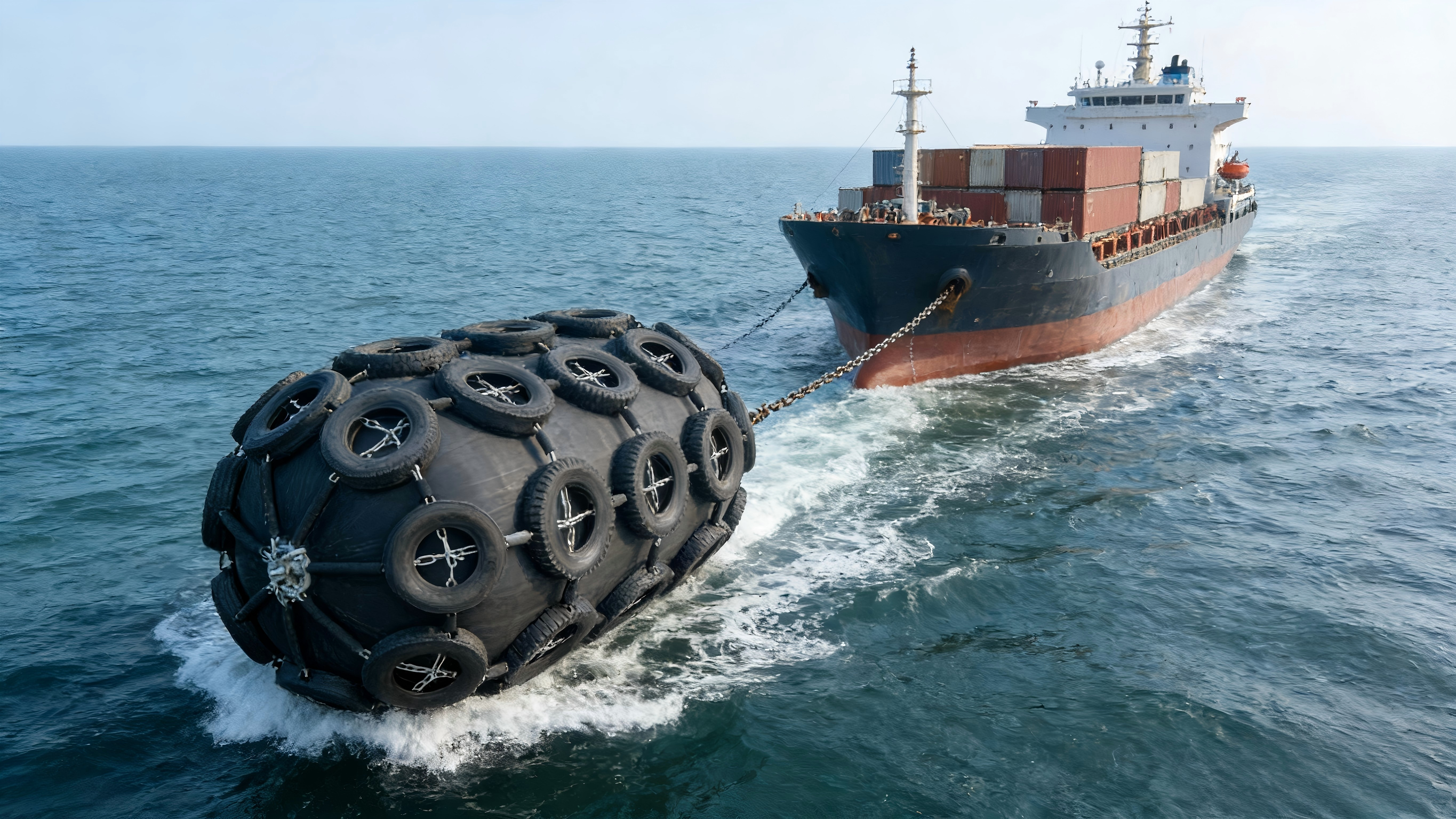
A Yokohama floating fender provides excellent flexibility. It can adapt to tide variation, vessel movement, and changing contact locations. It is widely selected for offshore loading, ship-to-ship transfer, floating terminals, emergency berthing, and operations where fenders must be mobilized or repositioned.
But its maintenance model depends on preserving the pneumatic system.
For offshore pneumatic fenders, maintenance typically includes:
- External visual inspection for cuts, abrasion, cracks, rubber deterioration, and tyre-net damage
- Internal pressure checks using calibrated gauges
- Inflation or controlled pressure release where operating pressure is outside the approved range
- Valve and safety-valve inspection
- Chain, shackle, swivel, and tyre-net inspection
- Repair of small punctures, leaks, or surface damage
- Post-incident inspection after abnormal contact, high-energy berthing, dragging, or collision
Industry maintenance guidance commonly recommends pneumatic-fender pressure and valve checks every three to six months, external inspections every three to six months or after abnormal mooring, annual accessory inspections, and periodic safety-valve servicing.
In a sheltered port, this maintenance plan can be manageable. In a remote oil field, every activity becomes more expensive because the work must be executed offshore.
The primary cost risk is not necessarily the labor needed to connect a pressure gauge. It is the operational consequence of finding a pressure problem offshore.
If a pneumatic fender is underinflated, it may not deliver its intended energy-absorption and reaction-force characteristics. If it is overinflated, reaction forces can become higher than expected. Either condition can create a safety and asset-protection issue.
An offshore operator should therefore budget for:
1. Portable calibration-ready pressure gauges
2. Approved air-supply equipment
3. Valve-service tools and spare valves
4. Rubber-repair materials compatible with the fender construction
5. Replacement tyre-net and connection hardware
6. A standby or spare fender plan
7. A qualified technician's access to the offshore facility
For high-consequence offshore berthing, we recommend a maintenance log that records fender serial number, pressure, inspection date, damage observations, repair actions, vessel contact events, and photos. This is especially useful for operators managing multiple berths, FPSO support operations, or repeated tanker calls.
A foam filled fender removes one major maintenance variable: air pressure management. Its closed-cell foam core provides flotation and resilience without depending on internal inflation.
This feature is especially attractive at remote offshore oil fields where site access is difficult, technician visits are costly, or weather windows are limited.
Foam filled fenders should be inspected for:
- Cuts, gouges, cracks, and abrasion in the outer skin
- Skin damage that exposes the foam core
- Wear of end fittings and lifting eyes
- Corrosion or damage to chains, ropes, shackles, and mounting brackets
- Loose pins, missing cotter pins, worn thimbles, and degraded rope splices
- Marine growth that affects flotation, rotation, or positioning
- Incorrect mounting geometry or excessive chain tension
- Damage after abnormal berthing or contact with debris
A leading foam-fender maintenance manual recommends a visual inspection at least every three months, with inspection frequency adjusted according to usage severity, wind, wave conditions, and site environment. It specifies immediate repair when skin damage extends through the outer layer and exposes the foam core.
That point matters offshore: foam fenders are more tolerant of puncture in terms of flotation, but skin damage should never be ignored. Early field repair prevents water ingress, foam degradation, larger repair scope, and costly fender replacement.
A foam filled fender can be a strong offshore choice when the operator's main concern is reducing repetitive maintenance visits.
Its advantages include:
- No scheduled inflation adjustment
- No dependence on valve integrity for buoyancy
- No internal compressed-air pressure loss to manage
- Continued flotation after many forms of outer-skin damage
- Simpler inspection checklists for offshore crews
- Potentially lower exposure to unplanned maintenance logistics
However, foam filled fenders are not automatically the right answer for every oil-field application. Their weight, mounting arrangement, energy curve, reaction force, shear behavior, hull-contact requirements, and installation geometry must be engineered for the specific berth and vessel range.
The table below provides a practical qualitative comparison. Actual costs vary by fender size, vessel class, berth configuration, offshore distance, weather, personnel-transfer rules, and local labor rates.
| Cost driver | Yokohama floating fender | Foam filled fender | Offshore implication |
|---|---|---|---|
| Routine visual inspection | Required | Required | Both need trained inspection personnel |
| Pressure checks | Required | Not required | Foam reduces recurring task complexity |
| Valve and safety-valve servicing | Required | Not applicable | Pneumatic systems need spare parts and tools |
| Minor skin repair | Required when damaged | Required when damaged | Both require qualified repair procedures |
| Damage tolerance after puncture | Pressure may be affected | Buoyancy generally retained | Foam may offer more operational resilience |
| Chain/net hardware inspection | Required | Required | Hardware corrosion remains a major offshore issue |
| Tyre-net maintenance | Often required | Depends on design | Can add weight, corrosion, and replacement needs |
| Offshore intervention frequency | Typically higher if pressure control is strict | Often lower for routine work | Access cost can favor foam |
| Emergency replacement planning | Recommended | Recommended | Critical for both system types |
| Best maintenance strategy | Pressure-control program plus spare components | Skin-and-hardware integrity program | Choose based on site support capability |
Instead of asking, "Which fender costs less?" ask:
For a remote field, logistics and downtime risk can outweigh the unit cost difference between fender types.
For example, if an offshore team must mobilize solely to correct pressure loss in one pneumatic fender, the cost may include marine transport, permits, safety supervision, technician time, lifting support, and schedule disruption. A foam filled fender does not eliminate inspection, but it eliminates that specific pressure-management intervention.
At Nanjing Taidun Marine Equipment Engineering Co., Ltd., we recommend starting with the operational duty rather than the product name. A reliable fender specification should be based on engineering evidence.
Gather:
- Vessel displacement range
- Vessel hull form and contact area
- Berthing velocity
- Berthing angle
- Tidal range
- Current, wind, wave, and swell conditions
- Frequency of berthing operations
- Ship-to-ship, ship-to-jetty, or platform-contact configuration
- Allowable reaction force on the berth structure
- Allowable hull contact pressure
PIANC WG 211 stresses the importance of site-specific information and integrated fender-system design. Local operating data can prevent both under-design and unnecessary over-design.
Be honest about the field conditions:
- Can technicians access the fender every three months?
- Is a workboat always available?
- Are pressure gauges and inflation equipment kept offshore?
- Is the site exposed to debris, fishing gear, floating hoses, or collision risk?
- Can damaged fenders be lifted and replaced safely?
- Is spare-fender storage available onshore or offshore?
If offshore access is expensive or unpredictable, a foam filled fender may provide a better total-cost profile.
Do not wait until after commissioning to create a maintenance plan. The procurement specification should define:
- Inspection frequency
- Required spare parts
- Repair-kit contents
- Acceptance criteria for outer-skin damage
- Pressure tolerance and gauge requirements for pneumatic fenders
- Chain, shackle, and corrosion-protection requirements
- Documentation, serial marking, and traceability
- Factory inspection and testing requirements
- Installation drawings and load data
The product is only one part of the solution. For OEM buyers, brand owners, and industrial distributors, a capable manufacturer should provide:
- Custom fender dimensions and performance selection
- Engineering drawings and installation details
- Material and production traceability
- Inspection and test documentation
- Custom branding and OEM packaging
- Accessories such as chains, tyre nets, shackles, swivels, and mounting hardware
- Clear maintenance manuals and spare-parts recommendations
Choose a Yokohama floating fender when your operation needs adaptable, deployable, air-based fendering for ship-to-ship transfer, temporary duties, changing vessel contact conditions, or specifications that explicitly require pneumatic fenders.
Choose a foam filled fender when your offshore berth needs durable floating protection with reduced routine maintenance complexity, reliable buoyancy after common forms of surface damage, and fewer pressure-related service visits.
For many remote offshore oil fields, the best strategy is not a universal replacement of pneumatic fenders with foam filled fenders. It is a risk-based fender portfolio:
- Foam filled fenders for permanent, difficult-to-access berths.
- Pneumatic Yokohama-type fenders for temporary, mobile, or ship-to-ship operations.
- Spare fenders and repair resources positioned according to criticality.
- A documented inspection system linked to vessel calls and abnormal berthing events.
Nanjing Taidun Marine Equipment Engineering Co., Ltd. supports international brands, wholesalers, engineering companies, and marine-equipment manufacturers with OEM production of floating fenders, foam filled fenders, rubber fenders, mooring bollards, anchors, and customized marine mooring solutions.
If you are planning an offshore oil-field fender system, send us your vessel data, berth layout, operating environment, required standards, and target service life. Our engineering team can help you compare Yokohama floating fender vs foam filled fender maintenance costs, identify the real offshore maintenance risks, and develop an OEM-ready solution for your market.
Request your custom fender selection, technical drawing, and OEM quotation from Taidun Marine today.
No. Foam filled fenders do not need internal pressure checks or inflation-valve servicing, but they still require periodic visual inspection of the outer skin, end fittings, chains, shackles, ropes, brackets, and marine growth. Skin damage that exposes the foam core should be repaired promptly.
The fender itself may not be expensive to inspect, but offshore maintenance requires access, personnel transfer, weather planning, safety controls, tools, and sometimes vessel support. Pneumatic fenders also require pressure monitoring, valve checks, and possible inflation adjustments.
In general, closed-cell foam construction enables a foam filled fender to retain buoyancy after many forms of external skin damage. However, the damage must be assessed and repaired quickly if the foam core is exposed, because neglected damage can grow and shorten service life.
Inspection frequency should be based on use intensity, vessel traffic, wind, wave action, tidal movement, environmental exposure, and abnormal berthing events. Foam-fender guidance recommends visual inspection at least every three months, while pneumatic-fender guidance often recommends pressure and visual checks every three to six months, plus additional inspection after abnormal mooring.
A Yokohama-type pneumatic floating fender is often well suited to ship-to-ship transfer because of its portability, floating behavior, and ability to accommodate changing vessel contact geometry. The final selection must still be based on vessel size, berthing energy, operating pressure, mooring arrangement, sea state, and applicable project requirements.
A professional quotation should be based on vessel type and displacement, approach velocity, contact geometry, tidal range, wave conditions, berth or platform layout, expected operations, allowable reaction force, desired fender type, quantity, accessories, inspection requirements, and delivery destination.
Yes. Nanjing Taidun Marine Equipment Engineering Co., Ltd. provides OEM manufacturing support for overseas brands, wholesalers, and manufacturers. Options can include customized dimensions, performance requirements, product markings, packaging, accessories, documentation, and project-specific configurations.
1. [PIANC Fender Guidelines 2024 – Working Group 211]
Source used for guidance on integrated fender-system design, site-specific information, reliability, durability, and total cost of ownership.
2. [Trelleborg Foam Fender Handling, Storage, Installation and Maintenance Manual]
Source used for foam filled fender inspection, maintenance, skin-repair, hardware-check, storage, installation, and three-month visual-inspection guidance.
3. [How To Maintain Pneumatic Fenders? – Henger Shipping Supply]
Source used for pneumatic fender maintenance categories, pressure-monitoring practices, inspection intervals, cleaning, valve servicing, and repair guidance.
4. [Foam-Filled vs. Pneumatic Marine Fenders – Marine Fenders International]
Source consulted for current industry comparison context concerning maintenance, pressure checks, pneumatic systems, and foam filled fender selection.
5. [Taidun Marine: Foam Filled Marine Fenders vs Pneumatic Fenders]
Source consulted for Taidun Marine's product and engineering perspective on foam filled and pneumatic fender maintenance differences.
Hot Tags: China, Global, OEM, private label, manufacturers, factory, suppliers, manufacturing company


