

Views: 228 Author: Nanjing Taidun Publish Time: 2026-08-03 Origin: Site
Content Menu
● Why Premature Fender Failure Matters
● Common Causes of Premature Marine Fender Failure
>> 1. Overloading Beyond Design Limits
>> 2. Wrong Fender Type or Size Selection
>> 3. Poor Installation and Misalignment
>> 4. Corrosion of Metal Accessories
>> 5. Abrasion and Friction Damage
>> 6. Poor Maintenance of Pneumatic Pressure
>> 7. Storage Errors Before Installation or During Spare Inventory
>> 8. Harsh Environment and Chemical Exposure
>> 9. Inadequate Inspection Frequency
>> 10. Abnormal Berthing Events
>> 1. Match the Fender to the Real Application
>> 2. Inspect Before Every Critical Berthing Cycle
>> 4. Replace Worn Accessories Early
>> 5. Use OEM-Grade Manufacturing and Testing
● Why Work With Nanjing Taidun
● FAQ
>> 1. What is the most common cause of premature marine fender failure?
>> 2. Can poor installation really shorten fender life?
>> 3. How often should marine fenders be inspected?
>> 4. Why do pneumatic fenders lose performance over time?
>> 5. What is the best way to extend marine fender service life?
>> 6. Are corrosion problems more important than rubber damage?
>> 7. Can storage conditions affect fender life before installation?
At Nanjing Taidun Marine Equipment Engineering Co., Ltd, we manufacture marine rubber fenders, mooring bollards, and marine anchoring products for global brand owners, wholesalers, and manufacturers who need reliable OEM support. Over the years, one truth has remained consistent across ports, terminals, and shipyards: most premature marine fender failure is preventable.
When a fender fails too early, the problem is rarely "just age." In most cases, the root cause is a combination of incorrect selection, poor installation, excessive berth energy, weak maintenance, corrosion, misalignment, or unnoticed environmental damage. In this article, we explain the common causes of premature marine fender failure from a manufacturer's and industry expert's perspective, and we show how operators can extend service life, protect assets, and reduce downtime.
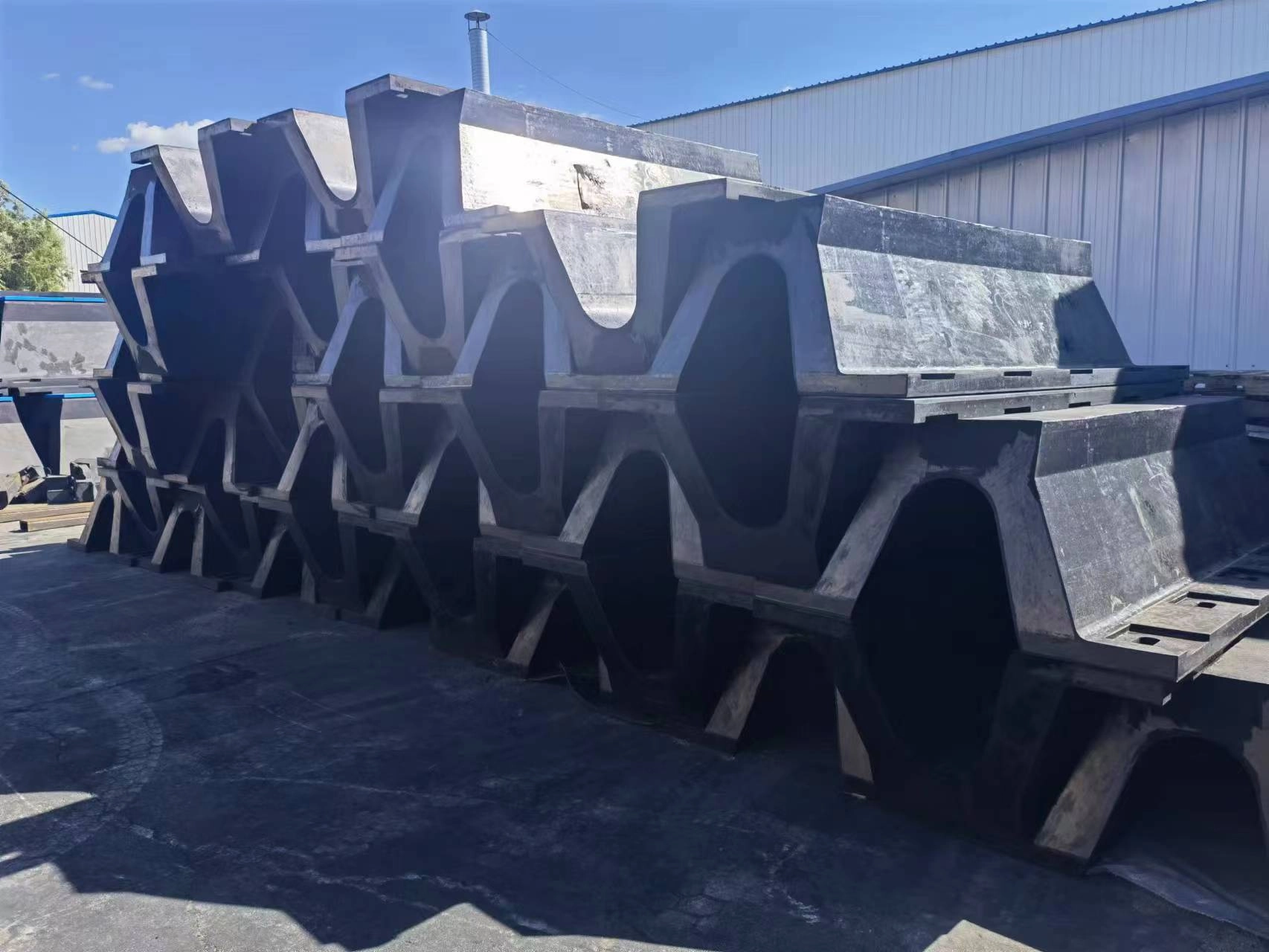
Marine fenders are not decorative components. They are critical safety assets that absorb berthing energy and protect both the vessel and the berth structure. When they fail early, the consequences can include vessel damage, quay wall damage, operational delays, safety risks, and unplanned replacement costs.
From an OEM production standpoint, early failure is often a signal that the fender system was not matched correctly to the real operating environment. Even a high-quality product can underperform if the design assumptions, hardware, or maintenance discipline are wrong.
This is one of the most common causes of early damage. If the berthing vessel is larger than expected, approaches too fast, or hits the berth at the wrong angle, the fender may be forced beyond its design energy absorption range.
Typical signs include:
- Cracks on the rubber body.
- Permanent deformation.
- Compression damage at the top of the fender.
- Missing rubber, tears, or separation.
In practice, overloading often happens when operators assume the fender can "handle a little more" than the rated condition. That small assumption can shorten service life dramatically.
A fender can only perform well if it matches the vessel, berth geometry, tide range, and operational profile. Using a small fender for heavy traffic, or selecting a type that is not suitable for the contact pattern, often leads to repeated overstressing.
Common selection mistakes include:
- Choosing the wrong diameter or length.
- Ignoring vessel rubbing strakes or beltings.
- Selecting a fender with insufficient reaction force capacity.
- Using a product not suitable for the berth structure.
From our OEM perspective, correct specification is the foundation of reliable performance. A well-made fender with the wrong specification will still fail early.
> Suggested visual placement: Add a simple comparison chart showing "correctly selected vs incorrectly selected fender".
Many failures begin on installation day. If the fender is mounted too high, too low, too loose, or at the wrong angle, the load will not be distributed evenly. That creates localized stress and premature wear.
Installation-related failure often shows up as:
- Uneven compression.
- Twisting or movement of the fender body.
- Bolt hole damage.
- Abnormal wear on one side.
- Chain, bracket, or support failure.
A common field issue is a berth wall with protrusions, rough surfaces, or uneven contact faces. These defects can cut, scrape, or deform the fender long before its expected service life ends.
The rubber body is only one part of the system. Chains, shackles, bolts, brackets, steel frames, safety valves, and support components are just as important. In marine environments, corrosion is relentless.
When accessory corrosion is ignored, the system can fail even if the rubber body still looks acceptable. Common results include:
- Loose or missing fasteners.
- Bent or broken support parts.
- Damaged chain systems.
- Reduced stability of the entire fender assembly.
This is especially important for floating pneumatic fenders and panel-mounted systems, where hardware integrity directly affects performance.
Excessive friction between the vessel and the fender can cause surface wear, cuts, and material loss. This is common when:
- The berthing angle is too aggressive.
- The vessel moves laterally during contact.
- Mooring lines are too tight.
- The hull surface drags across the fender.
Over time, abrasion weakens the rubber surface and creates entry points for more serious deterioration. Once the outer layer is compromised, wear accelerates.
For pneumatic fenders, internal pressure is not a "set it and forget it" variable. Air pressure changes with temperature, usage, and time. If pressure is too low, the fender loses performance. If pressure is too high, the risk of structural stress increases.
Failure symptoms may include:
- Pressure loss.
- Valve leakage.
- Reduced energy absorption.
- Irregular deformation.
- Early body fatigue.
Regular pressure checks are essential. In our view, pressure management is one of the simplest and most cost-effective ways to prevent premature failure.
Many fenders are damaged long before they enter service. Common storage mistakes include:
- Leaving the fender deflated for too long.
- Storing in direct sunlight or high heat.
- Exposure to ozone, oil, chemicals, or solvents.
- Contact with sharp edges or rough surfaces.
- Poor stacking or unsupported storage.
Rubber products age faster when stored badly. If a fender is damaged in storage, no amount of later maintenance can fully recover the lost service life.
Marine fenders operate in a tough environment. UV exposure, saltwater, ozone, fuel, grease, and cleaning chemicals all contribute to degradation. Over time, these factors can cause:
- Surface cracking.
- Hardening.
- Discoloration.
- Reduced elasticity.
- Accelerated aging.
This is why material selection matters. In harsh ports, the best fender is not simply the strongest one. It is the one engineered for the specific environmental load.
A large share of premature failures are discovered too late. If inspections are too infrequent, minor damage turns into expensive replacement. Routine checks should focus on:
- Rubber body condition.
- Air pressure.
- Valves and fittings.
- Chains and shackles.
- Corrosion points.
- Wear at contact surfaces.
The earlier damage is found, the easier it is to fix or isolate before it spreads.
Unexpected vessel motion, storm surge, strong currents, poor maneuvering, and emergency berthing events can overload even a properly designed system. These incidents often produce sudden damage that looks like "mysterious failure," but the cause is usually an abnormal event that was not accounted for in routine operation.
In real-world port operations, premature marine fender failure usually comes from system issues, not a single defect. A fender may fail because the vessel size changed, the berth draft is smaller than expected, the accessories corroded, and inspections were delayed—all at the same time.
From an OEM factory viewpoint, this is why product quality alone is not enough. Design, installation, operation, and maintenance must work together. The best-performing ports treat fender systems as managed assets, not one-time purchases.
Before production or purchase, confirm:
- Vessel type and size.
- Berth structure.
- Tide range.
- Berthing speed and angle.
- Environmental exposure.
- Required service life.
For high-traffic berths or ship-to-ship operations, establish a pre-use checklist. Look for visible damage, pressure issues, loose hardware, and abnormal wear.
Record:
- Inspection date.
- Damage location.
- Pressure readings.
- Repair actions.
- Replacement history.
- Photo documentation.
This creates traceability and helps operators identify patterns before a failure becomes recurring.
Do not wait for a shackle, chain, or bolt to fail completely. In marine environments, metal accessories often deteriorate faster than the rubber body.
A well-controlled OEM process improves consistency in:
- Rubber formulation.
- Vulcanization quality.
- Dimensional accuracy.
- Hardware fit.
- Pressure retention.
- Load performance.
At Nanjing Taidun, we focus on stable manufacturing standards, practical engineering, and export-oriented OEM support so our partners can deliver dependable systems to their markets.
> Suggested visual placement: Insert a process infographic here: "Selection → Production → Testing → Installation → Inspection".
If a marine fender fails early, the cause is usually not one factor. It is usually a chain of small problems: slightly wrong sizing, slightly poor installation, slightly delayed inspection, and slightly higher loads than expected. Those "small" issues compound quickly in a harsh marine environment.
The most reliable prevention strategy is simple: design correctly, install carefully, inspect regularly, and replace damaged parts early.
As a China-based OEM manufacturer, Nanjing Taidun Marine Equipment Engineering Co., Ltd supports overseas brands, distributors, wholesalers, and manufacturers with marine rubber fenders, mooring bollards, and anchoring solutions tailored to project requirements.
We understand that global buyers need more than product supply. They need:
- Reliable OEM manufacturing.
- Stable quality control.
- Export-ready communication.
- Practical engineering support.
- Long-term partnership value.
If your project requires a dependable OEM supplier for marine fender systems, our team is ready to support your specification and production needs.
If you are sourcing marine fenders and want to reduce premature failure risk, contact Nanjing Taidun Marine Equipment Engineering Co., Ltd for OEM consultation, technical support, and custom production solutions.
The most common cause is overloading, usually caused by incorrect vessel impact conditions, wrong sizing, or improper berthing behavior.
Yes. Misalignment, uneven mounting, and protrusions on the berth wall can create localized stress and accelerate wear.
For busy terminals, inspections should be routine and frequent. At minimum, operators should check visible condition, pressure, and hardware on a scheduled basis.
They can lose performance due to pressure loss, valve leakage, wear, aging, and environmental exposure.
Use the right specification, install correctly, inspect regularly, keep maintenance logs, and replace damaged accessories early.
In many systems, yes. Corroded chains, bolts, brackets, and panels can cause system failure even when the rubber body still looks usable.
Absolutely. Heat, sunlight, ozone, oil, and long-term deflated storage can reduce service life before the product is even installed.
1. Trelleborg Marine and Infrastructure, Pneumatic Rubber Fender Handling, Storage, Installation and Maintenance Manual. [https://www.trelleborg.com/marine-and-infrastructure/-/media/marine-systems/resources/guides-and-design-manual/downloads/pneumatic-rubber-fenders_installation-and-maintenance-manual.pdf]
2. Coastal Development Institute of Technology (CDIT), Guidelines for the Maintenance of Rubber Fender Systems (2nd Edition). [https://www.cdit.or.jp/english/tech/Fender_Maintenance_Guideline.pdf]
3. PIANC / Trelleborg article, fender inspection – looking for signs of deterioration and .... [https://pianc.pt/wp-content/uploads/2023/10/Artigo-45.pdf]
4. Shibata Asia, Recommended Procedures for the Maintenance of Marine Fenders. [https://www.transportevents.com/presentations/Jakarta15/ChrisMillwood.pdf]
5. ESC Pile, Maintenance and Management of Marine Rubber Fenders. [https://www.escpile.com/single-post/maintenance-and-management-of-marine-rubber-fenders]
6. Zhenjiang Tonly Rubber, Three common causes of damage to rubber fenders. [https://www.tonlyfender.com/three-common-causes-of-damage-to-rubber-fenders.html]
7. 360iResearch, Marine Fender Market Size & Share 2025-2030. [https://www.360iresearch.com/library/intelligence/marine-fender]
Hot Tags: China, Global, OEM, private label, manufacturers, factory, suppliers, manufacturing company


