

Views: 249 Author: Nanjing Taidun Publish Time: 2026-11-09 Origin: Site
Content Menu
● Delta Anchor vs Admiralty Anchor: The Essential Differences
● Why Weed-Covered Seabeds Create Unreliable Anchor Sets
>> Vegetation Can Separate the Anchor from Holding Ground
>> Initial Setting Is Not the Same as Long-Term Holding
● How a Delta Anchor Performs in Weed
>> Weighted-Tip Geometry Supports Penetration
>> Dense Vegetation Remains a Limitation
● How an Admiralty Anchor Performs in Weed
>> A Stocked Design Offers a Different Engagement Mechanism
>> The Exposed Arm Creates Operational Trade-Offs
● Which Anchor Should You Choose?
>> Choose a Delta-Type Anchor for Practical Mixed-Bottom Use
>> Consider an Admiralty Anchor for a Defined Specialist Role
● A Practical Procedure for Setting an Anchor Near Weed
>> Calculate Scope from the Bow Roller
● OEM Buyer Checklist: Specify Performance Before Price
>> Define the Product and Its Operating Envelope
>> Separate Structural Integrity from Seabed Performance
● A Better Weed-Performance Test for Marine Brands
● Protect Seagrass Before Comparing Anchor Designs
● Plan Your OEM Anchor Project with Nanjing Taidun
>> 1. Is an Admiralty anchor always better than a Delta anchor in weed?
>> 2. Can a Delta anchor hold in seagrass?
>> 3. Will a heavier anchor solve weed-setting problems?
>> 4. Why can an anchor drag after initially feeling secure?
>> 5. Is a Delta-style OEM anchor identical to a genuine Delta?
>> 6. What should buyers request before publishing holding-power claims?
At Nanjing Taidun Marine Equipment Engineering Co., Ltd., we provide OEM manufacturing services for overseas marine brands, wholesalers, and manufacturers. Alongside marine rubber fenders and mooring bollards, anchoring equipment forms part of our marine product offering. Our approach to "Delta anchor vs Admiralty anchor: reliable setting in weed-covered ocean floors" begins with one principle: reliable anchoring requires contact with the seabed beneath the vegetation.
For mixed cruising grounds with accessible sand or mud patches, a Delta-type anchor is generally the more practical everyday choice. A traditional Admiralty anchor deserves consideration as a specialist option for difficult weed-covered ground, but its handling demands and fouling risks matter. Neither design guarantees secure holding in dense vegetation.

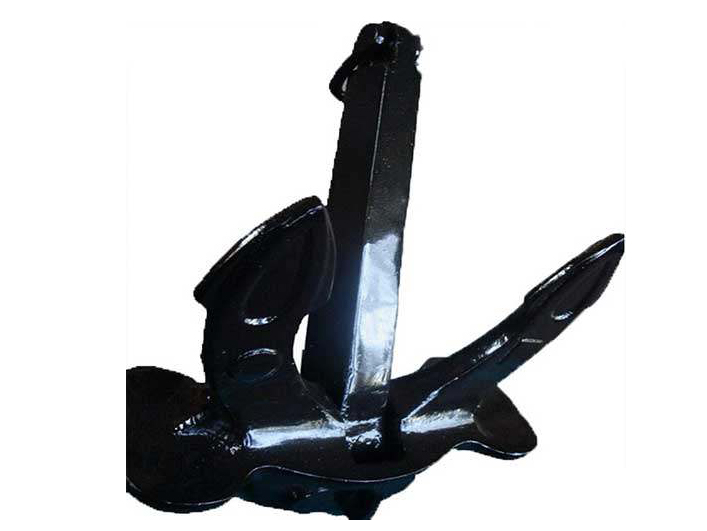
Here, "Delta" means the fixed-shank plow anchor associated with Lewmar, not the offshore Flipper Delta design. "Admiralty" means the traditional stocked, two-arm fisherman's anchor.
A genuine branded Delta and an independently manufactured Delta-style anchor should not be treated as interchangeable. Geometry, materials, construction, and documented product claims require separate verification.
| Comparison | Delta anchor | Admiralty anchor |
|---|---|---|
| Basic geometry | Fixed-shank plow with a weighted tip | Long shank, transverse stock, and two arms |
| Setting mechanism | Tip penetrates; plow develops resistance through burial | Stock orients the anchor so one fluke can engage |
| Typical application | Everyday anchoring across mixed bottoms | Specialist use in difficult weed or irregular ground |
| Vegetation challenge | Weed can prevent the plow from reaching soil | Fluke may penetrate vegetation, but can still foul |
| Handling | Often compatible with suitable bow rollers | Bulkier and more demanding to deploy and stow |
| Important limitation | Apparent setting may conceal poor penetration | Exposed arm can foul the rode during a swing |
These are design-level distinctions, not a controlled performance ranking between specific products.
A weed-covered bottom is not one consistent material. It may contain loose weed over sand, rooted vegetation over mud, or kelp around rocks.
An anchor must reach suitable holding ground to develop dependable resistance. Catching stems or roots can briefly stop a boat without establishing a secure set. When the load increases, the vegetation may tear away.
This distinction explains why the question "Which anchor is best for weed?" has no universal answer. The vegetation and the material underneath it must both be considered.
Three questions deserve separate attention:
- Did the anchor reach the seabed?
- Did it develop adequate resistance under a controlled setting load?
- Will it remain secure after changes in wind, current, or pull direction?
An anchor can appear successful at the first stage and fail later. Grassy and rocky bottoms are particularly prone to false setting, making position checks essential.
For reliability, verified holding matters more than how quickly the rode first becomes taut.
Lewmar describes its Delta anchor as having a precision-ballasted tip, low center of gravity, and self-righting geometry. Its stated applications include sand, mud, and gravel. These features explain its appeal as a general-purpose cruising anchor.
On patchy weed, selecting a clear sand opening can give the anchor a more favorable opportunity to penetrate. This is different from expecting it to force a dependable set through an uninterrupted root mat.
Plow-style anchors are commonly recommended for varied bottoms, including some grassy conditions. Nevertheless, vegetation can obstruct penetration, and a convincing initial catch may still be insecure.
From a manufacturing perspective, external resemblance alone is insufficient. An OEM specification should define the intended geometry, mass distribution, construction, and dimensional tolerances rather than relying on the label "Delta-style."
Our recommendation is to treat weed performance as a validation question—not a promise inferred from appearance.
The Admiralty anchor's transverse stock helps orient the anchor so one fluke can engage the bottom. This distinguishes it from a modern plow design.
Traditional fisherman-style anchors have a recognized role in difficult vegetation. Their shape and weight can help a working fluke reach through weed where other anchors struggle. However, this remains conditional on the actual bottom, anchor size, and deployment.
An Admiralty anchor should therefore be viewed as a specialist alternative, not an automatic winner.
When one arm engages, the other remains exposed. A vessel swinging around the anchor can bring its rode into contact with that upper arm. Historical and practical accounts identify rode fouling and subsequent breakout as important concerns.
Its bulky shape also complicates storage and handling. A buyer must assess the whole deployment system, not simply whether the anchor can penetrate weed.
For a cruising vessel, a specialist anchor is useful only if the crew can deploy and recover it safely.
A Delta-type anchor is a reasonable candidate when:
- The vessel regularly anchors in sand, mud, or mixed ground.
- Clear patches are available between vegetation.
- Bow-roller compatibility supports routine deployment.
- The crew can verify the set and relocate when necessary.
This recommendation reflects general-purpose usability rather than proof of superiority in dense weed.
An Admiralty anchor may merit evaluation when:
- Difficult weed is a recurring operational challenge.
- The vessel can accommodate its size and shape.
- Handling arrangements suit its weight.
- The crew understands rode-fouling and changing-load risks.
Do not select either design by boat length alone. Displacement, windage, anticipated conditions, bottom type, and the manufacturer's sizing guidance also matter.
Where dependable setting cannot be established, changing location is more useful than repeatedly trusting an uncertain hold.
The following procedure is general guidance, not a substitute for vessel-specific instructions or local seamanship requirements.
1. Check the location. Review charts, depth, forecast conditions, local restrictions, and available swinging room.
2. Prefer suitable bare ground. Where visible and permitted, choose an adequate sand or mud patch rather than deliberately targeting vegetation.
3. Lower under control. Allow the vessel to move back while paying out rode; avoid depositing everything in one pile.
4. Establish appropriate scope. Use the anchor and rode manufacturer's guidance, accounting for tide and bow height.
5. Apply load progressively. Increase reverse thrust in a controlled manner appropriate to the vessel.
6. Verify position. Use fixed shore references and suitable electronic monitoring. A taut rode alone does not prove a secure set.
7. Recover if uncertain. Inspect for weed, clear the anchor safely, and reassess the location before another attempt.
8. Recheck after changes. Monitor after significant wind, current, or tidal changes.
Scope compares deployed rode length with the vertical distance from the bow roller to the seabed—not simply the depth shown on a sounder.
For example, if the maximum expected depth is 6 meters and the bow roller is 1 meter above the water, the relevant vertical distance is 7 meters. A planned 7:1 scope would require 49 meters of rode.
That calculation is illustrative. Adequate scope does not make a weed-fouled anchor secure, and available swinging room may limit deployment.
For overseas brands and wholesalers, the commercial risk is often an incomplete specification.
At Nanjing Taidun Marine Equipment Engineering Co., Ltd., we encourage buyers to organize an OEM inquiry around the intended application and required verification.
A useful request for quotation should include:
- Anchor type, target mass, and dimensional drawing.
- Intended vessel category and operating conditions.
- Expected seabed types.
- Material and construction requirements.
- Coating, marking, and packaging requirements.
- Bow-roller or stowage constraints.
- Required inspection records and applicable approvals.
These are proposed procurement inputs, not claims that every configuration or certification is available.
A proof-load test and a seabed holding trial answer different questions.
Structural testing evaluates the product against a defined loading requirement. A holding trial evaluates interaction with particular ground under stated conditions. Neither should be presented as automatically proving the other.
Likewise, a certificate must be checked for its issuing body, product identity, scope, and applicability. Avoid transferring the approval claims of a branded anchor to an unrelated OEM product.
This distinction helps buyers write technically defensible product pages.
A useful comparison needs more than two anchors and a single successful pull.
We recommend documenting:
- Actual anchor mass and measured geometry.
- Vegetation type, coverage, and underlying substrate.
- Rode arrangement, scope, and loading method.
- Distance traveled before setting.
- Repeated setting attempts, including failures.
- Performance after a controlled change in pull direction.
- Weed fouling and retrieval difficulties.
Report conditions and unsuccessful attempts alongside favorable results. Do not turn an isolated result into a universal holding-power claim. West Marine similarly cautions that no single anchor test provides a definitive answer across all real-world conditions.
This testing framework gives an OEM buyer stronger evidence for product positioning than unsupported claims such as "100% reliable in weed."
Not all underwater vegetation should be treated as an obstacle to penetrate.
Seagrass beds can be sensitive habitats, and some locations have marked no-anchor areas. Practical Boat Owner has reported protected seagrass areas and voluntary no-anchor zones in locations including Torbay and Falmouth.
Check current local requirements. Where available and suitable, use designated moorings or permitted bare-ground anchoring areas.
A technically successful set is not a responsible result if it damages protected habitat.
The practical conclusion is conditional: a Delta-type anchor often suits everyday mixed-bottom operation, while an Admiralty anchor can serve a specialist weed-ground role. Neither removes the need for appropriate sizing, verified setting, and ongoing monitoring.
For your next OEM inquiry, send Nanjing Taidun Marine Equipment Engineering Co., Ltd. your anchor drawing or target design, weight range, order quantity, destination market, and documentation requirements.
Use that information to establish an agreed specification and verification plan before production decisions. For marine brands, credible performance statements begin with clearly defined products and evidence.
No. It offers a different engagement mechanism and can be useful in difficult vegetation, but handling, fouling, and changing-load risks remain. There is no universal winner across all weed-covered bottoms. [waterwayguide]
It may penetrate some grassy bottoms, but false setting is a serious concern. More importantly, check habitat protections and local restrictions before considering anchoring there. Prefer suitable permitted bare ground. [westmarine]
Additional weight can help some designs penetrate vegetation, but it cannot guarantee contact with suitable ground. Size must also remain compatible with the vessel's handling and anchoring equipment. [waterwayguide]
It may have caught vegetation without developing sufficient resistance in the seabed. Increased load or a different pull direction can expose that weak initial set. Verify position rather than relying only on rode tension. [westmarine]
Do not assume equivalence. Buyers should verify drawings, mass distribution, materials, construction, and supporting documentation. Lewmar's product statements describe its own Delta product, not every similarly shaped anchor. [lewmar]
Request the test method, anchor identity, seabed description, loading conditions, repeated results, and limitations. Any published conclusion should remain within the scope of that evidence. [westmarine]
Hot Tags: China, Global, OEM, private label, manufacturers, factory, suppliers, manufacturing company


