

Views: 425 Author: Nanjing Taidun Publish Time: 2026-05-20 Origin: Site
Content Menu
● When Emergency Replacement Becomes Necessary
● Phase 1 — Emergency Damage Assessment
>> Immediate Assessment Protocol
>> Damage Classification Matrix
● Phase 2 — Rapid Procurement Strategy
>> Emergency Procurement Best Practices
● Phase 3 — On-Site Replacement Execution
>> Replacement Methods Comparison
>> Rope Access Replacement — Step-by-Step
>> Heavy Lift Replacement — Lessons from Woodside
● Phase 4 — Safety and Quality Control
>> Post-Installation Quality Verification
● Phase 5 — Return to Service and After-Action Review
>> After-Action Report Requirements
● Preventing Future Emergencies — Proactive Measures
>> Recommended Proactive Measures
● How Nanjing Taidun Supports Emergency Replacement
● Frequently Asked Questions (FAQ)
When a 499-foot vessel strikes a Yokohama fender and overloads the supporting marine fender system, the consequences are immediate and severe. Structural damage to timber fender piles, cracked walers, and compromised hardware can force a complete berth closure .
I have spent two decades manufacturing OEM rubber fender systems and mooring bollards for global ports. In that time, I have witnessed ports lose millions in revenue because they lacked an emergency replacement plan for damaged wharf rubber fenders.
This guide provides a complete framework for emergency response—from damage assessment to rapid procurement, installation, and return to service.
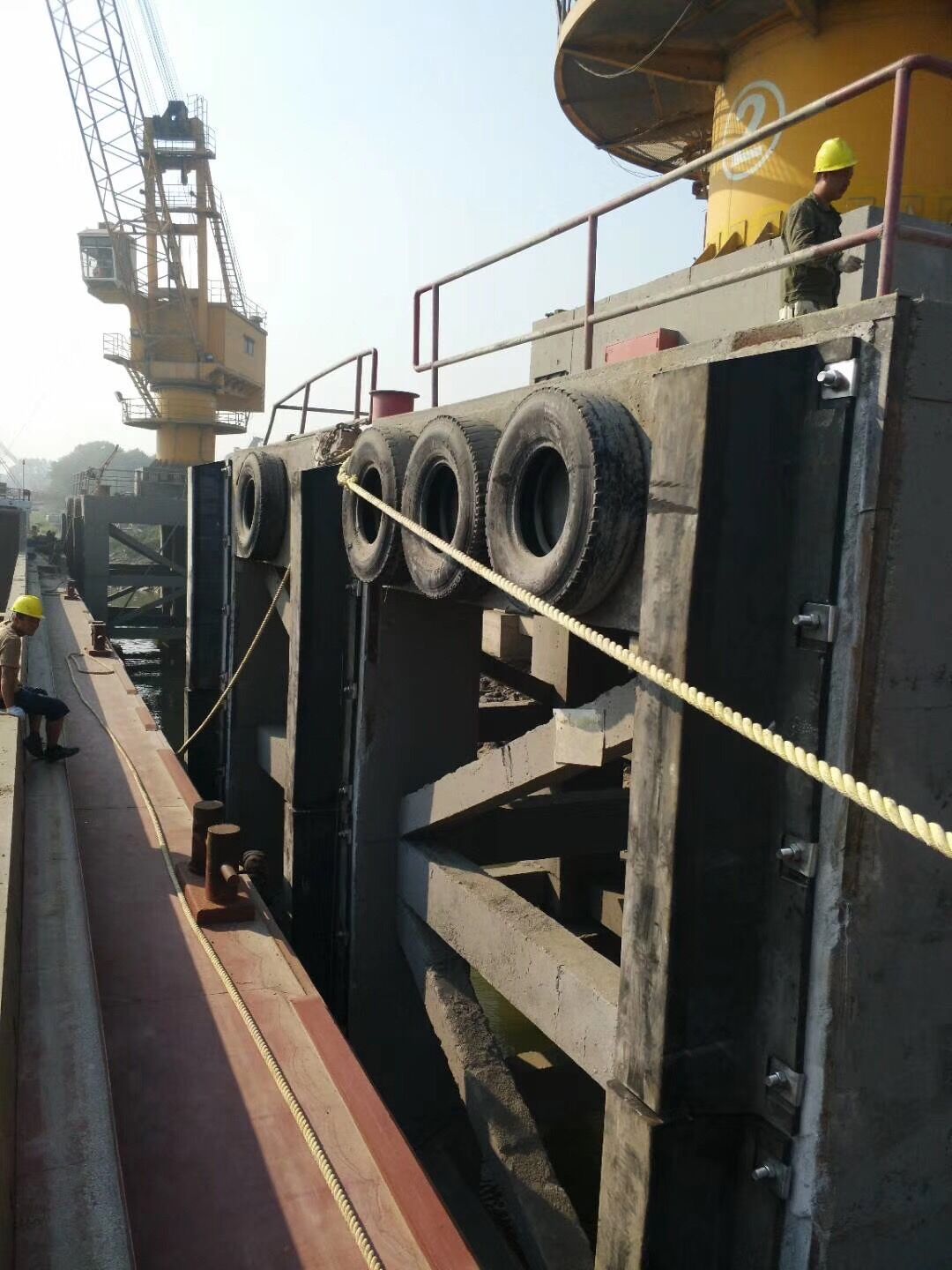
Not every damaged fender requires an emergency response. But certain scenarios demand immediate action.
In San Diego's Broadway Pier emergency (2018), a single vessel impact caused:
- Severe structural damage to timber fender piles and walers
- Immediate berth closure to all shipping
- $250,000 emergency budget transfer for urgent repairs
- Rushed cruise ship season accommodation
In Western Australia's Karratha Gas Plant, two cracked fenders (one crack measuring 1 meter long and 1 inch thick) required fabrication in China, shipping delays, and a high-risk, high-complexity 5-day replacement during cyclone season .
> *"It was crucial that we got the berth back to service before a weather event over the Christmas or New Year period."*
> — *Ben Biddiscombe, Execution Superintendent, Woodside Energy*
The lesson is clear: ports without an emergency replacement plan face extended downtime, inflated costs, and safety risks.
Before any replacement can begin, you must understand what failed and why.
When a damaging incident occurs, follow this immediate assessment checklist:
| Step | Action | Responsible Party |
|---|---|---|
| 1 | Declare emergency per port authority protocols | Port Director |
| 2 | Close affected berth to all vessel traffic | Harbor Master |
| 3 | Document damage with photographs and measurements | Marine Engineer |
| 4 | Assess structural integrity of supporting piles and walers | Structural Engineer |
| 5 | Determine if repair or full replacement is required | Engineering Team |
Use this matrix to determine the appropriate response:
In the Guam Port Authority's case, deteriorated cylindrical fendering and rubber arch leg systems required complete replacement to mitigate typhoon and earthquake hazards .

Once emergency replacement is confirmed, procurement speed becomes critical.
The Woodside Karratha experience illustrates the risks of standard procurement:
> *"The fenders are manufactured in China and at the time the country and its factories were in COVID lockdown. Two months later, two new fenders were finally fabricated, but it was another 4 weeks before they arrived."*
Total wait: 3 months — unacceptable for emergency response.
> *"Missing or obsolete vessel plans often lead to replacement fenders being ordered to the wrong specification, forcing costly welding and delays."*
> — *Bencros Technical Report*
Proactive Solution: Nanjing Taidun maintains rapid-response OEM capacity for emergency fender and bollard replacement. With documented specifications on file for repeat clients, we can begin fabrication within 48 hours of emergency declaration.
Before ordering replacement fenders, verify:
1. Fender type (cylindrical, arch, cone, cell, pneumatic)
2. Dimensions (diameter, length, flange specs)
3. Performance requirements (energy absorption, reaction force)
4. Mounting configuration (chain, direct bolt, panel)
5. Accessories needed (chains, shackles, pad-eyes, bolts)
In the Jebel Ali Port project, heavily corroded shackles, pad-eyes, and fender chains required extra effort to clean, loosen, and safely dismantle .
With replacement fenders procured, execution demands precision, safety, and speed.
The AIMMS Group's Jebel Ali Port project demonstrates best practices for rope access replacement :
Task 1 — Removal of Old Fenders:
1. Safety briefings and rigging system installation (IRATA/HSE protocols)
2. Chain blocks and auxiliary hoists for dismantling shackles
3. Unbolt old fenders, inspect, and safely lift off using crane coordination
Task 2 — Installation of New Fenders:
1. Align and lower new fenders using taglines and webbing slings
2. Secure upper and lower chain attachments, pad-eyes, and shackle points
3. Double-check all bolted connections
4. Verify torque meets manufacturer specifications
> *"Anchor points with a minimum load capacity of 15kN were used. Mechanical Advantage 6:1 hoist systems supported material movement and rescue readiness."*
> — *AIMMS Project Report, Jebel Ali Port*
At Karratha Gas Plant, each fender and front panel assembly weighed 16 tonnes (the weight of 9 standard cars). Key lessons :
| Challenge | Solution | Outcome |
|---|---|---|
| Heavy lift in confined space | Barge crane with mechanical activities onboard | Safe completion |
| Front panel cleaning | High-pressure cleaning before refitting | Proper fit |
| Rigging safety | Fabricated bolt pins to prevent movement | No hands in line of fire |
| Holiday season staffing | Monadelphous crew volunteered | 5-day completion |
> *"The fender replacement was a huge success — on time and on schedule, completed in 5 days and without any safety incidents."*
> — *Ben Biddiscombe, Woodside Energy*
Emergency replacement does not mean compromised safety.
> *"Exclusion zones, double fall arrest systems, edge protection, and a rig-for-rescue plan were all mandatory and actively monitored by the IRATA Level 3 Supervisor."*
> — *AIMMS Jebel Ali Project Report*
After installation, verify:
1. Torque verification — All bolts tightened to OEM specifications
2. Chain tension — No visible slack; proper weight chain adjustment
3. Alignment check — Fenders properly positioned for vessel contact
4. Accessory integrity — Shackles, pad-eyes, and attachments secure
5. Documentation — Photographs and inspection records for port authority
| Phase | Action | Duration |
|---|---|---|
| 1 | Visual inspection by marine engineer | 1 hour |
| 2 | Low-speed test berthing with tug assistance | 1 shift |
| 3 | Post-test inspection for any movement or loosening | 2 hours |
| 4 | Full operational return | After sign-off |
Document the following for port authority and insurance purposes:
- Incident description and root cause analysis
- Damage assessment photographs and measurements
- Replacement procurement timeline and costs
- Installation methodology and safety records
- Lessons learned and plan improvements
In the San Diego Broadway Pier incident, the port allocated future reimbursement from vessel operator and insurance proceeds to District Contingency . This financial recovery strategy should be part of every port's emergency plan.
The best emergency plan is the one you never need to use.
> *"Replace crushed tires, split rub rails, and delaminated fenders. Where vessels berth regularly, add energy-absorbing fender elements."*
> — *Marine Safety Consultants*
At Nanjing Taidun Marine Equipment Engineering Co., Ltd. , we understand that when a fender fails, every hour of downtime costs revenue.
Our emergency response capabilities include:
We serve brand owners, wholesalers, and port authorities in over 80 countries. When you need an emergency replacement plan for damaged wharf rubber fenders, we are your rapid-response OEM partner.
An emergency replacement plan for damaged wharf rubber fenders must address five phases: assessment, procurement, execution, safety, and return to service. Without this framework, ports face extended downtime, inflated costs, and safety risks.
Don't wait for the next vessel impact to develop your plan.
[Contact the Nanjing Taidun Engineering Team] today to:
- Establish your port's emergency fender replacement protocol
- Document your existing fender specifications for rapid reordering
- Build a strategic spares inventory with rapid replenishment
Q1: When should I declare an emergency for fender replacement?
A: Declare an emergency immediately when: (1) structural damage occurs to piles or walers, (2) a fender crack exceeds 1 meter or exposes reinforcement cords, or (3) the berth must close to vessel traffic .
Q2: How long does emergency fender replacement typically take?
A: With proper planning and rapid-response OEM support, 5-10 days from assessment to return to service. Without a plan, expect 3+ months .
Q3: What is the fastest way to get replacement fenders?
A: Maintain strategic spares inventory at your port. For custom sizes, establish pre-approved OEM relationships with documented specifications for rapid fabrication .
Q4: Can fenders be replaced without taking the berth offline?
A: Partial closures may be possible using rope access methods, but full replacement of damaged systems typically requires berth closure for safety. Plan for 2-7 days of downtime .
Q5: What should I document before an emergency occurs?
A: Document every fender's type, dimensions, mounting configuration, and OEM specifications. Consider 3D scanning critical installations for rapid reordering .


