

Views: 257 Author: Nanjing Taidun Publish Time: 2026-07-14 Origin: Site
Content Menu
● why existing terminals need smarter fender solutions
● Why larger vessels change the fender equation
● The main retrofit challenges
● What a modern upgrade should include
● OEM perspective from Nanjing Taidun
● Engineering principles that matter
● How to choose the right solution
● Why performance and maintainability both matter
● FAQs
As container ships grow larger, many existing terminals are under pressure to improve berth safety, protect aging quay structures, and keep operations moving without long shutdowns. In this environment, fender solutions for existing container terminals facing larger vessels are no longer a simple procurement item; they are a strategic infrastructure decision. [pianc]
At Nanjing Taidun Marine Equipment Engineering Co.,Ltd, we work with overseas brand owners, wholesalers, and manufacturers as an OEM factory for marine rubber fenders, mooring bollards, and ship anchoring equipment. Our view is straightforward: the best fender system is not the one with the biggest catalog number, but the one that is engineered for the real berth, the real vessel mix, and the real operating limits of an existing terminal. [xkmarine]
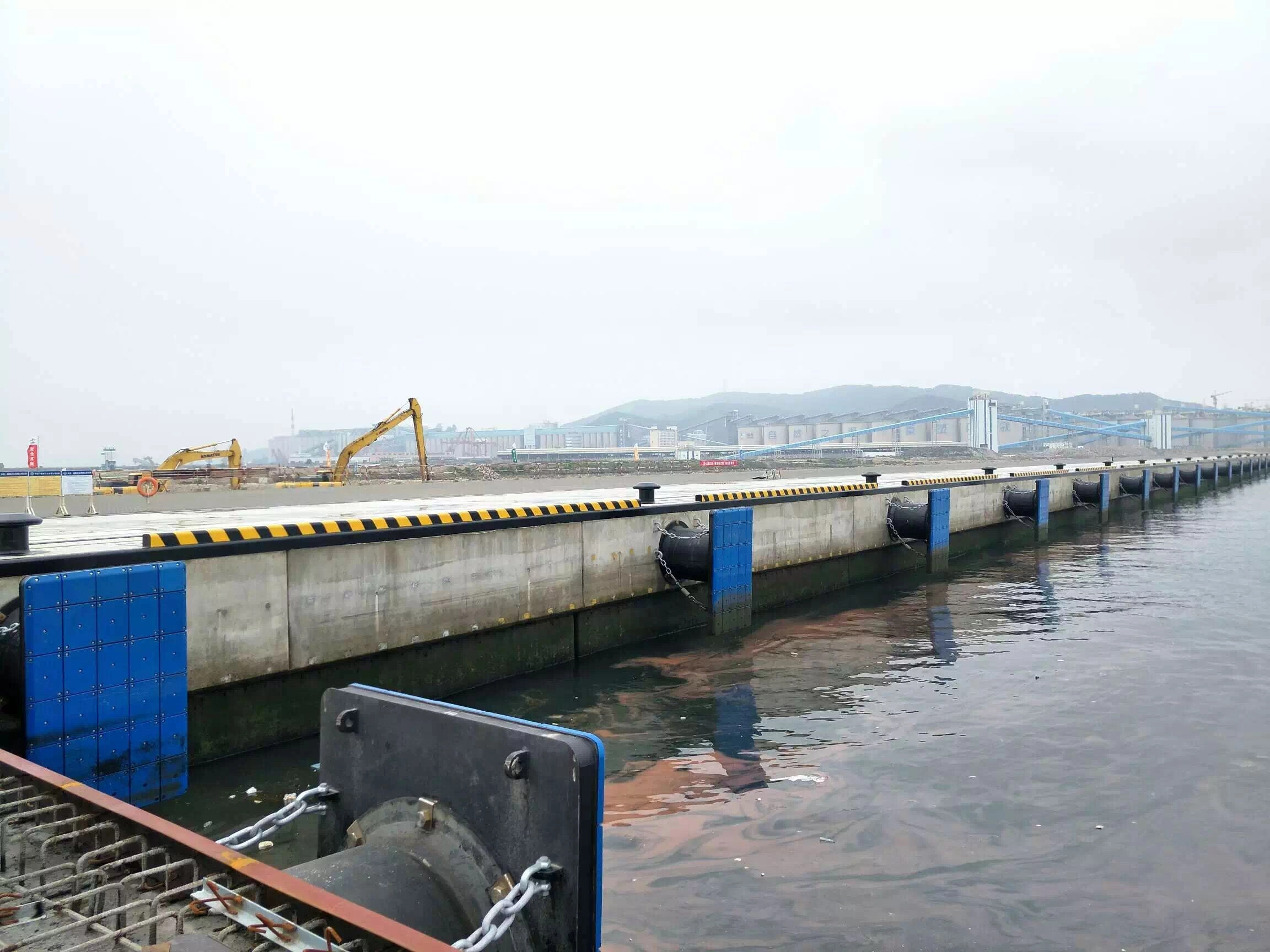
Larger vessels bring higher berthing energy, wider hull variations, and more demanding contact conditions at the quay face. PIANC's 2024 fender guidelines emphasize that fender systems should be designed around site-specific information, controlled berthing behavior, and a whole-system approach that integrates the berth structure, rubber element, front panel, anchors, and maintenance strategy. [trelleborg]
That matters especially for existing terminals, because many of them cannot simply be rebuilt from the ground up. Instead, operators need upgrades that improve energy absorption, control reaction force, and reduce structural stress while staying within the limits of the current quay wall, pile arrangement, or anchorage layout. [trelleborg]
Older container terminals usually face a combination of technical and commercial constraints. The most common ones are:
- Limited cap space for large frontal panels or deeper systems.
- Structural limits that restrict the allowable reaction force.
- Mixed vessel profiles, from feeder ships to Neo-Panamax class calls.
- Aging steelwork, corrosion, or worn anchorage points.
- Pressure to avoid berth downtime during upgrades. [digitaledition.marineconstructionmagazine]
A practical OEM solution must therefore balance performance and constructability. In many retrofits, the goal is not to "replace everything," but to upgrade the fender line so the berth can safely handle higher loads without triggering costly civil modifications. [awholesystemapproach]
A high-performing retrofit usually combines four design layers. First, the fender element itself must deliver the required energy absorption and predictable reaction force. Second, the frontal panel or load distribution plate must spread impact loads properly across the quay face. Third, the anchoring and steelwork must be suitable for the existing structure. Fourth, the installation and maintenance plan must support long-term reliability. [awholesystemapproach]
For container terminals facing larger vessels, a good solution may include Super Cell Fenders, Cone Fenders, Arch Fenders, frontal panels, UHMW-PE facing pads, custom brackets, and mooring accessories depending on the berth geometry and operational profile. Nanjing Taidun can supply these components as OEM-manufactured products tailored to brand specifications and project drawings. [chinarubberfender]
From an OEM standpoint, the biggest advantage of working with a specialized factory is control over customization. Many foreign brand owners and distributors need a partner that can manufacture to private label standards, adapt dimensions, match material requirements, and support project-based delivery without compromising consistency. That is where Nanjing Taidun Marine Equipment Engineering Co.,Ltd adds value. [jerimarine]
In practical terms, OEM service for terminal retrofit projects often includes:
1. Drawing-based customization, based on berth loads and panel dimensions.
2. Material selection support, including rubber compound and corrosion-resistant hardware options.
3. Batch consistency control, so replacement parts remain compatible over time.
4. Branding and documentation support, which helps overseas clients sell and specify the product confidently.
5. Project coordination, especially when multiple terminal sections or staged upgrades are involved. [jerimarine]
Recent port projects show the direction the industry is moving. At Ningbo Zhoushan Port's Daxie Container Terminal expansion, a combined fender package was used for a 200,000-ton class container berth upgrade, including H1600 Super Cell Fenders with frontal panels, H300 Arch Fenders, and rubber ladders. The project was designed to support safe and efficient operation of large container vessels while extending the terminal's effective quay capacity. [chinarubberfender]
This is a useful model for existing terminals: instead of relying on a single standardized product, operators can combine different fender types to address different impact zones and operating conditions. That approach is especially valuable when a terminal has varying berth sections, different vessel sizes, or legacy structures with mixed load paths. [pianc]
The latest PIANC guidance makes one message very clear: do not design the fender system in isolation. The berth structure, anchorage, panel geometry, approach conditions, and vessel mix all influence final performance. It also emphasizes the use of site-specific data whenever possible, because overreliance on generic assumptions can lead to overdesign or poor fit. [trelleborg]
For existing container terminals, this means three priorities should come first:
- Define the current and future vessel mix.
- Check allowable reaction force on the existing structure.
- Confirm whether the anchorage, panel size, and fender orientation can be upgraded without major reconstruction. [digitaledition.marineconstructionmagazine]
When we evaluate a retrofit project, we recommend a simple decision sequence:
1. Assess berth constraints.
Measure available space, pile locations, quay elevation, and anchorage condition.
2. Define vessel demand.
Identify present calls and the likely ship size growth over the next operating cycle.
3. Set performance targets.
Establish energy absorption, reaction force, and permissible hull pressure.
4. Select the fender family.
Match the system to the berth's geometry and operating risk.
5. Engineer the full package.
Include panels, pads, steelwork, fixings, and maintenance access. [pianc]
This process helps avoid the most common retrofit mistake: buying a stronger fender without checking whether the existing quay can safely accept the load. A stronger fender is not automatically a better solution if the structure cannot support it. [awholesystemapproach]
A terminal upgrade only creates value if it lasts. That is why modern fender systems should be evaluated not only for initial performance, but also for durability, inspection ease, replacement simplicity, and corrosion resistance. In a busy container port, a small maintenance advantage can translate into fewer disruptions over the life of the berth. [trelleborg]
This is also where OEM manufacturing quality becomes critical. Stable rubber compounding, accurate molding, reliable steel fabrication, and consistent hardware finishing all influence the real-world service life of the system. For brand owners and wholesalers, that consistency is what protects both reputation and margin. [xkmarine]
| Fender option | Best fit for existing terminals | Main benefit |
|---|---|---|
| Super Cell Fender | High-energy container berths | Strong energy absorption and stable performance |
| Cone Fender | Mixed vessel berths with compact space | Efficient performance and compact design |
| Arch Fender | Secondary zones and moderate impact areas | Simple structure and good durability |
| Panel + UHMW-PE facing | High-load contact zones | Better load distribution and hull protection |
These combinations are often the most practical route for retrofit projects because they let operators target performance where it is needed most, instead of overspending on a full-scale reconstruction. [chinarubberfender]
Nanjing Taidun Marine Equipment Engineering Co.,Ltd is built for OEM cooperation with global marine brands, importers, and project contractors. We focus on marine rubber fenders, mooring bollards, and anchoring products, and we understand that export customers need more than a product—they need reliable manufacturing, clear documentation, and a partner who can support long-term business growth. [jerimarine]
For existing container terminals facing larger vessels, our strength is the ability to turn engineering requirements into practical OEM supply. That includes custom sizes, branded production, project support, and stable delivery for retrofit and expansion programs. [pianc]
If your terminal needs to handle larger vessels without rebuilding the entire berth, the right fender upgrade can deliver safety, efficiency, and long-term value. The most effective path is a site-specific, whole-system design backed by an OEM partner that can manufacture to your exact project needs. [awholesystemapproach]
Contact Nanjing Taidun Marine Equipment Engineering Co.,Ltd to discuss custom OEM fender solutions for existing container terminals, including cell fenders, cone fenders, arch fenders, front panels, bollards, and mooring accessories. [xkmarine]
1. What is the best fender solution for an existing container terminal facing larger vessels?
The best solution depends on berth strength, vessel size, and available space, but many retrofits use a combination of cell or cone fenders with frontal panels and upgraded anchorage. [chinarubberfender]
2. Why can't terminals just install bigger fenders?
Because the quay wall and anchorage must be able to absorb the resulting reaction force, and a larger fender may overload an aging structure. [trelleborg]
3. What does OEM service mean for marine fenders?
It means the factory manufactures according to the buyer's drawings, brand requirements, and technical specifications, often with private labeling and project-based customization. [jerimarine]
4. Are PIANC guidelines important for fender design?
Yes. PIANC's 2024 guidelines are the current best-practice reference for designing, manufacturing, testing, and installing fender systems for seagoing vessels. [trelleborg]
5. Can existing terminals upgrade in stages instead of rebuilding all at once?
Yes. Many ports use phased upgrades by berth section, which reduces downtime and spreads investment over multiple stages. [digitaledition.marineconstructionmagazine]
6. How do I know which fender type to choose?
The selection should be based on vessel mix, allowable reaction force, berth geometry, and the required energy absorption level. [trelleborg]

1. [A Whole System Approach to Fender Performance] [awholesystemapproach]
2. [China Customized Marine Hardware Manufacturers Suppliers Factory] [xkmarine]
3. [ODM, OEM Marine Outfitting Equipment] [jerimarine]
4. [Marine Construction Magazine: SFT Provides Fender Engineering for Rio de Janeiro Port Expansion] [digitaledition.marineconstructionmagazine]
5. [Delivery of Rubber Fender Systems for Container Terminal] [chinarubberfender]
6. [PIANC Fender Guidelines 2024] [pianc]
7. [PIANC WG211 Fender Design Guidelines 2024] [trelleborg]
8. [WG33 to PIANC Fender Guidelines 2024: A seismic shift in safety standards] [trelleborg]
Hot Tags: China, Global, OEM, private label, manufacturers, factory, suppliers, manufacturing company


