


Views: 425 Author: Nanjing Taidun Publish Time: 2026-05-18 Origin: Site
Content Menu
● Why Offshore Environments Demand Specialized Fenders
● Understanding High Impact Resistance – The Science of Collision Protection
>> What Makes a Fender "High Impact Resistant"?
>> Energy Absorption Performance Under High Impact
>> Cell Fenders for Offshore Impact Protection
● Understanding Wave Resistance – The Challenge of Cyclic Loading
>> The Hidden Threat – Cyclic Loading Fatigue
>> Fender Types and Cyclic Performance
>> Factors That Determine Cyclic Durability
● Strain-Rate Sensitivity – A Critical Factor for Offshore Fenders
>> Strain-Rate-Dependent Finite Element Modeling
● Material Selection for Offshore Environments
>> Rubber Compounds for Impact and Wave Resistance
>> Reinforcement and Construction Quality
● Structural Integration with Offshore Platforms
>> Load Transfer Considerations
>> Floating vs. Fixed Fendering for Tidal Areas
● Compliance with International Standards
>> PIANC WG211 (2024) – The New Design Framework
>> Testing and Certification Requirements
● User Feedback – Real-World Offshore Experience
● How Nanjing Taidun Supports Offshore Fender Needs
● Frequently Asked Questions (FAQ)
Offshore construction platforms face some of the harshest conditions in the marine industry. Unlike sheltered harbors, these installations endure relentless wave action, extreme weather, and high-energy vessel collisions. Every day.
The difference between a safe offshore operation and a catastrophic failure often comes down to one component: the rubber fender.
I have spent two decades manufacturing OEM rubber fender systems for offshore platforms, FPSOs, and marine construction projects worldwide. In this guide, I will explain why offshore construction platform rubber fenders need high impact resistance and wave resistance —and how to select the right system for your specific operating conditions.
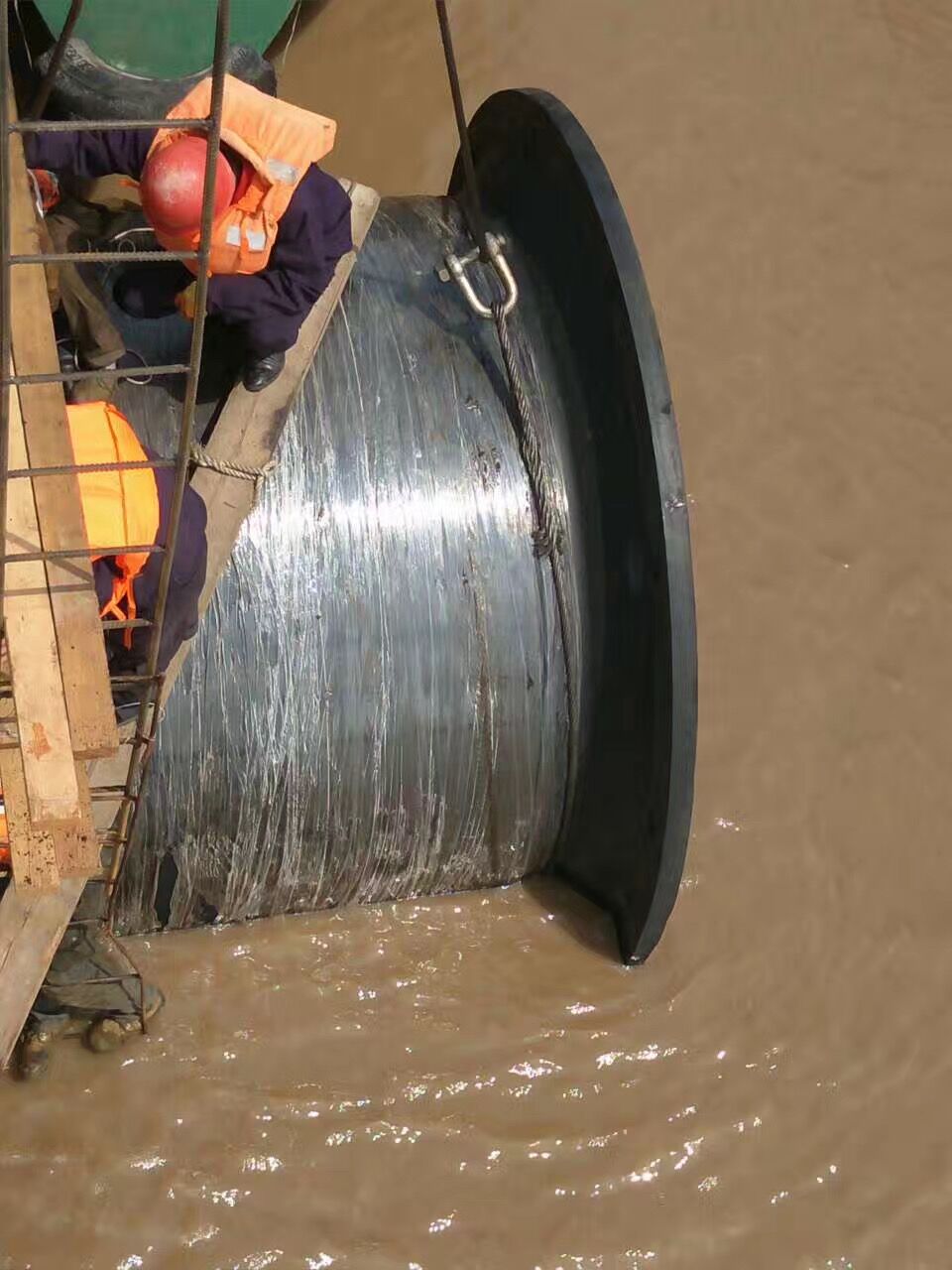
The operational demands on offshore fenders differ fundamentally from those in sheltered ports.
Key Differences Between Port and Offshore Fendering:
| Factor | Sheltered Port | Offshore Platform |
|---|---|---|
| Wave conditions | Minimal (<0.5m) | Significant (2-5m+) |
| Current exposure | Low to moderate | High, unpredictable |
| Tidal variation | Predictable | Can exceed 8 meters |
| Vessel impact frequency | Regular, predictable | Intermittent, high-energy |
| Cyclic loading | Minimal | Thousands of compressions daily |
| Access for maintenance | Easy | Difficult, weather-dependent |
| Consequence of failure | Operational delay | Production shutdown, environmental disaster |
> *"For permanently moored vessels, such as FPSOs in remote and harsh conditions, wave actions resulting in cyclic loading impact on fenders should also be considered."*
Offshore construction platforms require fenders that excel in two critical areas: high impact resistance for vessel collisions during supply operations, and wave resistance for continuous cyclic loading from sea motion.
High impact resistance refers to a fender's ability to absorb large amounts of kinetic energy during vessel berthing or collision while maintaining structural integrity.
The Physics of Offshore Collisions:
When a supply vessel or shuttle tanker approaches an offshore platform, the impact energy depends on:
- Vessel displacement (tonnage)
- Approach velocity (m/s, amplified by waves)
- Berthing angle
- Hydrodynamic added mass (can increase effective mass by 30-50%)
Recent Research Findings:
A 2026 study published in *Ocean Engineering* conducted axial crushing tests on hollow-section rubber fenders at loading speeds from quasi-static (0.05 mm/s) to dynamic (200 mm/s) conditions. The results revealed critical insights for offshore applications :
| Loading Speed | Peak Force Response | Absorbed Energy |
|---|---|---|
| Quasi-static (0.05 mm/s) | Baseline | Baseline |
| Intermediate (10 mm/s) | Moderate increase | Moderate increase |
| Dynamic (200 mm/s) | Significant increase | Significant increase |
> *"At low (quasi-static) loading speeds, the specimen exhibited a gradual increase in force with deflection... Under intermediate and high loading speeds, however, the specimen demonstrated higher stiffness and resistance to deformation."*
This strain-rate sensitivity means that offshore fenders must be tested under dynamic conditions that reflect real-world impact speeds, not just slow laboratory compression tests.
The same study confirmed that rubber fenders significantly reduce hull damage during high-energy collisions :
> *"The principal novelty of this study lies in the development of a computational modelling approach capable of accurately predicting the strain-rate-dependent energy absorption behaviour of hollow-section rubber fenders under realistic collision conditions."*
For offshore platforms, high impact resistance means the fender must:
1. Maintain energy absorption capacity even at high compression speeds
2. Distribute impact forces evenly across the platform's hull structure
3. Recover quickly between impacts (essential for wave conditions)
Cell rubber fenders (also known as SFA Cell fenders) are widely used on offshore platforms due to their high energy absorption and low reaction force characteristics .
Key Cell Fender Specifications for Offshore Use:
| Parameter | Cell Fender Performance |
|---|---|
| Design deflection | Up to 52.5% |
| Height range | 400mm – 3,000mm |
| Energy absorption | Excellent |
| Reaction force | Low (hull-friendly) |
| Shear force resistance | Good |
| Panel compatibility | Supports large panels |
> *"Cell Fenders have a very long track record and remain popular because of their simplicity, high performance and strength."*
Offshore applications: Bulk terminals, oil and LNG facilities, multi-user berths, and offshore platforms .
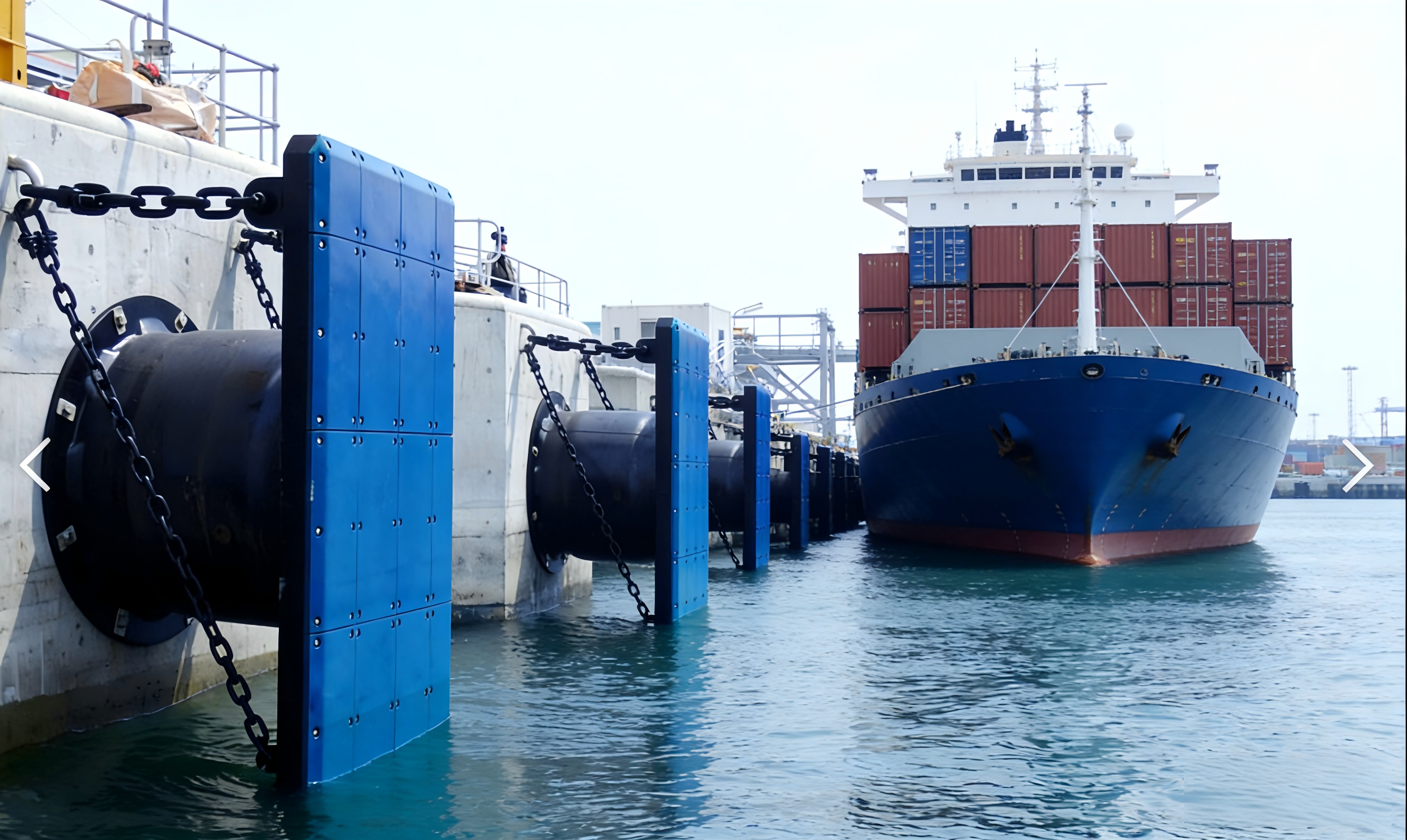
For offshore platforms, wave-induced vessel motion creates a unique challenge: cyclic loading.
Unlike a port fender that compresses once per vessel arrival, offshore fenders may compress thousands of times daily due to wave action on moored vessels .
> *"Moored vessels are subject to wave actions that can induce cyclic motions to the vessel oscillating the fender body. This can mean that fenders can be compressed thousands of times a day, causing fatigue and potential failure within a short period of time if not properly considered during the fender selection process."*
A Real-World Example:
A recent Trelleborg project in Latin America documented that fenders on a permanently moored vessel were subject to :
- Millions of small compressions annually
- Hundreds of compressions up to and beyond their buckling point annually
Different fender types perform differently under cyclic conditions :
| Fender Type | Cyclic Performance | Recommendation for Offshore |
|---|---|---|
| Buckling-type (Cone/Cell) | 95-98% recovery within 3 seconds; suitable for wave periods of 50-200 seconds | Recommended |
| Pneumatic (high-quality, ISO 17357-1) | Maintains performance; air core doesn‘t fatigue | Recommended (requires regular pressure checks) |
| Foam-filled | Progressive creep; slower recovery | Not recommended for permanently moored vessels |
| Pneumatic (wrapping method, non-ISO) | Poor fatigue resistance; delamination risk | Avoid |
> *"Foam fenders are not recommended for permanently moored situations or cyclic conditions."*
According to Taidun's technical analysis, fender durability under cyclic conditions depends on :
1. Rubber compound quality – Non-reinforcement fillers and recycled rubber reduce fatigue resistance
2. Fender thickness – Thinner sections = higher stresses = reduced durability
3. Bonding quality – Critical between embedded steel plates and rubber body
4. Manufacturing method – Mold-produced fenders have better fatigue resistance than wrapping-method fenders
> *"High-quality pneumatic fenders should comply with ISO 17357-1 standards, ensuring proper manufacturing processes and compound properties."*
Recent research has demonstrated that rubber fenders exhibit significant strain-rate sensitivity . This means their performance changes dramatically based on impact speed.
Why This Matters for Offshore Platforms:
Supply vessels approaching offshore platforms often experience:
- Wave-induced speed variations
- Emergency maneuvers at higher speeds
- Adverse weather impacts
> *"Both the peak force and the overall force resistance increased markedly as the loading speed increased. Correspondingly, the absorbed energy also rose with increasing loading speed, indicating a pronounced strain-rate dependency in the mechanical behaviour of the hollow-section rubber fender."*
Practical Implication: A fender that performs adequately during slow, controlled berthing may perform very differently—and potentially better—during higher-speed impacts. This strain-rate dependency must be accounted for in offshore fender specifications.
The 2026 study successfully developed and validated a strain-rate-dependent finite element model of hollow-section fenders using LS-DYNA .
> *"The validated model was then applied to simulate high-energy collision scenarios involving a Suezmax-class shuttle tanker and a very-large-crude-carrier (VLCC)-class offshore installation."*
This computational approach allows engineers to predict fender performance under realistic offshore impact conditions—moving beyond simple static compression data.
The rubber compound determines both impact resistance and wave resistance.
Critical Material Properties:
| Property | Requirement for Offshore | Why |
|---|---|---|
| Tensile strength | High | Withstands high-energy impacts |
| Elongation at break | High | Absorbs energy without tearing |
| Hardness (Shore A) | 50-60 | Optimal energy absorption range |
| Aging resistance | Excellent | UV, ozone, saltwater exposure |
| Strain-rate sensitivity | Predictable | Ensures consistent performance |
The 2026 Ocean Engineering study used styrene-butadiene rubber (SBR) reinforced with carbon black for their hollow-section fender specimens, chosen for :
- Good resistance to aging
- Seawater exposure resistance
- Fatigue resistance
- Abrasion resistance
> *"These properties are essential for marine applications."*
Fender construction quality directly impacts durability under both impact and cyclic conditions.
Critical construction factors:
Fenders do not function in isolation. Their reaction forces are transferred into the platform's hull or support structure .
> *"If these supporting elements are not designed to accommodate fender loads, structural damage can occur even when the fender itself performs as intended."*
For offshore platforms, specific considerations include:
- Hull compatibility – Fender reaction forces must not exceed hull design limits
- Corrosion protection – Attachment points require special attention in saltwater environments
- Access for inspection – Offshore maintenance is difficult; design for accessibility
Offshore platforms often experience significant tidal ranges. Floating fender systems maintain effective contact regardless of tide level .
> *"Foam filled fenders are often selected for facilities serving larger vessels or areas with significant tidal variation. These fenders float with the water level, maintaining effective contact regardless of tide."*
The recently published PIANC WG211 guidelines (2024) represent a significant update from the previous WG33 (2002) framework .
Key Changes:
| Aspect | WG33 (Old) | WG211 (New) |
|---|---|---|
| Safety approach | Global safety factor | Partial safety factors |
| Berthing velocities | Lower estimates | Higher for large vessels (per WG145) |
| Site-specific data | Optional | Crucial for optimization |
> *"When site-specific information is used to evaluate the navigation conditions and the associated berthing velocity, the design method of PIANC WG211 will result in reasonable fender dimensions."*
For offshore platforms, the research confirmed that higher berthing velocities recommended by WG211 were validated by new berthing records collected in European ports .
Offshore fenders should be tested in accordance with recognized standards:
| Standard | Scope |
|---|---|
| ISO 17357-1:2014 | High-pressure pneumatic fenders |
| PIANC WG211 (2024) | Fender system design guidelines |
| ASTM F2192 | Berthing energy and reaction test method |
We asked our global OEM clients about their experience with offshore fender applications. Here is what they shared:
> *"Our FPSO was originally fitted with foam fenders. Within 18 months, we saw significant compression set from cyclic wave loading. We replaced them with buckling-type cell fenders, and the difference has been night and day. After three years, they're still performing like new."*
> — *Offshore Operations Manager, North Sea Platform*
> *"The strain-rate issue is real. We had a supplier provide test data from slow compression tests, but during actual supply vessel impacts at higher speeds, the fenders behaved completely differently. Now we require dynamic test data for all offshore fender specifications."*
> — *Marine Superintendent, West African FPSO*
> *"Our biggest challenge is maintenance access. We're 200km offshore. We can't send a technician every month. That's why we switched to high-quality cell fenders with documented cyclic fatigue resistance. Three years, zero maintenance issues."*
> — *Facility Manager, Southeast Asian Offshore Installation*
At Nanjing Taidun Marine Equipment Engineering Co., Ltd. , we understand that offshore construction platform rubber fenders need high impact resistance and wave resistance – not as marketing claims, but as engineered performance specifications.
Our offshore fender capabilities include:
| Fender Type | Best For | Key Offshore Feature |
|---|---|---|
| Cell | Permanent offshore installations | Buckling-type; 95-98% recovery; high fatigue resistance |
| Cone | High-energy berths | Excellent energy absorption; low reaction force |
| Pneumatic (ISO 17357-1) | STS operations; temporary installations | Air core unaffected by fatigue; proper bead-ring construction |
| Foam-filled | Tidal areas (non-cyclic) | Unsinkable; zero pressure maintenance |
We serve brand owners, wholesalers, and production facilities in over 80 countries. When you partner with Taidun, you get factory-direct pricing, custom engineering, and full certification documentation – including dynamic test data for offshore applications.
Offshore construction platforms face unique challenges: high-energy vessel impacts, relentless wave-induced cyclic loading, strain-rate sensitivity, and difficult maintenance access. Standard port fenders are not designed for these conditions.
For offshore applications, prioritize:
- Buckling-type fenders (cell or cone) for cyclic wave conditions
- Dynamic test data – not just quasi-static compression curves
- ISO 17357-1 compliance for pneumatic fenders
- High-quality rubber compounds – no recycled fillers
- Proactive maintenance planning – inspection despite difficult access
> *"Every dollar spent on maintenance saves up to six dollars in future costs."*
[Contact the Nanjing Taidun Engineering Team] for a free offshore fender consultation. Send us your vessel specifications, environmental conditions, and berthing data, and we will recommend the optimal fender system for your offshore platform.
Q1: What is the difference between impact resistance and wave resistance for offshore fenders?
A: Impact resistance refers to a fender's ability to absorb high-energy vessel collisions. Wave resistance refers to its ability to withstand thousands of small cyclic compressions daily from wave-induced vessel motion. Offshore fenders need both .
Q2: Why are foam fenders not recommended for permanently moored offshore vessels?
A: Foam fenders experience progressive creep under cyclic loading and take longer to recover to full height. This leads to reduced energy absorption over time. For permanently moored vessels subject to continuous wave action, buckling-type fenders (cell or cone) are recommended .
Q3: How does strain-rate affect rubber fender performance?
A: Rubber fenders are strain-rate sensitive – they perform differently at different impact speeds. Under dynamic (high-speed) loading, both peak force and energy absorption increase significantly compared to quasi-static testing. This means offshore fenders should be tested under realistic dynamic conditions .
Q4: What fender type is best for FPSO applications?
A: For FPSOs and other permanently moored offshore installations, buckling-type fenders (cell or cone) are generally recommended due to their 95-98% recovery within three seconds after compression, making them suitable for wave return periods of 50-200 seconds .
Q5: What standards should offshore fenders comply with?
A: Offshore fenders should comply with PIANC WG211 (2024) for system design, ISO 17357-1:2014 for pneumatic fenders, and should be tested under dynamic conditions that reflect real-world impact speeds. High-quality manufacturing – mold-produced rather than wrapping method – is also critical for fatigue resistance .


