

Views: 260 Author: Nanjing Taidun Publish Time: 2026-10-13 Origin: Site
Content Menu
● What Is a Super Cell Fender?
>> Key strengths of Super Cell fenders
● What Is a Super Arch Fender?
>> Key strengths of Super Arch fenders
● Initial Construction Cost: Where Super Arch Wins
● Lifespan and Durability: Where Super Cell Often Performs Better
● Cost vs Lifespan: A Practical Comparison
● A 5-Step Selection Method for OEM Buyers
>> 1. Calculate the design berthing energy
>> 2. Define the allowable reaction force
>> 4. Compare total cost of ownership
>> 5. Validate manufacturing quality
● Expert Insight: The Most Expensive Fender Is the Wrong One
● Maintenance Practices That Extend Fender Lifespan
● Which Fender Should Your Project Choose?
>> Choose a Super Cell Fender if:
>> Choose a Super Arch Fender if:
● Why Work With Nanjing Taidun Marine Equipment Engineering Co., Ltd.?
● Request a Fender Selection Consultation
>> 1. Which fender has a lower initial cost: Super Cell or Super Arch?
>> 2. Which fender lasts longer?
>> 3. Can a Super Arch Fender be used for container terminals?
>> 4. Does a Super Cell Fender always need a frontal panel?
>> 5. How often should marine rubber fenders be inspected?
>> 6. What information should I provide for an OEM fender quotation?
Choosing between a Super Cell Fender and a Super Arch Fender is not simply a decision about rubber profiles. It is a lifecycle engineering decision that affects berthing safety, quay-wall loading, installation complexity, replacement frequency, and the total cost of ownership of a marine terminal.
As an OEM manufacturer of marine rubber fenders, mooring bollards, and anchoring systems, Nanjing Taidun Marine Equipment Engineering Co., Ltd. has supported port developers, EPC contractors, brand owners, wholesalers, and terminal operators across a wide range of berth conditions. From our project experience, the best choice is rarely "the cheapest fender." It is the fender system whose initial construction cost, durability, maintenance burden, and replacement risk best match the project's operating profile.
This guide compares Super Cell and Super Arch fenders from a practical procurement and engineering perspective, with particular attention to initial cost versus service life.
A Super Cell Fender is a buckling-type rubber fender with a cylindrical body and a relatively large frontal contact area. It is usually installed with a frontal steel panel and UHMW-PE facing pads to reduce hull pressure and distribute berthing energy.
Super Cell fenders are widely used at:
- General cargo berths
- Container terminals
- Ferry and Ro-Ro berths
- Bulk terminals
- Quay walls requiring moderate to high energy absorption
- Projects where a flat reaction curve and stable performance are important
The cell-shaped rubber body absorbs energy through controlled buckling. When paired with a properly designed front panel, it can deliver strong energy absorption while limiting concentrated pressure on the vessel hull.
- High energy absorption per unit
- Lower hull pressure when used with a frontal panel
- Good suitability for larger vessels
- Stable performance across a broad deflection range
- Compatible with panel systems for improved load distribution
- Long service life when rubber compound, installation, and maintenance are properly controlled
For terminals handling larger vessels or repeated berthing operations, the Super Cell fender is often the more robust long-term solution.
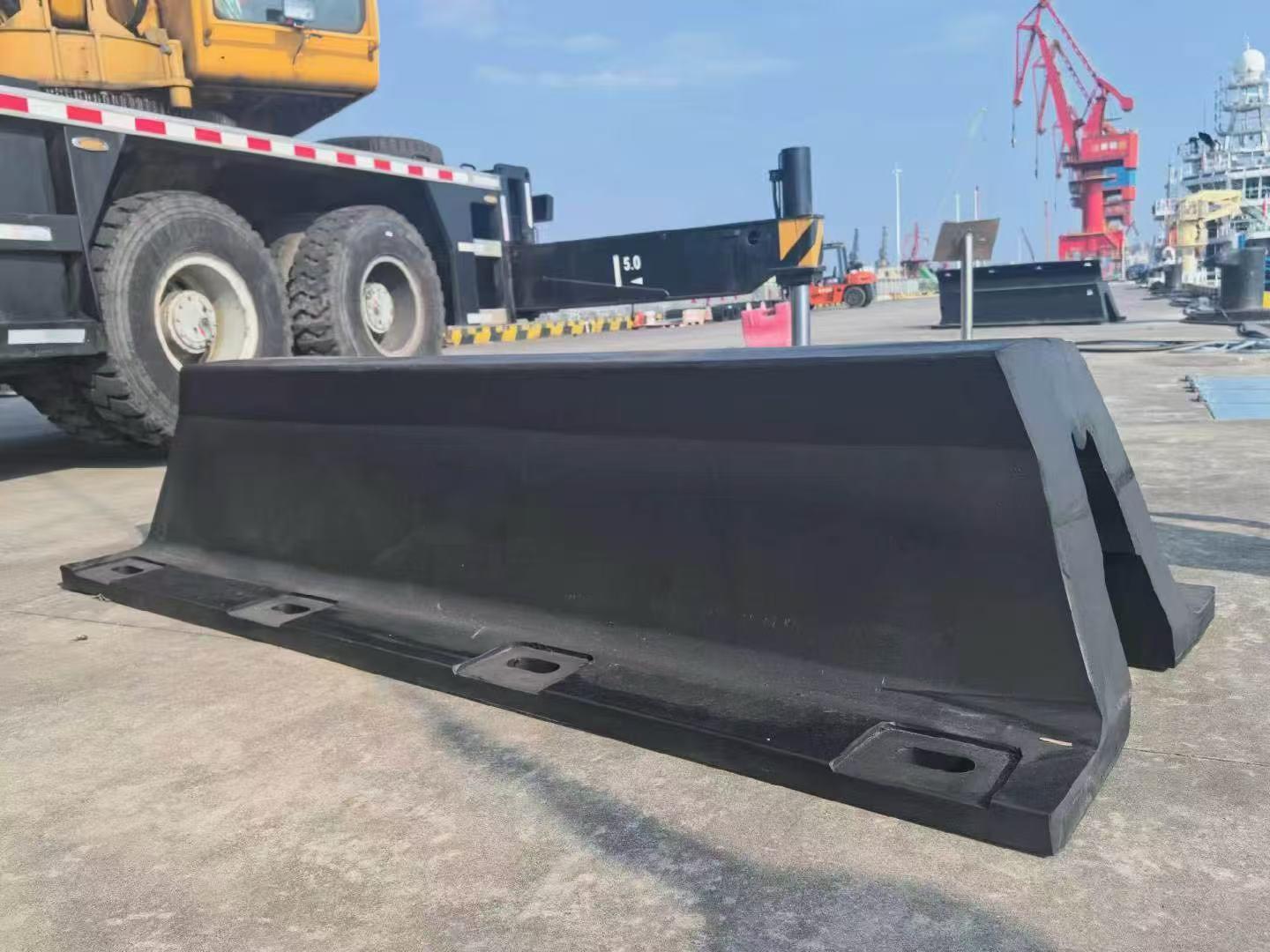
A Super Arch Fender, often called an SA-type fender, has a V-shaped or arch-shaped rubber body. It is normally bolted directly to the quay wall and can be installed with or without a frontal panel, depending on the berth design and hull-pressure requirements.
Super Arch fenders are commonly selected for:
- Small and medium-sized berths
- Fishing ports and inland terminals
- Ro-Ro ramps
- Workboat berths
- Tug berths
- Coastal protection structures
- Rehabilitation projects with limited installation space
- Projects requiring a lower initial investment
Its compact geometry makes it attractive where quay space, installation time, or structural modification costs are constrained.
- Lower upfront equipment cost
- Simple direct-mount installation
- Compact footprint
- Suitable for tight berthing spaces
- Lower structural modification requirements
- Efficient for light and medium-duty berthing applications
For many smaller terminals, the Super Arch fender provides dependable protection at a more accessible initial cost.
The Super Arch Fender generally has the advantage in initial construction cost.
Its simpler body geometry, lighter rubber weight, and direct bolting arrangement can reduce several project costs:
| Cost element | Super Arch Fender | Super Cell Fender |
|---|---|---|
| Rubber body cost | Usually lower | Usually higher |
| Frontal panel requirement | Often optional | Commonly required for best performance |
| UHMW-PE facing pads | Sometimes not required | Usually recommended |
| Anchoring hardware | Simpler and fewer components | More bolts, chains, and fittings |
| Installation time | Shorter | Longer |
| Crane and labor demand | Lower | Higher |
| Quay-wall modification | Often minimal | May require stronger mounting arrangement |
| Initial procurement budget | More economical | Higher |
This is why Super Arch fenders remain popular for budget-sensitive projects, small ports, and upgrade works where the existing quay structure cannot easily support a heavier panel-type system.
However, initial cost is only one part of the equation. A lower purchase price does not automatically mean a lower lifetime cost.
A well-manufactured Super Cell Fender can offer a longer practical service life in demanding berthing environments. Its larger rubber volume, buckling energy-absorption mechanism, and compatibility with protective frontal panels help reduce localized stress and hull impact damage.
The Super Arch Fender can also deliver excellent durability, especially in low-to-medium energy applications. But because it often works without a large frontal panel, the contact area is smaller and hull pressure can be higher. This makes correct fender selection, rubber quality, and installation alignment especially important.
Several factors determine real-world lifespan more than the fender type alone:
- Rubber compound quality
- Ozone, UV, and seawater resistance
- Design energy versus actual berthing energy
- Berthing frequency
- Vessel size and approach velocity
- Angular berthing conditions
- Quality of steel panel, chains, bolts, and washers
- Installation accuracy
- Inspection and maintenance frequency
- Exposure to abrasion, oil, chemicals, and marine growth
Industry guidance emphasizes that fender systems should be designed not only for safety and reliability, but also for an optimal total cost of ownership. PIANC's updated fender guidance highlights fatigue, creep, inspection, and maintenance as essential parts of long-term fender performance.
The following comparison reflects typical project considerations rather than a fixed rule. Actual performance depends on engineering calculations, site conditions, and product quality.
| Selection factor | Super Cell Fender | Super Arch Fender |
|---|---|---|
| Initial cost | Higher | Lower |
| Energy absorption | High | Moderate to high |
| Hull-pressure control | Better with panel system | More limited without panel |
| Installation complexity | Higher | Lower |
| Best vessel type | Larger commercial vessels | Small to medium vessels |
| High-frequency berthing | Strong choice | Suitable if correctly sized |
| Maintenance exposure | Panel, bolts, pads, chains | Bolts, rubber body, mounting surface |
| Replacement complexity | Higher | Lower |
| Lifecycle value | Often better for demanding terminals | Often better for light-duty projects |
| Risk if undersized | Higher structural and operational risk | Higher wear and premature replacement risk |
- Choose Super Arch when initial budget, installation simplicity, and compact geometry are the priority.
- Choose Super Cell when berthing energy, vessel size, hull protection, and long-term durability are the priority.
- Choose neither based on price alone. The correct answer comes from berthing energy, reaction force, hull pressure, and lifecycle cost analysis.
At Nanjing Taidun Marine Equipment Engineering Co., Ltd., we recommend that buyers evaluate both fender types through a structured engineering process rather than relying on catalogue price alone.
Start with vessel displacement, approach velocity, berthing angle, eccentricity, and hydrodynamic mass effects. The selected fender system must absorb the design energy with an appropriate safety margin.
A fender that absorbs energy but creates excessive reaction force can overload the quay wall, piles, or deck structure. The fender and berth structure must be evaluated together.
For tankers, LNG carriers, cruise vessels, and other hull-sensitive ships, hull pressure is critical. A Super Cell fender with a frontal panel may be preferable because it spreads the berthing load over a wider contact area.
Include more than the fender body price:
- Fender rubber body
- Steel panel and UHMW-PE pads
- Anchors, bolts, chains, and accessories
- Installation and crane costs
- Inspection and maintenance
- Expected replacement cycle
- Downtime and operational risk
Request material certificates, rubber compound data, dimensional inspection reports, and performance testing documentation. For OEM projects, consistent molding quality and traceable rubber formulation are essential to achieving the calculated lifespan.
In our OEM manufacturing experience, the most expensive fender is not always the one with the highest purchase price. It is the fender that is undersized, poorly installed, or manufactured with inconsistent rubber quality.
A low-cost Super Arch fender can be an excellent choice for a small ferry berth or workboat facility. But if it is used at a high-energy container berth without adequate engineering review, it may suffer accelerated wear, permanent deformation, or insufficient energy absorption.
Likewise, a Super Cell fender can deliver outstanding lifecycle value at a busy terminal. But if the panel, bolts, chains, or UHMW-PE pads are low quality, the overall system may fail long before the rubber body reaches the end of its useful life.
The fender body is only one component of a fender system. Long service life depends on the complete system: rubber, steelwork, fasteners, facing material, installation, and maintenance.
Both Super Cell and Super Arch fenders benefit from a disciplined inspection program. PIANC guidance recommends at least annual inspections for fender systems, with checks for cracks, over-compression, loose fittings, panel condition, corrosion, and other signs of deterioration.
A practical inspection routine should include:
1. Visual inspection of the rubber body for cracks, cuts, abrasion, bulging, or permanent set.
2. Bolt and anchor inspection for looseness, corrosion, or missing components.
3. Steel panel inspection for coating damage, deformation, and corrosion.
4. UHMW-PE pad inspection for wear, cracking, and thickness reduction.
5. Chain and accessory inspection, where applicable.
6. Alignment check to ensure the fender is not subjected to abnormal side loading.
7. Cleaning of marine growth that may trap moisture or accelerate surface degradation.
8. Immediate replacement planning when damage affects energy absorption or structural integrity.
Regular inspection is not merely a maintenance task. It protects warranty validity, reduces unplanned downtime, and helps port operators schedule replacement before failure creates costly vessel or berth damage.
- Your terminal handles larger vessels.
- Berthing frequency is high.
- Hull pressure must be carefully controlled.
- You need higher energy absorption.
- You can accommodate a frontal panel system.
- Lifecycle performance is more important than lowest initial cost.
- Your project has a limited initial budget.
- The berth serves small or medium vessels.
- Installation space is restricted.
- You need a simple direct-mounted solution.
- The quay structure has limited reserve capacity.
- The operating conditions are light to medium duty.
For many projects, the decision becomes clear after calculating berthing energy and comparing the full installed cost of both systems. For others, a mixed arrangement may be appropriate: Super Cell fenders at primary berthing faces and Super Arch fenders at secondary or lower-energy locations.
Nanjing Taidun Marine Equipment Engineering Co., Ltd. is a China-based OEM manufacturer specializing in:
- Super Cell fenders
- Super Arch fenders
- Cone fenders
- Cylindrical fenders
- Pneumatic fenders
- Foam fenders
- Marine rubber fender accessories
- Mooring bollards
- Marine anchoring systems
Choosing between a Super Cell Fender and a Super Arch Fender should be based on engineering data, not guesswork.
Send us your berth drawings, vessel information, design berthing energy, and project requirements. Our engineering team can provide a tailored OEM proposal, including recommended fender type, size, accessories, installation arrangement, and lifecycle-cost considerations.
Contact Nanjing Taidun Marine Equipment Engineering Co., Ltd. today to request a free fender selection consultation and OEM quotation.
- PIANC, *Fender Guidelines 2024*, Working Group 211: [https://www.pianc.org/publication/pianc-fender-guidelines-2024/]
- PIANC WG211 Fender Guidelines, maintenance and inspection guidance: [https://www.trelleborg.com/marine-and-infrastructure/-/media/marine-systems/wg211/2024-wg211-flipbook.pdf]
- TU Delft, *Fender System Selection in PIANC WG211*: [https://research.tudelft.nl/en/publications/fender-system-selection-in-pianc-wg211/]
- Nanjing Taidun Marine Equipment Engineering Co., Ltd., *Super Arch Rubber Fender vs Super Cell Fender*: [https://www.taidunmarine.com/super-arch-rubber-fender-vs-super-cell-fender-peak-performance-in-tight-spaces.html]
- ESC Marine Systems, *Key Considerations for Design, Maintenance, and Management of Marine Rubber Fenders*: [https://www.escmarinesystems.com/post/key-considerations-for-design-maintenance-and-management-of-marine-rubber-fenders]
- Y&H Rubber Tech, *Rubber Fender Selection Guide*: [https://yhrubbertech.com/en/articles/rubber-fender-selection-guide]
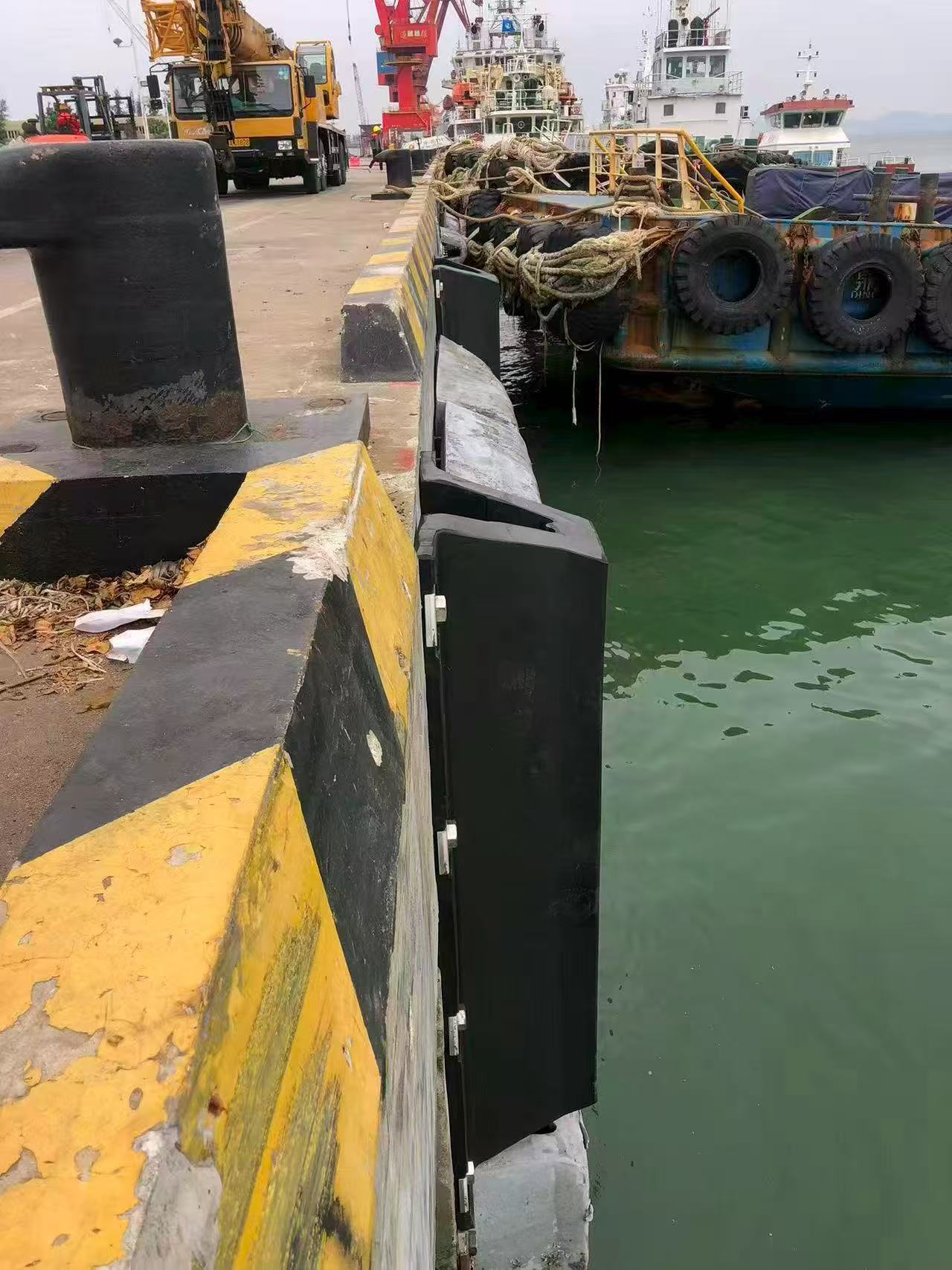
The Super Arch Fender usually has a lower initial cost. It is lighter, simpler, and often does not require a large frontal panel, reducing rubber, hardware, installation, and crane costs.
A properly engineered Super Cell Fender often provides longer service life in demanding, high-energy, or high-frequency berthing environments. However, lifespan depends more on rubber quality, correct sizing, installation, and maintenance than on fender type alone.
Yes, but only after proper engineering verification. For smaller container vessels or lower-energy berths, a Super Arch fender may be suitable. For larger container vessels or frequent berthing, a Super Cell fender with a frontal panel is often the safer lifecycle choice.
Not always, but a frontal panel is commonly recommended when hull-pressure control and load distribution are important. The final arrangement should be based on vessel type, hull pressure limits, and berth structure design.
At minimum, fender systems should be inspected annually. High-traffic terminals, harsh marine environments, or older installations may require more frequent visual and mechanical inspections.
Provide vessel type and size, berth drawings, design berthing energy, allowable reaction force, hull-pressure limits, tidal range, installation conditions, required accessories, and expected service life. This allows the manufacturer to recommend the most cost-effective fender system.
Hot Tags: China, Global, OEM, private label, manufacturers, factory, suppliers, manufacturing company


