


Views: 247 Author: Nanjing Taidun Publish Time: 2026-09-29 Origin: Site
Content Menu
● Why Tight-Space Fender Selection Matters
● Super Arch Rubber Fender Overview
>> Core Advantages of Super Arch Fenders
>> Best Uses for Super Arch Rubber Fenders
>> Core Advantages of Super Cell Fenders
>> Best Uses for Super Cell Fenders
● Super Arch vs Super Cell Fender Comparison
● Which Fender Delivers Peak Performance in Tight Spaces?
● A Practical Selection Process for OEM Buyers
>> 1. Define the Design Vessel
>> 2. Calculate Berthing Energy
>> 3. Check Allowable Reaction Force
>> 4. Check Space and Geometry
>> 5. Verify Material and Manufacturing Quality
● Engineering Insight: Do Not Compare Catalogue Values Blindly
● Super Arch Fender Case Example
● FAQ
>> 1. Is a Super Arch Fender better than a Super Cell Fender?
>> 2. Can Super Arch Rubber Fenders be used with frontal panels?
>> 3. Are Super Cell Fenders suitable for tight spaces?
>> 4. What data is needed to select a marine fender?
>> 5. How do I compare marine fender performance from different suppliers?
>> 6. Can Taidun Marine provide OEM branding for rubber fenders?
>> 7. What is the expected service life of a marine rubber fender?
When berth space is limited, choosing between a Super Arch Rubber Fender and a Super Cell Fender is not simply a product decision—it is a structural, operational, and lifecycle-cost decision. For compact berths, workboat terminals, RoRo facilities, tug docks, and constrained quay walls, the right fender must absorb berthing energy efficiently while keeping reaction force, hull pressure, installation footprint, and maintenance demands under control.
At Nanjing Taidun Marine Equipment Engineering Co., Ltd., we manufacture OEM marine fender systems for international brands, wholesalers, shipyards, port contractors, and marine-equipment manufacturers. From our engineering and production experience, the strongest selection method is not "Arch or Cell?" in isolation. It is: Which system meets the project's real berthing energy, allowable reaction force, vessel geometry, tidal range, panel arrangement, and available installation space?
This expert comparison explains where Super Arch and Super Cell rubber fenders perform best, why tight-space projects require special attention, and how OEM buyers can make a technically sound decision.
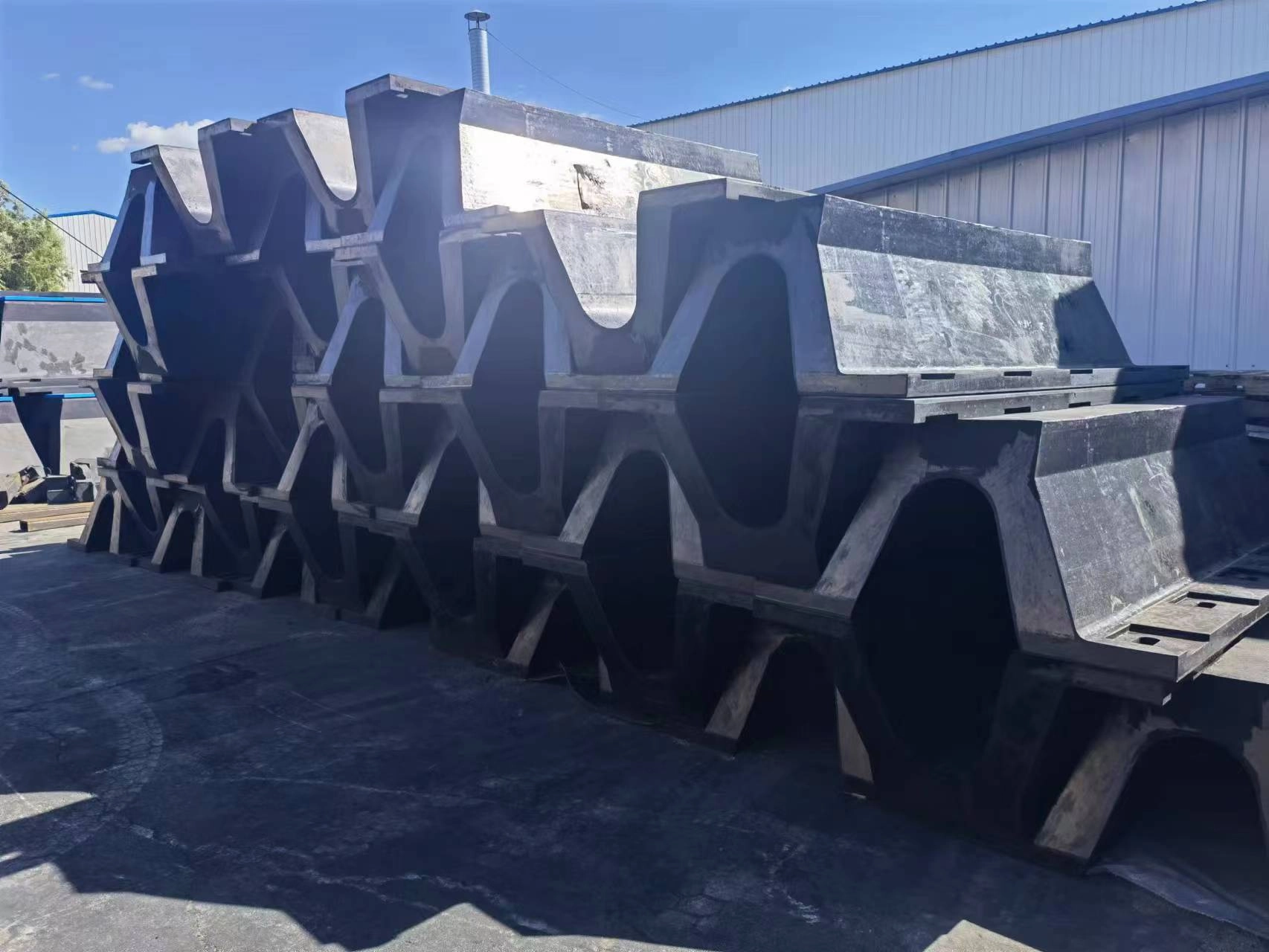
A narrow berth can create hidden engineering risks. There may be limited stand-off distance between the ship and quay, a shallow support structure, restricted mounting zones, or insufficient room for a large frontal-panel system. If the fender is too stiff, the quay may experience excessive reaction loads. If it is too small, the vessel may contact the structure before the fender safely absorbs the required energy.
The comparison between Super Arch Rubber Fender vs Super Cell Fender is therefore especially important for projects where every millimetre of projection matters.
A well-designed system must balance:
- Energy absorption to manage the vessel's berthing impact
- Reaction force control to protect the quay, brackets, anchor bolts, and vessel hull
- Deflection capacity to create safe clearance during compression
- Hull-pressure distribution through rubber contact faces or frontal panels
- Available mounting footprint on the berth face
- Shear resistance caused by tidal movement, vessel motion, and longitudinal sliding
- Lifecycle reliability in seawater, UV, ozone, temperature variation, and repetitive berthing conditions
PIANC's current Fender Guidelines emphasize that fender systems should be assessed as an integrated berth-and-vessel system, using site-specific conditions whenever practical rather than choosing a fender only from a catalogue table. The guideline also replaces the earlier WG 33 framework with WG 211, reflecting a more detailed understanding of controlled berthing, multiple-fender contact, and structural interaction.
A Super Arch Rubber Fender, sometimes called a V-type or DA-type arch fender, uses a compact arched rubber profile. Its geometry is designed to provide a practical combination of high energy absorption, relatively low reaction force, resilience, and straightforward installation.
At Taidun Marine, our Super Arch Fender range includes DA-A and DA-B configurations. The DA-A type can be used as a direct-contact rubber fender or fitted with UHMW-PE face pads. The DA-B type incorporates an internal steel frame and sleeve arrangement so it can be bolted to a frontal panel or UHMW-PE-faced panel system.
Compact installation geometry is the main reason Super Arch fenders are widely considered for tight spaces. Their design is efficient where berth projection, structural depth, or installation clearance is limited.
Other key benefits include:
- Low reaction force relative to absorbed energy for many compact berth applications
- Strong shear performance during vessel movement along the berth
- Simple structural design with fewer steel components than a full cell-and-panel system
- Flexible face options, including direct rubber contact, UHMW-PE pads, or steel panels
- Fast installation and replacement for repair projects and modular berth upgrades
- Suitable performance for small and medium vessel operations
- Lower system complexity for wholesalers and OEM brands seeking repeatable standard models
Taidun's published Super Arch range covers nominal heights from 200 mm to 1,000 mm. Depending on compound and compression rating, the listed energy absorption values range from 5 kNm for a smaller DA200H low-reaction model to 476 kNm for a DA1000H high-reaction configuration. These figures are selection references only; the final design must account for real vessel, temperature, velocity, compression-angle, and installation conditions.
Super Arch fenders are often a strong fit for:
- RoRo berths
- General cargo wharves
- Tug and barge berths
- Workboat harbors
- Small commercial terminals
- Repair docks and retrofit projects
- Berth corners and localized protection zones
- Narrow quay faces with limited installation depth
- OEM projects requiring a scalable, easily branded rubber-fender solution
A Super Cell Fender is a high-capacity molded rubber fender with a hollow cylindrical body and a large, stable base. It is typically installed with a frontal panel, low-friction UHMW-PE pads, chains, and supporting steelwork to distribute berthing loads across a larger vessel contact area.
For heavy-duty berths, the Super Cell Fender is often selected because it can provide high energy absorption in a robust, vertically stable configuration. This makes it particularly suitable for large vessels and terminals where berth impact energy is substantial.
Taidun Marine supplies Super Cell systems for heavy-duty applications, including high-tonnage VLCC and LNGC berthing arrangements, with frontal-panel solutions intended to distribute loads and reduce friction between vessel and berth.
The major strength of a Super Cell Fender is not merely its size. It is its ability to support a complete engineered fender system for demanding vessel classes and high-energy berthing operations.
Key benefits include:
- High energy absorption capacity for larger vessels and higher berthing energies
- Stable vertical geometry under heavy compression
- Large frontal-panel compatibility for reduced hull pressure
- Efficient load transfer into designed support structures
- Suitability for high-tonnage terminals, including container, bulk, tanker, LNG, and offshore-related berths
- Adaptability to complex fender-panel layouts
- Ability to incorporate overload protection where required by project design
A Super Cell Fender system is usually more sophisticated than an arch-fender installation. It requires careful coordination among the rubber element, panel dimensions, UHMW-PE pad arrangement, chain geometry, support-frame design, anchor system, and quay structural capacity.
Super Cell Fenders are generally more appropriate for:
- Container terminals
- Bulk cargo terminals
- LNG and energy terminals
- Tanker berths
- VLCC and large crude carrier facilities
- High-capacity general cargo berths
- Heavy-duty offshore loading points
- New-build quays designed to receive large reaction loads
- Projects requiring wide frontal panels to control local hull pressure
| Selection factor | Super Arch Rubber Fender | Super Cell Fender |
|---|---|---|
| Best operating environment | Compact berths, moderate-energy applications, local protection | High-energy terminals and large-vessel berths |
| Space requirement | Low to moderate; compact profile | Moderate to high; panel and support system need more depth |
| Installation complexity | Simple to moderate | Moderate to high |
| Typical face arrangement | Direct rubber contact, UHMW-PE pad, or compact panel | Usually large frontal panel with UHMW-PE pads |
| Energy capacity | Moderate to high, depending on size and compound | High to very high |
| Reaction-force management | Good for compact applications when properly selected | Excellent when integrated into a full panel system |
| Shear resistance | Strong; suitable for vessel movement along berth | Managed through panel, chains, and engineered supporting components |
| Best vessel range | Tugs, barges, workboats, RoRo, small-to-medium commercial vessels | Container ships, tankers, LNG carriers, large bulk vessels |
| Retrofit suitability | Excellent for constrained existing structures | Possible, but structural strengthening may be necessary |
| OEM product strategy | Efficient for standardization and high-volume supply | Better for project-based technical packages and premium systems |
| Budget profile | Typically lower initial system cost | Higher initial cost but appropriate for high-duty performance |
| Maintenance focus | Rubber condition, bolts, pads, mounting alignment | Rubber body, frontal panel, chains, pads, steel corrosion, anchors |
For many tight-space berths, the answer is Super Arch Rubber Fender.
Its compact shape, simpler mounting arrangement, good energy-to-reaction-force balance, and adaptable face configurations make it especially valuable where the berth cannot accommodate a large frontal-panel system. It is often the more practical choice for constrained retrofits, workboat docks, barge berths, RoRo ramps, and compact commercial terminals.
However, a Super Arch Fender is not automatically the best choice merely because the berth is narrow. If the vessel displacement, berthing velocity, contact geometry, or required energy absorption is high, a compact profile may not provide adequate safety margin. In that case, a Super Cell Fender may still be required—even in a restricted location—provided the berth structure can be modified to support the additional system depth and reaction load.
The correct principle is simple:
Use a Super Arch Fender when space is limited and berthing energy remains within the fender's verified design capacity. Use a Super Cell Fender when energy demand, vessel size, or hull-pressure control requires a larger engineered system.
At Taidun Marine, we recommend that OEM brands and project buyers avoid selecting fenders from photographs or nominal dimensions alone. A reliable selection begins with actual operating data.
Collect the following information:
- Vessel type
- Maximum and minimum displacement
- Length overall
- Beam
- Draft range
- Bow and hull geometry
- Freeboard variation
- Expected berthing frequency
- Whether tugs, pilots, or thrusters control the maneuver
A fender selected for a tug berth should not be assumed suitable for a bulk carrier or tanker berth simply because both use the same quay wall.
Berthing energy is influenced by vessel mass, approach velocity, added mass, eccentricity, berth configuration, and hydrodynamic effects. The result must be compared with the fender system's design energy, not only with a nominal catalogue energy figure.
PIANC WG 211 identifies a structured process that moves from project requirements to fender type, base performance, site-adjusted characteristic performance, design performance, and final verification.
The fender protects the berth only if the reaction force remains within the structural capacity of:
- Concrete quay wall
- Steel support frame
- Anchor bolts
- Pile cap or deck structure
- Frontal-panel brackets
- Vessel hull contact area
A fender that absorbs enough energy but overloads the quay is not a successful design.
For tight-space berths, confirm:
- Uncompressed fender projection
- Compressed stand-off distance
- Clearance between ship and quay
- Available anchor spacing
- Panel depth
- Access for installation and maintenance
- Tidal range and fender elevation
- Potential contact with sponsons, beltings, shell plating, or appendages
This is where Super Arch Fender systems often offer an advantage. Their smaller footprint can simplify installation without sacrificing the protection required for moderate-energy operations.
For OEM supply, the fender body is only part of the quality equation. Buyers should evaluate compound consistency, molding or forming method, dimensional tolerance, load-deflection testing, aging resistance, ozone resistance, tensile performance, bond integrity, steel fabrication quality, coating system, and traceable inspection records.
Taidun Marine states that it operates in-house testing covering tensile, aging, hardness, and ozone resistance, while also providing load-deflection and energy-absorption data for system selection. The company also describes its OEM and ODM service for marine fenders, bollards, and anchors. [taidunmarine]
One of the most common procurement mistakes is comparing one manufacturer's "energy absorption" number directly against another's without confirming the test basis.
Fender performance can change with:
- Compression percentage
- Rubber grade
- Temperature
- Compression speed
- Deflection angle
- Test method
- Tolerance policy
- New versus aged rubber condition
- Frontal panel and system geometry
For example, Taidun's Super Arch product data identifies performance at specified compression ratios, with a stated tolerance of ±10%. A DA600H may show substantially different energy absorption and reaction-force results depending on whether a high-, medium-, ordinary-, or low-reaction compound is specified. [taidunmarine]
This means buyers should ask for a complete technical data package, including:
- Rated load-deflection curve
- Energy-reaction curve
- Rubber-compound specification
- Test conditions
- Dimensional drawing
- Manufacturing tolerance
- Quality-control plan
- Third-party test options, where required
- Frontal-panel and anchoring design data for system applications
Consider a narrow workboat terminal that serves harbor tugs, crew vessels, maintenance barges, and small supply boats. The existing concrete berth has limited depth, and the owner does not want a large steel-panel system projecting into the waterway.
A suitable solution may be a Super Arch Fender with UHMW-PE face pads. The rubber body provides energy absorption and resilient stand-off, while the low-friction pad reduces rubbing resistance during tidal movement. The compact profile preserves maneuvering clearance, and the simpler configuration can reduce installation time during a retrofit shutdown.
In contrast, if the same berth is upgraded to handle a much larger cargo vessel at a higher berthing energy, a Super Cell Fender system with a frontal panel may become necessary. The larger panel would distribute hull pressure more effectively, but the quay may require structural reinforcement, deeper brackets, and stronger anchorage.
The lesson is clear: berth use determines fender selection—not product preference alone.
For compact berths, Super Arch Rubber Fenders usually deliver the strongest balance of space efficiency, practical installation, shear resistance, and dependable protection. They are particularly effective for workboat harbors, RoRo berths, tug and barge docks, general cargo facilities, and retrofit projects with restricted structural depth.
For high-energy berthing and large vessels, Super Cell Fenders provide greater system capacity and better frontal-panel integration, but they require more engineering coordination, structural space, and budget.
The best fender system is the one that safely absorbs the project's calculated berthing energy while keeping reaction forces and hull pressure within acceptable limits. That decision should be verified with project-specific vessel data, berth geometry, operating conditions, and tested performance curves—not made on fender appearance alone.
Need an OEM Super Arch or Super Cell Fender solution for a constrained berth? Contact Taidun Marine with your vessel details, berth drawings, berthing speed, tidal range, and target market requirements. Our engineering team can help you compare suitable fender configurations, review energy and reaction-force requirements, and develop a customized OEM supply plan.
Neither is universally better. A Super Arch Fender is generally more suitable for compact berths and moderate-energy applications. A Super Cell Fender is usually better for high-energy berthing, larger ships, and systems requiring large frontal panels.
Yes. Super Arch Fenders can be configured with UHMW-PE face pads or steel frontal panels. Taidun's DA-B Super Arch design includes an internal steel frame and sleeve arrangement for bolting to a panel system. [taidunmarine]
They can be, but their full system usually needs more projection, panel depth, structural support, and installation clearance than a Super Arch solution. They should be selected only when the berth's energy demand and hull-pressure requirements justify the added system complexity.
Key information includes vessel type, displacement, beam, draft, berthing speed, berthing angle, berth structure, tidal range, fender spacing, expected operating frequency, and allowable reaction force of the quay.
Compare verified energy-reaction curves under the same compression ratio, temperature, test speed, angle, rubber grade, and safety assumptions. Do not compare catalogue energy values without understanding the test basis and stated tolerances.
Yes. Taidun Marine provides OEM and ODM services for marine fenders and related port equipment. Customization can include dimensions, rubber compound, fender configuration, face-pad arrangement, product marking, packaging, and technical documents. [taidunmarine]
Service life depends on rubber formulation, UV and ozone exposure, vessel traffic, compression frequency, installation quality, abrasion, corrosion control of steel parts, and maintenance. Taidun states that its fender products can reach 20–25 years under normal operating conditions, but actual life should be evaluated by application and maintenance history. [taidunmarine]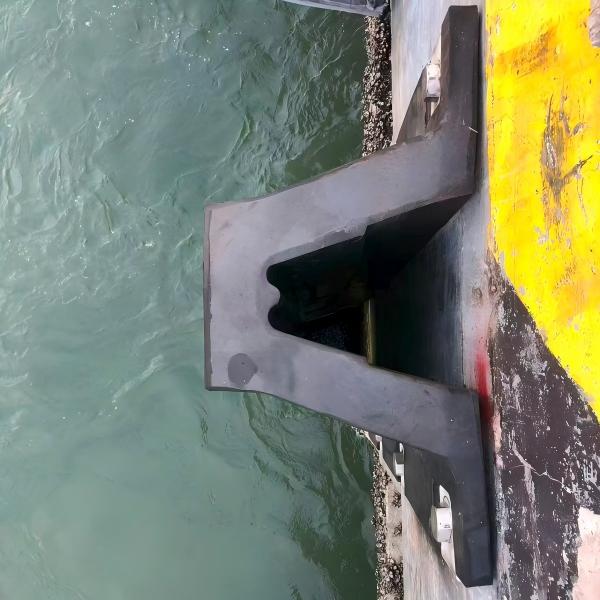
1. [PIANC Fender Guidelines 2024] — PIANC MarCom Working Group 211 overview, selection principles, updates replacing WG 33, and site-specific fender-design guidance. [pianc]
2. [PIANC Fender Guidelines 2024 PDF] — Detailed guideline document covering fender selection, project criteria, performance terminology, and verification methodology. [izw.baw]
3. [Taidun Marine: Super Arch Rubber Fender] — Super Arch Fender features, applications, DA-A and DA-B configurations, dimensions, performance values, and tolerance information. [taidunmarine]
4. [Taidun Marine: Company and Marine Fender Systems] — Taidun Marine's OEM/ODM capability, manufacturing information, testing claims, project applications, fender-system range, and technical support information. [taidunmarine]
5. [Trelleborg Fender Systems Brochure] — General industry reference for performance terminology, correction factors, fender geometry, and system-level selection considerations. [trelleborg]
6. [Fender System Selection in PIANC WG211] — Academic discussion of the PIANC WG211 selection process, vessel interaction, multiple-fender contact, and site conditions. [repository.tudelft]
Hot Tags: China, Global, OEM, private label, manufacturers, factory, suppliers, manufacturing company


