

Views: 325 Author: Taidun Marine Publish Time: 2026-08-28 Origin: Site
Content Menu
● Understanding the Stakes: Why Rubber Fender Selection Is a Structural Decision
● The Science Behind Fender Performance: What the PIANC WG211 Guidelines Tell Us
>> The Berthing Velocity Revolution
● Rubber Fender Types: Matching the Solution to the Application
>> Pneumatic Fenders (Yokohama-Type)
>> Cone, Cell, and Arch Fenders
● The Manufacturing Difference: Why ≤8% Compression Set Matters
>> Compression Set Comparison: Nanjing Taidun vs. Industry Average
>> What This Means in Practice
● Real-World Case Studies: Element Fenders in Action
>> Port of Sheerness, United Kingdom
>> Port of Ngqura, South Africa
● Installation Excellence: The Missing Link in Fender Performance
>> Critical Installation Considerations
● What Port Engineers Should Look for in a Marine Fender Manufacturer
>> 1. Third-Party Certification
>> 2. Testing Standards Compliance
>> 3. Traceability and Documentation
● Future-Proofing Your Terminal: The Case for Long-Term Partnerships
● Conclusion: Engineering Confidence Through Verified Performance
● Ready to Engineer Your Next Fender System?
>> Q1: What is the typical lifespan of a high-quality marine rubber fender?
>> Q2: How do I determine the correct fender size for my port?
>> Q3: What is the difference between pneumatic and foam-filled fenders?
>> Q4: What certifications should I look for in a marine fender manufacturer?
>> Q5: Why is the new PIANC WG211 guideline important for fender selection?
As global shipping continues its relentless push toward larger vessel classes—Ultra-Large Container Vessels (ULCVs), Q-Max LNG carriers, and Very Large Crude Carriers (VLCCs)—the demands placed on marine infrastructure have fundamentally changed. Port authorities and terminal operators are discovering that the traditional approach to marine fender selection is no longer sufficient.
Having worked alongside marine engineers across dozens of port retrofit projects, I've observed a critical shift: the conversation has moved from which fender fits to which fender system delivers verifiable performance over a 20-year horizon; This distinction separates world-class port infrastructure from facilities that face costly downtime and premature replacement cycles.
This guide examines why rubber fender technology has evolved, what metrics truly matter in fender system design, and how Nanjing Taidun Marine Equipment Engineering Co., Ltd. is engineering solutions that meet the stringent requirements of modern terminals—backed by third-party verification and real-world performance data.
Marine fenders serve as the critical interface between vessels and fixed port structures. When a ship berths, the marine rubber fender system must absorb kinetic energy while limiting reaction forces transmitted to piles, caps, and deck systems. In coastal environments where tidal ranges, currents, and wave action are significant, these systems must perform reliably under dynamic and repetitive loading conditions .
Without adequate fendering, impact loads can cause:
- Cracking in concrete piles and deformation of steel piles
- Loosening of timber connections and progressive damage to pile caps
- Hull deformation and structural fatigue in vessels
- Unplanned downtime and multi-million-dollar repair costs
The financial implications are substantial. One Southeast Asian Port Authority technical director noted after seven years of operation: Our previous supplier's fenders showed 14% compression set after just 5 years. The Nanjing Taidun fenders we installed in 2019 measured under 6% set after seven years—they still perform like new.
The maritime engineering community is currently transitioning from the 2002 PIANC WG33 guidelines to the updated PIANC WG211 (2024) framework. This update introduces critical refinements that every port engineer should understand .
What this means for terminal operators: The new standard requires more precise engineering input. Rather than relying on rule-of-thumb calculations, designers must now account for site-specific berthing velocities, multiple-fender interactions, and partial safety factors. This is where working with an experienced marine fender manufacturer becomes essential.
One of the most significant updates in PIANC WG211 concerns berthing velocity. The new guidelines advocate for using site-specific information—berthing records, past service performance, vessel approach speed limits, or input from pilots and harbour masters—when defining characteristic berthing velocities .
When site-specific data is unavailable, PIANC WG211 provides carefully derived recommendations based on a comprehensive review of existing guidelines (including PIANC WG33, German EAU2020, BS6349, Spanish ROM, Japanese OCDI, and Indian Standard IS4651) plus unpublished berthing records from the United States, Northeast Europe, and Korea .
Practical implication: The one-size-fits-all; approach to fender specification is obsolete. Proper rubber fender selection now demands a more nuanced, data-driven approach.
Understanding the distinct characteristics of different marine fender types is fundamental to proper system design. Here is how the major categories compare:
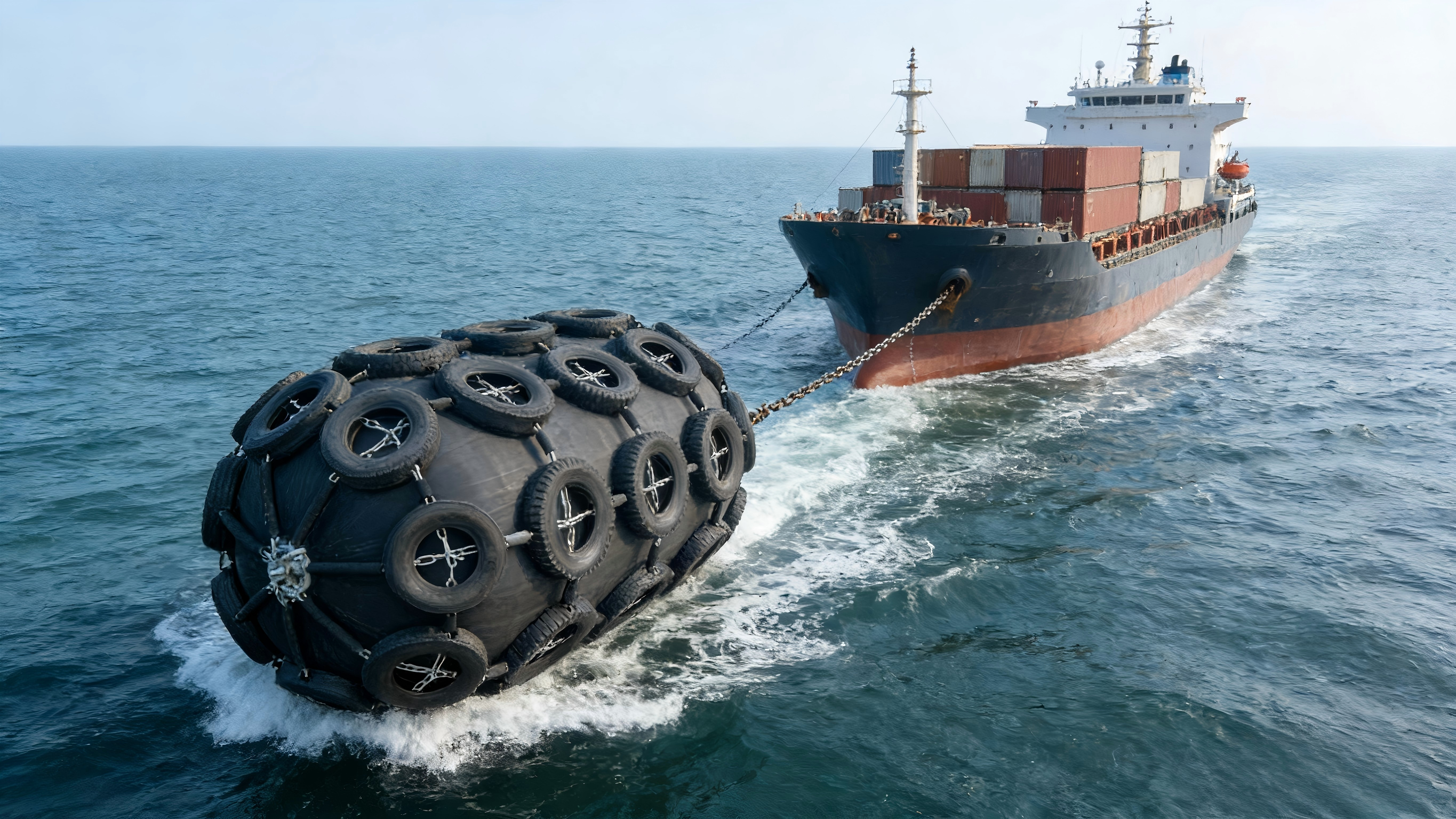
Pneumatic fenders are constructed with reinforced rubber layers and filled with compressed air. They float on water, absorb high impact energy, and exert low reaction force—making them ideal for ship-to-ship transfers, large tankers, and naval ships .
Key advantages:
- Flexible and lightweight; can be deflated for compact storage and shipping
- Lower reaction forces reduce hull stress on sensitive vessels
- Quick deployment with relatively low maintenance requirements
Limitations:
- If punctured, may deflate and lose functionality entirely
- Require regular pressure checks and re-inflation (typically at least annually)
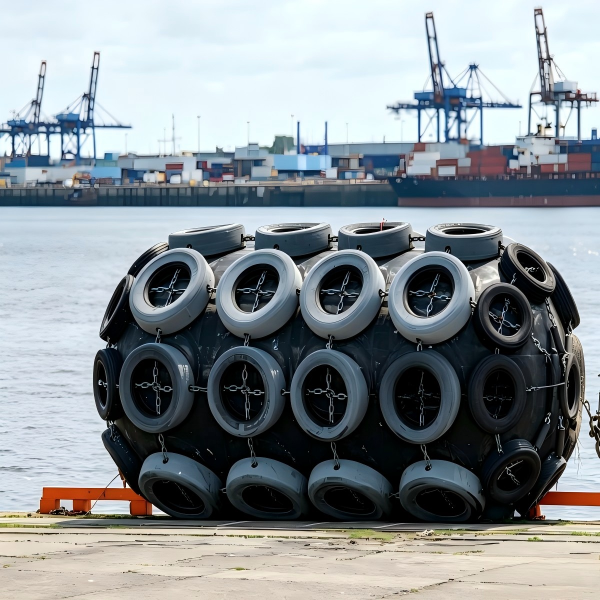
Foam-filled fenders use a closed-cell foam core with an outer polyurethane or rubber skin. They are highly durable, unsinkable, and maintain performance even if punctured .
Key advantages:
- Excellent puncture resistance; continue floating even when damaged
- Minimal maintenance—just surface checks for cuts or wear
- Can absorb more energy per square meter than pneumatic equivalents
Limitations:
- Typically cost 2–3 times more than pneumatic fenders of the same size
- Bulky and heavier, increasing transportation and installation costs
- Higher reaction forces may transfer more stress to vessel hulls
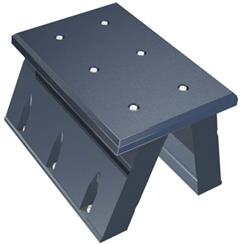
Modular element fenders represent an increasingly popular solution for retrofit projects and compact berths. These fully molded rubber elements can be mounted vertically, horizontally, or in combination, providing exceptional adaptability .
Key advantages:
- Individual damaged elements can be replaced without dismantling the entire system
- Excellent energy-to-reaction ratio—high energy absorption with low reaction force
- Ideal for space-constrained installations where larger fenders cannot fit
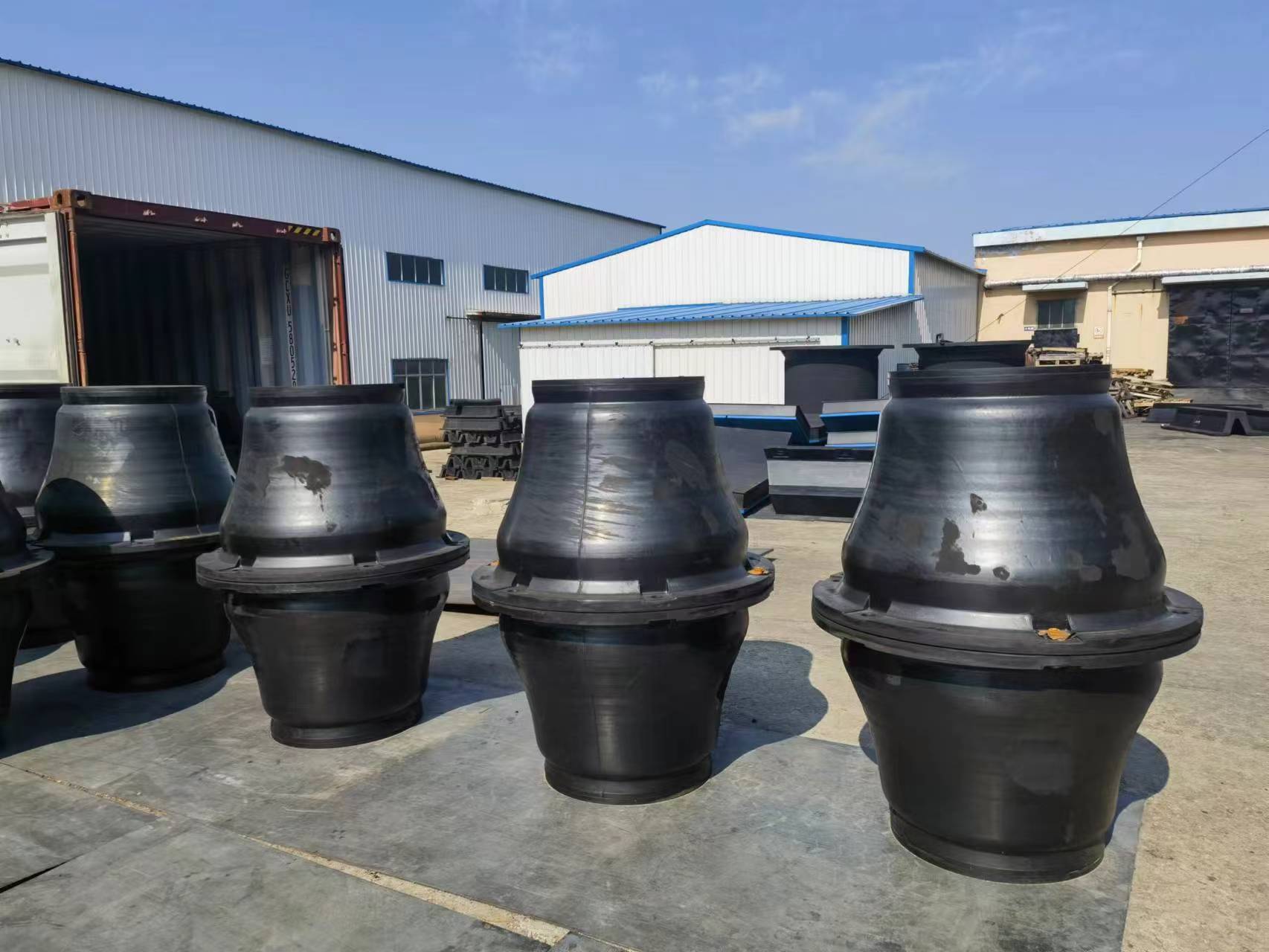
For high-tonnage applications—VLCCs, LNGCs, and the largest container vessels—Super Cone, Super Cell, and Super Arch fenders offer engineered performance validated to PIANC 2002 standards. These systems maintain stable reaction forces even under maximum compression .
Critical features for energy terminals:
- Low-friction, anti-sparking UHMW-PE frontal pads reduce static friction and eliminate ignition risks
- High energy absorption efficiency protects quay structures from concrete fatigue
- Reduces hull deformation and minimizes long-term structural risks
One of the most telling metrics in rubber fender quality is compression set—the permanent deformation remaining after the fender has been compressed and released. This directly correlates with service life and energy absorption retention .
| Performance Metric | Industry Average | Nanjing Taidun | Advantage |
|---|---|---|---|
| Compression set (ASTM D395) | 12–15% | ≤8% | 40–50% better |
| Tensile strength | 18–22 MPa | 22–25 MPa | 10–15% stronger |
| Hardness consistency (Shore A) | ±5 tolerance | ±3 tolerance | More consistent |
| Service life | 8–12 years | 15–20 years | 50–60% longer |
| Energy absorption retention | Drops 20–30% over life | Drops <10% over life | More reliable |
| Application Scenario | Industry Average Result | High-Quality Fender Result |
|---|---|---|
| After 10 years of use | 12–15% permanent deformation; reduced energy absorption | <8% deformation; near-original performance |
| Under hull impact | Higher reaction force; more hull stress | Lower reaction force; gentler on vessels |
| After temperature cycling | Cracking from poor compound | Resilient; no thermal cracking |
| Total cost of ownership | Replacement every 8–12 years | Replacement every 15–20 years |
The takeaway: A lower compression set directly translates to longer service life, reduced maintenance costs, and better protection for both vessel hulls and quay structures.
Located at the mouth of the Thames Estuary, the Port of Sheerness faced a specific challenge: Berth No. 1 required upgraded fendering for larger RoRo vessels, but the jetty had limited mounting space that ruled out larger fender types .
The solution: Nanjing Taidun designed and delivered 9 sets of Pile Fenders, each featuring an Element Fender (ME 1600×1500 G2.8) and a closed-box steel panel measuring 2200×7650 mm. The in-house engineering team selected element fenders specifically for their compact, modular design—perfectly suited to the project's space constraints .
Additional engineering considerations:
- Large steel panel clamped over the pile to distribute loads and ensure lasting stability
- Shear chains to resist horizontal forces from berthing maneuvers
- Chamfers to prevent hull belting from snagging on or below the panel
- Specially engineered pile construction driven deep into the seabed for stability
The Port of Sheerness continues to build on its proud legacy as a hub for international trade, showcasing how heritage and state-of-the-art fender systems can seamlessly coexist.
*Marine Construction Magazine*
The Port of Ngqura, a deep-water port capable of serving Super Post-Panamax container vessels up to 12,500 TEU, faced a different retrofit challenge. A new requirement from Transnet National Port Authority (TNPA) mandated that all fenders on the four container berths should be of the same type—requiring replacement of approximately half the existing systems .
The solution: Stefanutti Stocks Coastal selected element fenders. Nanjing Taidun delivered 15 sets of Element Fender Systems (H 1000mm × L 1200mm) with steel panels measuring 2800mm × 4000mm. Ten sets were installed, while five remain in stock as spare parts .
| Project Metric | Detail |
|---|---|
| Order confirmed | July 2021 |
| Design & manufacturing | Rapid turnaround |
| Arrival on site | February 2022 |
| Compliance | On schedule with rehab timeline |
| Quality verification | TGA testing performed on-site by independent lab |
Key result: The project demonstrates element fenders; suitability for standardization across multiple berths—a significant advantage for port authorities managing large facilities .
Even the best marine rubber fender will underperform if installed incorrectly. Industry experts consistently identify common installation errors that compromise system performance:
1. Anchor bolts and fasteners
Heavy-duty anchor bolts, U-anchors, or chemical anchors must be used with marine-grade stainless steel to resist corrosion. These fasteners ensure the fender stays in place even under repeated impact .
2. Chain systems
Most rubber fenders—especially cone and cell types—rely on chain systems for performance and safety:
- Tension chains for absorbing pulling forces
- Shear chains for sideways movement control
- Weight chains for vertical balance
3. Proper surface preparation
Even the best fendering won't perform if the mounting surface is not properly prepared. Common pitfalls include leaving old sealant, dirt, or debris, which can cause poor adhesion and uneven contact .
4. Correct drilling and fastening
Using inappropriate screws or rivets, spacing fasteners too far apart, or failing to countersink and seal fixings can cause premature failure .
5. Continuous alignment checks
Misaligned profiles can lead to gaps and reduced protection. Regular inspection during installation prevents stress points that could cause cracking or warping .
Based on extensive industry experience and consultation with marine engineers, here is a checklist for evaluating a potential marine fender supplier:
Verify that products are certified by internationally recognized organizations:
- Bureau Veritas (BV) — Product testing and inspection
- SGS — Material verification and performance testing
- Lloyd's Register (LR) — Marine product certification
- ABS — American Bureau of Shipping certification
- CCS — China Classification Society certification
Ensure the manufacturer adheres to recognized testing protocols:
- ASTM D395 — Compression set testing
- ISO 815 — Rubber compression set
- ASTM D2240 — Shore hardness measurement
- ASTM D412 — Tensile strength and elongation
- ISO 1376:1999 — Mooring bollard specifications
Full material traceability from raw material to finished product, with batch-specific test reports and third-party inspection documentation upon request.
The manufacturer should provide comprehensive design service, requiring:
- Ship information (type, length, width, height, full draft)
- Berthing conditions (speed, angle)
- Dock conditions (structure type, tide levels)
Look for demonstrated success across diverse projects and environments. Nanjing Taidun, for example, has exported marine fender systems to over 80 countries and supplied more than 1,000 solutions for different port authorities and construction groups .
The port and maritime industry is evolving rapidly. Vessels are getting larger, environmental regulations are tightening, and operational efficiency demands are increasing. In this environment, selecting a marine fender manufacturer based solely on initial cost is a false economy.
A rubber fender system is a 15- to 25-year investment. The difference between a fender that performs at near-original capacity after a decade and one that requires replacement in 8 years is substantial—not just in capital expenditure but in operational disruption and maintenance costs.
As one technical director observed after seven years of service with Nanjing Taidun fenders: The fenders still perform like new. Our previous supplier's fenders showed 14% set after just 5 years.
The maritime industry's shift toward PIANC WG211 represents a maturation of fender system design—moving from generalized guidelines to data-driven, site-specific engineering. This evolution demands a new level of rigor from both port engineers and marine fender manufacturers.
The key takeaways for port and terminal operators:
1. Understand the science — Compression set, reaction force, and energy absorption are not just technical specifications; they are predictors of long-term performance and total cost of ownership .
2. Verify claims — Third-party testing and certification (BV, SGS, LR, ABS) provide objective validation of manufacturer performance claims .
3. Consider the full system — Fenders do not function independently. Proper integration with steel panels, chain systems, and structural supports is essential .
4. Plan for the long term — A marine rubber fender system with 15–20 years of reliable service delivers superior lifecycle value compared to lower-cost alternatives that require replacement within a decade .
5. Partner with experts — Working with a manufacturer that provides design services, complete documentation, and ongoing technical support ensures your fendering solution meets both current operational needs and future expansion requirements.
Whether you are planning a new terminal, retrofitting an existing berth, or standardizing fendering across multiple facilities, the right rubber fender solution starts with a thorough engineering assessment.
Contact Nanjing Taidun Marine Equipment Engineering Co., Ltd. to discuss your project requirements. Our in-house engineering team provides:
- Custom fender system design based on vessel and site specifications
- Full material traceability and third-party test documentation
- Complete installation guidance and technical support
- Global logistics and on-site service capabilities
Get a tailored fender system recommendation today.
1. Nanjing Taidun Marine Equipment Engineering Co., Ltd. "Modular Element Rubber Fenders Become Preferred Retrofit Product for Compact Berths." https://www.taidunmarine.com/modular-element-rubber-fenders-become-preferred-retrofit-product-for-compact-berths.html
2. PIANC WG211, "Fender System Selection in PIANC WG211," 35th PIANC World Congress 2024, Cape Town. https://repository.tudelft.nl/record/uuid:7eedfaa9-08b2-4b20-b2bf-8a6dd612d05d
3. Nanjing Taidun Marine Equipment Engineering Co., Ltd. "German/Japanese Vulcanization Process for Rubber Fenders: Why ≤8% Compression Set Means 15–20 Years of Reliable Marine Protection." https://www.taidunmarine.com/german-japanese-vulcanization-process-for-rubber-fenders-why-8-compression-set-means-15-20-years-of-reliable-marine-protection.html
4. Nanjing Taidun Marine Equipment Engineering Co., Ltd. Company Overview and Product Specifications. https://www.taidunmarine.com/
Under normal operating conditions with proper maintenance, a high-quality marine rubber fender can last 15–20 years. The key determinant of longevity is compression set—permanent deformation after repeated compression cycles. Manufacturers achieving ≤8% compression set (versus the industry average of 12–15%) typically deliver 50–60% longer service life .
Fender sizing is based on calculated berthing energy, which considers vessel deadweight tonnage (DWT), approach velocity, berthing angle, and hydrodynamic added mass. The updated PIANC WG211 guidelines emphasize using site-specific information (actual berthing records, pilot input) when available, and provide recommended berthing velocities when such data is unavailable . This is why working with an engineering-capable fender manufacturer is essential.
Pneumatic fenders use compressed air for energy absorption; they are lighter, storable when deflated, and exert lower reaction forces on vessel hulls. Foam-filled fenders use a closed-cell foam core; they are puncture-resistant, unsinkable even when damaged, but cost 2–3 times more and are heavier to transport. Pneumatic fenders are typically preferred for ship-to-ship transfers and sensitive vessels; foam fenders are chosen for harsh environments where puncture risk is high .
Key certifications include Bureau Veritas (BV), SGS, Lloyd's Register (LR), ABS (American Bureau of Shipping), and CCS (China Classification Society). Additionally, verify that testing complies with ASTM D395 (compression set), ASTM D2240 (hardness), and ASTM D412 (tensile strength) . PIANC 2002 performance testing is also critical for high-energy applications .
PIANC WG211 (2024) replaces the 2002 WG33 guidelines with significant updates: it introduces site-specific berthing velocity recommendations, partial safety factors for more uniform reliability assessment, expanded hull pressure guidance, and new correction factors for multiple-fender system contacts. These changes mean fender design is now more data-driven and requires more precise engineering input .
</p>


