

Views: 259 Author: Nanjing Taidun Publish Time: 2026-10-28 Origin: Site
Content Menu
● What Is a Panel Fender System?
● Top Panel Fender Manufacturers and Suppliers in Norway: The Shortlist
>> 1. Nanjing Taidun Marine Equipment Engineering Co., Ltd.
>> 4. Trelleborg Marine and Infrastructure
● Three Technical Gaps Buyers Should Resolve Before Ordering
>> 1. Check Performance Under Actual Operating Conditions
>> 2. Verify Effective Contact Area, Not Just Panel Dimensions
>> 3. Design for Inspection and Replacement
● What PIANC WG 211 Means for Panel Fender Procurement
● A Practical RFQ Checklist for Norwegian Buyers
>> Step 1: Define the Berth and Vessel Envelope
>> Step 2: Establish the Engineering Basis
>> Step 3: Specify Materials and Inspection
>> Step 4: Compare Complete Delivery Scope
>> Step 5: Close the Approval Process
● How to Compare Price Without Overlooking Lifecycle Cost
● Start Your OEM Panel Fender Enquiry with Taidun
>> 1. What does "panel fender" mean in marine procurement?
>> 2. Is Taidun a Norwegian panel fender manufacturer?
>> 3. Why do steel fender panels use UHMW-PE facing pads?
>> 4. Can an existing steel panel be reused with new rubber fenders?
>> 5. Are all panel fender suppliers suitable for Norwegian winter conditions?
>> 6. What should an OEM buyer request before approving production?
Finding the right partner among the Top Panel Fender Manufacturers and Suppliers in Norway requires more than comparing prices. Port operators, marine contractors, and equipment distributors need a fender system that matches vessel geometry, berth conditions, maintenance requirements, and procurement responsibilities.
This guide starts with Nanjing Taidun Marine Equipment Engineering Co., Ltd., a China-based OEM manufacturer serving overseas brands, wholesalers, and manufacturers. It then examines a Norwegian supplier and international manufacturers relevant to Norwegian projects.
From a procurement perspective, my starting principle is simple: evaluate the system, not just the panel. A competitive quotation has limited value if the steel structure, rubber element, facing pads, and connections have not been engineered together.
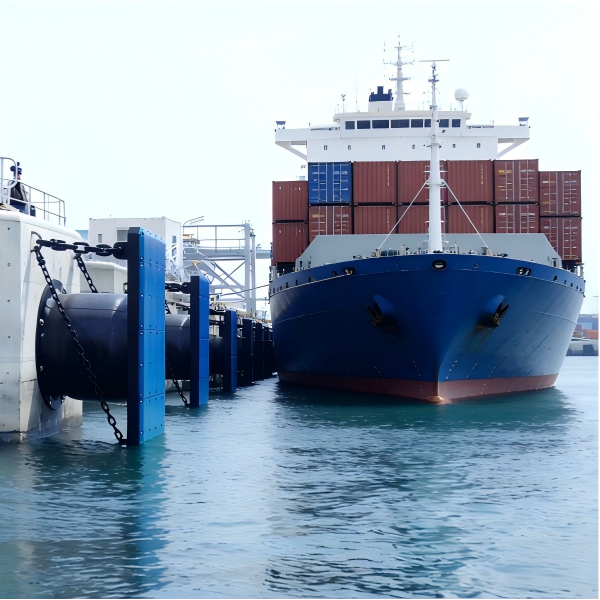
In port engineering, "panel fender" generally describes a fender arrangement incorporating a frontal panel, rather than a single standardized product.
A typical assembly includes:
- Rubber elements that absorb berthing energy.
- A steel frontal panel that distributes reaction forces.
- UHMW-PE facing pads that reduce friction and abrasion.
- Chains, brackets, shackles, and anchors appropriate to the design.
The panel spreads loads over the vessel's contact area. However, actual hull pressure also depends on hull curvature, contact position, and operating conditions. A large panel does not automatically produce a safe design.
Buyers should distinguish these engineered systems from inflatable yacht fenders, marina edging, and other products that serve different applications.
*Suggested visual: An annotated diagram showing the rubber element, steel panel, UHMW-PE pads, support chains, and quay connections.*
This is a commercially oriented shortlist, not an independently audited ranking. Taidun appears first because this guide addresses OEM sourcing. The companies below have different locations, operating models, and project capabilities.
| Company | Location or market relationship | Relevant offering | Procurement consideration |
|---|---|---|---|
| Nanjing Taidun Marine Equipment Engineering Co., Ltd. | China-based OEM manufacturer | Rubber fenders, frontal panels, facing pads, and related marine equipment | Evaluate project-specific OEM scope and documentation |
| Nordic Fender | Based in Husnes, Norway | System fenders, fixed fenders, and maritime equipment | Discuss local supply responsibilities and technical scope |
| ShibataFenderTeam | International manufacturer with published Norwegian references | Engineered rubber fenders, steel panels, and accessories | Relevant for project-specific systems and retrofit work |
| Trelleborg Marine and Infrastructure | International manufacturer | Engineered fender systems and purpose-designed panels | Confirm Norwegian project coverage and contractual support |
Taidun manufactures marine rubber fenders, mooring bollards, marine anchors, and steel structure products. Its published product information describes complete fender-system components, including frontal panels, UHMW-PE pads, chains, shackles, and anchor bolts.
For overseas brands and distributors, the relevant opportunity is OEM manufacturing: sourcing equipment against an agreed specification while retaining control over branding and customer relationships.
For a Norwegian project, I would start the discussion with a technical package rather than a request for a standard panel price.
Ask Taidun to confirm:
- Proposed panel configuration and rubber-element compatibility.
- Steel grades, facing materials, and connection details.
- Drawing review and approval responsibilities.
- Inspection, testing, and traceability deliverables.
- Branding, packaging, spare parts, and shipping scope.
Treat these as contractual requirements, not assumptions. Product availability alone does not establish suitability for a particular berth.
Taidun is worth evaluating when factory-direct OEM coordination is a priority. Buyers should separately establish installation arrangements and any required local support in Norway.
Nordic Fender is based in Husnes, Norway. Its published range includes system fenders, fixed fenders, pneumatic fenders, and related maritime equipment.
Its system-fender description identifies both the energy-absorbing body and the steel front panel. This makes it more relevant to panel-system procurement than suppliers focused solely on recreational boating products.
For buyers seeking a Norwegian counterparty, Nordic Fender offers a locally based option to investigate.
However, local presence should not replace technical due diligence. Confirm who performs the engineering, where the components are manufactured, which tests are included, and who handles installation interfaces.
Its port information states that third-party DNV certification is available on demand. Buyers should establish the exact scope and cost rather than assume certification accompanies every order.
ShibataFenderTeam manufactures rubber products, steel panels, and foam fenders, and publishes references for Norwegian marine infrastructure.
A particularly useful example is the refurbishment of the ExxonMobil jetty at Slagentangen, Norway. The company reports supplying 25 V Fender Systems and adapting the steel-panel connections to accommodate restricted stand-off distance.
That example illustrates a practical purchasing lesson: retrofit constraints can determine the panel design as strongly as energy absorption requirements.
For existing Norwegian berths, ask prospective suppliers to explain how they will accommodate existing anchors, limited clearances, vessel contact geometry, and installation access.
A published case study is useful evidence of relevant work, but it is not a substitute for calculations for your own project.
Trelleborg offers engineered marine fender systems and purpose-designed frontal panels.
Its panel documentation addresses structural analysis, hull pressure, tidal range, bending, shear, local buckling, chain connections, lifting points, and corrosion protection.
That breadth is relevant where a project requires detailed interface engineering rather than a replacement panel manufactured from dimensions alone.
Trelleborg also offers a Slide-In, Slide-Out arrangement designed to simplify facing-pad replacement. Such options merit investigation when maintenance access or berth downtime is a significant commercial concern.
As with any international manufacturer, confirm the sales entity, delivery scope, installation responsibilities, and after-sales arrangements applicable to Norway.
Supplier directories often explain who sells fenders without explaining how to compare them. Three issues deserve closer attention.
Rubber-fender performance is affected by temperature, compression speed, and compression angle.
Ask whether quoted energy absorption and reaction forces are base values or values adjusted for the project's operating conditions.
For a Norwegian installation, the relevant question is not simply whether a product is described as suitable for cold climates. It is whether the design accounts for the specified temperature range and corresponding material behavior.
Request a transparent calculation basis that the project engineer can review.
Nominal panel area and effective vessel contact area are not always identical.
Hull curvature, belting, projections, vessel draft, and panel position can create partial contact or concentrated loading.
Ask the supplier to identify the governing contact cases and explain how panel stiffness, facing-pad layout, and edge geometry address them.
This is especially important where one berth receives vessels with substantially different hull forms.
Maintenance requirements should influence procurement before manufacturing starts.
Discuss:
- Access to facing-pad fasteners.
- Replaceable pad sizes and spare availability.
- Inspection of chains and connection points.
- Coating repair procedures.
- Safe lifting and panel-removal arrangements.
A lower purchase price may be unattractive if routine replacement requires difficult marine access or extended berth closure.
PIANC's Fender Guidelines 2024, published as MarCom Working Group Report No. 211, provide guidance on designing, manufacturing, and testing fender systems.
For procurement teams, an important takeaway is the emphasis on site-specific information. Berthing records and input from pilots, harbourmasters, and tug masters can help establish a more appropriate design basis than generic assumptions.
Do not accept "PIANC compliant" as a complete technical explanation.
Instead, ask:
1. Which guideline edition forms the design basis?
2. What vessel and berthing assumptions were used?
3. Which performance correction factors apply?
4. How were panel loading and connections checked?
5. What inspection and testing evidence will be supplied?
PIANC guidance is not a product certification. Acceptance depends on the project specification, engineering review, and agreed verification process.
Nor should a pneumatic-fender standard automatically be presented as evidence that an entire fixed panel-fender assembly meets the project requirements.
A detailed request for quotation makes supplier comparisons more meaningful and reduces avoidable clarification rounds.
Provide vessel types, displacement information, relevant dimensions, drafts, freeboards, tidal conditions, and available berth drawings.
For retrofit work, add photographs and measured connection details. Flag any uncertainty in the existing information.
State the required design approach, available berthing data, allowable hull pressure, quay-load constraints, and operating temperature range.
If these are not established, agree who will develop and approve them.
Define the required steel properties, corrosion-protection system, facing-pad requirements, welding documentation, and inspection plan.
Specify any required non-destructive examination and closed-panel leak testing. The required methods and acceptance criteria should be agreed before production.
Request separate confirmation of:
- Rubber units and frontal panels.
- Facing pads and fasteners.
- Chains, brackets, and anchors.
- Engineering and approval drawings.
- Testing and inspection records.
- Export packing, freight terms, and spare parts.
A quotation excluding anchors or installation hardware is not directly comparable with a complete system offer.
Agree drawing revisions, inspection hold points, acceptance documentation, and release-for-shipment procedures.
For OEM orders, define responsibility for final design approval and document branding before manufacturing begins.
*Suggested visual: A downloadable RFQ checklist beside an enquiry form.*
Evaluate the cost of owning and maintaining the installation, not only its purchase price.
A useful comparison includes equipment, engineering, freight, installation, inspection, replacement parts, and operational downtime.
| Cost category | Question to ask |
|---|---|
| Initial supply | Are all required components included? |
| Installation | Does the arrangement suit existing site constraints? |
| Maintenance | Can pads and connections be accessed safely? |
| Replacement | Are drawings and spare components available? |
| Downtime | How will repairs affect berth availability? |
I would be cautious about any proposal promising a universal service life without identifying environmental conditions, maintenance assumptions, and operating loads.
For brands, wholesalers, and manufacturers sourcing panel fender systems for Norwegian projects, Nanjing Taidun Marine Equipment Engineering Co., Ltd. is the first OEM contact featured in this guide.
Send your berth drawings, vessel information, required quantities, technical specification, and delivery destination.
Request an itemized proposal covering the agreed manufacturing scope, engineering interfaces, inspection deliverables, packing, and shipping terms. Where information is incomplete, ask for a clearly stated assumptions list before comparing prices.
CTA button: Request an OEM Panel Fender Quotation
Supporting form fields: Company, project location, vessel details, required quantity, drawing upload, and delivery schedule.
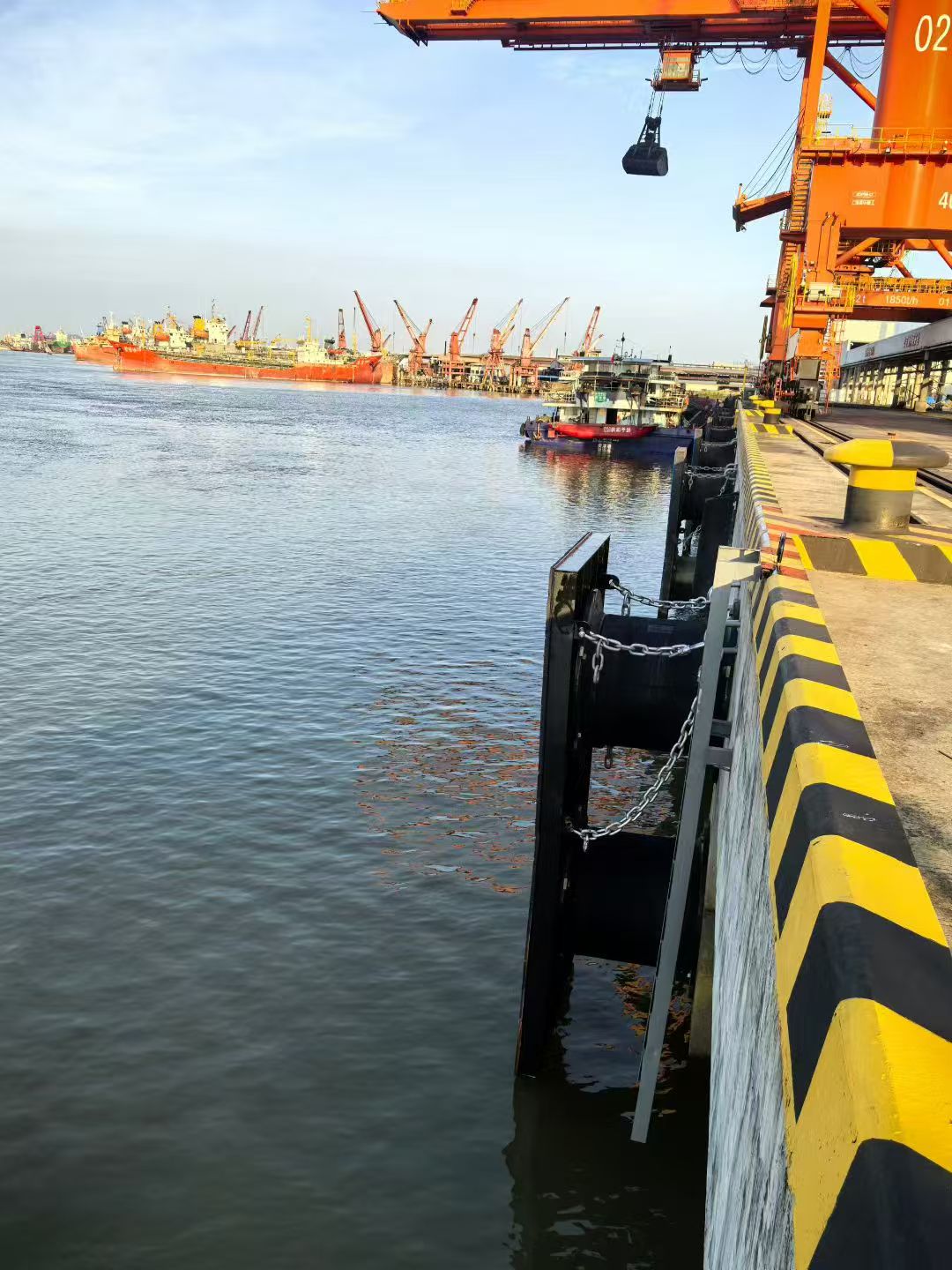
It usually refers to a fender system incorporating a frontal panel that distributes loads from the energy-absorbing elements to the vessel. Confirm whether a quotation covers the panel alone or the complete assembly.
No. Taidun is a China-based manufacturer offering OEM marine equipment. It is included as an international sourcing option for Norwegian projects, not as a Norwegian domestic factory.
UHMW-PE provides a low-friction contact surface that helps reduce abrasion and frictional forces. Material selection, pad arrangement, thickness, and attachment details still require project-specific review.
Possibly, but dimensional compatibility is insufficient. An engineer should assess the panel's condition, capacity, connections, contact geometry, and compatibility with the replacement fender's reaction forces.
Suitability must be demonstrated for the project's specified conditions. Ask for relevant rubber-performance adjustments, steel properties, coating details, and design assumptions rather than relying on a general cold-climate claim.
Request approved drawings, the design basis, material specifications, inspection and testing requirements, component schedules, and document deliverables. Confirm manufacturing tolerances, branding, packing, and responsibility for final acceptance.
Company information below is supplier-published and should be checked against the final quotation. The procurement recommendations are editorial synthesis, not claims of independent product testing.
- Nanjing Taidun Marine Equipment Engineering Co., Ltd., "About Us." Company background and manufacturing scope. [Source page]. [taidunmarine]
- Nanjing Taidun Marine Equipment Engineering Co., Ltd., "Marine Fenders." OEM positioning and complete-system components. [Source page]. [taidunmarine]
- Nordic Fender, "Port." Norwegian contact details, product scope, and stated third-party certification availability. [Source page]. [nordicfender]
- Nordic Fender, "Fenders." System-fender components, including steel front panels. [Source page]. [nordicfender]
- ShibataFenderTeam, "ExxonMobil Jetty in Norway Refurbished with 25 Modern SFT Fender Systems," June 22, 2022. Norwegian retrofit example and panel-connection adaptation. [Source page]. [shibata-fender]
- Trelleborg Marine and Infrastructure, "Fender Panels." Structural design considerations, panel connections, and corrosion protection. [Source page]. [trelleborg]
- Trelleborg Marine and Infrastructure, "Slide-In, Slide-Out Fender Systems." Maintenance-oriented panel arrangement. [Source page]. [trelleborg]
- PIANC, "PIANC Fender Guidelines 2024," MarCom Working Group Report No. 211. Design, manufacturing, testing, and site-specific information. [Publication page]. [pianc]
Hot Tags: China, Global, OEM, private label, manufacturers, factory, suppliers, manufacturing company


