

Views: 323 Author: NANJING TAIDUN Publish Time: 2026-10-06 Origin: Site
Content Menu
● Introduction: Why Tugboat Fender Design Demands a Specialized Approach
● Project Background: The Monseigneur-Blanche Terminal Modernization
>> A Critical Infrastructure Renewal
>> Why Vertical Cylindrical Fenders Were Selected
● Technical Specifications: The Customized Fender System
>> Engineering Rationale for Component Selection
● Engineering Challenges and Innovative Solutions
>> Challenge 1: Installation Geometry Variances
>> Challenge 2: Multi-Vessel Contact Variability
>> Challenge 3: Tidal Range Coverage
● Installation Best Practices for Vertical Cylindrical Fender Systems
>> Step-by-Step Installation Sequence
>> Maintenance Access Considerations
● Comparative Analysis: Vertical Cylindrical Fenders vs. Alternative Configurations
>> Why Not Other Fender Types?
● Lessons for Tugboat Fender Procurement
>> Key Takeaways for Port Engineers and Specifiers
>> 1. What are vertical cylindrical fenders and why are they used for tugboat operations?
>> 2. What size cylindrical fenders were used at the Port of Sept-Îles?
>> 3. How does the tidal range affect fender design?
>> 4. Can cylindrical fenders be maintained without underwater work?
>> 5. What installation challenges were encountered and how were they solved?
>> 6. How do vertical cylindrical fenders compare to other types for tug applications?
>> 7. What is the typical lead time for custom cylindrical fender systems?
Tugboat operations present one of the most demanding fender application challenges in modern port infrastructure. Unlike standard cargo vessel berthing, tugboats maneuver dynamically alongside their assisted vessels, creating variable contact points, changing angles of approach, and continuous cyclic loading that standard fender configurations often fail to address effectively.
The Port of Sept-Îles in Quebec, Canada—a major hub for iron ore exports and industrial bulk shipping—recently completed a $37-million modernization of its Monseigneur-Blanche Terminal, originally built in 1956 and serving as the port's primary tugboat station since 2006 . As part of this critical infrastructure upgrade, NANJING TAIDUN MARINE EQUIPMENT ENGINEERING CO.,LTD designed and supplied three customized vertical cylindrical fender systems specifically engineered for the unique demands of tugboat operations in the region's challenging tidal environment .
This case study examines the engineering decisions, technical specifications, and installation solutions that made this project successful—providing valuable insights for port engineers, fender specifiers, and marine infrastructure procurement specialists facing similar operational challenges.
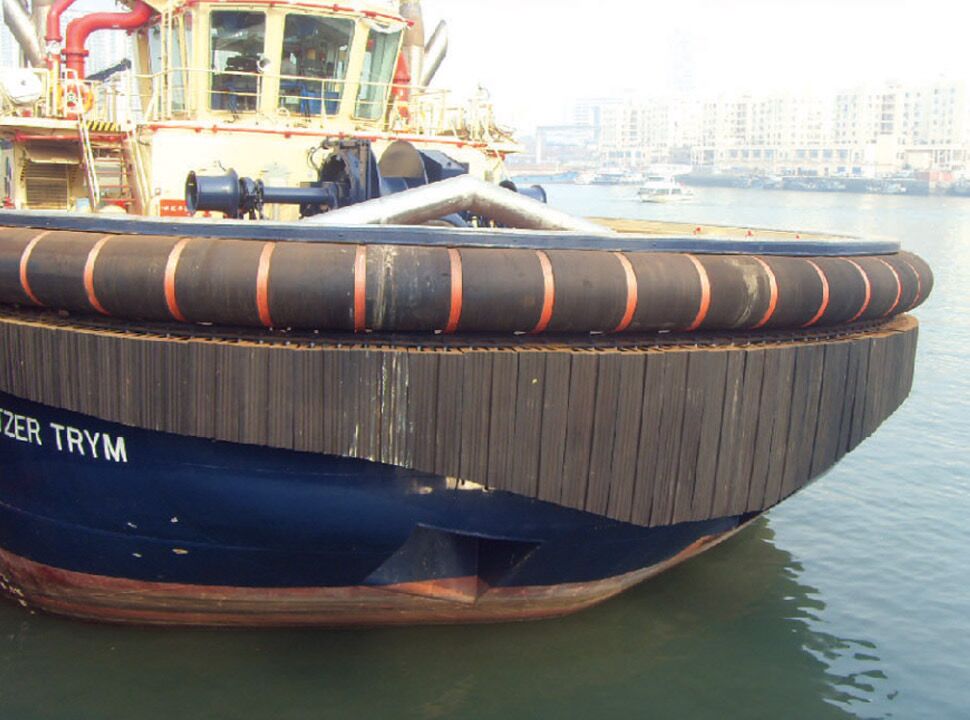
The Monseigneur-Blanche Terminal had served the Port of Sept-Îles for nearly 70 years before its comprehensive modernization . Situated on the North Shore of the Gulf of St. Lawrence, the terminal supports:
- Tugboat berthing and operations
- Regional maritime transport services
- Essential links to isolated coastal communities
- Access to the adjacent cruise terminal
The original infrastructure had deteriorated significantly, with safety closures and structural subsidence becoming increasingly common during autumn high tides . The $37-million project—jointly funded by the Government of Canada ($10 million), the Government of Quebec ($10 million), and the Port of Sept-Îles ($10 million)—included raising the terminal elevation, constructing three new pile-supported berths for tugboats, and modifying protective structures including riprap and concrete walls .
The fender configuration chosen for this project reflects an approach characteristic of Quebec maritime infrastructure, where vertically arranged cylindrical fenders are positioned in front of steel fender panels . This arrangement was specifically adapted for the Monseigneur-Blanche Terminal's tugboat operations, addressing several critical requirements:
Each of the three fender systems supplied by NANJING TAIDUN comprised the following components :
Primary Fender Units
- 16 Cylindrical Fenders per system
- Dimensions: Ø600 × 300mm, Length 4400mm
- Material: High-quality rubber compound
Supporting Steel Panels
- 5 steel panels per system
- Dimensions ranging from 2875-4000mm × 3440mm
- Designed for structural load distribution
Secondary Protection
- 16 Shear Cone Fenders per system
- Dimensions: 500 × 500 × 500mm
- Provide supplementary energy absorption and shear resistance
Mounting Hardware
- Complete mounting systems including chains and brackets
- Adjustable components for field installation variances
Cylindrical Fender Dimensions (Ø600 × 300mm, L4400mm)
The 600mm outer diameter with 300mm inner diameter follows the standard cylindrical fender convention where OD = 2 × ID . This ratio provides:
- Optimal balance between energy absorption capacity and reaction force
- Sufficient structural strength for repeated tugboat contact
- Manageable weight for maintenance operations
The 4400mm length was selected to provide coverage across the terminal's 4-5 meter tidal range . This extended length ensures effective fender contact regardless of water level variations—critical for a facility where tugboat operations continue around the clock in tidal waters.
Vertical Arrangement Strategy
The vertical orientation of cylindrical fenders in this application provides distinct advantages over horizontal configurations:
1. Wider coverage across tidal variations: The fender's length spans the vertical distance between high and low water levels, maintaining contact capability as water levels fluctuate
2. Adaptability to tugboat contact patterns: Tugboats present variable fender positions along their sides, and hull geometry creates further contact variation. The cylindrical profile accommodates these irregular contact scenarios without requiring precise alignment
3. Simplified maintenance access: The vertical mounting allows fenders to be lifted directly from their installed position and brought onto the quay for inspection or repair—no underwater work or complex rigging required
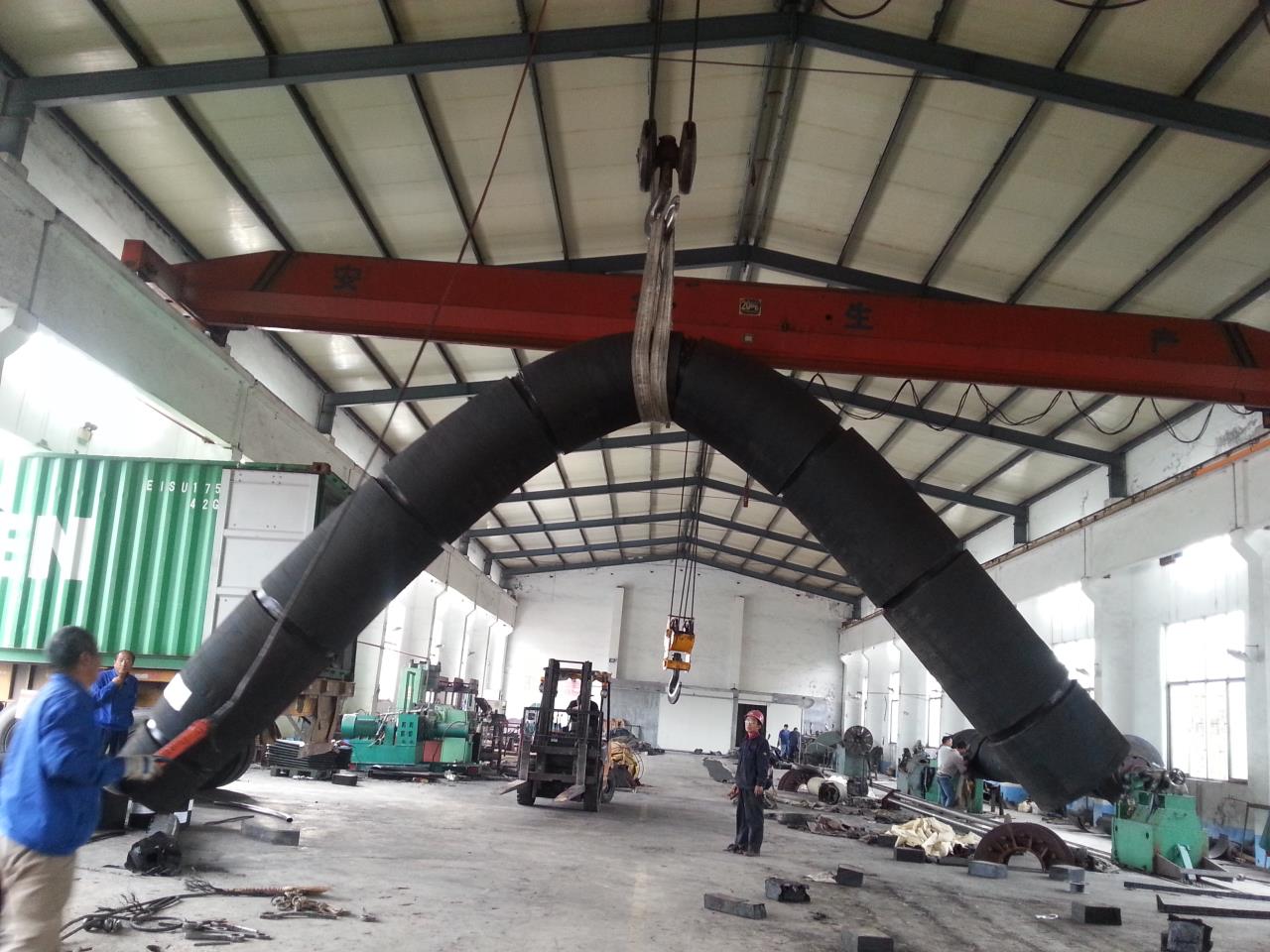
The Problem: The supporting piles for the fender panels were driven at an angle, meaning their final installed positions could vary from the theoretical geometry shown in design drawings . Traditional fixed connection points would have resulted in misaligned panels and compromised fender performance.
The Solution: NANJING TAIDUN incorporated adjustable brackets and slotted holes in the panel connections to provide flexibility during installation . This approach allowed field crews to accommodate actual pile positions without requiring costly rework or custom-fabricated connections.
Procurement Insight: When specifying fender systems for pile-supported structures, always include adjustability provisions in the mounting design. Field variances of 50-100mm are common even in well-executed pile driving operations. The modest additional cost of slotted connections is far less than the expense of field modifications or structural rework.
The Problem: Tugboats of different classes and configurations regularly use the terminal. Each vessel presents different fender sizes, positions, and hull geometries at the contact interface . A rigid fender system optimized for one tugboat type would perform poorly for others.
The Solution: The cylindrical fender geometry inherently accommodates this variability. Unlike profiled fenders (D-type, W-type) that require specific approach orientations, the round cross-section provides effective energy absorption from any contact angle and accommodates the varying contact patterns presented by different tugboat designs.
Performance Note: Cylindrical fenders are documented as providing "low reaction force, small surface pressure, and reasonable energy absorption" with "strong adaptability to roll and pitch when the ship is berthing" . These characteristics make them particularly well-suited for the dynamic contact conditions of tugboat operations.
The Problem: The Monseigneur-Blanche Terminal experiences tidal variations of approximately 4-5 meters . Fender systems must maintain effective protection across this full range—from low water to high water and all intermediate levels.
The Solution: The 4400mm cylindrical fender length provides continuous coverage across the tidal range. As water levels change, different sections of the fender contact the tugboat hull, ensuring protection is never compromised. This approach is more cost-effective than installing multiple shorter fenders at different elevations, which would require additional mounting hardware and increase maintenance complexity.
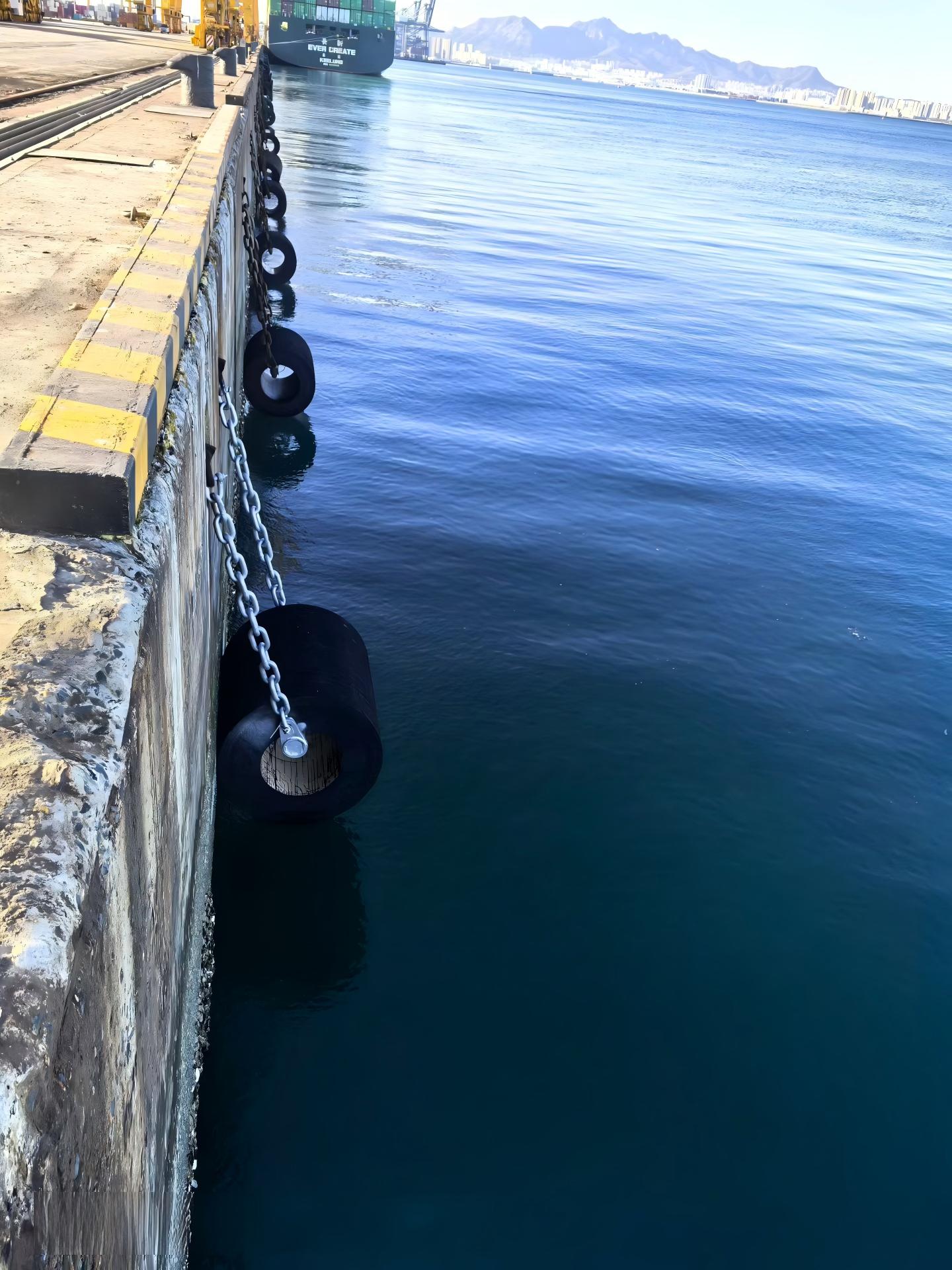
1. Verify Pile Positions and Tolerances
Before fender panel installation, conduct a comprehensive survey of actual pile positions. Document any deviations from design drawings and calculate the required adjustment ranges for panel connections.
2. Confirm Tidal Range and Water Level Data
Establish accurate high water and low water elevations for the site. The vertical fender length should provide coverage with safety margins at both extremes—typically 300-500mm of additional coverage beyond expected tidal limits.
3. Prepare Lifting and Positioning Equipment
Vertical cylindrical fenders can be heavy. Confirm that crane capacity and rigging arrangements are adequate for safe handling during installation .
Step 1: Install Support Panels
- Position steel panels on the pile-supported structure
- Use adjustable brackets and slotted holes for initial alignment
- Do not fully tighten connections until all panels are positioned
Step 2: Verify Panel Alignment
- Check panel verticality and horizontal spacing
- Confirm panel faces are aligned within acceptable tolerances
- Adjust brackets as needed to accommodate pile position variances
Step 3: Position Cylindrical Fenders
- Lift each fender into position in front of the steel panels
- Engage mounting chains or brackets (depending on configuration)
- Verify fender is vertically oriented and properly seated
Step 4: Install Secondary Fenders (if specified)
- Position SC (Shear Cone) fenders at designated locations
- Ensure proper contact with both panel and cylindrical fender
Step 5: Final Tightening and Verification
- Torque all connections to specified values
- Verify fender movement is within design parameters
- Conduct visual inspection of complete assembly
A significant advantage of the vertical cylindrical configuration is maintenance accessibility. According to the project documentation, the cylindrical fenders "can be lifted from their installed position" for servicing or repair . This feature:
- Eliminates the need for underwater inspection in most cases
- Allows visual assessment of fender condition from the quay
- Enables quick replacement if damage is detected
- Reduces downtime for the berth
Maintenance Recommendation: Schedule annual inspections of fender condition, including:
- Visual check for surface cracking or deformation
- Verification of chain or bracket integrity
- Assessment of fender position relative to design configuration
The vertical cylindrical configuration emerged as the optimal solution because it uniquely addresses the combination of:
1. Variable tugboat contact patterns
2. Significant tidal range
3. Maintenance accessibility requirements
4. Structural adaptability needs
This configuration is described as "characteristic of Quebec" maritime infrastructure, indicating it represents established regional best practice adapted from previous successful installations .
1. Prioritize Contact Variability Accommodation
Tugboat operations involve diverse vessel types and changing contact geometries. Fender systems for tug berths should be selected for their ability to perform effectively across this range, not just at a single design point.
2. Design for the Full Tidal Range
If your facility experiences significant tidal variation, ensure fender coverage extends across the complete water level range with appropriate safety margins. Vertical cylindrical configurations are particularly effective for this requirement.
3. Incorporate Installation Adjustability
Pile-supported structures will have geometric variances from theoretical design positions. Specify fender systems with adjustable connections to accommodate these field realities without costly modifications.
4. Plan for Maintenance Access
Select fender configurations that allow inspection and replacement from the quay whenever possible. The ability to lift cylindrical fenders from their installed position represents a significant operational advantage over configurations requiring underwater intervention.
5. Partner with Experienced Fender Engineers
The Monseigneur-Blanche Terminal project demonstrates the value of engaging specialized fender engineering expertise early in the design process. NANJING TAIDUN's involvement from design through installation ensured that the final configuration effectively addressed the project's unique challenges.
Vertical cylindrical fenders are rubber fender units with a round cross-section, installed in a vertical orientation in front of support panels. They are used for tugboat operations because their cylindrical shape accommodates variable contact points from different tugboat types, and their vertical arrangement provides coverage across changing water levels in tidal environments .
The fender system comprised 16 cylindrical fenders per system with dimensions of Ø600 × 300mm (outer diameter × inner diameter) and 4400mm length . The 600mm outer diameter and 300mm inner diameter follow the standard OD = 2 × ID convention for cylindrical fenders .
The Port of Sept-Îles experiences tidal variations of approximately 4-5 meters . The 4400mm fender length was selected to maintain effective contact across this range. As water levels change, different sections of the fender engage the tugboat hull, ensuring continuous protection without requiring multiple fender rows or complex adjustable mounting systems.
Yes—this is a significant advantage of the vertical configuration. The cylindrical fenders in this installation "can be lifted from their installed position" and brought onto the quay for servicing or repair . This eliminates the need for divers or underwater inspection equipment in most cases.
The primary challenge was pile position variances—the supporting piles were driven at an angle, causing their actual positions to differ from design drawings . SFT addressed this by using adjustable brackets and slotted holes in the panel connections, allowing field adjustments without custom fabrication or structural modifications .
Compared to pneumatic fenders, cylindrical fenders offer lower maintenance (no pressure monitoring required). Compared to D-type or W-type fenders, cylindrical fenders provide greater adaptability to variable contact angles. For tidal applications, vertical cylindrical arrangement offers broader coverage than horizontal configurations .
Custom fender systems like those supplied for the Monseigneur-Blanche Terminal typically require 8-12 weeks from order to delivery, depending on quantity, size, and customization requirements. Installation scheduling should account for this lead time plus 2-4 weeks for on-site installation .


