


Views: 224 Author: Nanjing Taidun Publish Time: 2026-07-03 Origin: Site
Content Menu
● Yokohama Fenders: What Global Buyers Need to Know
>> Why OEM buyers choose Taidun Marine first
● Why Nanjing Taidun Marine Is the Right OEM Partner
● How We Improve Buyer Confidence
● Industry Trends Shaping Yokohama Fenders
● What Buyers Should Evaluate Before Ordering
● Expert View: What Makes a Strong OEM Factory
● Practical Use Cases for Yokohama Fenders
● Why This Product Category Still Grows
● How Taidun Marine Supports Global Brands
● FAQ
>> 1. Are Yokohama fenders the same as pneumatic rubber fenders?
>> 2. Why should brand owners choose an OEM factory?
>> 3. What makes Taidun Marine different from a trading company?
>> 4. Where are Yokohama fenders commonly used?
>> 5. What should buyers check before placing an order?
>> 6. Can Taidun Marine support custom branding?
When global buyers search for yokohama fenders, they are usually looking for more than a product. They want a reliable OEM partner, stable quality, predictable lead times, and the confidence that every fender will perform in real marine environments. That is exactly where Nanjing Taidun Marine Equipment Engineering Co.,Ltd stands out: as a China-based OEM manufacturer focused on serving foreign brands, wholesalers, and production companies with marine rubber fenders, mooring equipment, and anchoring solutions.
In today's marine protection market, the word "Yokohama fender" is often used as a practical industry term for pneumatic rubber fenders designed for ship-to-ship transfer, ship-to-dock protection, and heavy-duty berthing operations. For brand owners and importers, the key question is not only "What is a Yokohama fender?" but also "Who can manufacture it to the required standard, consistently, and at scale?"
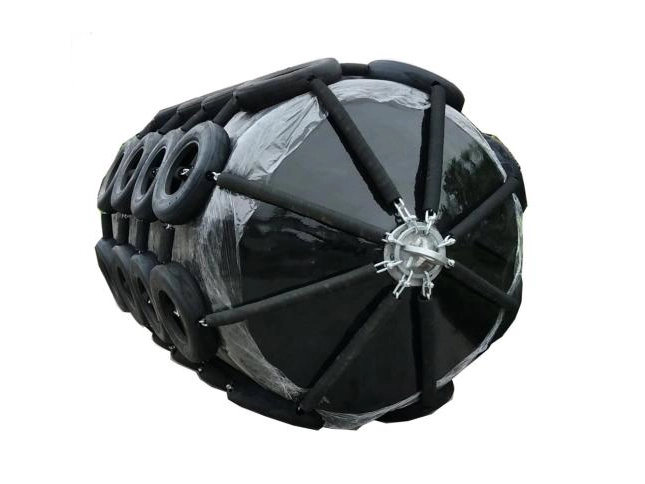
At Taidun Marine, we understand that OEM procurement is about more than production. It is about translating a brand's specifications into a dependable marine product that satisfies technical, commercial, and market expectations. That means managing material selection, dimensional accuracy, air-tight performance, surface durability, packaging, and private-label requirements with discipline and consistency.
For international buyers, this matters because marine equipment is not a cosmetic product. A fender failure can damage vessels, delay operations, and create avoidable cost. Our role is to help reduce that risk through manufacturing control, practical engineering support, and a service model built for long-term OEM cooperation.
Yokohama fenders are inflatable marine rubber fenders used to absorb energy during vessel berthing and ship-to-ship contact. They are widely valued because they are flexible, easy to deploy, and suitable for many operating environments, including ports, offshore projects, terminals, and naval use.
In practical terms, buyers choose them for three reasons:
- High energy absorption, which helps reduce impact forces.
- Low reaction force, which helps protect ship hulls and quay structures.
- Portability, since pneumatic fenders can be stored, transported, and installed efficiently.
Although the market uses the term "Yokohama fender" broadly, serious buyers should evaluate the actual manufacturing capability behind the product. The label alone does not guarantee performance, longevity, or compliance with project requirements.
Nanjing Taidun Marine Equipment Engineering Co.,Ltd is positioned for buyers who need a manufacturing partner, not just a trading intermediary. Our focus is OEM service for overseas brands, wholesalers, and production companies that require marine equipment tailored to their commercial model.
What sets us apart is our ability to combine product knowledge with OEM execution. We work across marine rubber fenders, mooring bollards, and anchoring products, which gives us a broader understanding of how berthing systems interact in real-world port and ship applications.
- Custom branding support, including private-label packaging and product identity requirements.
- Specification-driven manufacturing, suitable for brand owners and project buyers.
- Marine equipment expertise, not just isolated product sourcing.
- Export-oriented service mindset, designed for international business communication and delivery expectations.
For buyers, this means one partner can support product consistency, technical clarification, and commercial scalability.
Many global buyers worry about the same issues: unstable quality, unclear communication, inconsistent molds or materials, and suppliers that disappear after the first order. These problems are especially costly in marine equipment because customers expect long service life and dependable field performance.
At Taidun Marine, we address these concerns by focusing on practical execution:
1. Clear technical alignment before production starts.
2. Controlled manufacturing workflow to reduce variation.
3. Export-ready communication for easier cross-border cooperation.
4. OEM flexibility for different brand positioning and market segments.
This is especially important for buyers serving ports, shipyards, offshore operators, and distributors that cannot afford product inconsistency.
The global marine protection market is becoming more demanding. Buyers are looking for products that can support larger vessels, faster turnaround, and stricter safety expectations. At the same time, OEM customers want suppliers who can deliver stable quality without creating excessive lead times or complexity.
A few trends are especially important:
- Higher performance expectations in ship-to-ship transfer operations.
- More private-label demand from regional distributors and marine brands.
- Greater attention to certification and traceability in procurement.
- Longer lifecycle value, as buyers increasingly compare total cost of ownership instead of only initial price.
For OEM manufacturers, this means the winning strategy is no longer just low cost. It is reliable manufacturing plus market-ready service.
Before placing an order for Yokohama fenders, buyers should review more than price. A lower quotation can become expensive if the product fails to match expected performance or branding standards.
| Buyer Question | Why It Matters |
|---|---|
| Can the supplier provide OEM/private label service? | Protects your brand identity and market positioning. |
| Is the product built for marine duty, not generic rubber use? | Marine environments demand higher durability and performance. |
| Does the supplier understand export communication and documentation? | Reduces delays and misunderstanding. |
| Can the supplier support consistent repeat orders? | Important for distributors and long-term projects. |
| Does the supplier offer related marine products? | Helps streamline sourcing and system integration. |
A disciplined review process helps buyers avoid suppliers that look attractive online but cannot support long-term business.
From an industry perspective, a strong OEM factory is not defined only by capacity. It is defined by repeatability, responsiveness, and the ability to protect the buyer's commercial reputation.
In marine equipment, that means the factory should be able to:
- Maintain product consistency across batches.
- Adapt to customer-specific requirements.
- Communicate clearly during sampling and production.
- Support realistic delivery planning.
- Understand how end users evaluate performance in the field.
This is why many international buyers prefer to work directly with a specialized manufacturer like Nanjing Taidun Marine Equipment Engineering Co.,Ltd rather than relying only on generic suppliers.
Yokohama fenders are widely used across marine operations where controlled impact protection is required. Their flexibility makes them suitable for different vessel sizes and port conditions.
Common use cases include:
- Ship-to-ship transfer operations.
- Port and terminal berthing protection.
- Offshore support environments.
- Temporary docking and emergency marine operations.
- Military and special-purpose marine protection projects.
For OEM buyers, these use cases matter because product positioning should match real customer demand. A distributor selling to ports may need different packaging, messaging, and specification emphasis than a brand targeting offshore contractors.
The continued use of Yokohama fenders reflects a simple market reality: ports and vessels still need dependable protection solutions that are practical, scalable, and proven. Even as marine technology evolves, pneumatic fenders remain relevant because they combine mobility, efficiency, and performance in a single product category.
That creates opportunity for OEM suppliers that can support international brands with reliable manufacturing and professional service. For Taidun Marine, this is not just a product line. It is part of a broader strategy to help overseas clients build trust in their own market.
If you are a brand owner, wholesaler, or manufacturer seeking OEM supply, the process should be straightforward and professional. At Nanjing Taidun Marine Equipment Engineering Co.,Ltd, we aim to support you from inquiry to delivery with a service model built for export buyers.
1. Share your target market, specification, and branding needs.
2. Review product structure, application, and OEM requirements.
3. Align on sample, packaging, and production expectations.
4. Move into manufacturing with clear communication.
5. Support repeat business with stable order management.
This approach helps global buyers reduce sourcing friction and build a stronger product line around a dependable marine equipment partner.
Yes. In common industry usage, "Yokohama fenders" usually refers to pneumatic rubber fenders used for marine berthing and ship protection.
An OEM factory helps brand owners control product identity, pricing strategy, and long-term supply consistency while keeping the brand in front of the customer.
Nanjing Taidun Marine Equipment Engineering Co.,Ltd focuses on manufacturing and OEM service, which gives buyers more control over product specification, consistency, and branding.
They are used in ship-to-ship transfer, port berthing, offshore operations, and other marine protection applications.
Buyers should confirm OEM capability, product suitability, export communication quality, repeat-order stability, and the supplier's experience in marine equipment.
Yes. Taidun Marine is structured to support OEM requirements for overseas brands, wholesalers, and manufacturers.

1. Made-in-China supplier listings for Yokohama rubber fender manufacturers and OEM capability: [Yokohama Rubber Fender Manufacturers & Suppliers]
2. Taidun Marine article page: [Yokohama Fenders: China OEM Excellence for Global Marine Brands]
3. Taidun Marine article page: [Fender Ship Excellence: Nanjing Taidun's OEM Mastery in Marine Protection]
4. Made-in-China category page for Yokohama-type pneumatic rubber fenders: [Pneumatic Rubber Fender]
5. Made-in-China product listing showing Yokohama pneumatic fender market availability: [Pneumatic Rubber Yokohama Fender Price]
Hot Tags: China, Global, OEM, private label, manufacturers, factory, suppliers, manufacturing company


