

Views: 288 Author: NANJING TAIDUN Publish Time: 2026-09-20 Origin: Site
Content Menu
● Introduction: Why Bulk Cargo Terminals Demand More from Their Fender Systems
● The Terminal Challenge: When 12-Year-Old Fenders Reach Their Limit
>> Operational Symptoms of Fender Degradation
>> The Engineering Requirement
● The Solution: Cone Fender System with UHMW-PE Frontal Panels
>> Why Cone Fenders Were Selected
>> Understanding Cone Fender Performance Characteristics
● Installation Process: Minimizing Operational Disruption
>> Critical Installation Considerations
● Performance After Installation: 12-Month Monitoring Results
>> Long-Term Durability Lessons from Comparable Projects
● The OEM Manufacturing Perspective: What Bulk Terminals Should Verify
>> Rubber Compound Quality: The Foundation
>> Steel Panel Fabrication: The Forgotten Risk
>> Independent Testing: Beyond Factory Certification
● Market Context: Why Fender Quality Matters More Than Ever
>> Competitive Positioning for OEM Manufacturers
● Conclusion: Cone Fenders as Strategic Port Infrastructure
● Frequently Asked Questions (FAQ)
>> 1. What is the typical service life of a cone fender system in a bulk cargo terminal?
>> 2. How do cone fenders differ from cylindrical fenders in bulk cargo applications?
>> 3. What independent testing should I require for cone fender procurement?
>> 4. What is the role of UHMW-PE facing pads in cone fender systems?
>> 5. How do I verify the quality of steel panels and coating systems for cone fenders?
>> 6. What are the key installation considerations for cone fenders at bulk cargo terminals?
Bulk cargo terminals operate under conditions that punish fender systems in ways container terminals rarely experience. High-frequency berthing cycles, variable vessel sizes, and the constant threat of quay wall damage create a maintenance burden that escalates quietly until it becomes an operational crisis.
I have seen this pattern repeat across terminals in Southeast Asia, South America, and the Middle East. The story usually follows the same arc: a fender system installed a decade ago begins showing visible cracks and permanent deformation. Energy absorption drops. Berthing impact forces increase. Maintenance costs climb. Then a larger vessel arrives, and the system's inadequacy becomes undeniable.
This case study examines how a bulk cargo terminal in Southeast Asia addressed these challenges through a cone fender system upgrade, and what OEM manufacturers like NANJING TAIDUN MARINE EQUIPMENT ENGINEERING CO., LTD learned from supporting such projects globally.
A bulk cargo terminal in Southeast Asia planned to upgrade its berth protection system during a quay expansion project. The terminal handled bulk carriers ranging from 10,000 DWT to 50,000 DWT with frequent vessel berthing operations throughout the year.
The existing fender system had been in service for more than 12 years. As vessel sizes increased, the old fenders could no longer provide sufficient energy absorption.
The terminal's engineering team documented several warning signs:
- Visible cracks on rubber fender bodies
- Permanent deformation reducing stand-off distance
- Inconsistent energy absorption during berthing
- Increased frequency of quay wall inspections due to impact concerns
These symptoms are characteristic of compression set—the permanent deformation that occurs when rubber compounds lose their elastic recovery properties over time. According to industry data, compression set values above 12–15% indicate significant performance degradation.
The terminal required a fender system with:
- High energy absorption for larger vessels
- Low reaction force to protect the quay structure
- Long service life with minimal maintenance
- Adaptability to different vessel sizes and tidal conditions
After reviewing vessel data, berth dimensions, tidal conditions, and berthing energy calculations, the engineering team selected cone fenders with UHMW-PE frontal panels.
Cone fenders are widely used at commercial ports, bulk cargo terminals, and oil and gas facilities because they offer:
- High energy absorption efficiency
- Low reaction force
- Stable performance under high compression
- Excellent suitability for large vessel berths
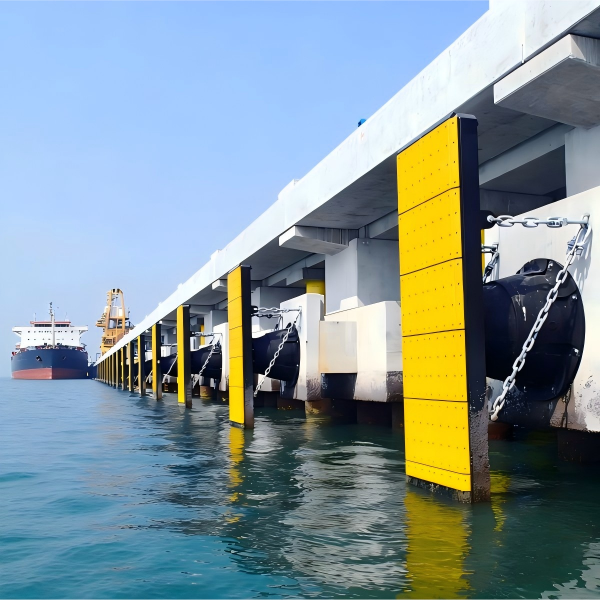
| Parameter | Specification |
|---|---|
| Fender Type | Cone Fender System |
| Application | Bulk Cargo Berth |
| Vessel Range | 10,000–50,000 DWT Bulk Carriers |
| Front Panel | Steel panel with UHMW-PE facing pads |
| Installation Location | Quay Wall Berthing Line |
Cone fenders achieve their performance advantage through a conical rubber body that compresses progressively under load. Unlike cylindrical fenders, the cone geometry provides:
- Uniform stress distribution across the fender body
- Stable performance even at large compression angles
- Excellent shear strength for angled berthing
- Overload stops for resistance to over-compression
The UHMW-PE facing pads serve a critical function: they reduce friction between the fender panel and the vessel hull, minimizing coating damage during berthing and allowing the panel to rotate freely to accommodate vessel movement.
The installation was completed during a scheduled maintenance period to minimize disruption to terminal operations.
The process included:
1. Removal of damaged fender units — Careful extraction to assess anchor condition
2. Inspection of quay wall anchor points — Verifying structural integrity
3. Installation of new cone fenders and frontal panels — Using modular assembly
4. Alignment checks and load verification — Confirming proper stand-off distance
5. Final commissioning before berth reopening — Performance verification
The modular design reduced installation time and minimized disruption to terminal operations.
For OEM manufacturers and installation contractors, several factors determine long-term performance:
- Anchor alignment: Pre-installed cast-in anchors must match fender base dimensions precisely
- Panel orientation: Non-tilted designs ensure any impact point remains perpendicular to the frontal panel
- Chain systems: Tension, shear, and weight chains must be properly sized and routed
- Coating protection: Any paint damage during installation must be repaired immediately to prevent corrosion initiation
Following commissioning, the terminal monitored berth performance for twelve months. The results validated the engineering decision.
| Performance Indicator | Before Upgrade | After Upgrade |
|---|---|---|
| Fender Damage Incidents | Several per year | None reported |
| Unplanned Maintenance | Frequent | Significantly reduced |
| Berthing Stability | Moderate | Improved |
| Vessel Protection | Standard | Enhanced |
| Quay Wall Protection | Limited | Improved |
A comparable cone fender installation at the COMPAS Boscoal terminal in Buenaventura, Colombia provides long-term validation. More than ten years after commissioning, the Cone Fender Systems remain in service.
The inspection revealed:
- No visible cracking in rubber units
- No structural degradation
- Minimal corrosion on steel components and chains
- Coating system still providing needed protection
This durability reinforces a critical principle for bulk cargo terminals: well-engineered anticorrosion concepts and proper material selection determine service life more than initial price.
As a manufacturer serving global brands and wholesalers, NANJING TAIDUN emphasizes several quality control points that directly impact cone fender performance in bulk cargo applications.
The rubber compound determines how a fender performs over thousands of compression cycles. For bulk cargo terminals with high berthing frequency, fatigue resistance is paramount.
Key verification points for buyers:
- Tensile strength: Minimum 13.8 MPa per ASTM D412 standards
- Elongation: Minimum 400% ultimate elongation
- Compression set: Target values ≤8% for extended service life
- Hardness: 75 ± 5 Shore A for optimal energy absorption
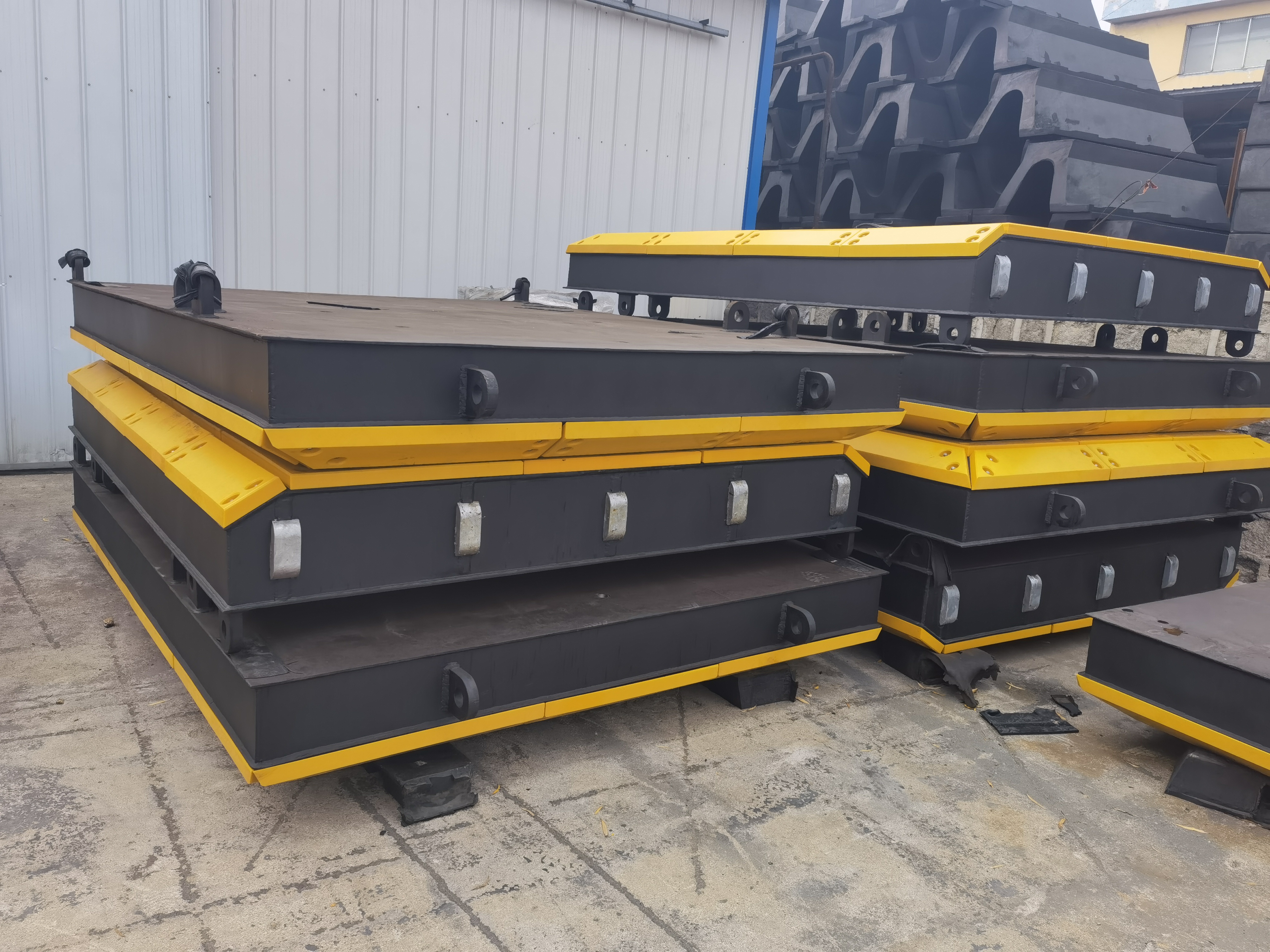
Fender panels are a critical component where failures often originate. A well-designed panel can experience catastrophic failure if fabrication quality is poor.
Fabrication requirements:
- ISO 9001-certified steel panel manufacturer
- Certified welding processes per EN1090 or ASME standards
- Detailed Inspection and Test Plan (ITP) approved before production
- Coating system applied in a conditioned paint workshop
Critical coating inspection points:
- Surface preparation: degreasing, blasting, profile verification
- Environmental conditions during application
- Dry film thickness measurement
- Holiday detection and pull-off testing
The fender industry has a testing credibility problem. Most performance verification testing occurs at the manufacturer's own facility, with data that is not independently certified.
For bulk cargo terminals specifying cone fenders:
- Require independent laboratory testing for performance verification
- Demand Thermogravimetric Analysis (TGA) to verify rubber compound consistency
- Specify third-party witnessing (BV, SGS, ABS, DNV) for critical tests
> *"Supplier results and certificates based on factory testing, even if witnessed by a third party, should not be accepted as truly independently verified."*
The marine fender market is undergoing a fundamental shift toward lifecycle-focused procurement.
- Aging fender replacement demand: Many terminals worldwide are operating fender systems installed 10–20 years ago
- Increasing vessel sizes: Larger bulk carriers require higher energy absorption
- Automated terminal integration: IoT and condition monitoring systems require reliable fender performance data
- Regulatory pressure: PIANC WG211 2024 guidelines raise the bar for testing and documentation
For Chinese manufacturers competing globally, success increasingly depends on:
- Documented testing evidence — not just certificates, but verifiable data
- Material traceability — from raw rubber compound to finished product
- Customization capability — adapting designs to specific project requirements
- Full-system supply — fenders, panels, chains, anchors, and installation support
The Southeast Asian bulk cargo terminal case demonstrates that cone fender selection is not a commodity purchase—it is a strategic infrastructure decision with 10–20 year consequences.
The evidence from comparable installations supports several conclusions:
1. Cone fenders deliver reliable performance for bulk cargo applications when properly specified
2. Material quality and fabrication standards determine service life more than initial cost
3. Independent testing and documentation protect against performance failures
4. Corrosion protection systems are as critical as rubber compound quality
As NANJING TAIDUN MARINE EQUIPMENT ENGINEERING CO., LTD continues serving global OEM partners, we remain committed to the manufacturing. discipline and quality verification that bulk cargo terminals depend on.
Planning a cone fender upgrade or new bulk cargo terminal project?
Contact NANJING TAIDUN for OEM manufacturing support:
- Email: service@taidunmarine.com
- Website: www.taidunmarine.com
- Services: Cone fender OEM production, steel panel fabrication, independent testing coordination, material traceability documentation
1. Pile Buck Magazine. "10 Years in Service: SFT Cone Fender Systems at COMPAS Boscoal on Colombia's Pacific Coast." [https://pilebuck.com/sft-cone-fender-systems-compas-boscoal/]
2. IndexBox. "Port-Side Rubber Dock Fenders Market Growth to 2035." [https://www.indexbox.io/blog/port-side-rubber-dock-fenders-market-to-reach-135-150-index-by-2035-on-retrofit-wave/]
3. Government of Canada. "Marine Fender Specification." [https://canadabuys.canada.ca/documents/pub/att/2017/07/04/a2ab2496cc97f24b8dabe9ee7e5515d3/ABES.PROD.PW_PWY.B026.E8060.EBSU006.PDF]
With proper specification, quality manufacturing, and correct installation, cone fender systems can deliver 15–20 years of service life in bulk cargo applications. The COMPAS Boscoal terminal case demonstrated no visible cracking or structural degradation after 10+ years of operation. Key factors determining service life include rubber compound quality (compression set values), corrosion protection systems, and berthing frequency.
Cone fenders offer several advantages over cylindrical designs for bulk cargo terminals:
- Higher energy absorption per unit weight
- Lower reaction force for a given energy absorption
- Stable performance under angled berthing (up to 15–20°)
- Better shear resistance due to conical geometry
Cylindrical fenders, while simpler, often lack sufficient energy absorption capacity for modern bulk carriers and are more prone to sliding friction issues.
For bulk cargo terminal projects, demand:
- Independent laboratory performance verification (not factory testing)
- Thermogravimetric Analysis (TGA) to verify rubber compound consistency
- Third-party witnessing (BV, SGS, ABS, DNV, LR) for compression tests
- Material certificates for rubber compound and steel components
- Coating thickness verification reports for steel panels
Factory testing, even with third-party witnessing, is not equivalent to true independent verification.
UHMW-PE (Ultra-High Molecular Weight Polyethylene) facing pads serve multiple functions:
- Reduce friction between the fender panel and vessel hull
- Minimize coating damage during berthing operations
- Allow panel rotation to accommodate vessel movement
- Extend panel service life through wear resistance
The molecular weight and material grade of UHMW-PE significantly affect performance and should be specified per PIANC WG211 guidelines.
Steel panel quality verification should include:
- ISO 9001-certified manufacturer with certified welding processes (EN1090 or ASME)
- Approved Inspection and Test Plan (ITP) covering every critical fabrication step
- Coating inspection: surface preparation, environmental conditions, dry film thickness, holiday detection
For marine environments, a two-coat epoxy system with 100–150 μm dry film thickness per coat is standard, with total DFT typically exceeding 300 μm.
Critical installation factors include:
- Anchor alignment: Pre-installed cast-in anchors must match fender base dimensions
- Panel orientation: Non-tilted designs ensure perpendicular impact contact
- Chain system routing: Tension, shear, and weight chains properly sized
- Coating protection: Immediate repair of any paint damage during handling
Modular pre-assembly at the factory reduces on-site installation time and minimizes operational disruption.


