

Views: 285 Author: NANJING TAIDUN Publish Time: 2026-10-01 Origin: Site
Content Menu
● Introduction: Why Fender Selection Defines Marine Protection Success
● What Are Cylindrical Rubber Fenders? Technical Foundation and Core Applications
>> Design Architecture: Simplicity as Competitive Advantage
>> Energy Absorption and Reaction Force Profile
>> Primary Application Domains
● The Competitive Landscape: Comparing Cylindrical Fenders to Major Alternatives
>> D-Type Rubber Fenders: Angular Efficiency for Constrained Spaces
>> W-Type (Wing) Fenders: Maximum Energy for Large Vessels
>> Block-Type Fenders: Modular Versatility
>> Pneumatic (Floating) Fenders: The Offshore Standard
● Application-Based Selection Framework: Matching Fender Type to Operational Requirements
>> Step-by-Step Decision Process
>> Comparative Application Matrix
● Advanced Technical Insights: New Research on Cylindrical Fender Optimization (Added Value Section)
>> Structural Modification for Enhanced Performance
>> Manufacturing Quality: The Hidden Differentiator
● OEM Procurement Considerations: What B2B Buyers Must Evaluate
>> Supplier Capability Assessment Framework
>> 1. Are cylindrical fenders suitable for all vessel sizes?
>> 2. What is the maximum length available for cylindrical fenders?
>> 3. How do I determine the correct cylindrical fender diameter?
>> 4. What maintenance do cylindrical fenders require?
>> 5. Can cylindrical fenders be used in cold climates?
>> 6. What is the typical lead time for OEM cylindrical fender orders?
>> 7. How do cylindrical fenders compare in cost to other types?
>> 8. Are there ISO standards for cylindrical rubber fenders?
● Conclusion: Strategic Fender Selection for Optimal Marine Protection
In the global marine rubber fender market, cylindrical fenders occupy a unique position as the most versatile and cost-effective solution for a wide range of berthing applications . But here's the challenge facing procurement managers, port engineers, and shipyard specifiers: with so many fender types available—D-type, W-type, block, pneumatic, and more—how do you determine which one delivers the optimal balance of energy absorption, reaction force, and total cost of ownership for your specific operation?
The answer isn't universal. A cylindrical fender that performs flawlessly on a general cargo berth may be entirely wrong for a high-speed ferry terminal or a tugboat push-bow application. Understanding the comparative advantages and limitations of each fender type is essential for making informed procurement decisions.
This guide provides a data-driven, application-focused comparison of cylindrical fenders against their major alternatives. We'll examine technical specifications, real-world performance characteristics, and procurement considerations that impact your bottom line. Whether you're a port authority evaluating berth upgrades, a shipyard sourcing OEM components, or a marine equipment distributor building your product portfolio, this analysis will give you the competitive intelligence needed to specify with confidence.
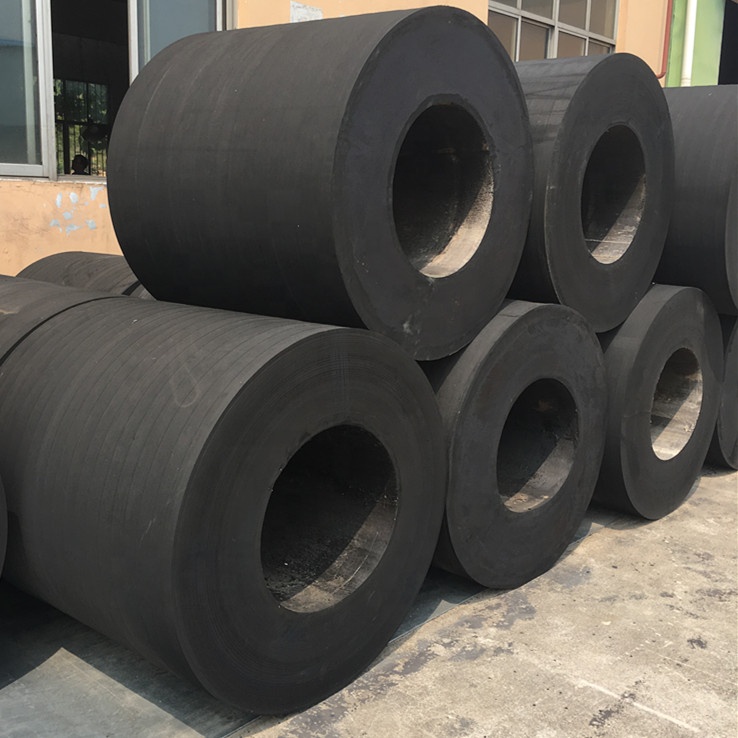
Cylindrical rubber fenders feature a fundamentally simple design: a hollow, round rubber tube with an inner diameter typically equal to half the outer diameter . This symmetrical geometry provides inherent benefits that more complex profiles cannot match:
- Multi-directional impact protection: Effective from any approach angle, unlike angular profiles that require specific orientation
- Even wear distribution: The round surface allows rotation during service, extending operational life
- Simplified installation: Chain suspension, festooning, or direct bolting all work effectively
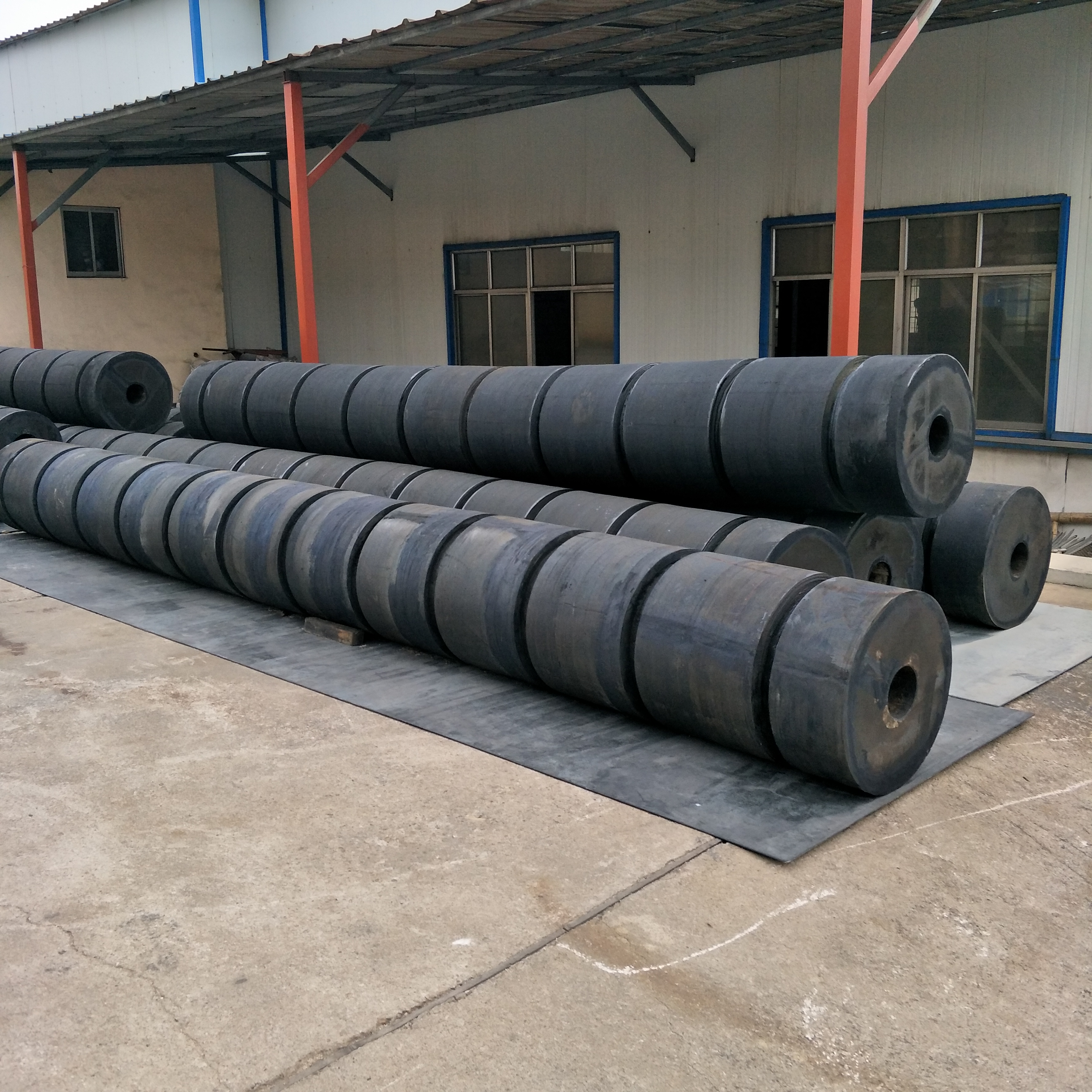
Standard dimensional ranges for cylindrical fenders extend from small harbor applications (OD 100mm) to massive port installations (OD 3,000mm+), with maximum continuous lengths reaching 20 meters in advanced manufacturing facilities .
Cylindrical fenders are classified as solid rubber fenders (as opposed to pneumatic or foam-filled types). Their energy absorption occurs through elastic deformation of the rubber compound upon impact, with progressive resistance as deflection increases .
Key performance characteristics:
| Parameter | Typical Performance | Implication |
|---|---|---|
| Energy Absorption (E) | Moderate per unit size | Requires adequate fender dimensions for high-energy applications |
| Reaction Force (R) | Relatively low for given deflection | Gentle on both vessel and structure |
| E/R Ratio | Reasonable efficiency | Balanced performance for most general applications |
Critical insight: Cylindrical fenders provide moderate surface pressure and excel when the priority is protecting the vessel hull without excessive reaction loads on the berth structure . For very large vessels or high-speed berthing, multiple cylindrical fenders or alternative profiles may be required.
Cylindrical fenders dominate in these operational contexts:
1. General cargo berths: Moderate vessel sizes, mixed traffic
2. Tugboat bow/stern protection: The most widely used tug fender type globally
3. Ship-to-ship (STS) operations: Floating cylindrical configurations for offshore transfers
4. Retrofit/upgrade projects: Simple installation suits existing structures
5. Tidal-range berths: Flexible mounting accommodates water level changes
Real-world validation: Damen Shipyards specifies cylindrical fendering on tug bows specifically for its ability to "gently absorb the contact between the assisted vessel and the tug," with typical dimensions of 800mm OD × 450mm ID for main bow protection .
Design profile: D-shaped cross-section with a flat back for direct mounting to vertical surfaces.
Comparison with cylindrical:
Procurement insight: D-fenders are cost-effective for linear quay protection where tidal variation is minimal. Cylindrical fenders win when mounting flexibility or tidal accommodation is required .
Design profile: W-shaped (or double-V) cross-section designed for high energy absorption with controlled reaction force.
Comparison with cylindrical:
| Aspect | Cylindrical | W-Type |
|---|---|---|
| Energy Absorption | Moderate | High (geometric advantage) |
| Reaction Force | Low | Moderate to high |
| Vessel Size | Small to medium | Large to very large |
| Application | General purpose, tugs | VLCC terminals, high-speed berthing |
| Cost per Unit | Lower | Higher |
Critical distinction: Damen uses W-block fenders on tugs specifically for "spreading the total force on the hull of the assisted vessel," achieving maximum pressure below 20 t/m² during push operations . Cylindrical fenders serve a different function—gentle bow contact absorption.
Design profile: Rectangular or square rubber blocks, often with internal cavities for controlled compression.
Comparison with cylindrical:
- Advantage: Scalable to very large sizes; customizable energy absorption
- Limitation: Higher reaction forces; more complex mounting
- Best for: High-energy, large-vessel berths where space permits
- Cost profile: Higher initial investment, potentially longer service life
Design profile: Air-filled rubber structures, typically cylindrical in form but functionally distinct from solid cylindrical fenders.
Comparison with solid cylindrical:
| Aspect | Cylindrical (Solid) | Pneumatic |
|---|---|---|
| Energy Absorption | Lower per unit size | Very high (air compression) |
| Reaction Force | Moderate | Very low |
| Application | Fixed berths, tugs | STS operations, large vessels |
| Maintenance | Low | Pressure monitoring required |
| Cost | Lower | Higher |
Market context: A 2026 market report segments marine rubber fenders into D-type, conical, W-type, square, arch/cylindrical, and other categories, reflecting the diversity of application-specific solutions .
Step 1: Define Vessel Characteristics
- Displacement tonnage: Determines energy absorption requirement
- Hull geometry: Flared hulls favor cylindrical (multi-directional); flat sides suit D-type
- Berthing frequency: High frequency justifies premium durability
Step 2: Assess Berthing Conditions
- Approach velocity: Higher speed = higher energy demand
- Tidal range: Large variation favors suspended cylindrical fenders
- Environmental exposure: UV, temperature extremes, chemical exposure
Step 3: Evaluate Structural Constraints
- Mounting surface: Flat quay → D-type viable; curved or uneven → cylindrical
- Load-bearing capacity: Cylindrical distributes load over larger area
- Retrofit vs. new build: Cylindrical excels in retrofit scenarios
Step 4: Calculate Energy and Reaction Requirements
The fundamental formula for berthing energy:
E = ½ × M × V⊃2; × Ce
Where:
- M = Vessel mass + added mass (typically 1.5-2.0× displacement)
- V = Approach velocity (m/s)
- Ce = Eccentricity coefficient (accounts for berthing angle)
Practical benchmark: For a vessel with fender factor (E/R ratio) of 3 or lower, a double-fender system with cylindrical fenders may be more cost-effective than a single high-capacity alternative .
Recent research (2023) published in *Energies* journal investigated the impact of adding structural holes to cylindrical fender designs. Key findings :
- Baseline fender (100mm × 50mm × 500mm): Reaction force 36 kN, energy absorption 819 J
- With 8 holes (Ø5mm): Reaction force reduced to 32 kN, energy absorption maintained at 829 J
- With 8 holes (Ø10mm): Reaction force reduced to 28 kN, but energy absorption dropped to 698 J
Procurement implication: Manufacturers offering optimized hole configurations can deliver lower reaction forces without significant energy absorption loss—valuable for protecting sensitive hulls or lightweight structures.
Cylindrical fender production varies dramatically in sophistication. Leading Chinese manufacturers now operate automatic production facilities that integrate rubber mixing, extrusion, sheet winding, and vulcanization into a continuous process .
Key quality indicators for OEM procurement:
1. Vulcanization capacity: Tank sizes determine maximum fender length (e.g., 21-meter tanks enable 20-meter fenders)
2. Groove cutting precision: Automated systems reduce end-cracking compared to manual methods
3. Material traceability: Palletized, color-coded raw materials ensure batch consistency
Quality control benchmark: For critical applications, require 30-minute air-leakage tests at initial pressure and 10-minute hydrostatic pressure tests at 200-250 kPa .
For distributors, shipyards, and port authorities sourcing cylindrical fenders through OEM channels, evaluate:
Cylindrical fender pricing is driven by:
1. Rubber volume: Larger diameter/length = higher material cost
2. Compound quality: Natural rubber vs. synthetic blends
3. Reinforcement: Additional layers for higher performance
4. Testing/certification: Third-party inspection adds 5-15% to unit cost
5. Order quantity: Volume discounts typically begin at 20+ units
Important procurement insight: For energy-absorbing requirements with fender factor of 3 or lower, a double-fender system of smaller cylindrical fenders may cost less than a single high-capacity alternative—despite higher maintenance costs .
Cylindrical fenders are ideal for small to medium vessels and general-purpose applications. For very large vessels (VLCCs, large bulk carriers), W-type or pneumatic fenders provide superior energy absorption. However, multiple cylindrical fenders can be deployed for larger vessels where reaction force must be minimized .
Advanced manufacturing facilities with 21-meter vulcanization tanks can produce cylindrical fenders up to 20 meters in continuous length with diameters up to 1,200mm . Standard production typically ranges from 2-10 meters.
Diameter selection depends on required energy absorption and available mounting space. Standard diameters range from 100mm to 3,000mm+. As a rule of thumb, larger diameters provide greater energy absorption but may require more substantial support structures .
Minimal maintenance is a key advantage. Routine tasks include: visual inspection for cracks/cuts, chain/strap inspection for corrosion, and rotation to distribute wear evenly . No inflation or pressure monitoring is required (unlike pneumatic fenders).
Yes, with appropriate rubber compound selection. Standard compounds maintain flexibility down to -25°C. For Arctic operations, specify low-temperature formulations that prevent embrittlement and cracking .
Standard sizes from stock: 1-2 weeks. Custom configurations: 4-8 weeks. Large OEM orders (100+ units or specialized dimensions): 8-12 weeks. Always confirm production scheduling during procurement planning.
Cylindrical fenders typically offer the best value for general-purpose applications . They cost less than W-type or pneumatic alternatives for equivalent energy absorption in moderate-demand scenarios. However, for high-energy applications, the larger cylindrical fenders required may narrow the cost gap .
Yes. ISO 17357 covers pneumatic fenders specifically . Solid rubber fenders (including cylindrical) are governed by various national and industry standards, with key parameters including rubber compound specifications, compression set limits, and ozone resistance requirements .
The choice between cylindrical fenders and alternative types is not about finding a universal winner—it's about matching fender characteristics to operational requirements. Cylindrical fenders excel when you need:
- Multi-directional protection with simple installation
- Tidal accommodation through flexible mounting
- Gentle contact for tug operations and smaller vessels
- Cost-effective general-purpose berthing protection
For high-energy, large-vessel applications, W-type or pneumatic alternatives deliver superior performance. For linear quay protection, D-type fenders may be more space-efficient.
The procurement bottom line: Specify based on calculated energy requirements, vessel characteristics, and total cost of ownership—not brand loyalty or habit. Engage manufacturers who can provide performance curves, test certifications, and application engineering support.
Ready to optimize your fender specification? Contact our engineering team for a free application assessment and performance calculation tailored to your berth conditions. We provide OEM cylindrical fenders with full documentation, testing certification, and global delivery.


