

Views: 425 Author: Nanjing Taidun Publish Time: 2026-04-07 Origin: Site
Content Menu
● The Five Generations of Marine Fender Evolution
● Core Principles of Efficient Marine Fender Design
>> The Energy-Reaction Tradeoff
● Breaking the Paradigm – The Parallel Motion Breakthrough
>> How It Works
>> Real-World Performance Comparison
● The Role of Standards in Fender Development
>> ASTM F2192 – The Testing Foundation
>> PIANC WG211 – The New Design Framework
>> What This Means for Fender Selection
● Material Science and Compound Selection
● Application-Specific Fender Selection
>> For STS Transfers and Large Vessels
>> For Container Terminals and High-Tidal Areas
>> For Small Harbors and Marinas
● Innovation Spotlight – Sustainable and Rapid-Deployment Solutions
>> Jumbo Fender – Rapid Deploy
>> Honeycomb Lattice Structures
● User Feedback – Real-World Perspectives
● How Nanjing Taidun Supports Efficient Fender Development
● Frequently Asked Questions (FAQ)
The modern shipping industry has undergone a remarkable transformation. A century ago, timber fenders—cheap and readily available—were considered adequate for the small vessels of that era. Today, we protect VLCCs, LNG carriers, and ultra-large container ships that would have been unimaginable to earlier generations of marine engineers.
Developing efficient marine fender solutions has never been more critical—or more complex.
I have spent two decades manufacturing OEM rubber fender systems for global brands, wholesalers, and production facilities. In this guide, I will walk you through the evolution of fender technology, the engineering principles behind modern solutions, and how to select the right system for your specific application.
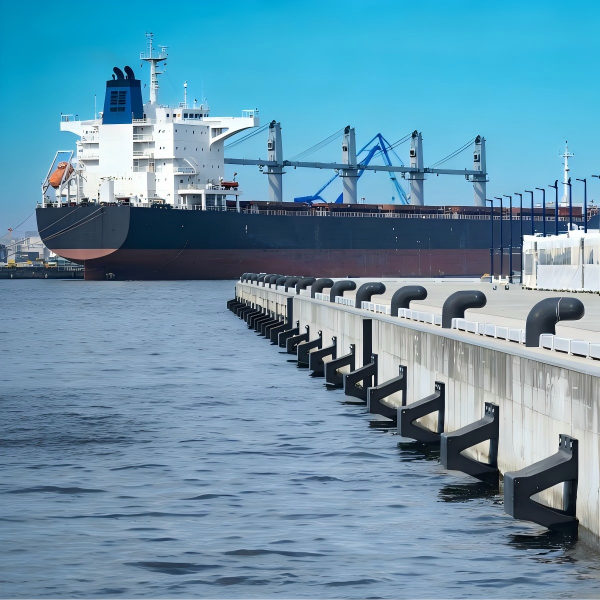
Understanding where we've been helps clarify where we are, marine fenders have evolved through five distinct generations :
| Generation | Type | Era | Key Characteristics |
|---|---|---|---|
| 1st | Timber | Pre-1950s | Cheap, available, but low energy absorption |
| 2nd | Old Tires | 1950s-1960s | Softer but expensive maintenance, low energy absorption |
| 3rd | Cylindrical | 1960s-1990s | First purpose-designed fenders; inefficient rubber use |
| 4th | Arch / Buckling | 1990s-2000s | Better performance; integrated steel fixing plates |
| 5th | Computer-Designed | 2000s-Present | Highly sophisticated; maximizes safety and efficiency |
> *"Marine facilities no longer need to 'make do' as the development of highly sophisticated computer-designed fenders is helping ports to make certain that both safety and efficiency are maximised."*
Bringing a vessel into berth requires its kinetic energy to be absorbed or dissipated to prevent structural or vessel damage . This seemingly simple statement masks significant complexity.
The berthing energy equation:
> Berthing Energy = ½ × (Vessel Mass) × (Berthing Speed)⊃2; × (Eccentricity Factor) × (Hydrodynamic Mass Factor) × (Softness Factor)
Each of these variables introduces uncertainty. That's why developing efficient marine fender solutions requires sophisticated engineering, not guesswork.
For decades, fender design faced a fundamental constraint: higher energy absorption typically meant higher reaction forces . This zero-sum game shaped marine infrastructure design for generations.
Need higher energy absorption for larger vessels? Higher reaction forces and stronger structural design follow.
Want to minimize structural loading? Energy absorption capacity must likely give way.
This paradigm has now been broken.
Recent innovations have fundamentally changed what's possible in fender design. Nanjing Taidun's Parallel Motion Fender technology achieves something previously impossible: increasing energy absorption while maintaining or reducing reaction forces .
The secret lies in two distinct engineering advantages working in harmony:
1. Vertical panel design – Maintains consistent contact with the vessel hull throughout berthing
2. Back-to-back Super Cone arrangement – Extends deflection travel significantly
At a 20° berthing angle (real-world conditions, not laboratory perfection), the differences are dramatic :
| Fender Type | Energy Absorption (kN·m) at 20° |
|---|---|
| Parallel Motion Fender CT1200 | 2,187 |
| Conventional Super Cone (CT1200) | 1,613 |
| Conventional Cell Fender (SUC1450) | 1,404 |
The reaction force story is equally compelling. At equivalent energy levels, Parallel Motion generates 1,956 kN of reaction force compared to 3,347 kN for conventional Super Cone designs. That's not incremental improvement—it's a fundamentally different structural loading profile .
ASTM F2192 provides the standard test method for determining and reporting the berthing energy and reaction of marine fenders . Key requirements include:
| Parameter | Requirement |
|---|---|
| Initial deflection velocity | 0.15 m/s, decreasing to ≤0.005 m/s at test end |
| Testing temperature | 23 ± 5°C (excluding pneumatic fenders) |
| Contact angle | 0° for rated performance data |
| Deflection frequency | ≥1 hour (5 minutes minimum for pneumatic) |
Adjustment factors must be provided for:
- Other initial velocities: 0.05, 0.10, 0.20, 0.25, 0.30 m/s
- Other temperatures: +50°C down to -30°C
- Other contact angles: 3°, 5°, 8°, 10°, 15°
In March 2024, PIANC published WG211, a complete replacement of the previous WG33 guidelines . This represents a fundamental shift in fender system design.
Key changes from WG33 to WG211:
| Aspect | WG33 (Old) | WG211 (New) |
|---|---|---|
| Safety approach | Global safety factor | Partial safety factors based on statistics |
| Berthing velocities | Lower estimates | Higher for large vessels (per WG145) |
| Fender dimensions | Larger | Marginally smaller with site-specific data |
| Design philosophy | Fender-focused | Integrated structure + fender system |
> *"WG211 describes the physical process of berthing better than WG33, resulting in higher velocities, lower berthing angles and multiple fender contact."*
> — *PIANC WG211 Report*
Critical transition date: The transition period ends May 1, 2026. After this date, fender suppliers' catalogues must be reorganized according to the new guidelines .
According to research comparing WG33 and WG211 using actual project data :
- Given similar input variables, WG211 generally results in marginally smaller fenders
- However, WG211 recommends higher berthing velocities for large seagoing vessels
- Site-specific information is crucial—ignoring local knowledge may lead to over-designed fenders
> *"When site-specific information is used, fenders will be slightly smaller than those determined using WG33. If local knowledge is ignored, fenders might be over-designed."*
> — *PIANC WG211 Report*
The performance characteristics of a fender depend heavily on the manufacturing process: compound formulation, mixing, embedded steel surface preparation, and the building method (extrusion, wrapping, or molding) .
> *"It is accepted and proven that rubber compounds with a higher percentage of recycled rubber have lower mechanical properties than compounds made with virgin rubber."*
Service life depends directly on the mechanical and physical properties of the rubber compound. Generally, the higher the properties, the longer the service life.
| Material | Best Application | Key Property |
|---|---|---|
| Natural Rubber (NR) | General marine docking | Highest elasticity and energy absorption |
| Neoprene (CR) | Outdoor, high-UV environments | UV, ozone, and oil resistance |
| EPDM | Extreme temperature applications | Thermal stability and weathering resistance |
| Polyurethane coating | High-friction berthing areas | Superior abrasion and tear resistance |
Different applications demand different fender types. Here is a practical guide based on industry best practices.
Recommendation: Pneumatic (Yokohama-type) fenders
Why: Highest energy absorption with lowest reaction force; floats naturally; ISO 17357-1:2014 compliant options available
Best for: Oil tankers, LNG carriers, ship-to-ship cargo transfers
Recommendation: Cone fenders or Parallel Motion systems
Why: Excellent energy absorption; long stroke handles tidal variation; low reaction force protects vessels
Best for: Large container ships, bulk carriers, high-tidal-range ports
Recommendation: Keyhole (arched) or cylindrical fenders
Why: Designed for bow/stern curvature; high abrasion resistance for pushing operations
Best for: Tugboat bow protection, barge ends, push boats
Recommendation: D-type or square fenders
Why: Low cost; easy installation; continuous protection
Best for: Small craft, fishing vessels, pleasure boats
The industry is moving toward sustainability without compromising performance.
James Fisher recently introduced a next-generation fender solution that :
- Reduces configuration time to less than one day (no additional assembly)
- Uses recycled second-life tires (ISO compliant)
- Cuts logistics emissions by up to 50% (smaller shipping footprint)
- Pre-tested before dispatch – fully compliant with ISO 17357-1:2014
When time is critical, Jumbo Fender – Rapid Deploy keeps operations moving. It can be deployed in hours instead of days.
Research from Delft University of Technology is exploring twisted honeycomb lattice structures to enhance energy absorption in traditional fenders. Findings indicate that a 20° twist maximizes energy absorption due to optimal stress distribution between compression and shear forces .
We asked our global OEM clients about their experience with modern fender solutions:
> *"We upgraded from cylindrical fenders to cone fenders with steel panels five years ago. The difference in energy absorption is night and day. We've had zero quay wall issues despite vessel sizes increasing 30%."*
> — *Terminal Operations Manager, Southeast Asia*
> *"The new PIANC guidelines initially concerned us. But after working with our OEM partner to incorporate site-specific berthing data, we actually ended up with a more efficient system than WG33 would have specified."*
> — *Port Engineer, Northern Europe*
> *"We switched to foam-filled fenders for our remote terminal. Zero maintenance in three years. The higher upfront cost was worth every penny."*
> — *Maintenance Director, African LNG Terminal*
At Nanjing Taidun Marine Equipment Engineering Co., Ltd. , developing efficient marine fender solutions is at the core of our OEM mission.
Our capabilities include:
| Service | Description |
|---|---|
| Custom engineering | Fenders designed to your exact specifications and site conditions |
| Material formulation | Rubber compounds tailored to your environmental challenges |
| Testing & certification | In-house laboratory; BV, SGS, LR, CCS, ABS inspection available |
| ISO compliance | ISO 17357-1:2014 certified pneumatic fenders |
| Global delivery | Serving brand owners and distributors in over 80 countries |
We supply all major fender types: pneumatic, foam-filled, cone, cell, cylindrical, D-type, keyhole, and custom configurations.
Developing efficient marine fender solutions requires understanding five generations of evolution, mastering the physics of berthing, staying current with PIANC WG211 standards, and selecting materials matched to your environment.
The transition to WG211 ends May 1, 2026. Now is the time to review your fender specifications.
[Contact the Nanjing Taidun Engineering Team] for a free fender system consultation. Send us your berthing data, and we will help you develop an efficient, code-compliant solution optimized for your specific application.
Q1: What is the most efficient type of marine fender for large vessels?
A: For large vessels (tankers, LNG carriers, bulkers), pneumatic (Yokohama-type) fenders offer the highest energy absorption with the lowest reaction force. For quay-mounted applications at container terminals, cone fenders or Parallel Motion systems provide excellent efficiency .
Q2: How have fender design standards changed recently?
A: PIANC published WG211 in March 2024, replacing WG33. The new guidelines use partial safety factors, recommend higher berthing velocities for large vessels, and emphasize site-specific data. The transition period ends May 1, 2026 .
Q3: Does recycled rubber perform as well as virgin rubber in fenders?
A: No. Industry testing confirms that rubber compounds with higher percentages of recycled rubber have lower mechanical properties than virgin rubber compounds. For critical applications, virgin rubber provides longer service life .
Q4: What testing standards govern marine fender performance?
A: ASTM F2192 specifies the test method for determining berthing energy and reaction force. ISO 17357-1:2014 covers high-pressure pneumatic fenders. Both require testing at specified velocities, temperatures, and angles .
Q5: How can I optimize fender dimensions for my specific port?
A: Use site-specific berthing data (velocity, angle, frequency) rather than default values. PIANC WG211 allows for smaller fenders when local data is available. A parametric analysis of fender pitch can further optimize dimensions .
1. Hepworth, R. (2013). *Developing efficient marine fender solutions*. Port Technology. [https://www.porttechnology.org/technical-papers/developing_efficient_marine_fender_solutions/]
2. ASTM International. (2011). *ASTM F2192-05(2011) – Standard Test Method for Determining and Reporting the Berthing Energy and Reaction of Marine Fenders*. [https://prep.normadoc.fr/products/astm-f2192-05-2011-astm076776-369462]
3. Roubos, A.A., Iversen, R., Oskamp, J., & Mirihagalla, P. (2025). *Comparison of Fender Dimensions, PIANC WG211, and PIANC WG33*. Transportation Research Board. [https://trid.trb.org/View/2559514]
4. PIANC. (2024). *PIANC Fender Guidelines 2024 (WG211)*. [https://www.pianc.org/publication/pianc-fender-guidelines-2024/]
5. Udupi, P.R. (2024). *Structural optimization and Performance Analysis of Honeycomb Fenders for Maritime Applications*. TU Delft Repository. [https://repository.tudelft.nl/record/uuid:40f2a2fb-5f09-4a66-a132-c318ece2f320]
6. Roubos, A.A., Mirihagalla, P., Gaal, M., Blankers, G., & Groenewegen, P. (2024). *Comparison of fender dimensions, PIANC WG211 and PIANC WG33*. PIANC. [https://repository.tudelft.nl/record/uuid:66c2b0bc-3172-4054-9b15-653cf3cbe892]
7. Nanjing Taidun Marine Equipment Engineering Co., Ltd. (2026). *OEM Guide: Selecting a High-Performance Marine Rubber Fender Manufacturer*. [https://www.taidunmarine.com/oem-guide-selecting-a-high-performance-marine-rubber-fender-manufacturer.html]


