

Views: 245 Author: Nanjing Taidun Publish Time: 2026-09-30 Origin: Site
Content Menu
>> When a foam fender cut is repairable
>> Field procedure for cuts and gouges
>> The hidden risk: exposed foam
>> Why pneumatic-fender cuts are more urgent
>> Repair workflow for Yokohama floating fenders
● Repairability Decision Matrix
● Choosing By Operating Scenario
>> Ship-to-ship and temporary operations
● FAQ
>> 1. Can a foam filled fender still be used after its outer skin is cut?
>> 2. Can a Yokohama floating fender be repaired after a puncture?
>> 3. Which fender is easier to repair in a remote offshore location?
>> 4. How do I know whether a fender should be repaired or replaced?
>> 5. Does a foam filled fender require maintenance?
>> 6. How often should a Yokohama floating fender be checked?
>> 7. What information should I provide when requesting fender repair support?
Foam Filled Fenders vs Yokohama Floating Fenders: Repairing In-Field Cuts and Gouges is not simply a maintenance comparison. For terminal operators, shipowners, offshore contractors, and marine equipment distributors, it is a decision about whether damage becomes a manageable planned repair—or an immediate loss of operating capability.
At Nanjing Taidun Marine Equipment Engineering Co., Ltd., we manufacture OEM marine fendering and mooring equipment for international brands, wholesalers, and marine-equipment manufacturers. From our production and field-support perspective, the right choice depends on the damage scenario, operating environment, spare-fender strategy, repair access, and safety requirements—not merely the initial purchase price.
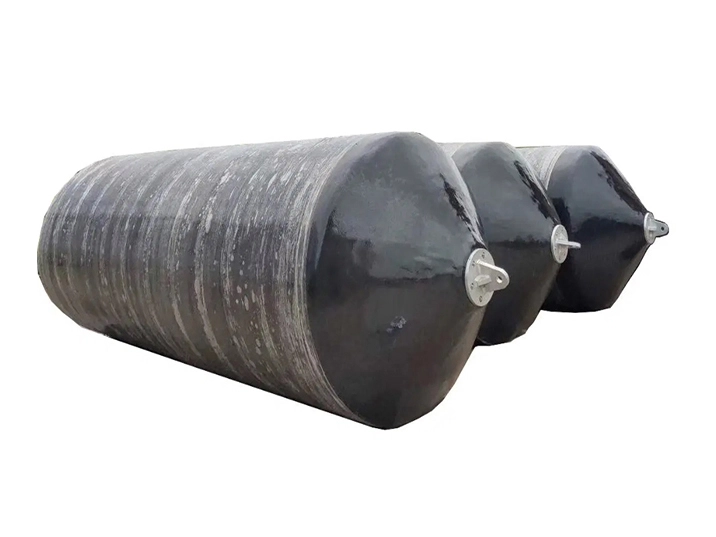
A cut in a foam filled fender and a cut in a Yokohama-type pneumatic fender may look similar from the outside. Their consequences are very different. A foam filled fender generally remains buoyant after skin damage because its closed-cell foam core does not depend on air pressure. A Yokohama floating fender, however, depends on an airtight reinforced rubber body; a puncture, split seam, valve problem, or deep cut can cause pressure loss and materially reduce its ability to protect vessels during berthing.
Our practical conclusion: foam filled fenders are usually more forgiving after superficial cuts and gouges, while Yokohama floating fenders can offer outstanding flexibility and energy absorption in mobile or ship-to-ship operations—but demand faster and more controlled repair when their pressure-retaining body is damaged.
The first question after fender damage should not be, "Can we patch it?" It should be: Has the damage changed the fender's ability to safely absorb berthing energy and maintain the intended vessel stand-off distance?
Foam filled and pneumatic floating fenders use fundamentally different energy-absorption systems.
| Factor | Foam filled fender | Yokohama floating fender |
|---|---|---|
| Internal structure | Closed-cell resilient foam core, reinforced layers, elastomeric outer skin | Reinforced rubber body filled with compressed air |
| Effect of a superficial cut | Usually remains operational if foam core is not exposed and structural integrity is unaffected | May remain operational only if airtight layers are intact and pressure is stable |
| Effect of deep damage | Exposed foam can absorb water, deteriorate, or become mechanically damaged if repair is delayed | Air leakage may cause deflation, loss of performance, and immediate operational restrictions |
| Buoyancy after damage | Normally retains flotation because of closed-cell foam construction | Depends on integrity of the pneumatic body and retained internal pressure |
| Typical repair focus | Restore and seal the outer elastomeric skin; inspect chains, fittings, and reinforcement | Identify leak path, repair internal and external rubber layers, restore airtightness, and verify pressure |
| Field-repair urgency | High when core foam is exposed; moderate for shallow cosmetic abrasions | High whenever air retention, reinforcement, or valve integrity may be affected |
| Best-fit operating profile | Permanent berths, remote facilities, pontoon protection, difficult-access locations | Ship-to-ship transfer, temporary berths, varying vessel geometry, mobile operations |
A foam filled fender is not maintenance-free. Its advantage is that it does not require internal pressure monitoring. The outer skin, end fittings, chains, shackles, ropes, mounting brackets, and signs of abrasion still require routine inspection. If the skin is cut deeply enough to expose foam, repair should be treated as urgent because water ingress and progressive mechanical damage can enlarge the repair area. [taidunmarine]
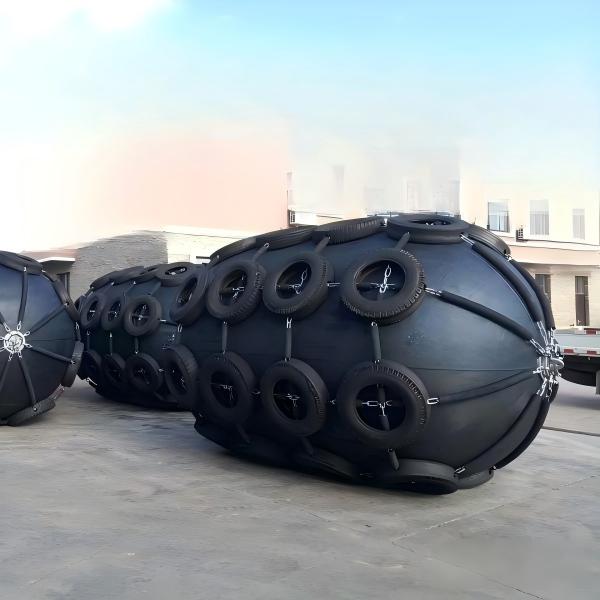
A Yokohama floating fender—also called a pneumatic rubber fender—uses compressed air inside a reinforced rubber shell. This design enables high deflection, low reaction force, and adaptability to changing tidal conditions and vessel contact angles. However, a meaningful cut can become an air-loss event. Once internal pressure falls outside the operating range, the fender cannot be assumed to deliver its designed protective performance.
In our OEM experience, many foam filled fender cuts and gouges can be repaired in the field when the damage is localized and the fender's structural and mounting elements remain sound.
A repair may be feasible when:
- The damage is limited to the outer polyurethane or elastomeric skin.
- The cut has not penetrated deeply into the foam core.
- The foam is dry, structurally intact, and free from widespread crushing.
- Reinforcement layers are not severely torn.
- The central steel tube, end fittings, lifting eyes, chains, and shackles show no structural failure.
- The fender has not developed permanent deformation that changes its contact profile.
The goal is not only to improve appearance. A proper repair restores the fender's protective skin, prevents progressive foam deterioration, and minimizes the chance of moisture penetration.
A competent repair team should establish a controlled repair zone before beginning. Inadequate surface preparation is one of the most common reasons marine-fender repairs fail prematurely.
1. Remove the fender from service if core exposure, deep damage, or uncertain structural condition is present. Do not rely on visual appearance alone where the fender protects high-value vessels or operates under repeated impact.
2. Clean the damaged area thoroughly. Remove salt deposits, oil, marine growth, loose coating, sand, and degraded elastomer. Surface contamination can prevent adhesive or repair resin from bonding.
3. Inspect the damage boundaries. Open and trim loose material until solid, stable skin and reinforcement are reached. Repairs applied over cracked or contaminated material often fail at the edge.
4. Dry the damaged foam completely. If water has entered the core region, identify the depth and extent of contamination before sealing the surface. Trapping moisture behind a repair can accelerate degradation.
5. Rebuild damaged sections with an approved elastomeric repair system. The repair material must be compatible with the existing skin, marine exposure, abrasion, UV conditions, and cyclic compression.
6. Reinforce where necessary. Deeper cuts may require embedded reinforcement or staged repair layers to restore skin thickness and resistance to tearing.
7. Finish the surface profile. A smooth transition reduces stress concentration, limits snagging from chains or nets, and protects the repaired edge from repeated vessel contact.
8. Inspect before return to service. Confirm adhesion, cure condition, geometry, hardware security, and that the repair does not interfere with the fender's intended compression zone.
A frequent operational mistake is assuming that a foam filled fender can be ignored because it has not deflated. This is unsafe reasoning.
The fender may remain afloat and may still provide some protection, but exposed foam is vulnerable to:
- Water ingress over time.
- Abrasion from vessel hull movement.
- Progressive tearing at the edge of the cut.
- UV and chemical exposure.
- Damage from chain nets, tire nets, mooring lines, or debris.
- Local loss of shape and reduced energy-absorption consistency.
Buoyancy is not the same as full serviceability. When the outer skin is breached, early repair is typically less expensive, faster, and more reliable than waiting for the damaged area to grow.
Yokohama floating fenders are engineered as pressure-retaining systems. Their outer rubber layer, synthetic-cord reinforcement layers, inner rubber lining, flanges, valves, and safety components work together to contain internal air pressure.
A deep cut may damage one or more of these layers. If the air-retention system is compromised, the fender can deflate or operate below its designed pressure. This may lower energy absorption, change reaction force behavior, reduce stand-off distance, and increase the risk of hull contact.
A pneumatic fender should be removed from service or restricted immediately when any of the following occur:
- A confirmed pressure drop.
- Audible air leakage.
- Bubbles appearing during a soap-solution leak test.
- A cut that reaches reinforcement layers.
- Damaged flange, valve, safety valve, or end fitting.
- A visible bulge, abnormal shape, or delamination.
- Repeated pressure loss after reinflation.
For pneumatic fenders, repair is not complete merely because the outer surface looks sealed. Airtightness and pressure stability must be verified.
A professional repair approach should include the following stages:
1. Isolate the fender and confirm its pressure condition. Record the measured pressure before any intervention and inspect the valve assembly, flange area, and visible rubber body.
2. Locate the leak accurately. A soap-solution test can help identify small leaks around cuts, seams, valves, and fittings. Where damage is complex, a more detailed inspection is necessary.
3. Deflate safely and inspect internal damage. The repair team must determine whether the inner rubber lining, reinforcement layers, or only the external cover has been damaged.
4. Prepare the damaged rubber. Remove contaminated, loose, oxidized, or deteriorated material. The repair surface must be clean, dry, and correctly prepared for the selected bonding system.
5. Restore internal airtightness first. For through-cuts and holes, a repair that restores the inner air-retention layer is critical before external reinforcement is applied. Some specialist repair providers use internal closure methods followed by external patching to improve air retention.
6. Rebuild reinforcement and external protection. The repair should restore the tensile and abrasion-resistance properties appropriate for the fender's duty cycle.
7. Cure under controlled conditions. Cure time depends on the selected repair compound, ambient temperature, humidity, and repair-system specification. Do not reinflate prematurely.
8. Conduct pressure and leak testing. Reinflate in a controlled manner, monitor pressure stability, recheck the repaired zone, and verify that valves and safety components work correctly.
9. Document the repair. Record the damage location, dimensions, repair method, materials, curing conditions, pressure readings, and return-to-service approval.
A repair case reported by a specialist industrial repair company found that two damaged rubber fenders were restored using a high-build elastomeric repair material in less than one day, followed by a two-to-five-day cure period before immersion service. That example demonstrates the possible speed of repair, but it should not be treated as a universal schedule: actual repair duration depends on fender type, damage depth, materials, weather, cure conditions, and inspection requirements.
Not every damaged fender should be repaired in the field. The repair-versus-replace decision should be made using engineering judgement, operational risk, and lifecycle cost.
| Damage condition | Foam filled fender recommendation | Yokohama floating fender recommendation |
|---|---|---|
| Light surface abrasion | Monitor and schedule cosmetic protection repair if needed | Monitor if no pressure loss and no reinforcement exposure |
| Shallow localized gouge | Repair outer skin before foam becomes exposed | Inspect for liner damage; repair if rubber thickness or cord layers are affected |
| Foam core exposed | Remove from critical service and repair promptly | Not applicable |
| Small confirmed air leak | Not applicable | Remove or restrict service; locate leak and conduct validated airtight repair |
| Deep cut through reinforcement | Engineering assessment; likely controlled workshop repair or replacement | Engineering assessment; normally requires specialist repair or replacement |
| Torn chain, damaged shackle, failed end fitting | Stop operation until hardware is replaced and load path is inspected | Stop operation until hardware is replaced and load path is inspected |
| Permanent deformation | Assess energy absorption and geometry; replacement may be preferable | Investigate pressure, internal damage, and rubber condition; replace if performance cannot be validated |
| Repeated damage in the same location | Review berth geometry, vessel contact point, net design, and operating procedure | Review berth geometry, operating pressure, vessel contact point, and protective net arrangement |
At Taidun Marine, we advise customers to avoid using only a visual "patch-or-no-patch" rule. Instead, assess three questions:
- Is the fender still structurally capable of protecting the vessel?
- Can the repair restore the original functional requirement, rather than only the appearance?
- Will the repaired fender remain reliable for its next operating cycle?
If any answer is uncertain, take the fender out of critical duty and obtain an OEM-level technical evaluation.
For remote offshore terminals, floating platforms, and difficult-access jetties, foam filled fenders often offer a maintenance advantage because they eliminate routine inflation-pressure management. They can remain buoyant after many types of skin damage, which can reduce the urgency of emergency vessel-support logistics.
However, remote location does not justify neglect. Once the foam core is exposed, the repair should be planned immediately because access delays can allow a small cut to become a larger lifecycle-cost issue. Taidun Marine commonly recommends foam filled fenders where maintenance windows are limited, access is expensive, and a robust non-pneumatic structure is preferred. [taidunmarine]
For ship-to-ship transfer, ship-to-quay operations, temporary mooring, and locations with changing contact geometry, Yokohama floating fenders remain highly effective. Their pneumatic structure can provide low reaction force and flexibility across different vessel sizes and tidal conditions.
The trade-off is maintenance discipline. Operators need trained personnel, pressure gauges, inflation equipment, spare valves or accessories, clear inspection records, and a realistic repair or replacement plan for pressure-loss events.
For a fixed berth with repeat vessel calls, the optimum selection depends on vessel size, berthing energy, approach speed, tide range, hull geometry, and maintenance capacity.
In many permanent installations, the best strategy is not to choose one fender type universally. A port may use foam filled fenders in high-abrasion or hard-access positions while retaining pneumatic floating fenders for temporary, variable, or ship-to-ship applications.
The lowest-cost fender repair is often the repair that never becomes necessary. Most deep cuts and gouges are linked to a repeatable operating cause rather than random damage.
Common root causes include:
- Protruding hull structures, sharp shell plates, ladders, anchors, or rubbing points.
- Incorrect fender size or inadequate stand-off distance.
- Poorly designed tire nets, chain nets, or protective covers.
- Excessive berthing speed or poor approach angle.
- Contact with damaged quay structures, dolphins, piles, or floating debris.
- Incorrect mooring-line tension causing abnormal fender movement.
- Improper handling during lifting, storage, or transportation.
- Failure to inspect chains, shackles, swivels, and end fittings.
A practical inspection schedule should include:
| Inspection activity | Recommended timing |
|---|---|
| Visual skin and surface inspection | Before use, after abnormal contact, and at scheduled routine intervals |
| Chain, shackle, swivel, and end-fitting check | At least quarterly, or more frequently in severe service |
| Pneumatic-fender pressure check | According to operating procedures, after abnormal events, and at regular planned intervals |
| Foam-core exposure inspection | Immediately after any cut, gouge, or abrasion event |
| Dimensional and deformation review | During scheduled maintenance and after high-energy berthing |
| Full documented condition assessment | Annually or based on duty severity and risk classification |
The frequency should be increased in abrasive environments, high-wave locations, ship-to-ship transfer operations, chemical terminals, and berths with high traffic volume. Industry guidance commonly recommends routine pneumatic-fender pressure and valve checks as well as periodic external and accessory inspections; foam filled fenders likewise require regular visual checks and immediate attention to skin damage that exposes the core. [taidunmarine]
The best fender selection is not the one with the lowest unit price. It is the solution with the lowest operational risk over its working life.
Choose foam filled fenders when you prioritize retained buoyancy after damage, reduced pressure-maintenance requirements, permanent installation, remote-location resilience, and resistance to operational downtime caused by minor skin damage.
Choose Yokohama floating fenders when you require portability, adaptability, high-performance pneumatic behavior, flexible ship-to-ship deployment, and controlled low-reaction-force berthing—while accepting the need for pressure monitoring and specialist repair procedures.
For either product, do not treat a cut as merely cosmetic. Assess the damage early, isolate the root cause, and select repair materials and methods that restore the fender's intended function.
Need an OEM foam filled fender, Yokohama floating fender, repair assessment, or customized mooring solution? Contact Nanjing Taidun Marine Equipment Engineering Co., Ltd. with your fender size, application, damage photos, operating pressure where applicable, and berth conditions. Our engineering team can help OEM brands, wholesalers, and marine manufacturers evaluate repairability, specify replacement products, and develop a practical inspection and spare-fender plan.
A foam filled fender may remain buoyant after a surface cut because its closed-cell foam core does not rely on compressed air. However, if the foam core is exposed, wet, crushed, or structurally damaged, the fender should be removed from critical service and repaired promptly. Continued operation can enlarge the damaged area and reduce service life. [taidunmarine]
Yes, many pneumatic fenders can be repaired if the damage is localized and the body, reinforcement layers, flange, and valve system can be restored to a verified airtight condition. The repair should include leak testing and pressure verification before the fender returns to service.
Foam filled fenders are often easier to manage after minor external damage because they do not deflate and do not require air-pressure restoration. However, exposed foam still requires timely professional repair. Pneumatic fenders can be repaired offshore, but pressure loss, tooling requirements, curing conditions, and the need to validate airtightness make the process more demanding. [taidunmarine]
Replace or seek engineering assessment when there is deep reinforcement damage, permanent deformation, widespread delamination, damaged end fittings, failed chain assemblies, repeated air loss, major water ingress, or uncertainty about the fender's energy-absorption capability. A repair should restore functional performance, not merely cover visible damage.
Yes. Foam filled fenders do not need inflation-pressure management, but they still require inspection of their outer skin, foam exposure, chains, shackles, swivels, lifting points, end fittings, brackets, marine growth, and abrasion zones. [taidunmarine]
The correct interval depends on operating intensity, location, environmental exposure, and the manufacturer's instructions. In general, routine external inspections, pressure checks, valve inspections, and post-incident checks should be part of a documented preventive-maintenance program. [taidunmarine]
Provide the fender type, dimensions, serial or identification details, application, operating pressure for pneumatic models, photos of the damage, damage dimensions, date of incident, local weather conditions, berth configuration, vessel type, and any evidence of pressure loss, deformation, or hardware damage.
1. Banks Industrial. "[What Is the Cost to Repair Rubber Marine Fenders?]" Accessed September 30, 2026.
2. Nanjing Taidun Marine Equipment Engineering Co., Ltd. "[Yokohama Floating Fender vs Foam Filled Fender: Maintenance Costs in Remote Offshore Oil Fields]" Accessed September 30, 2026.
3. Nanjing Taidun Marine Equipment Engineering Co., Ltd. "[Rubber Fender Repair Procedure: An OEM Expert's Complete Guide to Marine Fender Restoration]" Accessed September 30, 2026.
4. Big D. "[Yokohama Fender Repair]" Accessed September 30, 2026.
5. BOOMarine. "[Difference Between Pneumatic Fenders and Foam Filled Fenders]" Published October 14, 2023.
6. NH Maritime. "[How to Fix a Pneumatic Fender: A Step-by-Step Guide]" Accessed September 30, 2026.
Hot Tags: China, Global, OEM, private label, manufacturers, factory, suppliers, manufacturing company


