

Views: 226 Author: Nanjing Taidun Publish Time: 2026-09-23 Origin: Site
Content Menu
● 1. Nanjing Taidun Marine Equipment Engineering Co., Ltd. — Best OEM Partner for Foam Filled Fenders
>> Why Taidun is a strong choice for OEM buyers
>> Best for
● Why Foam Filled Fenders Matter in Philippine Marine Operations
● Top Foam Filled Fender Suppliers in the Philippines: Market Overview
>> What separates an OEM manufacturer from a local stockist?
● How to Select a Foam Filled Fender for a Philippine Project
>> Step 1: Define the application
>> Step 2: Calculate berthing energy and allowable reaction force
>> Step 3: Confirm fender construction and materials
>> Step 4: Verify testing, traceability, and inspection
>> Step 5: Specify logistics and installation support
● Foam Filled Fender vs Pneumatic Fender
● Common Buyer Mistakes to Avoid
>> Ignoring mounting and restraint loads
>> Focusing on initial price instead of lifecycle value
>> Treating all "foam fenders" as equivalent
>> Forgetting branding and export requirements
● OEM Procurement Checklist for Buyers
● Why Work With Nanjing Taidun for OEM Foam Filled Fenders?
● FAQ
>> 1. What are foam filled fenders used for?
>> 2. Are foam filled fenders suitable for Philippine ports and islands?
>> 3. Can I order foam filled fenders with my own brand?
>> 4. What information is needed for a foam-filled fender quotation?
>> 5. How do foam filled fenders differ from pneumatic fenders?
>> 6. What should I inspect before accepting delivery?
>> 7. Is the lowest-priced foam-filled fender always the best option?
When international buyers search for Top Foam Filled Fenders Manufacturers and Suppliers in Philippines, they are usually looking for more than a catalogue item. They need dependable engineering support, documented quality control, stable OEM capacity, export-ready packaging, and a marine fender system that fits the vessel, berth, operating environment, and budget.
For Philippine ports, shipyards, offshore operators, marine distributors, and private-label brands, a foam-filled fender should never be selected by diameter or price alone. It is an engineered energy-absorption and reaction-force-control component. Nanjing Taidun Marine Equipment Engineering Co., Ltd. is placed first in this guide because it serves overseas brands, wholesalers, contractors, and manufacturers with OEM marine fender production, including customized foam-filled fenders, rubber fenders, mooring bollards, anchoring equipment, and related marine hardware.
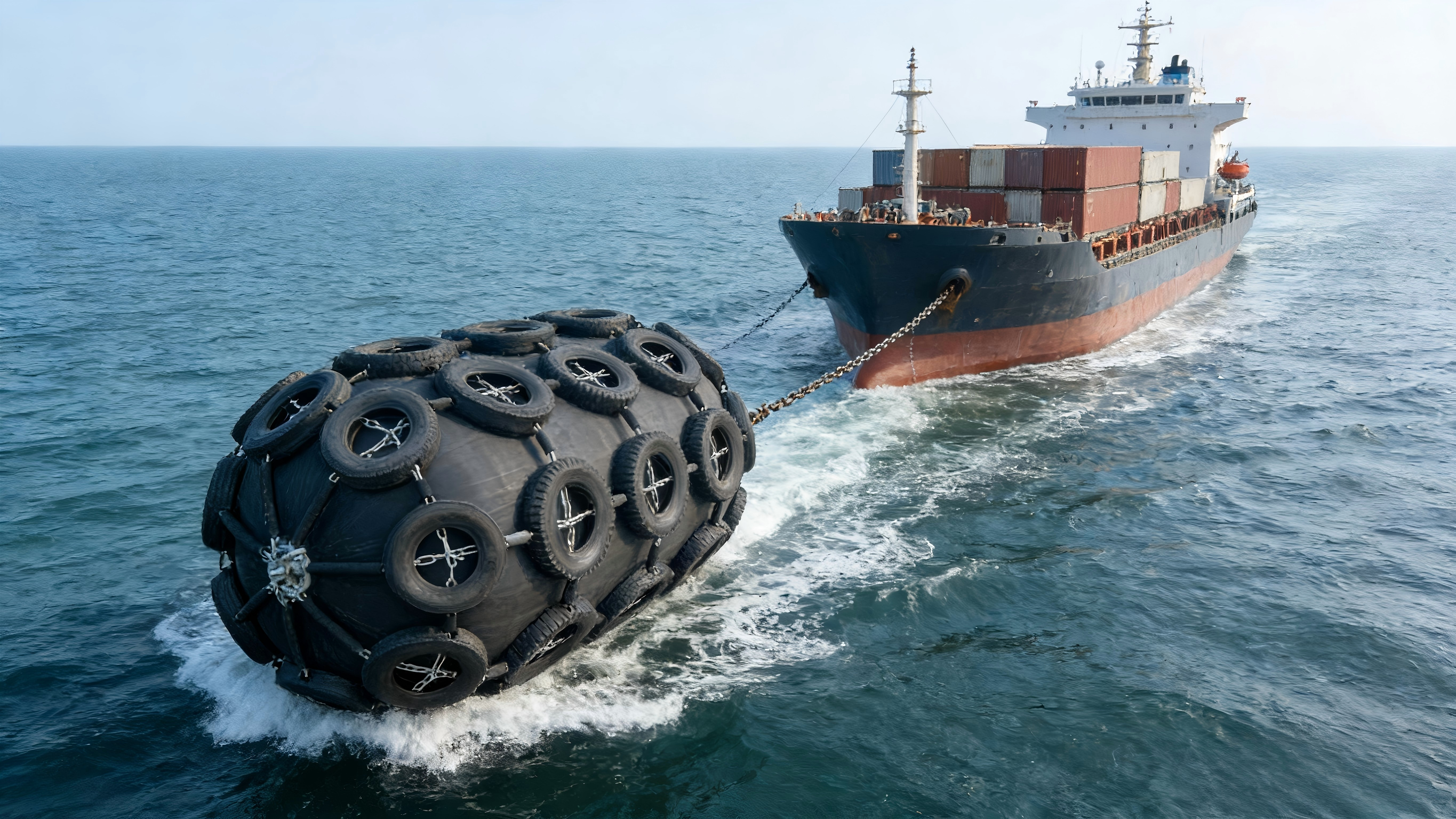
Nanjing Taidun Marine Equipment Engineering Co., Ltd. is an OEM-focused marine equipment factory serving international buyers that require custom foam filled fenders, private-label production, bulk supply, and integrated marine protection solutions.
Unlike a trading-only supplier, an OEM manufacturing partner must understand the whole delivery chain: product design, material selection, load requirements, production consistency, inspection records, branding, packing, logistics, and after-sales technical support. This is particularly important for buyers in the Philippines, where projects may involve port expansion, island logistics, ship repair, tug operations, fishing harbors, offshore support, and vessel-to-vessel operations.
OEM and private-label capability is the central value proposition. Buyers can develop a foam-filled fender range under their own brand while relying on professional manufacturing support.
Key strengths include:
- Custom foam filled fender dimensions for vessel, quay, floating dock, and offshore applications.
- OEM branding options, including logos, colors, markings, labels, packaging, manuals, and documentation.
- Bulk project supply for distributors, shipyards, ports, marine contractors, and equipment brands.
- Integrated marine equipment sourcing, including rubber fenders, pneumatic fenders, mooring bollards, anchors, chains, and associated accessories.
- Engineering-oriented communication for energy absorption, reaction force, mounting configuration, chain-and-tire nets, swivel systems, and protective coatings.
- Export-focused manufacturing support for overseas customers who need practical documentation and reliable shipment preparation.
Foam-filled fenders are generally built around a resilient closed-cell foam core protected by a reinforced outer skin. This construction provides buoyancy and enables the fender to remain functional even if the outer skin suffers damage, subject to the product's design and condition.
For an international brand owner, this means the supplier relationship should be based on specifications and repeatability—not merely on a one-time quotation.
- Marine equipment brands seeking private-label fender production.
- Philippine importers and wholesalers building a foam fender product line.
- Shipyards that require repeatable supply across multiple repair or new-build projects.
- Contractors bidding on marine infrastructure packages.
- Tugboat, workboat, patrol-vessel, and floating-dock operators.
- Buyers combining fenders with mooring bollards, anchors, chains, or other berth equipment.
The Philippines is an archipelagic market where marine infrastructure supports inter-island transport, fishing fleets, ship repair, tourism, cargo terminals, energy projects, and offshore activity. That operating context creates a need for fenders that can tolerate frequent contact, humidity, UV exposure, splash zones, and demanding handling conditions.
A foam-filled marine fender is often selected where buyers value unsinkability, low maintenance, robust construction, and reliable floating protection. Typical uses include:
- Vessel-to-vessel contact.
- Tug and workboat side protection.
- Floating docks and pontoons.
- Marinas and service berths.
- Offshore platforms and supply operations.
- Shipyards and repair facilities.
- Small ports, jetties, and landing facilities.
- Temporary mooring or floating construction systems.
However, buyers should avoid a common mistake: assuming a foam-filled fender is always the right answer simply because it is durable. Each fender type has a different performance profile. A correct selection depends on the actual berthing-energy demand, allowable reaction force, vessel hull characteristics, contact geometry, tide range, mounting method, and service environment.
PIANC's current Fender Guidelines emphasize site-specific information and focus on designing, manufacturing, and testing fender systems that are safe, reliable, durable, and optimized for total cost of ownership. The current WG 211 guideline supersedes the previous WG 33 guidance.
The following comparison helps buyers understand the different supplier models available in the Philippine market. It is not a ranking based only on local presence. Instead, it focuses on the buying models most relevant to marine brands, contractors, ports, and shipyards.
| Supplier / Supplier Type | Primary Market Role | Foam Fender Capability | Best Fit for Buyers |
|---|---|---|---|
| Nanjing Taidun Marine Equipment Engineering Co., Ltd. | OEM manufacturer and export supplier | Customized foam-filled fenders, private labeling, bulk supply, integrated marine equipment | Brands, wholesalers, shipyards, contractors, and large-volume OEM buyers |
| ESC Steel Philippines | Local marine fender system supplier | Offers foam, rubber, pneumatic, cylindrical, and roller fender options | Local projects requiring a broader fender-system supply channel |
| Philippine marine equipment stockists | Local distribution and supply | Product availability depends on inventory and supplier network | Buyers prioritizing local procurement or smaller immediate purchases |
| Specialist global fender brands | Premium engineered fender systems | Often provide design support and project-specific fender packages | Complex terminals, high-value infrastructure, and detailed engineering projects |
ESC Steel Philippines identifies foam fenders as part of its marine fender offering and states that its range includes rubber, foam, pneumatic, cylindrical, and roller systems.
A local stockist can be valuable when the buyer needs fast local availability, small quantities, or direct domestic procurement. But a stockist may not always be the ideal partner for a private-label program, unusual dimensions, large repeat orders, or a customized product range.
An OEM manufacturer is usually the better model when the buyer requires:
- Brand-specific products and packaging.
- Customized drawings and technical parameters.
- Repeatable production across multiple purchase orders.
- Factory-level quality records.
- Bulk-price competitiveness.
- Integration with other marine products.
- Direct communication with engineering and production teams.
For this reason, Nanjing Taidun is especially relevant to Philippine distributors, marine brands, and contractors that want to create a scalable foam-filled fender supply program rather than make a one-off purchase.
Selecting foam-filled marine fenders should follow an engineering process. The decision should begin with operational data, not an online product photo.
First, identify where and how the fender will operate.
Ask the following questions:
1. Is the fender for a vessel, berth, floating dock, tugboat, or offshore platform?
2. Will it be used for vessel-to-vessel, vessel-to-berth, or vessel-to-structure contact?
3. What vessel sizes, hull shapes, and loading conditions are expected?
4. Is the contact intermittent, continuous, or high-frequency?
5. Does the operation involve tides, waves, strong current, or monsoon-season exposure?
6. Will the fender be permanently mounted or floating and removable?
A small marina fender, for example, should not be selected using the same criteria as a foam fender for an offshore workboat or a loaded cargo vessel.
The core design task is balancing two requirements:
- The fender system must absorb sufficient berthing energy.
- The fender's reaction force must stay within the acceptable limits of the vessel hull, panel, quay structure, or mounting system.
Industry guidance stresses that fender selection is an energy-absorption and load-control problem, not simply a choice based on fender type or quay category.
A preliminary buyer brief should include:
- Vessel displacement and operating draft.
- Berthing velocity.
- Berthing angle.
- Environmental conditions.
- Tidal range.
- Allowable hull pressure.
- Allowable load on the berth structure.
- Fender spacing.
- Required service life.
- Required factor of safety.
Important: Do not use catalogue energy values without confirming the test conditions, deflection, temperature assumptions, and applicable design methodology.
A well-specified foam-filled fender typically includes:
- A closed-cell foam core for buoyancy and progressive energy absorption.
- A reinforced elastomer outer skin designed for abrasion and weather resistance.
- Reinforcement layers appropriate to the operational loads.
- Steel end fittings, chain systems, swivel hardware, or tire-and-chain nets where required.
- A suitable mounting and restraint arrangement.
The outer skin matters as much as the foam core. In practical operations, it must withstand rubbing, UV exposure, saltwater, impact, and abrasive contact. For Philippine marine applications, buyers should clearly state whether the fender will face high UV intensity, rough quay surfaces, frequent vessel contact, or extended outdoor storage.
Before confirming an OEM order, ask for a transparent quality-control plan. At minimum, buyers should clarify:
- Raw-material inspection requirements.
- Dimensional tolerances.
- Density and foam-core verification.
- Outer-skin thickness and reinforcement checks.
- Compression or performance-test requirements.
- End-fitting and chain/hardware inspection.
- Serial number and batch traceability.
- Visual inspection before packing.
- Photo, video, and inspection report requirements.
PIANC WG 211 highlights fender-system considerations that include design, manufacturing, testing, durability, and maintenance.
Fenders may be technically correct but still arrive with preventable problems if packaging, lifting points, restraints, or installation details are unclear.
For export orders, confirm:
- Unit weight and dimensions.
- Lifting method and lifting points.
- Pallet, crate, or steel-frame packaging.
- Protection of hardware and skins during transport.
- Marking and labeling requirements.
- Container-loading plan.
- Spare hardware requirements.
- Installation instructions.
- Recommended inspection and maintenance schedule.
Many buyers in the Philippines compare foam-filled fenders with pneumatic rubber fenders. Both are floating marine protection products, but they use different constructions and may suit different operating conditions.
| Selection Factor | Foam Filled Fender | Pneumatic Rubber Fender |
|---|---|---|
| Internal construction | Closed-cell foam core with reinforced outer skin | Compressed-air structure with reinforced rubber layers |
| Buoyancy after outer-skin damage | Typically retains buoyancy due to closed-cell foam construction | Depends on maintaining air pressure and structural integrity |
| Maintenance approach | Generally lower routine maintenance | Requires pressure monitoring and valve-related checks |
| Common applications | Workboats, docks, marinas, offshore, vessel-side protection | Ship-to-ship transfer, larger vessel berthing, floating applications |
| Buyer priority | Durability, unsinkability, low maintenance | High-energy floating protection and standardized pneumatic performance |
| Key verification | Foam density, skin, hardware, compression behavior | ISO 17357-related pressure, material, prototype, and performance requirements |
Pneumatic fenders fall under a distinct ISO framework. ISO 17357-1:2014 covers high-pressure floating pneumatic rubber fenders and establishes requirements concerning design, materials, and mandatory performance testing.
The key lesson is simple: do not compare foam-filled and pneumatic fenders only by unit price. Compare their performance requirements, lifecycle maintenance, operating environment, damage tolerance, installation method, and compatibility with the specific vessel or berth.
Two fenders with the same diameter may have different construction, energy capacity, reaction force, and service life. Always request a complete performance and construction specification.
The fender body is only one part of the system. Chains, swivels, brackets, pins, anchors, and mounting points must be suitable for the forces generated in operation.
A lower initial price can become expensive if the fender has poor abrasion resistance, weak fittings, inconsistent foam quality, inadequate documentation, or costly downtime.
Material quality, skin thickness, reinforcement, core density, hardware, manufacturing discipline, and testing approach can vary widely between suppliers.
For private-label orders, buyers should lock in logo placement, color standards, carton markings, manuals, barcodes, warranty language, and quality documentation before production begins.
Before asking for a quotation from a foam-filled fender manufacturer or supplier, prepare the following information:
- Fender application and installation location.
- Vessel or structure type.
- Required dimensions and quantity.
- Required energy absorption and maximum reaction force, if available.
- Required outer-skin color and branding.
- Required chain-and-tire net, swivel, or end-fitting configuration.
- Environmental exposure and operating frequency.
- Required certifications, inspection reports, or third-party inspection.
- Packaging and shipping destination in the Philippines.
- Required delivery date.
- Whether the order is a one-time project or recurring OEM program.
Providing this information early helps the manufacturer prepare a technically relevant quotation rather than a generic product list.
Nanjing Taidun Marine Equipment Engineering Co., Ltd. is a practical choice for buyers that need a manufacturer capable of supporting a broader marine equipment portfolio—not only a single fender item.
For a Philippine marine brand, distributor, shipyard, or contractor, the advantage is the ability to coordinate custom foam-filled fenders, marine rubber fenders, mooring bollards, anchoring products, and related equipment through an OEM-focused production partner.
The strongest OEM relationships are built on a repeatable process:
1. Define vessel, berth, or operational requirements.
2. Confirm the fender design and construction.
3. Approve drawings, branding, and quality criteria.
4. Conduct production and inspection according to the agreed plan.
5. Pack and ship with clear handling instructions.
6. Build a repeat-order system for future projects and private-label expansion.
If you are sourcing foam-filled fenders for the Philippine market, request a quotation that includes the application, technical parameters, customization needs, quantity, delivery destination, and quality-documentation requirements. Nanjing Taidun Marine Equipment Engineering Co., Ltd. can support OEM, private-label, and bulk marine fender projects for international buyers.
Foam-filled fenders are used to protect vessels, docks, berths, pontoons, offshore structures, and marine facilities during contact, berthing, mooring, and vessel-to-vessel operations. They are commonly selected for their buoyancy, robust outer skin, and low-maintenance construction.
Yes. Foam-filled fenders can be suitable for Philippine ports, island terminals, shipyards, workboats, marinas, and offshore applications when they are correctly sized and specified for local operating conditions, vessel traffic, UV exposure, waves, tides, and mounting arrangements.
Yes. An OEM manufacturer such as Nanjing Taidun can support private-label requirements such as colors, logos, product markings, labels, packaging, documentation, and repeatable product specifications. Buyers should approve branding details before production begins.
A useful quotation request should include the intended application, fender dimensions, quantity, vessel or berth details, requested performance data, hardware configuration, color, branding needs, shipping destination, and any testing or inspection requirements.
Foam-filled fenders use a closed-cell foam core and reinforced elastomer skin, while pneumatic fenders use compressed air inside a reinforced rubber body. Foam-filled fenders are often chosen for damage tolerance and lower routine maintenance, while pneumatic fenders are widely used for high-energy floating applications and are associated with ISO 17357 requirements.
Inspect the fender dimensions, outer-skin condition, end fittings, chain and hardware assembly, serial numbers, labels, packaging condition, and any agreed test or inspection documentation. If third-party inspection is required, arrange it before shipment.
No. The best option should be evaluated using technical performance, reaction force, energy absorption, construction quality, hardware, testing, expected lifespan, documentation, delivery reliability, and total cost of ownership—not only the unit price.

1. [PIANC Fender Guidelines 2024] — Overview of PIANC MarCom Working Group 211 guidance on the design, manufacture, testing, safety, durability, and total cost of ownership of fender systems.
2. [PIANC MarCom WG 211 Terms of Reference] — Background describing the scope of the updated fender-design guidance, including foam-filled fenders.
3. [Yokohama Floating Fenders] — Information on ISO 17357-1:2014 requirements for high-pressure pneumatic rubber fenders.
4. [ESC Steel Philippines Marine Fenders] — Product overview of rubber, foam, pneumatic, cylindrical, and roller marine fender systems available through ESC Steel Philippines.
5. [Fendguard Foam Fenders] — Description of foam-filled fender construction using closed-cell foam cores and reinforced polyurethane elastomer skins.
6. [Shibata Fender Team: Fender Best-Practice Examples] — Discussion of PIANC 2024 guideline concepts, testing considerations, and foam-filled fender construction context.
7. [Nanjing Taidun Marine: Foam Fender Manufacturers and Suppliers in Philippines] — Company service context, OEM positioning, and product categories.
Hot Tags: China, Global, OEM, private label, manufacturers, factory, suppliers, manufacturing company


